

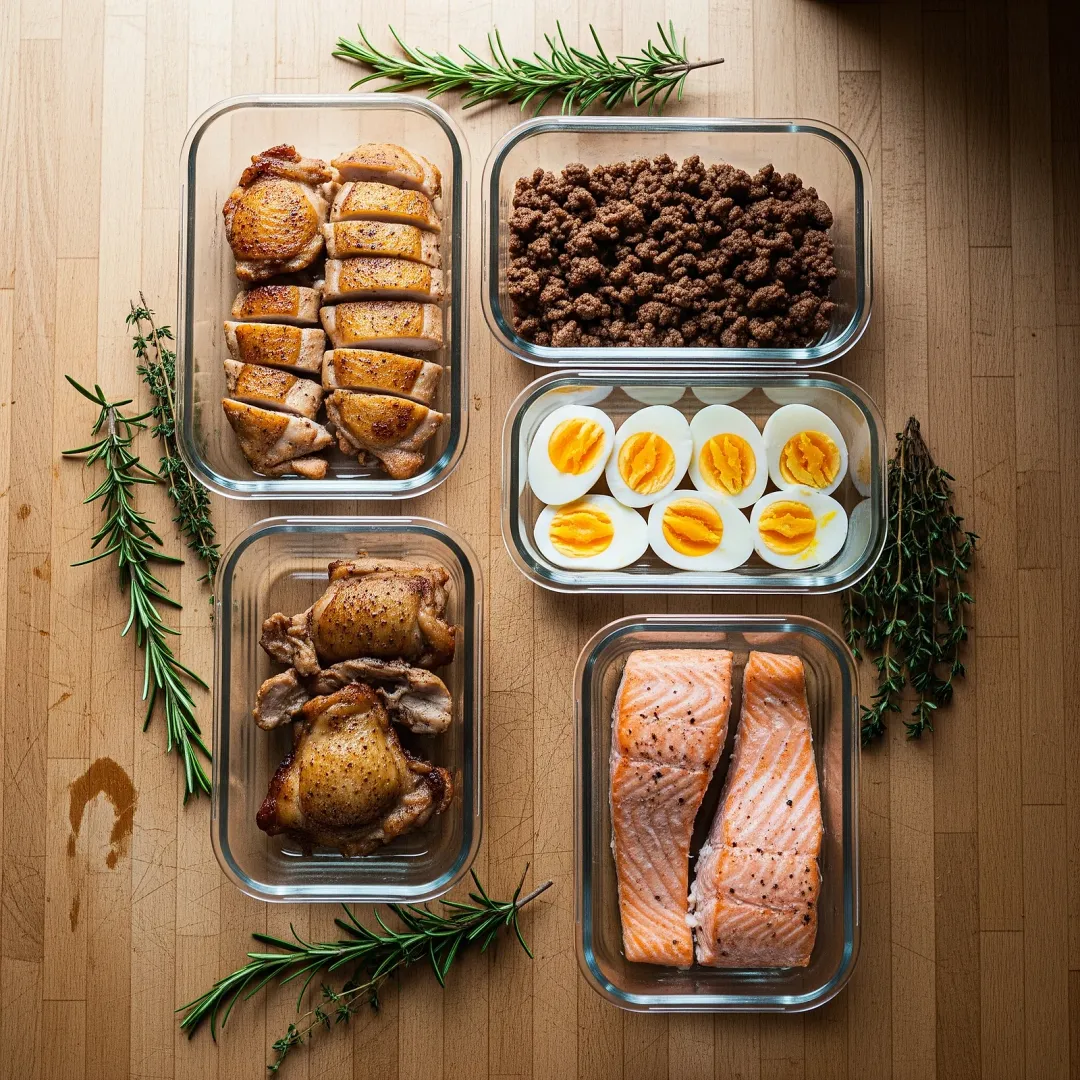

I used to stare into the refrigerator at 6pm on a Tuesday like it owed me something. Tired, hungry, nothing ready, and every good intention I had on Sunday officially dead. Sound familiar? The single thing that changed that faster than any app, any meal kit, any Pinterest board, was learning to batch-cook my proteins once a week and actually do it in a way that worked for real life. Not a lifestyle shoot. Real life.
Why Protein Is the Anchor (Not the Afterthought)
Here's the honest truth about meal prep: most people start with grains or sauces or snacks and then wonder why they're ordering pizza by Wednesday. Protein is the thing that makes everything else click. A 2023 review in Nutrients confirmed what functional-medicine practitioners have been saying for years, that adequate dietary protein is foundational for satiety, muscle maintenance, and metabolic health. When you have cooked protein ready in the fridge, you can pull a meal together in under ten minutes from real, whole ingredients. Without it, you're scrambling.
This matters for us paleo folks especially because we're already skipping the quick-carb shortcuts. We need that protein base more than anyone. Think of it as stewarding what you've got. Your body is a gift, and feeding it well doesn't have to mean cooking from scratch every single night.
Choose Your Proteins Strategically (3 Is the Magic Number)
Don't try to cook six different proteins in one session. You will lose your mind, your kitchen will look like a crime scene, and you'll quit by week three. Pick three. One red meat, one poultry, one seafood or egg-based option. That combo gives you enough variety to mix and match without the overwhelm.
Here are my go-tos for a paleo batch-cook week:
Red Meat:
- Ground beef (grass-fed when the budget allows, and yes, the budget point matters, USDA data consistently shows grass-fed commanding a premium, so buy what you can afford and move on)
- Beef chuck roast (slow-cooker magic)
- Bison burgers
Poultry:
- A whole rotisserie-style chicken (roast it yourself and you control what goes on the skin)
- Boneless chicken thighs (way more forgiving than breasts when you're reheating)
- Ground turkey
Seafood / Egg-Based:
- Wild-caught salmon fillets
- Hard-boiled eggs (a dozen takes 12 minutes and costs almost nothing)
- Shrimp sautéed in ghee and garlic
My usual rotation is ground beef, chicken thighs, and hard-boiled eggs. Simple, cheap, versatile, done.
Set Up Your Session Before You Start Cooking
Sunday batch-cooking fails happen in the prep phase, not the cooking phase. Here's how I set mine up.
Gather your tools first:
- Sheet pans (at least two)
- A Dutch oven or slow cooker
- An instant-read thermometer (non-negotiable for food safety)
- Glass storage containers in multiple sizes
- Parchment paper
Plan your cooking order by method: The oven, the stovetop, and the slow cooker can all run at the same time. That's your strategy. While the slow cooker handles the roast, the oven handles the chicken thighs, and you're on the stovetop browning the ground beef. You can have three proteins done in about 90 minutes, most of which is totally hands-off.
Season minimally now, flavor later: This is the move that keeps batch cooking from feeling repetitive. Cook your proteins with just salt, pepper, garlic, and maybe a little onion powder. Then when you plate them through the week, you can go Italian one night (olive oil, basil, roasted tomatoes), Mexican the next (cumin, lime, avocado), or Asian-inspired the night after that (coconut aminos, ginger, sesame). Same chicken thigh. Three completely different meals.
Cooking Times and Temps to Keep It Safe
Food safety isn't optional. The USDA's safe minimum internal temperature guidelines are the baseline, and an instant-read thermometer is the tool that gets you there without guessing:
- Ground beef and pork: 160°F
- Whole cuts of beef, pork, lamb: 145°F with a 3-minute rest
- All poultry (whole and ground): 165°F
- Fish and seafood: 145°F
- Eggs (hard-boiled): fully set yolk and white
Don't eyeball it. A $15 thermometer eliminates all the guesswork.
Basic timing for your simultaneous cook session:
- Slow cooker chuck roast: 8 hours low or 4-5 hours high (start this one first, obviously)
- Sheet pan chicken thighs at 400°F: 35-40 minutes
- Ground beef on the stovetop: 10-12 minutes, breaking it up as you go
- Shrimp in a skillet: literally 3-4 minutes, do these last so they don't overcook in the fridge
Store It Right So It Actually Gets Eaten
Cooked protein sitting in a sad Ziploc bag gets ignored. I'm not judging, it just happens. Here's the storage setup that actually works.
Glass containers over plastic. The National Institute of Environmental Health Sciences has raised ongoing concerns about endocrine-disrupting chemicals in some plastics, especially when food is heated in them. Glass is inert, reheats cleanly, and you can see what's inside. Win all around.
Refrigerator shelf life for cooked proteins: The USDA FoodKeeper guidelines are your reference here:
- Cooked poultry: 3-4 days
- Cooked beef and pork: 3-4 days
- Cooked fish: 3-4 days
- Hard-boiled eggs (in shell): 1 week; peeled, in water in a container: 1 week
Label everything. I use painter's tape and a Sharpie. Protein, date, done. Takes ten seconds and saves you from the sniff test by Thursday.
Freeze what you won't use by day 4. Batch-cook extra ground beef or chicken thighs and freeze half. That's your week 2 head start already handled.
How to Mix and Match Through the Week Without Eating the Same Meal on Repeat
This is the piece people miss. Batch cooking doesn't mean eating identical bowls all week. It means you have a building block, not a finished dish.
Here are five quick real-food assemblies from the same three base proteins (ground beef, chicken thighs, hard-boiled eggs):
- Monday: Ground beef over roasted sweet potato with sautéed onions and hot sauce
- Tuesday: Sliced chicken thighs over a big salad with avocado, cucumber, and a lemon-olive oil drizzle
- Wednesday: Ground beef lettuce wraps with shredded carrots, coconut aminos, and a squeeze of lime
- Thursday: Chopped chicken thighs with roasted broccoli and garlic, finished with a little ghee
- Friday: Hard-boiled eggs with a pile of raw veggies, olives, and whatever leftover protein is in the fridge
Same proteins. Five genuinely different meals. None of them took more than ten minutes to plate.
The key is keeping a solid rotation of paleo-friendly "flavor builders" on hand: coconut aminos, good olive oil, ghee, fresh citrus, fresh herbs, a few dried spice blends you love. Those are what turn "Tuesday's chicken again" into something you're actually excited to eat.
Budget Hacks for Batch-Cooking Real Food
I know the objection before you even say it. "Krista, grass-fed beef and wild-caught salmon don't grow on trees and my grocery bill is already painful." I hear you. Here's how I make it work.
Buy in bulk when it's on sale. Many grocery stores mark down meat on its sell-by date. That's your moment. Buy it, cook it same day or freeze it immediately, and you've just cut your protein cost significantly.
Cheaper cuts are your friend. Chuck roast, chicken thighs (bone-in is even cheaper), and ground beef are consistently less expensive than steaks or chicken breasts. They also have more fat and collagen, which is a nutritional bonus, not a drawback.
Eggs are an underrated anchor protein. A dozen pasture-raised eggs runs $5-7 in most markets. Hard-boil a full dozen on Sunday and you have grab-and-go protein for the whole week. That's hard to beat.
The whole chicken calculation. A 4-pound whole chicken roasted at home typically yields more usable meat per dollar than buying pre-cut pieces. Roast it, pull all the meat, and simmer the carcass into bone broth. One bird, multiple outputs.
Shop the freezer section for wild-caught fish. Frozen wild-caught salmon or shrimp is often just as nutritionally sound as fresh (sometimes more so, since it's frozen at peak freshness) and consistently cheaper. The FDA notes that frozen seafood handled properly is a safe and quality option.
The Mindset Shift That Makes This Actually Stick
Batch cooking isn't a discipline thing. It's not about being more organized or more motivated or more "on it" than you were last week. It's about removing the decision from Tuesday night when you're tired and hungry and your willpower is at zero.
Research on decision fatigue shows that the more decisions we make throughout the day, the worse our judgment gets by evening. When dinner requires zero decisions because the protein is already cooked, you eat the real food. When it requires a full cooking session, sometimes you don't. That's not weakness, that's how human brains work.
One focused session, once a week. Sunday is popular but use whatever day works before your week gets heavy. Protect that time like you'd protect a workout or a church commitment. It matters just as much for how you show up the rest of the week.
This is one of the simplest, most practical ways I know to actually live out the belief that your body deserves good fuel. Not perfect fuel. Not organic-everything-or-bust fuel. Just real food, ready when you need it.
This article is for general informational purposes only and is not medical advice. Always consult a qualified healthcare professional before making changes to your diet or health routine.
Key Takeaways
- Pick three proteins per week (one red meat, one poultry, one seafood or egg-based) to get variety without chaos.
- Run your oven, slow cooker, and stovetop simultaneously to finish your whole batch in about 90 minutes.
- Season minimally during batch cooking so you can re-flavor each meal differently through the week.
- Use an instant-read thermometer and follow USDA safe internal temperature guidelines, every time.
- Store in glass containers, label with protein and date, and freeze anything you won't use within 4 days.
- Budget moves: buy in bulk on sale, lean on cheaper cuts, hard-boil a dozen eggs, and grab frozen wild-caught fish.
Frequently Asked Questions
How long does batch-cooked protein last in the refrigerator?
According to USDA FoodKeeper guidelines, most cooked proteins, including chicken, beef, pork, and fish, stay safe in the refrigerator for 3 to 4 days. Hard-boiled eggs last up to 1 week in the shell. Label everything with the cook date, and freeze anything you won't use within 4 days.
What proteins are best for paleo meal prep?
The most versatile paleo batch-cook proteins are ground beef (grass-fed when budget allows), bone-in chicken thighs (more forgiving when reheated than breasts), hard-boiled eggs (cheap and fast), and wild-caught salmon or shrimp. Picking one from each category gives you variety without overwhelming your Sunday session.
How do you keep batch-cooked meals from tasting the same all week?
Season your proteins plainly during the batch cook: just salt, pepper, garlic, and maybe a little onion powder. Then re-flavor each meal differently when you plate it. Italian herbs and olive oil one night, cumin and lime the next, coconut aminos and ginger after that. The protein is a blank canvas. Your spice shelf and pantry staples do the rest.
Is it safe to batch-cook proteins and freeze them?
Yes. Cooked proteins freeze well for up to 3 months (poultry and ground meat) or 2 to 3 months (cooked fish), according to USDA guidelines. Cool completely before freezing, store in airtight glass or freezer-safe containers, and label with the protein type and freeze date. Thaw in the refrigerator overnight, not on the counter.
Sources
- Nutrients: Dietary Protein and Muscle Mass: Translating Science to Application and Health Benefit
- USDA Economic Research Service: Cattle & Beef: Overview
- USDA: Cooking Meat? Check the New Recommended Temperatures
- National Institute of Environmental Health Sciences: Endocrine Disruptors
- FoodSafety.gov (USDA): Cold Food Storage Charts
- FDA: Selecting and Serving Fresh and Frozen Seafood Safely
- Journal of Personality and Social Psychology: When choice is demotivating: can one desire too much of a good thing?
This article is for general informational purposes only and is not medical advice. Always consult a qualified healthcare professional before making changes to your diet or health routine.




Join the conversation
What do you think?
Free members can comment, reply and like. It takes ten seconds.