

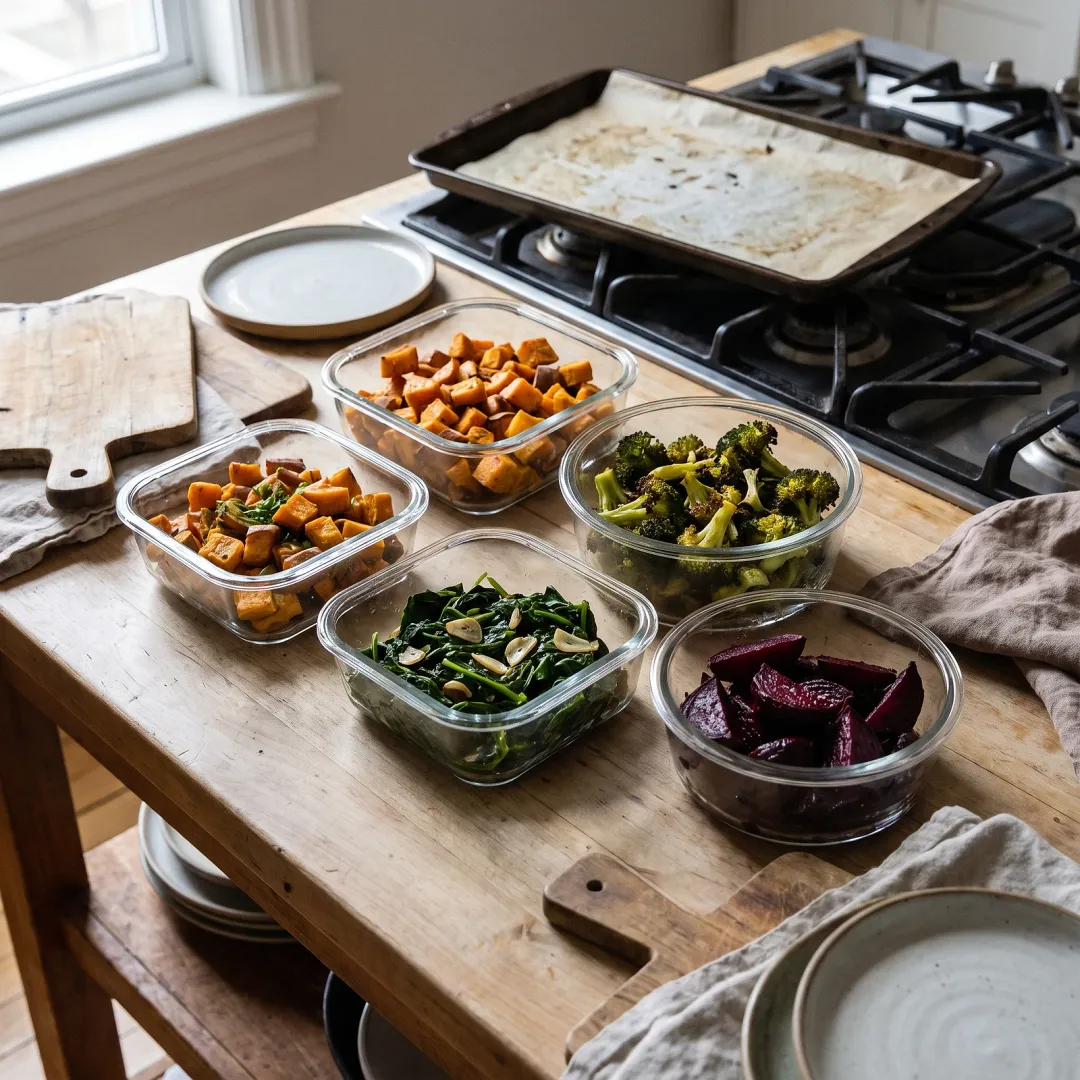

The thing that actually derails most people on a real-food eating plan? It's not the protein. It's the vegetables. The chicken is cooked. The ground beef is browned. And then Tuesday rolls around and the only vegetable in the fridge is a sad half-onion and some wilting spinach, so dinner becomes "whatever" and the whole week slides. I know because I have lived that exact Tuesday. Batch-cooking your vegetables is the missing piece, and once you get a system going, it honestly takes less than an hour on a Sunday to set yourself up for a full week of eating that actually looks like the way God designed food to be eaten. Let me show you how.
Why Vegetable Prep Is the Real Meal-Prep Game
We talk constantly about batch-cooking proteins, and yes, that matters. But here's the thing: protein is forgiving. Cold chicken thighs taste fine. Reheated ground beef works. Vegetables, though, have a short window between "fresh and delicious" and "soggy, sad, and trash-bound," and that short window is exactly why people skip them by Wednesday.
Research consistently shows that the biggest barrier to eating more vegetables is convenience, not preference. A 2017 study published in the journal Appetite found that time pressure is one of the strongest predictors of lower vegetable intake in adults. In other words: if the veg isn't ready, it doesn't get eaten. Period.
The fix isn't willpower. It's prep. When you open the fridge and roasted sweet potatoes, caramelized broccolini, and a big container of sautéed greens are just sitting there waiting, you eat vegetables. Every single day. Because the work is already done.
This is stewardship, honestly. We've been given these bodies and this incredible variety of real food, and it's worth the one hour a week it takes to actually use it well.
Step 1: Plan Two to Three "Anchor" Vegetables Per Week
Don't try to prep everything. Pick two or three vegetables that will anchor your meals, plus one "wild card" that sounds good at the store. Keep it simple, especially when you're starting out.
Good anchor vegetables for paleo meal prep (chosen because they hold their texture and flavor well after cooking):
- Root vegetables: sweet potatoes, carrots, parsnips, beets. These roast beautifully and last four to five days in the fridge without going mushy.
- Cruciferous vegetables: broccoli, cauliflower, Brussels sprouts, broccolini. Roast them at high heat (400 to 425°F) and they'll stay slightly crispy for three to four days.
- Sturdy greens: kale, Swiss chard, collard greens. Sauté with garlic and a good fat and they hold for three to four days without turning slimy the way baby spinach does.
- Alliums: whole roasted garlic, caramelized onions. These are flavor bombs that make everything else taste better and last up to five days.
Avoid prepping watery vegetables like zucchini, cucumber, or raw tomatoes in bulk. They break down fast and turn everything in the container wet. Those are better fresh, same day.
Step 2: Master the High-Heat Roast (This Is Your Best Friend)
Roasting is the workhorse technique for vegetable batch-cooking because it concentrates flavor, adds a little caramelization, and leaves you with something that tastes genuinely good cold or reheated. Low and slow is not your friend here. High heat is.
The basic formula:
- Preheat your oven to 400 to 425°F.
- Cut vegetables into similar-sized pieces so they cook evenly. Aim for 1 to 1.5-inch chunks for most things.
- Toss generously with a stable cooking fat. Avocado oil is my go-to for high-heat roasting because it has a high smoke point of around 520°F, which means it won't oxidize and turn rancid in the oven the way seed oils do. Coconut oil or pastured lard also work great.
- Season with salt, pepper, and whatever else sounds good (more on that below).
- Spread in a SINGLE layer. This is the most important part. Crowded pans steam instead of roast, and you end up with soft, pale vegetables instead of golden, caramelized ones. Use two sheet pans if you need to.
- Roast 20 to 35 minutes depending on the vegetable, flipping once halfway through.
That's it. No special equipment. No complicated technique. Just hot oven, good fat, single layer, flip once.
Step 3: Use a Flavor Rotation So You Don't Get Bored
The number one reason people stop eating their prepped vegetables is boredom. Everything tastes the same by Thursday. The fix is a simple flavor rotation. You're cooking the same vegetables but finishing them differently each time you pull them from the fridge, or prepping two batches with different seasonings from the start.
Here are five easy flavor profiles to rotate through:
- Mediterranean: olive oil, dried oregano, garlic powder, lemon zest. Great on broccoli, cauliflower, carrots.
- Smoky Southwest: avocado oil, smoked paprika, cumin, garlic salt. Excellent on sweet potatoes and Brussels sprouts.
- Simple Garlic and Herb: avocado oil, fresh or dried rosemary, thyme, minced garlic. Works on literally everything.
- Asian-Inspired: coconut aminos (paleo-friendly soy sauce swap), sesame oil drizzled after cooking, fresh ginger. Great on broccolini, bok choy, carrots.
- Balsamic Reduction: a drizzle of balsamic (look for one without added sugar) and fresh thyme. Amazing on beets, sweet potatoes, and red onion.
You don't have to use all five in a single week. Even just rotating two or three means Monday's roasted broccoli tastes nothing like Thursday's roasted broccoli, and that's enough to keep you reaching for it.
Step 4: Store It Right So It Actually Lasts
Storage is where a lot of good prep goes sideways. Here's what actually works:
Glass containers over plastic. Glass doesn't absorb flavors or odors, it doesn't leach anything into your food (unlike some plastics when heated), and you can see what's inside at a glance without opening every container. According to the National Institutes of Health, some plastic food containers can leach hormone-disrupting chemicals, especially when reheated. This is not a minor thing. Make the switch when you can.
Don't store hot food with the lid fully sealed. Let roasted vegetables cool for ten to fifteen minutes first, then loosely cover or store with the lid slightly ajar until they've fully cooled before sealing. Sealing hot veg traps steam, which creates condensation inside the container and makes everything soggy by the next day.
Layer delicate greens separately. Don't mix sautéed kale or chard in with your roasted root vegetables. The moisture from the greens will soften everything else. Each vegetable type gets its own container.
Label with the date. I know this sounds overly Type A but it takes five seconds and it means you don't play the "how old is this?" guessing game on Thursday. Most roasted vegetables are good for four to five days. Sautéed greens, closer to three to four.
General fridge storage timelines for batch-cooked veg:
- Roasted root vegetables (sweet potato, carrot, beet): 4 to 5 days
- Roasted cruciferous (broccoli, Brussels, cauliflower): 3 to 4 days
- Sautéed leafy greens: 3 to 4 days
- Caramelized onions: up to 5 days
- Roasted garlic: 5 to 7 days (stored covered in a little olive oil)
Step 5: Build a Sunday Prep Rhythm That Takes Under an Hour
Here's a real-world Sunday veg prep session. This takes me about 45 to 55 minutes from start to finish, including cleanup:
While the oven preheats to 420°F: Wash and dry all vegetables. Get the drying step done first because wet vegetables steam instead of roast.
0 to 15 minutes: Chop everything. Sweet potatoes, broccoli, Brussels sprouts, beets, whatever you're working with. I batch the chopping all at once so I'm not going back and forth.
15 to 20 minutes: Toss each vegetable separately with its fat and seasonings and spread on sheet pans. I usually run two to three sheet pans at a time. Stagger them if your oven runs uneven.
20 to 55 minutes: Everything roasts while I do something else. I'm not standing at the oven. I check at the halfway mark, flip, go back to whatever I was doing. This is not a high-effort process.
While veg is cooling: Quick sauté of whatever leafy greens I'm using this week (takes about 7 to 8 minutes on the stovetop). Greens don't go in the oven; they just need a hot pan, some fat, garlic, and a few minutes.
Once everything's cooled: Into labeled glass containers, into the fridge.
That's the whole session. The point isn't perfection. The point is that your future self on a Tuesday at 6pm doesn't have to make any decisions. The vegetables are there. You just eat them.
Quick Tips for Eating Your Prepped Veg All Week
Having prepped vegetables in the fridge is great. Actually eating them requires a little intentionality, especially when life gets busy and you're staring at the fridge at 7pm wondering what to make.
A few ways I use batch-cooked veg throughout the week:
- Toss them cold into a big salad. Roasted sweet potato and beets over arugula with olive oil and lemon is legitimately one of my favorite lunches and it takes four minutes.
- Reheat in a skillet, not a microwave. A quick two to three minutes in a hot pan with a tiny bit of fat brings roasted vegetables back to life. Microwaving makes them soft and sad. The skillet keeps a little of that texture.
- Add to eggs in the morning. Leftover roasted broccoli or sautéed greens thrown into scrambled eggs or a frittata is the easiest breakfast upgrade, no extra prep required.
- Bowl meals. A bowl of roasted vegetables over cauliflower rice or alongside a protein you've already prepped is a full meal in under ten minutes. This is the whole point of the prep.
- Soup starter. If anything is starting to get near the end of its life by Thursday or Friday, toss it all in a pot with bone broth and blend or simmer into a quick soup. Nothing goes to waste.
The goal is to make real food the path of least resistance. That's how you actually stick to it, not through some iron-willed discipline, but because you made it easy.
One More Thing: You Don't Have to Be Perfect
I want to say this clearly: you do not need a color-coded meal prep system or a Pinterest-worthy fridge to eat well. You need a rough plan and vegetables in containers. That's it.
Some weeks I prep three kinds of roasted veg and feel like I have it completely together. Some weeks I roast one sheet pan of broccoli and call it done. Both of those weeks I eat better than I would have if I'd prepped nothing at all.
Done is better than perfect. Every single time. Your body was designed to run on real, whole food, and making that food available to yourself on a busy weeknight is one of the most practical, loving things you can do for it. Start where you are. Use what you have. And eat your vegetables.
---
This article is for general informational purposes only and is not medical advice. Always consult a qualified healthcare professional before making changes to your diet or health routine.
Key Takeaways
- Vegetables are the most commonly skipped part of meal prep, and fixing that is simpler than most people think.
- Stick to two or three anchor vegetables per week that hold their texture after cooking, like sweet potatoes, broccoli, Brussels sprouts, and sturdy greens.
- High-heat roasting (400 to 425°F) with a stable fat like avocado oil and a single-layer pan gives you the best flavor and texture for batch-cooked veg.
- A flavor rotation (Mediterranean, smoky, Asian-inspired, etc.) keeps prepped vegetables interesting all week long.
- Store in glass containers, let veg cool before sealing, and label with the date so nothing goes to waste.
- A full vegetable prep session takes under an hour and sets you up for easy, real-food meals every night of the week.
Frequently Asked Questions
How long do batch-cooked vegetables last in the fridge?
Most roasted root vegetables like sweet potatoes, carrots, and beets last four to five days in a sealed glass container in the fridge. Roasted cruciferous vegetables like broccoli, Brussels sprouts, and cauliflower are best within three to four days. Sautéed leafy greens like kale and Swiss chard hold for three to four days as well. Label your containers with the date so you always know where you stand.
What vegetables are best for paleo meal prep?
The best vegetables for paleo batch-cooking are ones that hold their texture and flavor after cooking. Great choices include sweet potatoes, carrots, parsnips, beets, broccoli, cauliflower, Brussels sprouts, broccolini, kale, Swiss chard, and collard greens. Avoid prepping watery vegetables like zucchini, cucumber, or raw tomatoes in large batches, as they break down quickly and can make other vegetables in the container soggy.
What oil should I use for roasting vegetables on a paleo diet?
For high-heat roasting, avocado oil is an excellent paleo-friendly choice because of its high smoke point (around 520°F), which means it stays stable in the oven without oxidizing. Coconut oil and pastured lard also work well for high-heat cooking. Save extra-virgin olive oil for lower-heat applications or for drizzling after cooking.
Can I freeze batch-cooked vegetables?
You can freeze some batch-cooked vegetables, but results vary. Roasted root vegetables like sweet potatoes and carrots freeze reasonably well and can be stored frozen for up to two to three months. Roasted cruciferous vegetables tend to become mushy after freezing and reheating, so they are better eaten fresh from the fridge within their storage window. Blanching vegetables before freezing (a quick dip in boiling water followed by ice water) can also help preserve texture for longer storage.
Sources
- Public Health Nutrition: Is the perception of time pressure a barrier to healthy eating and physical activity among women?
- Healthline: Avocado Oil vs Olive Oil: Which Is Healthier?
- National Institute of Environmental Health Sciences (NIH): Bisphenol A (BPA) and Plastics
This article is for general informational purposes only and is not medical advice. Always consult a qualified healthcare professional before making changes to your diet or health routine.




Join the conversation
What do you think?
Free members can comment, reply and like. It takes ten seconds.