
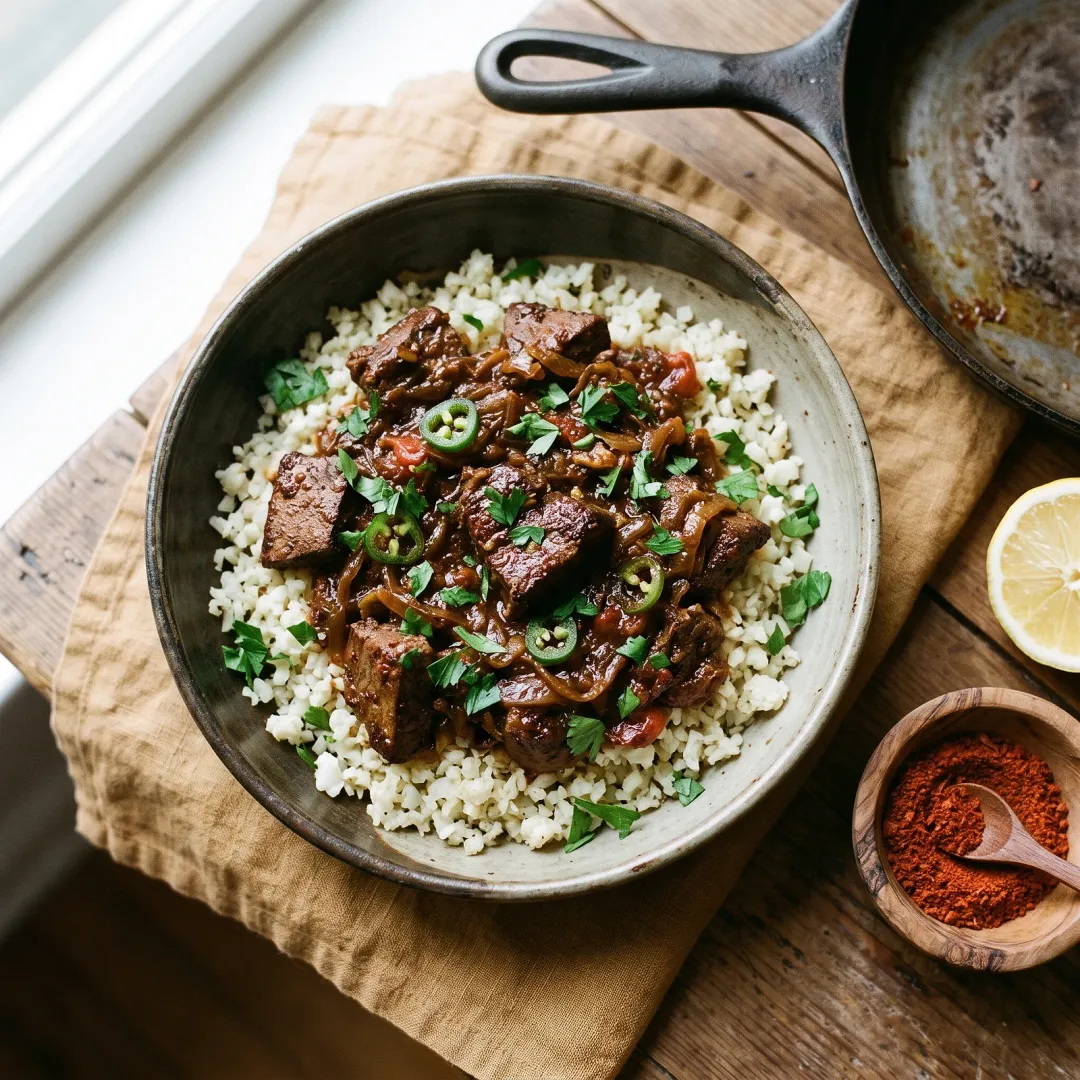

Beef liver in Ethiopia is not a sad diet food. It is celebration food. It is the thing you serve to honored guests, the cut that shows up at feasts because the people who have been eating this way for centuries knew exactly what they were doing. Ethiopian tibs is a sauté-style dish, high heat, bold spice, fast cook, and it is absolutely one of the best vehicles for organ meat that exists on this planet. The berbere does heavy lifting on the flavor side, so if you have been nervous about cooking liver, this recipe has your back. The combination of liver and heart gives you two different textures and two different nutrient profiles in one bowl. The liver is rich and almost creamy when it is not overcooked. The heart is firmer, closer to a lean steak in bite. Together with the spiced onion and tomato base and a pile of cauliflower rice underneath, this is a full, satisfying lunch that is not going to leave you face-down on your desk at 2 p.m.
Nutritional Benefits
Beef Liver: One of the Most Nutrient-Dense Foods on Earth
- Beef liver is among the highest dietary sources of vitamin B12, with a single 3-ounce serving providing well over the daily recommended intake according to the USDA FoodData Central database.
- It is also one of the richest food sources of preformed vitamin A (retinol), heme iron, copper, folate, and choline, nutrients that are difficult to get in comparable amounts from muscle meat alone.
- Choline, found in high concentrations in liver, is linked to healthy liver function and cognitive support, according to the National Institutes of Health Office of Dietary Supplements.
- Heme iron from animal sources like liver is absorbed significantly more efficiently by the body than non-heme iron from plant sources, per research published in the American Journal of Clinical Nutrition.
Beef Heart: Lean Protein with a CoQ10 Bonus
- Beef heart is a muscle meat, so it has a mild flavor compared to liver, but it carries a nutrient punch all its own. It is an excellent source of lean protein and B vitamins.
- Heart is one of the most concentrated food sources of Coenzyme Q10 (CoQ10), a compound involved in cellular energy production, as noted by the Linus Pauling Institute at Oregon State University.
- It also provides zinc and selenium, two minerals that support immune function according to the NIH Office of Dietary Supplements.
Berbere Spice: More Than Just Flavor
- Berbere is a complex Ethiopian spice blend that typically includes chili peppers, fenugreek, ginger, coriander, and other spices. Many of its components have been studied for their bioactive compounds.
- Ginger, a core component of many berbere blends, has been studied for its potential role in supporting digestive comfort, according to a review published in the journal Foods (2019).
- Turmeric, often included in berbere or added alongside it, contains curcumin, which has been studied extensively. Research published in the journal Nutrients notes its potential antioxidant properties.
Cauliflower Rice: A Grain-Free Base That Earns Its Place
- Cauliflower rice keeps this bowl grain-free and low in net carbohydrates while adding fiber, vitamin C, and vitamin K.
- Cruciferous vegetables like cauliflower contain glucosinolates, compounds that have been researched for their role in supporting the body's natural detoxification pathways, per the National Cancer Institute.
- Using it as a base instead of injera or white rice means this bowl works for people eating grain-free or gluten-free without sacrificing volume or satisfaction.
FAQs
My liver always turns out rubbery and bitter. What am I doing wrong?
Almost always it is two things: wet liver and too much time in the pan. Dry your liver pieces completely before they hit the heat, and pull them off the second they are just cooked through. Overcooked liver is the reason most people think they hate liver. A 60-second sear per side in a screaming hot pan is genuinely all it needs. Also, sourcing matters. Grass-fed beef liver has a milder flavor than conventional.
Where do I find beef heart? My regular grocery store does not carry it.
Most standard grocery stores do not stock it, but a local butcher shop, a farmers market with a grass-fed beef vendor, or an online grass-fed meat retailer will have it. Ethnic grocery stores that serve Latin American, African, or Eastern European communities often carry organ meats as a regular part of their inventory. Call ahead and ask.
Can I make this with just liver or just heart, not both?
Absolutely. The recipe works beautifully with either one on its own. If you are using only liver, reduce your total protein to about 12 ounces and keep the same cook time. If you are using only heart, you can give it a few extra minutes since it is more forgiving than liver and can handle a slightly longer cook without getting rubbery.
What is berbere and where do I buy it?
Berbere is a foundational Ethiopian spice blend. The flavor is warm, earthy, and has a slow-building heat. You can find it at specialty spice shops, Ethiopian grocery stores, or online. If you buy a pre-made blend, check the label for added sugar, cornstarch, or other fillers that would make it non-paleo. Many clean versions exist, or you can blend your own at home using dried chilies, fenugreek, coriander, allspice, ginger, and black pepper.
Is this recipe Whole30 compliant?
It can be, but you need to verify your berbere spice blend has no added sugar or non-compliant additives. The rest of the ingredients are Whole30 friendly. Ghee is permitted on Whole30. Make sure the cauliflower rice has no added oils or ingredients if you buy it pre-made.
How do I store leftovers?
Store the tibs and the cauliflower rice separately in airtight containers in the refrigerator for up to 2 days. Reheat the tibs quickly in a hot skillet, just 1 to 2 minutes, to warm through without cooking it further. Organ meat does not benefit from a long reheat.
If this is your first time cooking organ meat, I genuinely want you to come back and tell me how it went. And if you are already an offal convert, you know exactly what I mean when I say this lunch hits different. Save the recipe, share it with the person in your life who keeps saying they want to eat more nose-to-tail but does not know where to start. This is a great place to start.
Ethiopian Spiced Beef Liver and Heart Tibs Lunch Bowl
A deeply spiced, sear-finished Ethiopian tibs made with beef liver and heart, cooked in a fragrant berbere and niter kibbeh-style ghee sauce, served over cauliflower rice with fresh tomato and jalapeño. Bold, nutrient-dense, and 100% paleo.
Ingredients
- 8 oz beef liver, cleaned and cut into 1-inch pieces
- 6 oz beef heart, trimmed of fat and connective tissue, cut into 1-inch pieces
- 2 tablespoons ghee, divided
- 1 medium red onion, thinly sliced
- 4 garlic cloves, minced
- 1 teaspoon fresh ginger, grated
- 1.5 teaspoons berbere spice blend (store-bought or homemade, check label for paleo compliance, no fillers or sugar)
- 1/2 teaspoon ground cumin
- 1/2 teaspoon ground coriander
- 1/4 teaspoon ground turmeric
- 1/4 teaspoon ground black pepper
- 1/2 teaspoon fine sea salt, plus more to taste
- 1 medium Roma tomato, chopped
- 1 jalapeño, thinly sliced (seeds in for heat, out for mild)
- 1 tablespoon fresh lemon juice
- 2 tablespoons fresh flat-leaf parsley or cilantro, roughly chopped
- 3 cups cauliflower rice (fresh or thawed from frozen)
- 1 teaspoon ghee (for cauliflower rice)
- Salt to taste for cauliflower rice
Instructions
- Prep the offal: Pat the beef liver and beef heart pieces completely dry with paper towels. This is non-negotiable for a good sear. Set aside separately on a plate.
- Make the spice mix: In a small bowl, combine the berbere, cumin, coriander, turmeric, black pepper, and salt. Toss the liver and heart pieces together with the spice mix until evenly coated. Set aside for 10 minutes while you prep everything else.
- Cook the cauliflower rice: Heat 1 teaspoon ghee in a medium skillet over medium-high heat. Add the cauliflower rice, season with salt, and stir-fry for 4 to 5 minutes until tender with a little color. Remove from heat, cover loosely, and keep warm.
- Sear the heart first: Heat 1 tablespoon ghee in a large cast iron skillet or heavy pan over high heat until shimmering. Add the beef heart pieces in a single layer. Sear without moving them for 90 seconds, then flip and sear another 60 to 90 seconds. The heart needs a little more time than the liver. Remove the heart to a plate and tent with foil.
- Sear the liver: In the same hot pan, add the remaining tablespoon of ghee. Add the liver pieces in a single layer. Sear 60 seconds per side. Liver goes from perfect to chalky fast, so watch it closely. Remove to the plate with the heart.
- Build the sauce: Lower the heat to medium. Add the sliced red onion to the pan and cook for 3 to 4 minutes, scraping up any browned bits. Add the garlic and ginger and cook another 60 seconds until fragrant.
- Bring it together: Add the chopped tomato and jalapeño to the pan. Stir and cook 2 minutes until the tomato softens slightly. Return the seared liver and heart to the pan. Toss everything together gently and cook just 1 to 2 more minutes to heat through and let the flavors marry. Do not overcook.
- Finish and serve: Remove from heat. Squeeze the lemon juice over the top and toss. Taste and adjust salt. Divide the warm cauliflower rice between two bowls, top generously with the tibs mixture, and scatter fresh parsley or cilantro over each bowl. Serve immediately.
Nutrition per serving
- Calories: 420
- Total Fat: 22g
- Carbohydrates: 18g
- Protein: 38g
- Dietary Fiber: 6g
- Sugar: 5g
 That Paleo Chick
Real food that heals
RecipePaleoLunchGluten-Free

Fits these needs
Checked ingredient by ingredient. Tap one to see every recipe that fits.
Ingredients
Instructions
Nutrition Facts Amount per serving
Estimated from the ingredients. Values vary with brands and portions.



Join the conversation
Made it? Tell us how it went.
Free members can comment, reply and like. It takes ten seconds.