
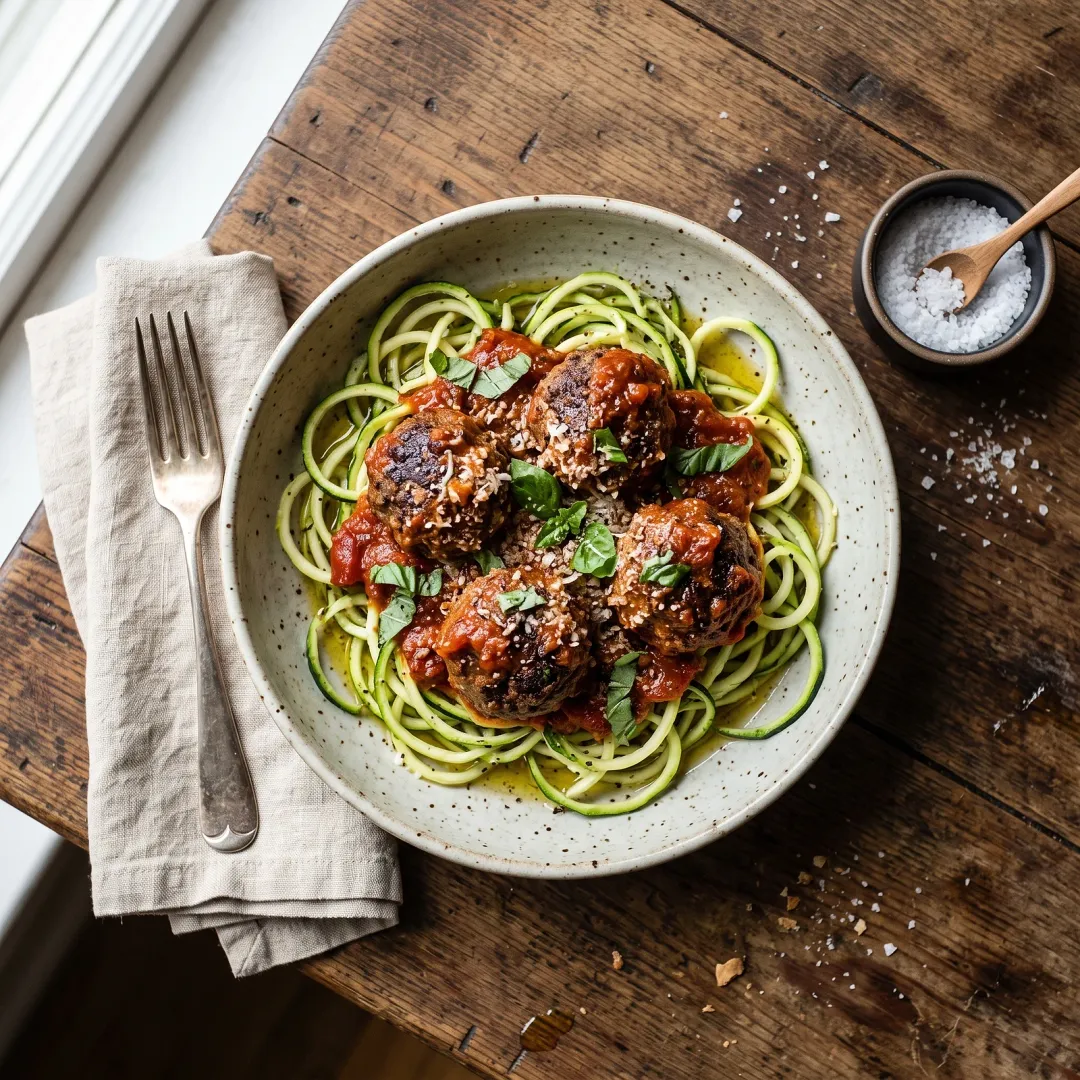

Bison doesn't get nearly enough credit in the Italian food world, and that honestly annoys me. Ground bison is leaner than beef, richer in flavor, and it takes herbs and tomato like it was born for them. These meatballs are everything: herb-forward, a little fennel-kissed, seared until they have that gorgeous crust, and then finished low and slow right in the marinara so every bit of flavor goes back into the sauce. Over a pile of barely-cooked zucchini noodles with torn basil and a glug of olive oil on top, this is a lunch I would sit down for every single week. No pasta required, no compromise needed.
Nutritional Benefits
Why Bison Is Worth the Swap
- Bison is naturally leaner than conventional ground beef. The USDA reports that a 3-ounce serving of cooked ground bison contains approximately 152 calories and 22 grams of protein compared to roughly 218 calories in a comparable serving of 85% lean ground beef.
- Bison raised on pasture is a source of heme iron, zinc, and B12, all of which are critical for energy metabolism, according to data published by the USDA FoodData Central database.
- Because bison are rarely given growth hormones or antibiotics (and the USDA prohibits hormone use in bison sold in the U.S.), it is a cleaner animal protein option for people mindful of what goes into their food.
Zucchini Noodles as a Grain-Free Base
- Zucchini is very low in carbohydrates, with about 3.1 grams of net carbs per cup according to the USDA, making it a genuinely useful base for anyone eating grain-free or reducing overall carbohydrate load.
- Zucchini provides potassium and small amounts of vitamin C and folate, all of which support general cellular function as noted by the National Institutes of Health Office of Dietary Supplements.
- Unlike starchy pasta alternatives, zucchini noodles do not spike blood sugar the way refined grains can, which research published in the American Journal of Clinical Nutrition has consistently linked to better overall metabolic responses.
San Marzano Tomatoes and Olive Oil
- Tomatoes are a primary dietary source of lycopene, a carotenoid that research published in the journal Nutrients suggests may play a role in supporting cardiovascular health, with cooked tomatoes offering higher bioavailability than raw.
- Extra-virgin olive oil is rich in oleic acid and polyphenols. A substantial body of research, including large studies reviewed by the Harvard T.H. Chan School of Public Health, links regular EVOO consumption to markers of heart and metabolic health.
- Combining tomatoes with a fat source like olive oil may further enhance lycopene absorption, as lycopene is fat-soluble, per research in the British Journal of Nutrition.
FAQs
Can I use ground beef instead of bison?
Absolutely. This recipe works well with 85% or 90% lean ground beef. The flavor will be slightly richer and fattier, but the technique and seasoning are the same. Bison is the star here, but beef is a solid backup.
Is bison paleo?
Yes, 100%. Ground bison is a whole, unprocessed animal protein and fits squarely within a paleo eating pattern. It is one of the cleanest proteins you can buy, especially when sourced from grass-fed animals.
Can I make these meatballs ahead of time?
Yes, and they actually get better as they sit in the sauce. Make the full recipe, cool completely, and store in an airtight container in the fridge for up to 4 days. Reheat gently on the stovetop over medium-low heat. Prep the zucchini noodles fresh when you are ready to serve.
My zucchini noodles are watery. What went wrong?
Zucchini is mostly water and will release a lot of it when heat hits. The salt-and-squeeze step in the instructions handles most of that, but do not skip it, and do not cook the zucchini noodles longer than 2 minutes. They should still be slightly firm when they hit the bowl because the hot sauce will continue to soften them.
Is this recipe Whole30 compliant?
Almost everything here is Whole30 compliant as written. The one ingredient to flag is the coconut sugar in the marinara. For a strict Whole30, simply leave it out or swap in a couple of fresh pitted dates blended into the sauce for natural sweetness without added sugar.
Where do I find ground bison?
Many well-stocked grocery stores carry it now, especially stores like Whole Foods or Sprouts. You can also order directly from online grass-fed meat suppliers. It is worth looking for grass-fed and pasture-raised on the label.
If you made this, I want to see it. Tag me on Instagram so I can cheer you on. And if you are new around here and this is your first time cooking bison, welcome to the good side. Drop a comment below and tell me how it went.
Italian Bison Meatball Lunch Bowl with Zucchini Noodles and San Marzano Marinara
Tender, herb-packed bison meatballs simmered in a rich San Marzano marinara, served over spiralized zucchini noodles and finished with fresh basil and a drizzle of good olive oil. Strictly paleo, deeply satisfying, and way better than anything from a jar.
Ingredients
- 1 1/2 lbs ground bison
- 1/4 cup almond flour (blanched, fine-ground)
- 1 large egg
- 3 garlic cloves, minced (divided)
- 2 tablespoons fresh flat-leaf parsley, finely chopped
- 1 teaspoon dried Italian seasoning
- 1 teaspoon fennel seeds, lightly crushed
- 1/2 teaspoon red pepper flakes
- 3/4 teaspoon fine sea salt (divided)
- 1/2 teaspoon black pepper (divided)
- 2 tablespoons extra-virgin olive oil (divided), plus more for drizzling
- 1 small yellow onion, finely diced
- 1 can (28 oz) whole San Marzano tomatoes, crushed by hand
- 1 tablespoon tomato paste
- 1 teaspoon dried oregano
- 1 teaspoon coconut sugar
- 4 medium zucchini, spiralized into noodles
- 1/4 cup fresh basil leaves, torn, for serving
- Flaky sea salt, for finishing
Instructions
- Make the meatball mixture: In a large bowl combine the ground bison, almond flour, egg, half the minced garlic (about 1.5 cloves), parsley, Italian seasoning, crushed fennel seeds, red pepper flakes, 1/2 teaspoon sea salt, and 1/4 teaspoon black pepper. Mix with your hands until just combined. Do not overwork it or the meatballs will be dense. Roll into 16 equal balls, roughly 1.5 inches each.
- Sear the meatballs: Heat 1 tablespoon of olive oil in a large, heavy skillet (cast iron works great here) over medium-high heat. Add the meatballs in a single layer and sear without moving for 2 to 3 minutes per side, turning to brown on at least 3 sides. They do not need to be cooked through at this point. Transfer to a plate and set aside.
- Build the marinara: Reduce heat to medium. Add the remaining 1 tablespoon of olive oil to the same skillet. Add the diced onion and cook, stirring occasionally, for 4 to 5 minutes until softened and translucent. Add the remaining garlic and cook for 1 minute more until fragrant.
- Add the tomatoes: Stir in the tomato paste and cook for 1 minute, letting it darken slightly. Pour in the crushed San Marzano tomatoes with all their juices. Add the dried oregano, coconut sugar, remaining 1/4 teaspoon sea salt, and remaining 1/4 teaspoon black pepper. Stir to combine.
- Finish the meatballs in the sauce: Nestle the seared meatballs back into the skillet, spooning sauce over the tops. Reduce heat to medium-low, partially cover, and simmer for 10 to 12 minutes until the meatballs are cooked through (internal temperature of 160 degrees F) and the sauce has thickened slightly.
- Prep the zucchini noodles: While the meatballs finish, place the spiralized zucchini noodles in a large colander. Sprinkle lightly with salt and let sit for 5 minutes to draw out some moisture, then gently squeeze with a clean kitchen towel. This keeps them from making your bowl watery.
- Warm the zucchini: In a separate skillet over medium-high heat, add a small drizzle of olive oil and toss the zucchini noodles for 1 to 2 minutes just until barely tender. They should still have some bite. Do not overcook.
- Assemble the bowls: Divide the zucchini noodles among four bowls. Ladle the marinara sauce generously over the top, then add 4 meatballs per bowl. Finish with torn fresh basil, a drizzle of good olive oil, and a pinch of flaky sea salt. Serve immediately.
Nutrition per serving
- Calories: 420
- Total Fat: 24g
- Carbohydrates: 18g
- Protein: 34g
- Dietary Fiber: 4g
- Sugar: 9g
 That Paleo Chick
Real food that heals
That Paleo Chick
Real food that heals
RecipePaleoLunchGluten-Free

Fits these needs
Checked ingredient by ingredient. Tap one to see every recipe that fits.
Ingredients
Instructions
Nutrition Facts Amount per serving
Estimated from the ingredients. Values vary with brands and portions.


Join the conversation
Made it? Tell us how it went.
Free members can comment, reply and like. It takes ten seconds.