

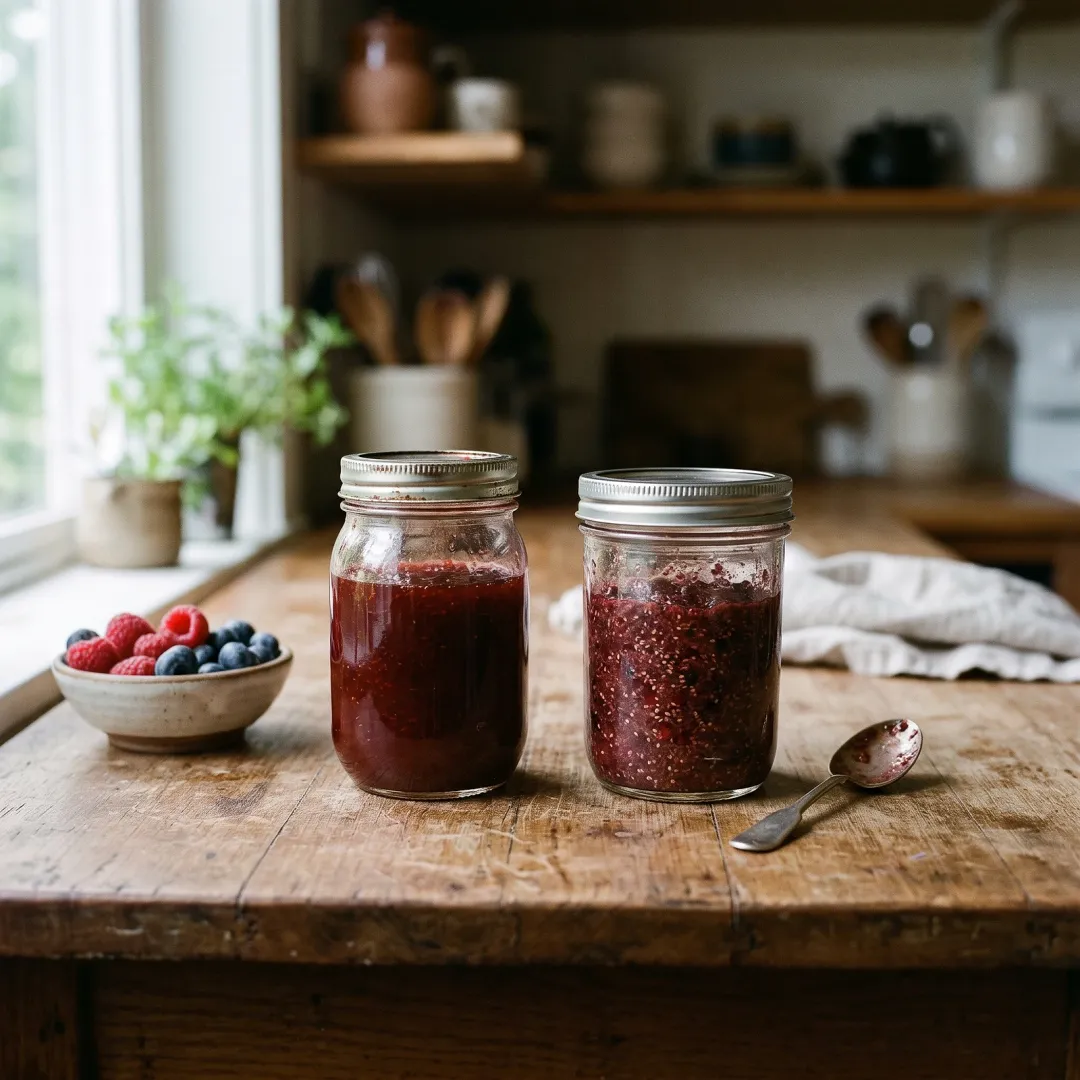

Most jars of store-bought jam have more in common with candy than with fruit. A standard two-tablespoon serving of a leading strawberry preserve packs around 10 to 12 grams of added sugar, and the sweetener is usually right there in the first three ingredients. That is not a preserve. That is a dessert spread pretending to be breakfast food. The swap is easier than you think, and you do not have to go full homesteader to make it worth doing.
What Is Actually in That Jar
Conventional jam is mostly sugar, a little fruit, and a gelling agent like pectin. The USDA food composition database lists strawberry jam at roughly 49 grams of sugar per 100 grams of product. That means nearly half the jar, by weight, is sugar. Most of it is added. The fruit flavor is real, sure, but the fiber and polyphenols that made the original berry worth eating have largely been cooked down and crowded out. A 2019 review in Nutrients found that berry polyphenols are sensitive to high-heat processing, which is exactly what commercial jam production involves. You are buying fruit-flavored sweetness, not the berry itself.
The Swap: Quick Chia Berry Spread
Chia seeds gel in liquid. That is the whole trick. Mash or warm some berries, stir in a tablespoon of chia seeds per half cup of fruit, let it sit for ten to fifteen minutes, and you have something that looks and spreads like jam. No pectin, no boiling, no canning. Chia seeds are a solid source of fiber and omega-3 fatty acids, and according to a 2017 review in the Journal of Food Science and Technology, they absorb up to twelve times their weight in water, which is what creates that familiar jam-like texture without any added gelling agents or refined sugar. The berries bring their own natural sweetness. A little raw honey or a couple of dates can fill the gap if you need more.
Good: The Shelf-Stable Upgrade
Still buying jam at the grocery store? Start here. Look for a jar where the first ingredient is actual fruit, the sugar is third or lower on the list, and the total added sugars per serving land under 5 grams. Brands using fruit juice as the only sweetener exist and are reasonably easy to find now. This is not a perfect swap. The processing is still there, the fiber is still reduced, and the cost per ounce is often higher than conventional jam. But if your current jar has high-fructose corn syrup or artificial pectin as core ingredients, trading it for a better-sourced fruit-first preserve is a real step forward. You are not eliminating the problem, but you are shrinking it. A small step counts.
Better: The No-Cook Freezer Spread
Frozen berries, chia seeds, and a small amount of sweetener if you want it. Thaw a cup of frozen berries (strawberries, blueberries, mixed, whatever you have), mash them with a fork, stir in one and a half tablespoons of chia seeds, sweeten with a drizzle of raw honey if the berries are tart, and refrigerate. Done. The whole thing takes under five minutes of hands-on effort. It keeps in the fridge for about a week. Frozen berries are picked at peak ripeness and frozen quickly, which research published in the Journal of Agricultural and Food Chemistry found can preserve antioxidant content comparably to fresh. The cost is lower than buying fresh berries year-round. The texture is softer and a little less shiny than jam, and the seeds are visible. If that bothers you, blend it smooth. If it does not bother you, do not. This one is genuinely practical for most people most weeks.
Best: The Fresh Berry Version (When It Makes Sense)
Peak berry season, farmers market or your own yard, fresh fruit at its most flavorful. Warm a cup of fresh berries in a small saucepan over low heat for five minutes, just enough to soften and release the juice. Mash, stir in one and a half tablespoons of chia seeds, add a little raw honey or pure maple syrup only if the fruit needs it, pull it off the heat, and cool. The flavor is noticeably brighter than the frozen version. This is also the best version for pairing with savory food, which sounds odd but works. A lamb burger with a smear of fresh blackberry chia spread on the inside of the bun is something worth trying at least once. The fruit cuts the richness of the meat, and no, it does not taste like a dessert. This version costs the most and lasts the least, maybe five days refrigerated, so it makes sense to make it small and make it fresh when berries are actually good. Off-season, stick with frozen.
When the Swap Is Not Worth It
If you use jam once a month on a slice of sourdough and you are otherwise eating real food, spending mental energy on this swap is probably not the highest-value use of your attention. The upgrade ladder matters most for people who reach for the jar daily, spread it on kids' lunches five times a week, or use it as a regular ingredient in sauces and dressings. Daily exposure to 10-plus grams of added sugar from a single condiment adds up across a year. An occasional spoonful of a nice, fruit-forward preserve is not a crisis. Context matters.
Key Takeaways
- Most store-bought jam is nearly half sugar by weight, with the fiber and polyphenols of the original fruit largely processed out.
- Chia seeds gel in fruit liquid without boiling or added pectin, creating a spreadable texture in about 15 minutes.
- Good swap: choose a store-bought jar where whole fruit is the first ingredient and added sugar is under 5 grams per serving.
- Better swap: mash thawed frozen berries with chia seeds for a no-cook fridge spread that keeps a week.
- Best swap: briefly warm fresh peak-season berries, stir in chia seeds, and use within 5 days.
- If jam is a rare treat in an otherwise real-food diet, this swap is low priority. If it is a daily habit, the upgrade is worth the 5 minutes.
Frequently Asked Questions
How long does homemade chia berry spread last in the fridge?
A chia berry spread made with frozen or fresh berries typically keeps well in a sealed glass jar in the refrigerator for up to 5 to 7 days. The fresh berry version is best used within 5 days. Always use a clean spoon to extend shelf life, and check for any off smell before using.
Can I use any berries to make a chia seed jam?
Yes. Strawberries, blueberries, raspberries, blackberries, and mixed berry blends all work well. Berries with more natural pectin, like raspberries, tend to gel a bit more firmly. Blueberries give a deeper color and a milder flavor. Fresh or frozen both work; frozen is often more affordable and practical year-round.
How much chia seeds do I need to replace the pectin in jam?
A general starting ratio is about 1 to 1.5 tablespoons of chia seeds per half cup of mashed fruit. If you want a thicker spread, add a bit more. If you prefer a looser, saucier texture, start with 1 tablespoon and adjust after it sits for 15 minutes. The spread continues to thicken as it chills.
Is a chia berry spread paleo?
Yes, a basic chia berry spread made with fresh or frozen berries and chia seeds is paleo-friendly. If you sweeten it, raw honey or pure maple syrup are the most common paleo-compatible options. Skip refined white sugar and corn syrup-based sweeteners.
Sources
- USDA FoodData Central: Strawberry Jam, Nutrient Data
- Nutrients (MDPI): Berry Polyphenols and Human Health: Evidence of Digestibility and Mechanisms of Action
- Journal of Food Science and Technology: Nutritional and therapeutic potential of chia seeds (Salvia hispanica): A review
- Journal of Agricultural and Food Chemistry (ACS Publications): Effect of Freezing on Polyphenol and Antioxidant Content of Fruit
This article is for general informational purposes only and is not medical advice. Always consult a qualified healthcare professional before making changes to your diet or health routine.


Join the conversation
What do you think?
Free members can comment, reply and like. It takes ten seconds.