

You have tried the hard resets. The ones where you cut out everything and white-knuckle your way through two weeks. And maybe they worked, for a minute. But then life happened, and the plan you were on had no place in actual life, so you drifted back to where you started.
What if the healthiest way to eat on the planet also happened to be the most livable one?
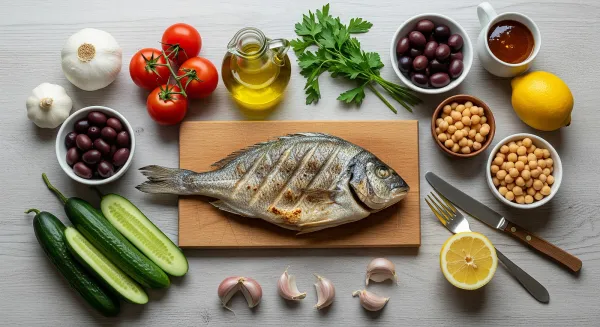
The 21-Day Mediterranean Reset is exactly what it sounds like. Three weeks eating the way people in the most food-studied regions of the world have eaten for generations: real olive oil, plenty of fish, vegetables at almost every meal, fresh herbs, and food that is actually allowed to taste good. No points. No meal replacements. No sad desk lunches.
This is the least restrictive program I offer. I mean that. The goal is not to shock your system, it is to shift it. Twenty-one days is long enough to break old patterns and start noticing what actually makes you feel good. And this particular way of eating is designed to keep going well after the program ends.
Here is what you get inside:
- The full 21-day protocol with clear daily guidance
- The paired Mediterranean meal plan to take the guesswork out completely
- Six daily trackers: Energy, Mood, Sleep, Digestion, Mental clarity, and Hunger between meals
By the end of three weeks, you will have a real read on how your body responds to eating this way. And a very good chance you will just want to keep doing it.
Why 21 days of olive oil, fish, and vegetables
Three weeks is not an arbitrary number. It is long enough to move past the first few days of adjustment, long enough to build a real rhythm with new foods and habits, and short enough that it does not feel like a life sentence. Most people do not start noticing the good stuff until somewhere around day seven or eight. That means a one-week reset would have you quitting right before the payoff. Twenty-one days gets you there and then gives you another week to actually enjoy it.
This is also not a program designed to be done and discarded. The Mediterranean way of eating is not a temporary fix. It is a pattern. By the end of week three, the goal is that some version of this has started to feel normal to you.
What fills your plate and what quietly steps back
Let me be straight with you: this is not an elimination diet in the traditional sense. You are not cutting out entire food groups. You are crowding out the stuff that tends to work against you by filling your plate with food that genuinely serves you.
What you are eating, generously:
- Extra-virgin olive oil, used freely for cooking, dressing, and finishing
- Fish and seafood, aiming for several times a week
- Vegetables at breakfast, lunch, and dinner. Yes, breakfast too.
- Legumes like lentils, chickpeas, and white beans
- Fresh and dried herbs, citrus, garlic, and good spices
- Whole grains in reasonable amounts: farro, brown rice, whole grain sourdough
- Nuts, seeds, and olives as everyday snacks
- Eggs and modest amounts of good quality poultry
- Fresh fruit, especially as your default dessert
- Water, herbal tea, and if you drink coffee, you keep your coffee
What you are setting aside for these 21 days:
- Processed seed and vegetable oils (canola, soybean, corn, sunflower): olive oil is your fat now
- Added sugar in packaged foods, sodas, and sweetened drinks
- Ultra-processed snack foods, fast food, and anything that comes out of a crinkly bag with twenty ingredients
- Red meat is not forbidden, but it steps back to a supporting role rather than the main event
- Alcohol: set it aside for the 21 days. It muddies your data and this program is about clarity.
That is it. This is the protocol. I told you it was the least restrictive one I have.
The paired Mediterranean meal plan maps this out day by day with real recipes, a shopping list, and meal prep guidance so you are not standing in the kitchen at 6pm wondering what the plan is. Use it. It removes about ninety percent of the friction.
Week by week with olive oil, fish, and herbs
Week one is about getting organized. You are learning where things are, figuring out what to keep stocked, and adjusting to cooking with olive oil as your default. Some people feel great immediately. Some people miss their usual food and feel a little flat. Both are normal.
Week two is usually where things shift. Sleep often gets more consistent. Energy tends to level out instead of spiking and crashing. A lot of people notice they are less hungry between meals than they expected to be. This is the week to pay attention. Write things down. Your tracker is there for a reason.
Week three is about settling in. By now the recipes feel familiar, the grocery run is easier, and you have probably found three or four meals you genuinely like. This week is where people start thinking, I could just keep eating this way. That is the whole point.
How to use day 21 as a real reference point
There is no reintroduction ladder here. This program does not have one, and it does not need one. The Mediterranean pattern is meant to be sustained, not peeled back or tested like an elimination protocol. When day 21 is done, you review your trackers, look honestly at how you felt across the three weeks, and decide what you want to carry forward.
For most people, the answer is: most of it. You might bring alcohol back in moderation if that is part of your social life. You might decide you feel good enough eating this way that you just keep it as your default. You might loosen up a little on the weekends and hold tighter during the week. All of that is reasonable.
What I would encourage you not to do is throw out everything you learned because the program officially ended. Look at your data. Something in those 21 days worked for you. Build from that.
Rating six markers every day across 21 days
Every day you rate six things: Energy, Mood, Sleep, Digestion, Mental clarity, and Hunger between meals. Each one gets a simple score. Takes about thirty seconds.
Here is why memory is not good enough. On day 21, if someone asks how you feel, you will report how you feel right now. That is just how humans work. We are not wired to accurately average three weeks of data in our heads. The tracker captures the actual pattern: the dip in energy around day four, the sleep improvement in week two, the afternoon hunger that disappeared by week three. Without it, all of that gets lost.
The trackers also help you connect what you eat to how you feel. If digestion tanks on a particular day, you can look back at what you ate. If mental clarity is noticeably better on certain days, your data will show you why. This is your own personal n-of-one experiment, and the trackers are how you run it properly.
Olive oil fears, portion habits, and other common pitfalls
I have seen a few patterns come up again and again with this program, and I want to name them so you can sidestep them.
Not eating enough fat. This is the Mediterranean diet, not a low-fat diet. Pour the olive oil. Eat the olives. Add the avocado. Fat is not the problem here and skimping on it will leave you hungry and miserable.
Treating it like a calorie restriction plan. It is not. Eat until you are satisfied. The goal is to change the quality and pattern of what you eat, not to shrink your portions until you can barely function.
Skipping the vegetables at breakfast. I know it feels weird. Do it anyway. Throw a handful of greens into eggs. Add sliced tomato and cucumber to the side. Your body does not care that it is morning.
Going too long without a plan. The weeks where people drift are almost always the weeks they ran out of meal ideas and did not bother to restock. This is why the meal plan exists. Use it as your anchor, especially in week one.
Expecting to feel perfect immediately. Some people do. Most people have an adjustment period. Stick with it through day ten before you decide anything about how it is going.
Drinking alcohol and wondering why their sleep tracker looks terrible. I said set it aside. I meant it.
A conversation worth having first
This program is built for generally healthy adults who want to eat better and feel better. If you have a diagnosed health condition, are pregnant or nursing, or have any personal history with disordered eating, please talk with your doctor or a registered dietitian before starting. They know your full picture. I do not, and that matters.
What the evidence actually says
The Mediterranean pattern is the most heavily studied diet in the literature, with an update of its clinical trials covering cardiovascular and metabolic outcomes across multiple large randomized trials.
Cleveland Clinic describes the practical shape of it: olive oil as the main fat, fish and vegetables at the center, and meals built around plants rather than around a slab of protein.
These are the sources behind this program. They are worth reading yourself; none of them were written to sell you anything.
Sources
- Cleveland Clinic: Mediterranean Diet: Food List and Meal Plan
- PMC: The Mediterranean Diet: An Update of the Clinical Trials
- Harvard Health: Foods that fight inflammation
- Harvard T.H. Chan Nutrition Source: Omega-3 Fatty Acids: An Essential Contribution