


You did the hard thing. You lost the weight. And your doctor told you great job, come back in a year. But your body? Your immune cells? They didn't get that memo. A new study is showing something that functional-medicine practitioners have suspected for a long time: obesity leaves a molecular memory inside key immune cells, and that memory can stick around for five to ten years after the weight is gone. Let that land for a second.
What the Research Actually Found
A study published in August 2026 and covered by ScienceDaily found that obesity appears to leave a persistent molecular imprint on immune cells, specifically changes at the epigenetic level, meaning the way genes are expressed, not the genes themselves. These changes were observed to potentially persist for five to ten years after a person returns to a normal body weight.
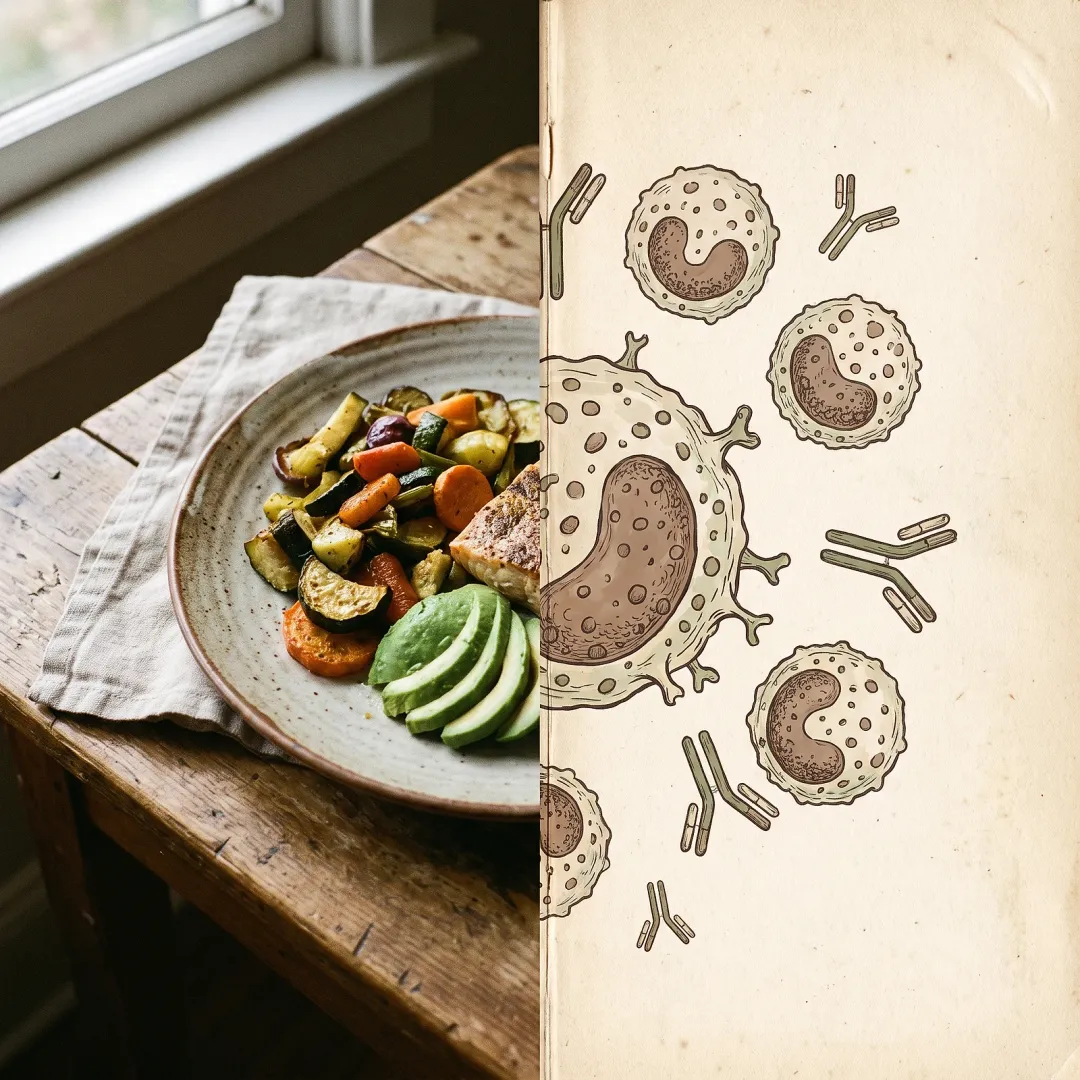
Researchers looked at macrophages, a type of immune cell that plays a central role in inflammation. What they found was that these cells, even in people who had already lost weight, still showed patterns more consistent with an obese metabolic state than a healthy one. The body normalized on the outside. The immune cells didn't catch up.
This is a big deal. Not because it's hopeless. It isn't. But because it completely blows up the conventional idea that losing weight fixes the underlying problem. For a lot of people, the "problem" has been remodeled at a cellular level, and nobody told them.
Why This Is Not a Willpower Story
I need to say this clearly because the diet industry and frankly a lot of mainstream medicine have spent decades turning chronic disease into a character-flaw conversation. You're overweight because you lack discipline. You got sick because you made bad choices. Just eat less, move more. You know the script.
This research doesn't fit that script at all.
Epigenetic changes in immune cells are not something you chose. They are the biological consequence of a prolonged inflammatory metabolic state, which, by the way, our food environment has been engineered to create. Ultra-processed food, seed oils, added sugar at every meal, the total obliteration of real whole food from the American diet, these aren't personal failures. They are systemic ones. And now we have science showing that the immune system carries the receipts for all of it, long after the scale looks better.
When I think about this through a faith lens, it actually makes a lot of sense to me. Our bodies were designed with a kind of precision and memory that we are still only beginning to understand. Nothing is wasted. Nothing is forgotten. Every input matters, which is both sobering and a good reason to start treating the body like the gift it actually is.
What "Immune Memory" Actually Means for Your Health
So what does it mean in practical terms if your macrophages are still behaving like they're living in an obese metabolic environment even though your weight is down?
Macrophages are central players in inflammation. They're the immune system's first responders. When they're in a chronically activated, pro-inflammatory state, that affects everything: how your body responds to infection, how it repairs tissue, how it manages blood sugar regulation, how it processes fat. A macrophage that is epigenetically primed for inflammation is going to see the world through that lens regardless of what the scale says.
This could help explain something that a lot of people in my community have experienced firsthand: you do everything right, you lose the weight, you feel better in some ways, but you still don't feel completely like yourself. Your labs are still a little off. You still carry more inflammation than you expect. You're still fatigued in ways that don't totally add up. Your doctor tells you everything looks fine. But something doesn't feel fine.
This research suggests there may be a biological reason for exactly that experience, and it deserves to be taken seriously instead of dismissed.
The System's Failure Here Is Worth Naming
Here's what frustrates me about where conventional medicine has landed on obesity and metabolic health. The conversation almost always starts and ends at weight. BMI. The number. Lose weight and the problem is solved. That's the whole framework.
But a functional-medicine lens has always asked: what is driving the weight in the first place? And what else is happening downstream? Root cause. Not symptom management, root cause.
The truth is that chronic inflammation, driven by the food we were told was fine, the ultra-processed stuff, the refined carbohydrates, the industrial seed oils, doesn't just affect the waistline. It restructures how the immune system operates at a molecular level. And that restructuring doesn't resolve the moment you fit back into your old jeans.
I'm not saying this to scare you. I'm saying it because you deserve the full picture. Because if you know that healing takes longer than the scale reflects, you'll stop declaring victory too early and start thinking about what real, lasting recovery actually looks like.
What a Root-Cause Approach Actually Looks Like Here
From a functional-medicine coaching standpoint, this research reinforces something I keep coming back to with clients: real food is not just about weight management. It's about the ongoing information you are sending to your cells, including your immune cells.
Every meal is a message. And if you've had a long season of metabolic dysfunction, those cells need a long, consistent stream of a different message before they start responding differently. That's not discouraging. That's just biology being honest with you.
Here's what that looks like in practice:
Feed the immune system, not just the macro targets. Whole animal proteins, wild-caught fish rich in omega-3 fatty acids, colorful vegetables packed with polyphenols, good fats from real sources like pastured tallow, olive oil, and avocado. These are not weight-loss foods. They are immune-supportive foods that send anti-inflammatory signals at the cellular level.
Get serious about reducing processed food, not just calories. Ultra-processed food drives the kind of low-grade systemic inflammation that sets this whole cascade in motion. It is not about perfection. It's about reducing the noise so your immune cells get cleaner signals over time.
Prioritize sleep and stress regulation. Both have direct effects on macrophage behavior and epigenetic expression. I know sleep and stress feel like the unsexy answer, but the science on their role in immune regulation is rock solid.
Think in seasons, not weeks. If the research suggests this immune memory can persist for up to a decade, then you need a longer horizon than a 30-day reset. This is a sustained lifestyle, not a program.
Work with a practitioner who actually looks at inflammation markers. C-reactive protein, fasting insulin, homocysteine, these are the numbers that reflect what's happening at the cellular level. If your doctor is only tracking your weight and your basic lipid panel, push for more.
The Bigger Picture
I want to zoom out for a second, because this research doesn't exist in a vacuum.
We are living through an era of unprecedented chronic disease. Rates of obesity, autoimmune conditions, metabolic dysfunction, they have all exploded in the last 50 years in near-perfect parallel with the rise of ultra-processed food as the backbone of the American diet. And the official response has mostly been: here's a BMI chart, eat less fat, and take this medication.
The idea that cells carry a long-term metabolic memory is not new to functional medicine. Epigenetics has been pointing this direction for years. But mainstream medicine is catching up slowly, and in the meantime, millions of people are being told they're fine because their weight is down, while their immune systems are still running the old programming.
This is why I keep saying the food really does matter. Not for vanity. Not even primarily for the number on the scale. But because what you eat talks directly to your biology, at the level of gene expression, immune regulation, and cellular memory. And the system as it currently exists has very little financial incentive to tell you that, because real food doesn't have a patent.
I am not a doctor and I am not giving you medical advice. What I am giving you is a reason to take your food seriously for the long haul, not just until the jeans fit.
Key Takeaways
- New research suggests obesity may leave a molecular imprint on immune cells that can persist for five to ten years after weight loss, meaning the scale normalizing doesn't automatically mean the immune system has.
- Macrophages, central immune cells involved in inflammation, appear to carry epigenetic changes linked to a prior obese metabolic state, which may help explain why some inflammation-related health risks remain elevated after weight loss.
- This is a biology story, not a willpower story. Chronic inflammatory states driven by ultra-processed food restructure how immune cells operate at the molecular level.
- A root-cause, functional-medicine approach means feeding the immune system with real, whole food consistently over time, not just until the weight is gone.
- Key inflammation markers like C-reactive protein and fasting insulin may reflect what's actually happening inside your cells better than the number on the scale.
- Real, lasting recovery from metabolic dysfunction likely requires a long-term lifestyle commitment, not a short-term program, because cellular memory operates on a long timeline.
Frequently Asked Questions
Can your immune system recover from obesity after weight loss?
Research suggests it may take significantly longer than the weight loss itself. A 2026 study found that immune cells called macrophages may carry epigenetic changes linked to a prior obese metabolic state for five to ten years after weight normalizes. This doesn't mean recovery isn't possible, but it does suggest that sustained lifestyle habits, particularly anti-inflammatory real-food eating, matter long after the scale looks better. Always work with a qualified healthcare practitioner to assess your specific situation.
What is obesity memory in immune cells?
"Obesity memory" refers to persistent epigenetic changes in immune cells, particularly macrophages, that appear to remain even after a person loses weight and returns to a normal body weight. These changes affect how genes are expressed in those cells, potentially keeping them in a more pro-inflammatory state associated with obesity. It is an area of active research and not yet fully understood, but it may help explain why some obesity-related health risks remain elevated after weight loss.
What inflammation markers should I ask my doctor about?
From a functional-medicine coaching perspective, markers worth discussing with your doctor include high-sensitivity C-reactive protein (hsCRP), fasting insulin, homocysteine, and a full lipid panel that includes triglycerides and HDL. These can give a more complete picture of what's happening metabolically and immunologically than weight or BMI alone. This is not medical advice, consult your doctor or a qualified healthcare professional about what testing is appropriate for you.
Does losing weight fix chronic inflammation?
Weight loss can improve many inflammatory markers, and it is genuinely beneficial. But the new research on immune cell memory suggests that inflammation may not resolve as quickly or completely as the weight loss itself. From a root-cause perspective, the quality of the food you eat during and after weight loss matters a great deal, since real, whole foods send anti-inflammatory signals to your cells while ultra-processed foods continue to drive inflammatory pathways regardless of calorie count.
Sources
- ScienceDaily: Obesity leaves a lasting memory in immune cells
- ScienceDaily: Your waist size may reveal health risks BMI misses
This article is for general informational purposes only and is not medical advice. Always consult a qualified healthcare professional before making changes to your diet or health routine.

Join the conversation
What do you think?
Free members can comment, reply and like. It takes ten seconds.