


Most people start thinking about nutrition the minute they see a positive test. I get it. But by the time that little line shows up, the earliest, most foundational stages of development are already underway. The months before conception are not a waiting room. They are, arguably, the most important nutritional window of your entire reproductive life.
Why Preconception Nutrition Is a Separate Conversation
A question that comes up a lot: "Should I just start taking a prenatal vitamin and call it good?"
Honest answer: a prenatal vitamin is a safety net, not a foundation. It cannot compensate for a diet built on ultra-processed food, chronic stress, blood sugar swings, and nutrient depletion. What it can do is fill in specific gaps in an already decent diet, and some of those gaps matter enormously in the weeks before and just after fertilization.
Here is why the timing matters more than most conventional advice acknowledges. A baby's neural tube closes between 21 and 28 days after conception, according to the CDC. That is often before a woman even knows she is pregnant. The nutrients required for that closure, especially folate, need to already be in your system. You cannot retroactively top up in week six and expect the same outcome as someone who spent three months building stores.
Beyond folate, research published in the journal Nutrients makes the case that preconception dietary quality influences egg quality, sperm quality, implantation, and early embryonic development, all before a positive test. So no, it is not overkill to think carefully about food six months before you start trying. It is actually the smarter move.
"What Should I Actually Be Eating?"
This is the most common question, and I want to answer it without turning it into an overwhelming food pyramid. Real, whole food is the frame. That means:
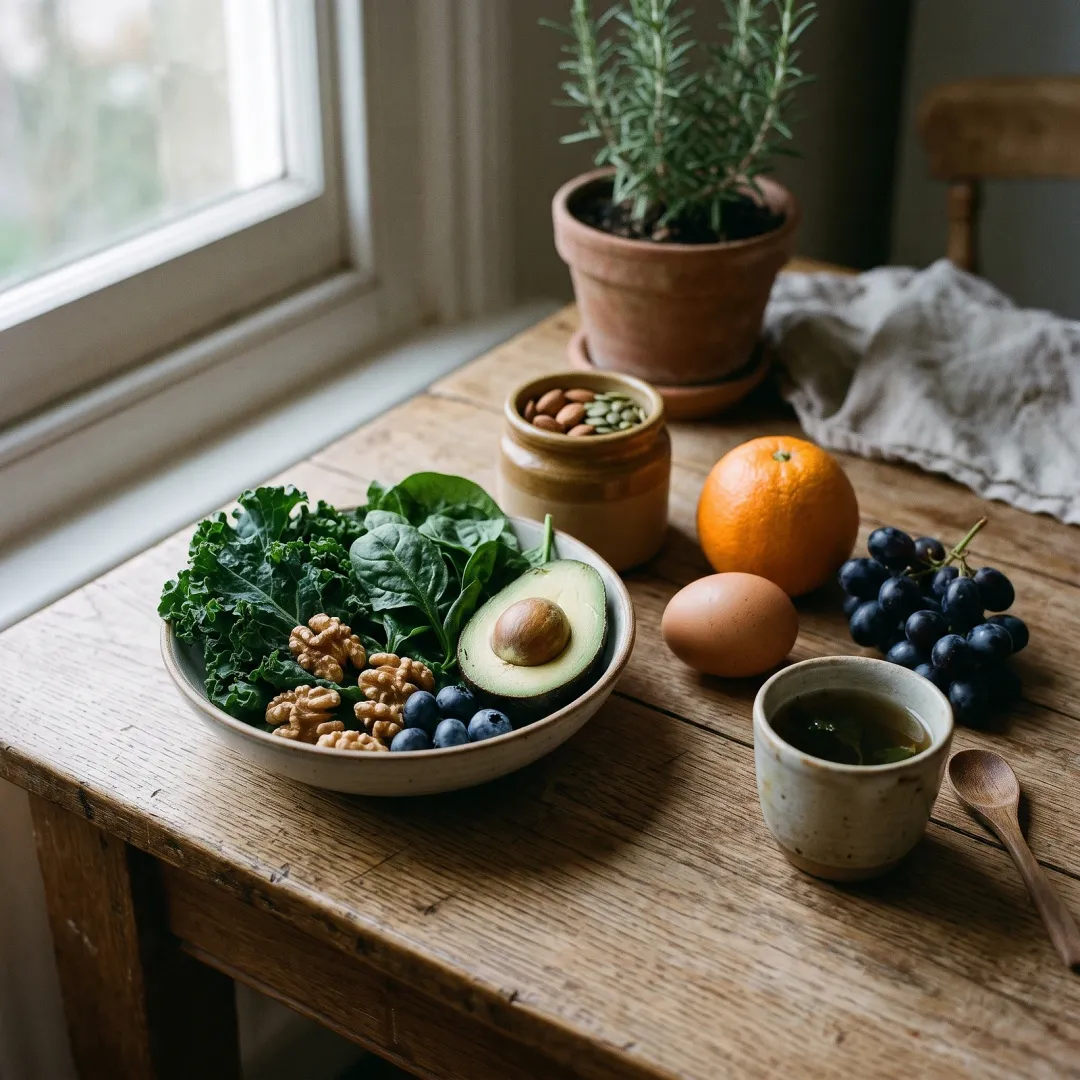
Quality protein at every meal. Protein provides the amino acids your body needs to build and repair tissue, regulate hormones, and support the cellular machinery of ovulation and fertilization. Eggs (yes, the whole egg, yolk included), quality red meat, organ meats if you can stomach them, and simple things like a well-sourced roasted chicken thigh over a pile of greens. The egg yolk in particular is a concentrated source of choline, a nutrient that is critically important for fetal brain development and one that most women of reproductive age are not getting enough of, according to research in the American Journal of Clinical Nutrition.
Colorful, varied vegetables and some fruit. Not in a "eat the rainbow" motivational-poster way. In a practical way: different plant foods provide different antioxidants, and oxidative stress is a real factor in egg and sperm quality. Dark leafy greens bring folate. Beets bring nitrates that support blood flow. Berries bring polyphenols. You do not need to overthink it; you just need variety and volume.
Healthy fats that your hormones actually use. Cholesterol is the raw material for steroid hormones, including estrogen and progesterone. Cutting fat, especially from real whole-food sources like avocado, coconut, pastured butter, or fatty cuts of meat, is one of the worst things you can do for your hormonal foundation heading into conception. This is not fringe opinion; a Harvard School of Public Health review notes that dietary fat quality is meaningfully connected to fertility outcomes.
Liver, once a week if you can. I know. I know. But chicken livers specifically are one of the most nutrient-dense foods on the planet, loaded with the active form of B12, preformed vitamin A (retinol), iron, folate, and copper. A small serving once a week does heavy lifting you cannot replicate with a supplement stack. If you truly cannot do it plain, blend it into ground meat or sauté it with onions and apple cider vinegar until the taste mellows.
"What Should I Cut Out, or At Least Cut Back?"
Another question that lands in my inbox regularly, and it deserves a straight answer.
Ultra-processed food. This one matters more than people realize, not just because of what is in processed food but because of what it crowds out. Every highly processed meal is a missed opportunity to give your body the building blocks it actually needs right now. A 2021 study in Human Reproduction found associations between higher ultra-processed food intake and lower fertility in women. That is not a reason to panic, but it is worth taking seriously.
Alcohol. The research on preconception alcohol is more sobering than most conversations acknowledge. There is no established safe level of alcohol consumption before or during early pregnancy, and the CDC recommends avoiding alcohol entirely if you are trying to conceive, since early pregnancy often goes undetected for several weeks. That is a personal call, but you deserve to know the actual guidance.
High-mercury fish. This one surprises people because fish is often framed as a fertility superfood. Some of it is. But certain high-mercury varieties, particularly shark, swordfish, king mackerel, and tilefish, accumulate methylmercury in ways that can affect a developing nervous system. The FDA guidance for those who are pregnant or trying to conceive recommends avoiding these while choosing lower-mercury options.
Refined sugar and refined seed oils. Not because they are evil in small amounts but because both drive systemic inflammation, and inflammation is not a friend to hormonal balance or egg quality. This is a place where the paleo framework is genuinely protective, not because it is trendy but because it naturally removes most of the modern food system's worst offenders.
"My Doctor Said Just Start a Prenatal. Is That Enough?"
Your doctor is not wrong. A prenatal vitamin is genuinely important, and I would never tell you to skip it. But "enough" depends on what you are comparing it to.
A prenatal covers the basics: folate (or ideally methylfolate, the active form, if you carry an MTHFR variant), iron, iodine, DHA, vitamin D. What it cannot do is replace the synergistic nutrition that comes from real food, the fiber, the cofactors, the form of nutrients that your body recognizes and uses most efficiently.
One thing worth flagging: if your prenatal contains folic acid rather than methylfolate, and you have not been tested for the MTHFR gene variant, that is a conversation worth having with your provider. A meaningful portion of the population has reduced ability to convert synthetic folic acid into the active form the body uses. Methylfolate bypasses that conversion step entirely. This is general information, not a prescription. Talk to your doctor about which form is right for you.
A few things your prenatal almost certainly does not cover in meaningful amounts: choline, magnesium in a bioavailable form, vitamin K2, and collagen-supportive nutrients. Food fills those gaps better than supplements do.
"How Far in Advance Should I Start?"
Three months is the number you will see most often, and it is a reasonable minimum. The logic is rooted in biology: it takes roughly 90 days for an egg to mature (a process called folliculogenesis) and a similar timeframe for sperm to complete their development cycle. What you eat today is literally building the cells that will be involved in conception three months from now.
If you have been on hormonal birth control for a significant period, if your cycle is irregular, if you have a history of digestive issues that might affect nutrient absorption, or if you have not had a full blood panel run in a while, starting earlier and getting a functional look at your labs is worth it. Nutrient deficiencies like low iron, low vitamin D, or low B12 take time to correct through food and supplementation. You want to start that process with enough runway.
Six months is not excessive. A year is not obsessive. The body God gave you is worth stewarding well before you are asked to grow another one inside it.
"What About My Partner?"
This conversation almost always focuses on the woman, and that needs to change. Sperm quality, including motility, morphology, and DNA integrity, is significantly influenced by diet and lifestyle in the months leading up to conception. A review in Fertility and Sterility32106-2/fulltext) found that dietary patterns rich in fruits, vegetables, fish, and whole grains were associated with better sperm parameters.
What that means practically: your partner's version of preconception prep is not so different from yours. Real food. Enough protein. Plenty of antioxidants from colorful plants. Less alcohol. Less junk. If he is not already eating this way, now is the time to bring him along, not as a lecture but as an invitation. You are doing this together.
Zinc and folate matter for sperm DNA integrity. Vitamin C and vitamin E are involved in protecting sperm from oxidative damage. Antioxidant-rich whole foods provide these in the forms the body uses best. Again: food first, supplements as backup.
A Simple Place to Start This Week
If all of this feels like a lot, here is the short version. Focus on these three moves for the next 30 days:
- Add a quality protein source to every single meal. Eggs at breakfast, a chicken thigh or a handful of chicken at lunch, quality red meat or more eggs at dinner. Do not let a meal slide by without it.
- Crowd in the dark leafy greens. Not to replace anything, just to add. A handful of spinach into eggs, some arugula under dinner, whatever fits. Folate and magnesium live in these foods.
- Take a quality prenatal with methylfolate, and take it consistently. If you do not know whether yours has methylfolate or folic acid, flip the bottle and look at the ingredient list. That small detail matters.
These three moves are not glamorous. They are not a 30-day program with a hashtag. They are the unsexy, effective, research-backed foundation for giving a future pregnancy the best possible start.
And that is worth doing.
--- This article is for general informational purposes only and is not medical advice. Always consult a qualified healthcare professional before making changes to your diet or health routine.
Key Takeaways
- The neural tube closes as early as 21 days after conception, often before a positive test, so folate stores need to be built before you start trying.
- Preconception diet quality is linked to egg quality, sperm quality, and early embryonic development, not just what happens after a positive test.
- Choline, found in whole eggs and chicken liver, is a critical preconception nutrient that most women of reproductive age are under-consuming.
- Prenatal vitamins are important backup, but they work best on top of a real-food foundation, not in place of one.
- Three to six months before trying to conceive is a reasonable runway for building nutritional stores; sperm and egg cells take roughly 90 days to develop.
- Your partner's diet matters too. Sperm quality is meaningfully influenced by dietary patterns in the months before conception.
- MTHFR gene variants affect some people's ability to convert synthetic folic acid. Talk to your provider about whether methylfolate is the right form for you.
Frequently Asked Questions
When should I start taking prenatal vitamins if I want to get pregnant?
Most guidelines suggest starting at least one month before trying to conceive, but three months is a more protective window for building folate stores and other key nutrients. Because the neural tube closes in the first 3-4 weeks after conception, often before a positive test, having folate already in your system is important. Talk to your healthcare provider about the best timing for your situation.
Does diet affect fertility?
Research suggests that overall dietary quality is linked to reproductive outcomes, including egg quality, sperm quality, and implantation success. Diets rich in whole foods, quality protein, colorful vegetables, and healthy fats are generally associated with better fertility markers, while higher intakes of ultra-processed foods have been linked to lower fertility in some studies. Food alone does not guarantee conception, but it creates the biological environment for it.
What is the best food to eat when trying to conceive?
There is no single magic food, but a few stand out in the research: whole eggs for choline, dark leafy greens for folate and magnesium, quality animal protein for amino acids and B vitamins, and colorful vegetables and fruit for antioxidants that may support egg and sperm quality. Chicken liver, while not everyone's favorite, is one of the most concentrated sources of preconception nutrients including retinol, B12, folate, and iron.
Is folic acid the same as folate, and does it matter which one is in my prenatal?
Folic acid and folate are related but not identical. Folic acid is the synthetic form found in many supplements and fortified foods. Folate is the naturally occurring form found in food. Some people carry a variant in the MTHFR gene that reduces their ability to convert folic acid into the active form the body uses. Methylfolate (sometimes listed as 5-MTHF on supplement labels) bypasses that conversion step. Whether methylfolate is the right form for you is a conversation worth having with your healthcare provider, especially if you have not been tested for MTHFR variants.
Sources
- CDC: Folic Acid and Neural Tube Defects
- MDPI Nutrients: Preconception Dietary Patterns and Reproductive Outcomes
- American Journal of Clinical Nutrition / PubMed Central: Choline Intake and Status Among Reproductive-Age Women
- Harvard Health Blog: Fertility and Diet: Is There a Connection?
- Human Reproduction (Oxford Academic): Ultra-Processed Food Intake and Female Fertility
- CDC: Fetal Alcohol Spectrum Disorders: Alcohol Use in Pregnancy
- FDA: Mercury Levels in Commercial Fish and Shellfish
- MedlinePlus Genetics: MTHFR Gene
- Fertility and Sterility: Diet and Sperm Quality: A Review
This article is for general informational purposes only and is not medical advice. Always consult a qualified healthcare professional before making changes to your diet or health routine.



Join the conversation
What do you think?
Free members can comment, reply and like. It takes ten seconds.