
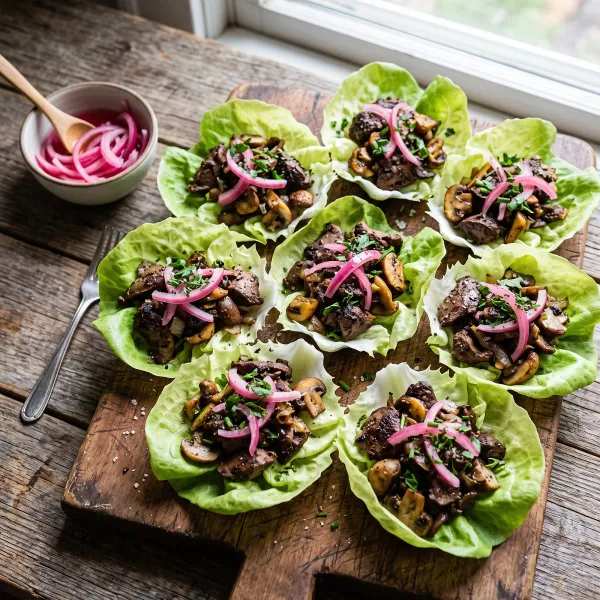
Chicken livers are probably the most nutritious thing you can put on a plate at lunch. More iron than a steak, more B12 than almost any food on the planet, vitamin A, folate, CoQ10. And yet most people in the real-food space still kind of side-eye them. I get it. I used to be one of those people. Then my functional medicine doctor started talking about nutrient density and I realized I had been leaving the single best food on the table because of a texture bias I picked up somewhere in childhood. This recipe is built to make you actually want to eat liver. The stovetop smoking step is the key. That light layer of apple or cherry wood smoke does something really specific to the flavor of chicken liver. It rounds off that sharp mineral edge, adds depth, and makes the whole thing taste intentional and complex instead of just 'organ meat you are forcing yourself to eat.' Pair that with meaty sautéed mushrooms, a splash of coconut aminos, and a quick-pickled red onion that cuts right through the richness, and you have a lunch that genuinely earns its spot on the table. Butter lettuce cups keep it light and fresh, which matters at midday when you do not want to crash. No grains, no fillers, just real food doing exactly what it was designed to do.
Nutritional Benefits
Iron and B12 in Quantities You Cannot Match with Plants
- Chicken liver is one of the most concentrated sources of heme iron available. Heme iron from animal sources is absorbed at a much higher rate than the non-heme iron in spinach or lentils.
- A single serving provides several times the daily recommended value of vitamin B12, which is essential for neurological function, red blood cell production, and energy metabolism.
- If you have ever felt chronically tired and had low-normal B12 numbers, adding organ meat once or twice a week is something worth talking to your practitioner about.
Vitamin A From a Real Source
- Liver contains preformed vitamin A (retinol), which your body uses directly. Beta-carotene from vegetables must be converted to retinol, and that conversion is inefficient for a meaningful portion of the population.
- Retinol supports immune function, skin integrity, and hormone production. It is not something most people are getting enough of on a standard diet.
CoQ10 and Folate for Real Energy
- Organ meats are among the best dietary sources of CoQ10, a compound your mitochondria use to produce energy. Statins deplete CoQ10, which is one reason fatigue is such a common side effect of that class of drugs.
- Liver is also loaded with natural folate, the real form your body recognizes, not the synthetic folic acid in most supplements and fortified foods.
Mushrooms Add Immune Support and Umami
- Cremini mushrooms contribute beta-glucans, a type of soluble fiber that supports immune modulation and gut health.
- They are also one of the few non-animal food sources of ergothioneine, an antioxidant that does not degrade easily during cooking.
- The savory, meaty quality of mushrooms pairs with liver in a way that balances the dish and adds volume without excess calories.
FAQs
I have never cooked liver before. What is the most important thing to get right?
Do not overcook it. This is the number one reason people say they hate liver. Overcooked liver turns grainy, dry, and intensely bitter. You want it just barely pink in the center, about 160°F internal temp. Pull it earlier than you think you need to. It will carry over slightly while it rests.
Do I really need wood chips? Can I skip the smoking step?
You can skip it if you need to, the recipe still works as a straight pan-seared liver and mushroom cup. But the smoking step is genuinely worth the five extra minutes. It changes the flavor profile completely and makes this feel like a restaurant-level dish rather than a 'health food you are tolerating.' Apple wood is mild and slightly sweet, cherry wood is a little deeper. Both work great with chicken liver.
Can I use beef liver instead?
Yes. Beef liver has a stronger, more pronounced flavor than chicken liver. If you are new to organ meats, chicken liver is the gentler starting point. If you are already a liver person and want more intensity, beef works here. Slice it a bit thinner and adjust the sear time accordingly since it is denser.
Is this Whole30 compliant?
Yes, with one note: the small amount of raw honey in the quick-pickle is technically not Whole30 compliant. You can simply leave it out and the pickled onion still works beautifully with just the vinegar and salt.
How do I store leftovers?
Store the seared liver slices, mushrooms, and pickled onion separately in airtight containers in the fridge for up to 2 days. Keep the lettuce cups whole and unwashed until you are ready to eat. Reheat the liver gently in a skillet over low heat, do not microwave it or it will overcook and turn bitter. Honestly, liver is best the day it is made.
My liver has a really strong smell. Is that normal?
Fresh chicken liver has a mild mineral smell that is normal. If it smells genuinely sour or off, that is a sign it has turned. Buy the freshest liver you can, ideally from a farmers market or a butcher who sources pasture-raised birds. Pasture-raised chicken livers taste noticeably cleaner and milder than conventional.
If this is your first time cooking liver, I am genuinely proud of you for trying it. Organ meats were considered a treasured food for most of human history and then somewhere in the last century we decided they were gross and started throwing them out. That shift happened roughly at the same time that chronic disease rates started climbing. Probably a coincidence. Or probably not. Try this recipe once. Actually try it, the full recipe with the smoking step and the pickled onion. I would bet real money you will be surprised. And if you make it, come tell me about it. Drop a comment, tag me, send a message. I want to know how it went.
Ingredients
Instructions
Nutrition Facts
| Nutrient | Amount per Serving |
|---|