

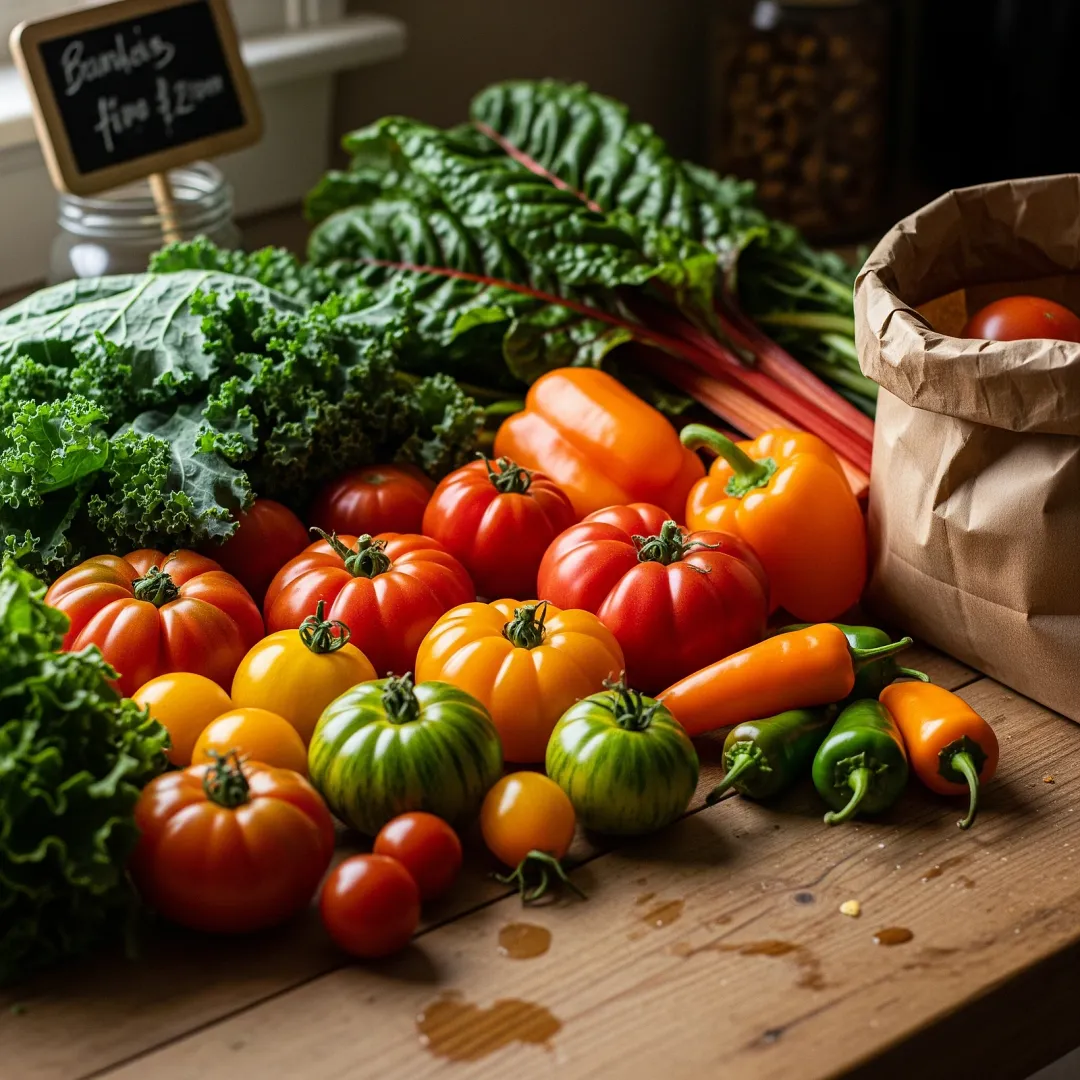

I used to think food was just food. A carrot was a carrot. Chicken was chicken. It didn't matter where it came from as long as I was eating something that looked healthy on the plate. Then I started learning about functional medicine and root-cause health, and I realized that mindset was costing me. The SOURCE of your food is not a minor detail. It might actually be the whole ballgame.
The Problem With Conventional Food That Nobody Talks About Enough
Here's the thing about conventional produce: it can look identical to organic produce. Same color, same shape, same aisle at the grocery store. But what you can't see is the pesticide residue sitting on the skin, or the synthetic fertilizers used to grow it, or how far it traveled before it got to you. Conventional farming relies heavily on synthetic pesticides and herbicides. Some of those chemicals are designed to kill living things, full stop. And while the regulatory line is that residue levels on food are "safe," a growing body of research is pushing back on that assumption, especially for kids, pregnant women, and people with already-stressed immune systems. The Environmental Working Group publishes a Dirty Dozen list every year for a reason. Strawberries, spinach, bell peppers, these are the crops that consistently carry the highest pesticide loads when grown conventionally. That's not fear-mongering. That's data. And then there's the freshness problem. Most conventional produce travels an average of 1,500 miles from farm to store. By the time it hits your cart, it's been sitting in cold storage, losing nutrients the whole way. Studies from UNH Extension confirm that nutrient content in fresh produce starts declining almost immediately after harvest (https://extension.unh.edu/blog/2022/05/health-benefits-eating-locally). Local food, by contrast, often goes from field to table in days. That difference matters more than most people realize.
What Organic Food Actually Does for Your Body
Let me be clear: organic is not a magic bullet. Eating organic Oreos is still eating Oreos. But when we're talking about whole, real foods, choosing organic does make a measurable difference. First, pesticide exposure. Research published in the journal Time (https://time.com/4871915/health-benefits-organic-food/) confirms that people who eat organic food consistently show lower levels of pesticide metabolites in their urine. That's not a small thing. Your liver has to process every synthetic chemical that enters your body. Every bit of toxic load you reduce means more capacity for your body to do the things it's actually supposed to do. Second, nutrient density. A comprehensive analysis published in PMC (https://pmc.ncbi.nlm.nih.gov/articles/PMC10814746/) found that organic crops tend to have higher levels of certain antioxidants and polyphenols compared to conventionally grown counterparts. Plants produce these compounds as a natural defense mechanism. When you spray them with synthetic pesticides, they don't have to work as hard to protect themselves, so they produce fewer of those beneficial compounds. You lose on both ends. Third, antibiotic resistance. Organic meat and dairy standards prohibit the routine use of antibiotics. Conventional animal agriculture uses antibiotics so heavily that it's contributing to a global antibiotic resistance crisis. When you choose organic animal products, you're opting out of that system. Cleveland Clinic notes this as one of the meaningful reasons to consider organic, particularly for meat (https://health.clevelandclinic.org/organic-food). And for what it's worth, I believe we were designed to eat food as close to its created form as possible. Spraying it with chemicals, stripping it of nutrients, and shipping it across the country isn't exactly stewarding the gift of a good harvest well.
Why Local Food Is a Health Decision, Not Just an Environmental One
People associate eating local with farmers markets and feel-good environmentalism. And yes, it IS better for the planet. But I want you to see it as a health decision too, because that's exactly what it is. Local food is fresher. Full stop. And fresher food is more nutrient-dense food. Sustainable Capitol Hill lays this out clearly: locally grown food retains more vitamins and minerals because it doesn't spend days or weeks in transit and cold storage (https://sustainablecapitolhill.org/eating-locally-in-capitol-hill/). Vitamin C, folate, and other water-soluble nutrients are especially vulnerable to degradation over time. You could be eating salad every day and still not getting what you think you're getting if that lettuce is three weeks old by the time you eat it. Local food also tends to be grown with more variety. Big commercial farms often grow just one or two crop varieties chosen for yield and shelf life, not nutritional value or flavor. Small local farms are more likely to grow heirloom varieties, older breeds, and diverse crops that have higher nutrient profiles. And here's the part I love: when you buy local, you can actually TALK to the person who grew your food. You can ask how they grow it, whether they spray, what they feed their animals. That kind of transparency is almost impossible in a conventional supply chain. It's accountability built into the relationship. Runstreet's breakdown of the benefits of organic food also points to better taste as a real, documented advantage (https://www.runstreet.com/blog/benefits-of-organic-food). I know that sounds soft compared to nutrients and pesticides, but taste matters. Food that tastes better is food you actually want to eat. And food you want to eat is food that nourishes you. It all connects.
The "I Can't Afford Organic" Problem (Let's Be Honest About It)
I'm not going to sit here and tell you organic is cheap. It's not, and pretending otherwise is condescending. Organic food costs more. Local food sometimes costs more. And for a lot of families, that's a real barrier. But here's how I think about it practically: Prioritize your highest-exposure items first. The Dirty Dozen is your starting point. If you can only swap a few things, swap strawberries, spinach, apples, and bell peppers to organic before anything else. These are the crops with the highest pesticide residue when grown conventionally. Buy local when you can, especially for animal products. A local farm that raises pastured animals might actually be comparable in price to what you'd pay at a natural grocery store for organic meat. And you get the added benefit of knowing exactly how those animals were raised. Frozen organic is still organic. This gets overlooked. Frozen fruits and vegetables are often picked at peak ripeness and frozen immediately, which locks in nutrients. A bag of frozen organic blueberries is a solid, affordable choice. Farmers market bargains are real. Near the end of the market day, many vendors discount produce. You can also ask about "seconds," slightly imperfect produce that's nutritionally identical but doesn't sell well. It's one of the best-kept secrets in real-food eating. You don't have to be perfect. You just have to be better than you were yesterday. Start somewhere.
Practical Steps You Can Take This Week
Okay, here's where I hand you something actionable. Because I'm not in the business of making you feel guilty or overwhelmed. I want you to actually DO something. 1. Pull up the EWG Dirty Dozen list and look at what's in your fridge right now. Identify one or two items you can swap to organic on your next grocery run. 2. Google "farmers market near me" and find out when the closest one runs. Show up once. Just once. Walk around, talk to a vendor, buy something. See how it feels. 3. Look for a local CSA (Community Supported Agriculture) box in your area. Many offer flexible options now. A weekly or bi-weekly box of local produce is one of the easiest ways to build a local food habit without thinking too hard about it. 4. When you're at the grocery store, flip over the package or look at the PLU code on produce. A five-digit code starting with 9 means it's organic. Four digits means conventional. Knowing this takes ten seconds and costs nothing. 5. If budget is tight, choose organic for the foods you eat MOST often. Frequency of exposure matters. The food you eat every single day is where you want the cleanest source. This isn't about being precious or elite. It's about making intentional choices with the information you have. Your body is worth that.
The Bottom Line on Organic and Local Food
Here's where I land after all of it: I believe real food, grown by real people, as close to the way God designed it as possible, is how we're meant to eat. Organic and local food isn't a trend for wealthy people. It's a return to what food used to be before industrial agriculture decided that yield, shelf life, and profit margins mattered more than nutrition. Less pesticide exposure. More nutrients. Better flavor. Transparency about how your food was grown. Support for farmers who are actually doing things the right way. These aren't small wins. You don't have to overhaul everything at once. Start with one swap. Build from there. Your body notices, even when you don't. And over months and years, those choices compound into something real.
Key Takeaways
- Organic food consistently shows lower pesticide residue levels in people who eat it regularly, reducing overall toxic load on the body.
- Local food is fresher and retains more vitamins and minerals because it hasn't spent days or weeks in transit and cold storage.
- Organic crops tend to have higher levels of certain antioxidants and polyphenols compared to conventionally grown crops.
- Organic animal products are produced without the routine use of antibiotics, which is a meaningful factor given the global antibiotic resistance problem.
- You don't have to go all-organic overnight. Prioritize the Dirty Dozen, shop local when you can, and build from there.
- Frozen organic produce is a budget-friendly option that still delivers on nutrient density.
Frequently Asked Questions
Is organic food actually healthier or is it just marketing?
It's a fair question, and the honest answer is: it depends on what you mean by healthier. The research does show that people who eat organic consistently have lower pesticide metabolites in their urine, which means less chemical load on the body. Studies have also found that organic crops tend to have higher levels of certain antioxidants and polyphenols. That's not nothing. What organic isn't is a guaranteed nutrition overhaul, especially if you're comparing organic processed food to conventional whole food. The biggest wins from going organic are in the produce and animal products you eat most often.
What's the difference between eating local and eating organic?
They're related but not the same thing. Organic refers to how food is grown, specifically without synthetic pesticides, herbicides, or (for animal products) routine antibiotics. Certified organic has a legal definition backed by USDA standards. Local refers to where food comes from, usually meaning it was grown nearby and didn't travel far to get to you. Local food tends to be fresher and more nutrient-dense because of that shorter time from harvest to table. A small local farm might not be certified organic (certification is expensive and time-consuming) but might still use clean growing practices. The best approach is to look for both when you can, and when you can only choose one, prioritize local for freshness and organic for the highest-pesticide crops.
What are the most important foods to buy organic on a budget?
Start with the Environmental Working Group's Dirty Dozen list. These are the crops that consistently test highest for pesticide residue when grown conventionally: strawberries, spinach, kale and collard greens, peaches, pears, nectarines, apples, grapes, bell peppers, cherries, blueberries, and green beans. If you can only swap a handful of things, start there. Foods with thick peels you don't eat, like avocados, pineapple, and onions, tend to carry much less residue and aren't as urgent to buy organic.
Is frozen organic produce worth buying?
Absolutely, yes. Frozen organic produce is picked at peak ripeness and frozen quickly, which locks in a lot of the nutrients. In some cases, frozen produce can actually be more nutrient-dense than fresh produce that's been sitting in transit and refrigeration for a week or more. Frozen organic berries, spinach, broccoli, and peas are all solid, budget-friendly choices. Don't overlook the freezer aisle.




Join the conversation
What do you think?
Free members can comment, reply and like. It takes ten seconds.