

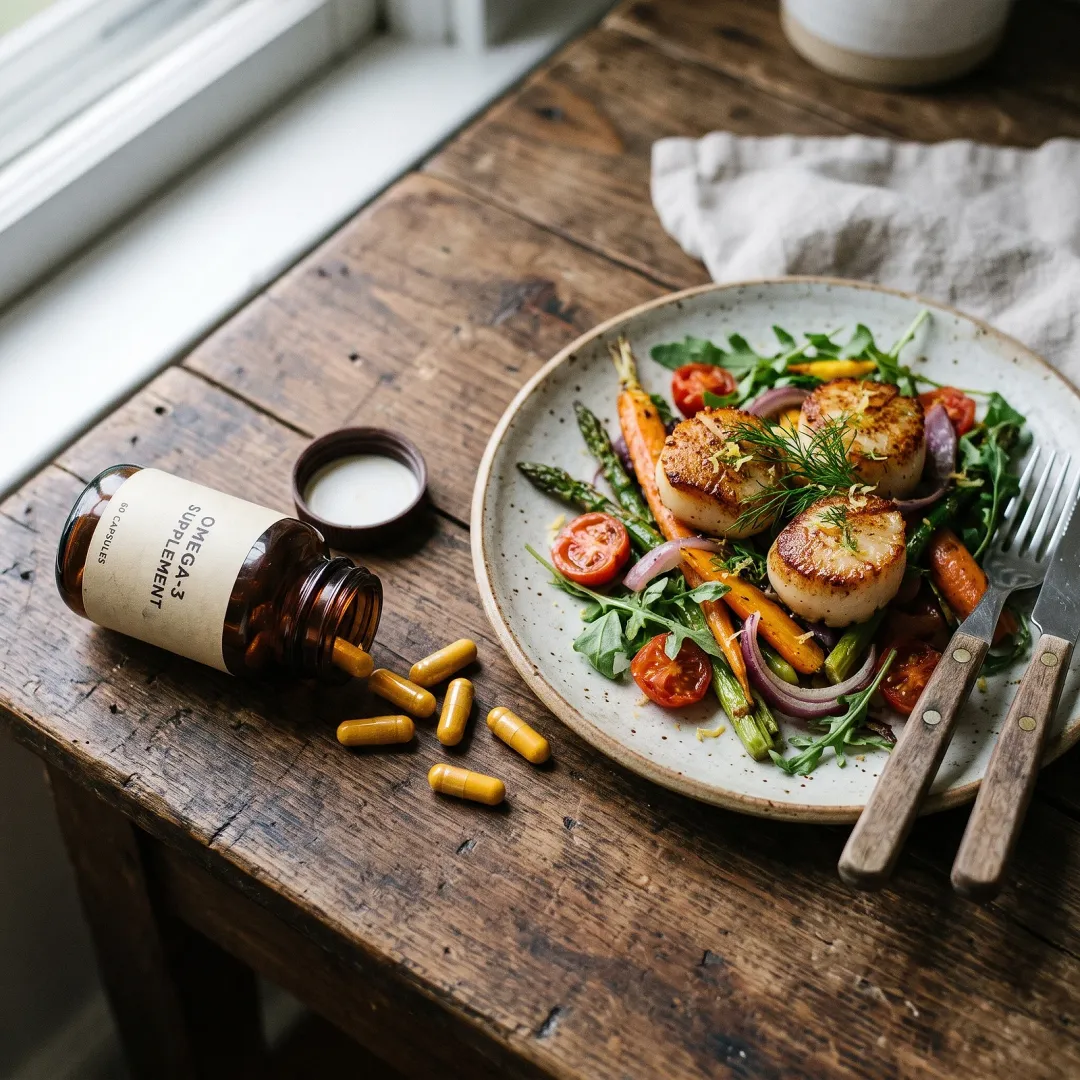

The anti-aging supplement market is worth over $60 billion and growing. Walk into any pharmacy, scroll through Instagram for thirty seconds, you'll find NMN, resveratrol, NAD+ boosters, collagen powders, and a dozen more products promising to literally reverse your biological clock. The pitch is slick. The price tags are real. The science behind most of it? A lot thinner than you've been told.
What They're Claiming
Here is the marketing language you'll find on the bestselling anti-aging supplements right now. "Clinically backed to support cellular repair." "Proven to boost NAD+ levels and slow biological aging." "Reverse your age at the cellular level."
Resveratrol, NMN (nicotinamide mononucleotide), NAD+ precursors, rapamycin-adjacent compounds, collagen peptides, and similar products are routinely positioned as breakthroughs. The industry counts on the fact that most people won't track down the original research, and that the word "cellular" sounds impressive enough to close the sale.
To be fair, some of these compounds have genuinely interesting early-stage research behind them. Resveratrol activated longevity genes called sirtuins in some cell and animal models. NAD+ does decline with age. These are real facts. But real facts in a petri dish or a mouse study do not automatically translate into a pill that slows your aging in a meaningful, measurable way. And the people selling you those pills know the difference.
What Yale Actually Found
Yale researchers published an analysis of 51 studies looking at interventions that measurably change biological age, the kind of aging tracked by epigenetic clocks that assess how your cells are actually functioning, not just how many years you've been alive. This matters because biological age and chronological age can diverge significantly depending on how you live.
The researchers found, as ScienceDaily reported the study, that certain prescription drugs, healthy dietary patterns, and exercise produced measurable changes in biological aging markers. Popular anti-aging supplements, as a category, appeared largely ineffective by those same measures.
Let me put that plainly: the interventions that moved the needle were food, movement, and in some cases specific medical treatments prescribed by a physician. The supplements that dominate store shelves and social media feeds? Not showing up with meaningful evidence in a rigorous multi-study analysis.
And there is a critical honesty built into this research that I actually respect: the Yale team was careful to note that whether these measurable biological changes actually extend human lifespan remains uncertain. They are not overselling their own findings. That kind of scientific humility is not something you will see in the supplement aisle.
The Money Trail Behind the Hype
The global anti-aging supplement market was valued at over $43 billion in 2023 and is projected to keep climbing, driven heavily by influencer marketing, celebrity endorsements, and the very human fear of getting old. The profit margins on these products are enormous because the raw ingredient cost is often pennies compared to the retail price.
Here is where the follow-the-money piece gets important. The same supplement industry that funds its own research also funds the conferences where that research gets presented, the podcasts where it gets discussed, and sometimes the content creators who recommend the products. That is not a conspiracy theory; it is just how the money flows. When a supplement company funds a small, short-duration study and uses it to claim their product is "clinically proven," they are technically pointing to a real study. They are just not telling you the full picture of what the broader body of research shows.
Yale looking at 51 studies across the literature is a very different exercise than a supplement company citing the two studies that made their product look good.
What the Data Says Actually Works
Real dietary patterns. Movement. Those are the winners in the Yale analysis, and frankly, that should not surprise anyone who has been paying attention. This is not a new conclusion; it is a consistent one that keeps showing up across the research.
On the food side, we are talking about whole, minimally processed food. Plenty of quality protein. Vegetables across the color spectrum. Healthy fats from real sources. The kind of eating that does not require a subscription box or a $90 bottle of capsules. Research has long linked eating patterns rich in whole foods with markers of better cellular health, including lower levels of systemic inflammation that drive biological aging.
On the protein front specifically: your muscle tissue is one of the most metabolically active factors in how well your body ages. Building and maintaining it requires adequate protein from real food sources. Scallops, for example, are a fantastic, often-overlooked source of high-quality complete protein with a clean, minimal-ingredient profile straight from the ocean. No label required.
On exercise: resistance training in particular has solid research linking it to improvements in epigenetic aging markers. A 2022 study published in the journal Aging found that a lifestyle intervention including exercise was associated with measurable reductions in biological age as assessed by epigenetic clocks. Movement is not a supplement. It is non-negotiable.
And yes, the Yale analysis found that certain prescription drugs showed measurable effects on biological aging markers. That is worth noting. But notice what I am not going to do: I am not going to tell you which ones or suggest you go ask for them. That is a conversation for your doctor, full stop. Mention this research; let your physician weigh in.
Why This Keeps Happening
The supplement industry operates under a regulatory framework that is genuinely weak. Under the Dietary Supplement Health and Education Act of 1994, supplement manufacturers do not have to prove their products are effective before selling them. They are not required to run the kind of rigorous, multi-stage clinical trials that prescription drugs must pass. The FDA can only step in after a product is already on the market and causing documented harm.
So the burden of proof runs backwards. Products get sold first. The science, if it ever comes, comes later. And when a comprehensive analysis like this Yale study lands and says the supplements are not performing, the industry does not pull its products. It funds new smaller studies and keeps marketing.
This is not a failure of individual companies doing something illegal. It is a structural problem in how we regulate things people put in their bodies with health expectations. DSHEA was passed in 1994 partly through heavy industry lobbying, and it has not been fundamentally reformed since. That is the system working exactly as it was designed to work.
Meanwhile, real food never needed a lobby because it never had a profit margin that could fund one.
The Stewardship Angle Nobody Is Selling You
My faith shapes how I see this. The body is a gift, not a project. We were designed to eat real food, to move, to rest, to be in relationship and community. The idea that you can shortcut that design with a subscription to supplements is a very modern and very convenient lie.
I am not saying every supplement is worthless. There are real, evidence-backed uses for specific supplementation, especially when addressing documented deficiencies. Talk to a doctor who actually runs labs and looks at your individual picture. That is not the same as buying whatever a podcast host is currently paid to recommend.
But when Yale runs the numbers on 51 studies and finds that the most effective biological aging interventions are diet and exercise, and the least effective are the supplements taking up four aisles of your local health food store? That is not an anti-supplement agenda. That is the receipts. And the receipts say: eat real food, move your body, and stop paying $80 a month to feel like you are doing something.
You are more than a customer for the wellness industry. Act like it.
---
This article is for general informational purposes only and is not medical advice. Always consult a qualified healthcare professional before making changes to your diet or health routine.
Key Takeaways
- A Yale analysis of 51 studies found that healthy dietary patterns and exercise showed measurable effects on biological aging markers; popular anti-aging supplements largely did not.
- The anti-aging supplement industry is not required to prove effectiveness before selling products under the 1994 Dietary Supplement Health and Education Act.
- Whether measurable changes in biological aging markers actually extend human lifespan remains scientifically uncertain, even for the interventions that showed effects.
- Real, whole food and consistent movement are what the multi-study evidence keeps pointing to, not a capsule.
- Some prescription drugs did show effects in the Yale analysis, but those decisions belong in a conversation with your doctor, not on a supplement label.
Frequently Asked Questions
Do anti-aging supplements like NMN and resveratrol actually work?
The honest answer is that the evidence is much weaker than the marketing suggests. A Yale analysis of 51 studies on biological aging found that popular anti-aging supplements appeared largely ineffective at measurably changing biological aging markers, while healthy dietary patterns and exercise did show effects. Some early research on compounds like resveratrol and NMN is genuinely interesting in cell and animal models, but that does not translate automatically to a meaningful effect in a human body taking a daily capsule. If you're considering any supplement, that conversation belongs with a doctor who can look at your individual labs.
What does Yale's biological aging research actually measure?
The interventions in the studies Yale analyzed were evaluated using epigenetic clocks, tools that look at patterns of chemical modifications on your DNA to estimate how old your cells are functioning relative to your chronological age. Biological age and chronological age can diverge based on lifestyle. Importantly, the Yale researchers noted that whether measurable changes in these biological markers actually extend human lifespan remains uncertain. The science is real and interesting; it's just not a finished answer yet.
Why don't supplement companies have to prove their products work?
Because of the Dietary Supplement Health and Education Act of 1994 (DSHEA), supplement manufacturers in the U.S. are not required to demonstrate effectiveness or even safety before bringing a product to market. The FDA can only step in after a product is already on shelves and documented harm has occurred. This framework was shaped significantly by industry lobbying at the time of its passage and has not been fundamentally reformed since. It's a structural problem, not an accident.
What foods may support healthier biological aging?
Research consistently links whole, minimally processed dietary patterns with better markers of cellular health, including lower systemic inflammation that is associated with accelerated aging. That means quality protein from real sources (think scallops, eggs, grass-fed meat), plenty of colorful vegetables, healthy fats from whole foods like avocado and olive oil, and the general absence of ultra-processed food. Resistance exercise alongside that dietary foundation is what the multi-study evidence keeps pointing to. No single superfood or supplement has cleared the bar that consistent whole-food eating and movement have.
Sources
- ScienceDaily: Yale scientists reveal what really slows aging and what doesn't
- Grand View Research: Anti-Aging Supplements Market Size & Share Report, 2024-2030
- National Institutes of Health / PMC: Dietary Patterns and Inflammation: A Review
- Aging (journal): Potential reversal of epigenetic age using a diet and lifestyle intervention
- U.S. Food and Drug Administration: Dietary Supplement Health and Education Act of 1994 (DSHEA)
This article is for general informational purposes only and is not medical advice. Always consult a qualified healthcare professional before making changes to your diet or health routine.



Join the conversation
What do you think?
Free members can comment, reply and like. It takes ten seconds.