


Think about your body for a second. Not your weight, not your jean size. I mean the actual internal environment you are walking around in every single day. Is it calm? Or is it quietly on fire? Because here is what most conventional doctors are not sitting down to explain to you: chronic, low-grade inflammation is the thread running through almost every modern disease we are seeing explode right now. Heart disease, type 2 diabetes, autoimmune conditions, depression, even certain cancers. The research keeps pointing back to the same place. And food, the stuff you are putting in your body multiple times a day, is one of the most powerful levers you have to turn that fire down. That is what today's Coach's Corner is about.
What Inflammation Actually Is (And Why 'Chronic' Is the Problem)
Inflammation is not inherently bad. I want to be really clear about that. Acute inflammation is your immune system doing exactly what it was designed to do. You cut your finger, your body floods that area with immune cells to protect and repair it. That is a gift. The problem is chronic, systemic inflammation, which is a low-level, constant immune activation that never really shuts off. Your body is treating your own tissues like a threat, day after day, year after year.
Research published in Nature Medicine described chronic inflammation as a driver of the most significant causes of disability and death worldwide, including cardiovascular disease, cancer, diabetes, chronic kidney disease, non-alcoholic fatty liver disease, and autoimmune and neurodegenerative conditions. That is a serious list. And a huge portion of that inflammation is being driven by lifestyle, and specifically by food.
From a functional-medicine coaching perspective, we always want to ask: what is the root of this? Because inflammation is not a disease in itself. It is a signal. It is your body waving a flag. The question is: what is the fire, and what is fueling it?
How Your Fork Fans the Flames (Or Puts Them Out)
Every single meal is either pro-inflammatory or anti-inflammatory. Maybe that sounds dramatic, but the science backs it up. Ultra-processed foods, refined carbohydrates, added sugars, industrial seed oils, and conventionally raised factory-farmed meat all carry compounds that activate inflammatory pathways in the body. On the other side, whole, minimally processed foods, colorful produce, quality proteins, and healthy fats carry phytonutrients, antioxidants, omega-3 fatty acids, and fiber that actively work to cool inflammation down.
The Harvard T.H. Chan School of Public Health has published extensively on the connection between dietary patterns and inflammatory markers. Their research found that diets high in refined starches, sugar, and red processed meat are associated with higher levels of inflammatory markers like C-reactive protein (CRP), interleukin-6, and TNF-alpha, while diets rich in fruits, vegetables, whole grains, and healthy fats are associated with lower levels of those same markers.
This is not abstract biochemistry. These are measurable things your doctor can pull on a blood panel. And the food you ate for breakfast this morning is already influencing those numbers. I find that both sobering and incredibly empowering, because it means you have real agency here.
The Anti-Inflammatory Foods Worth Building Your Plate Around
Let me give you the practical list, the one I actually run through with clients. This is not a prescription. It is a framework. And the goal is to crowd out the inflammatory stuff by adding more of what genuinely works.
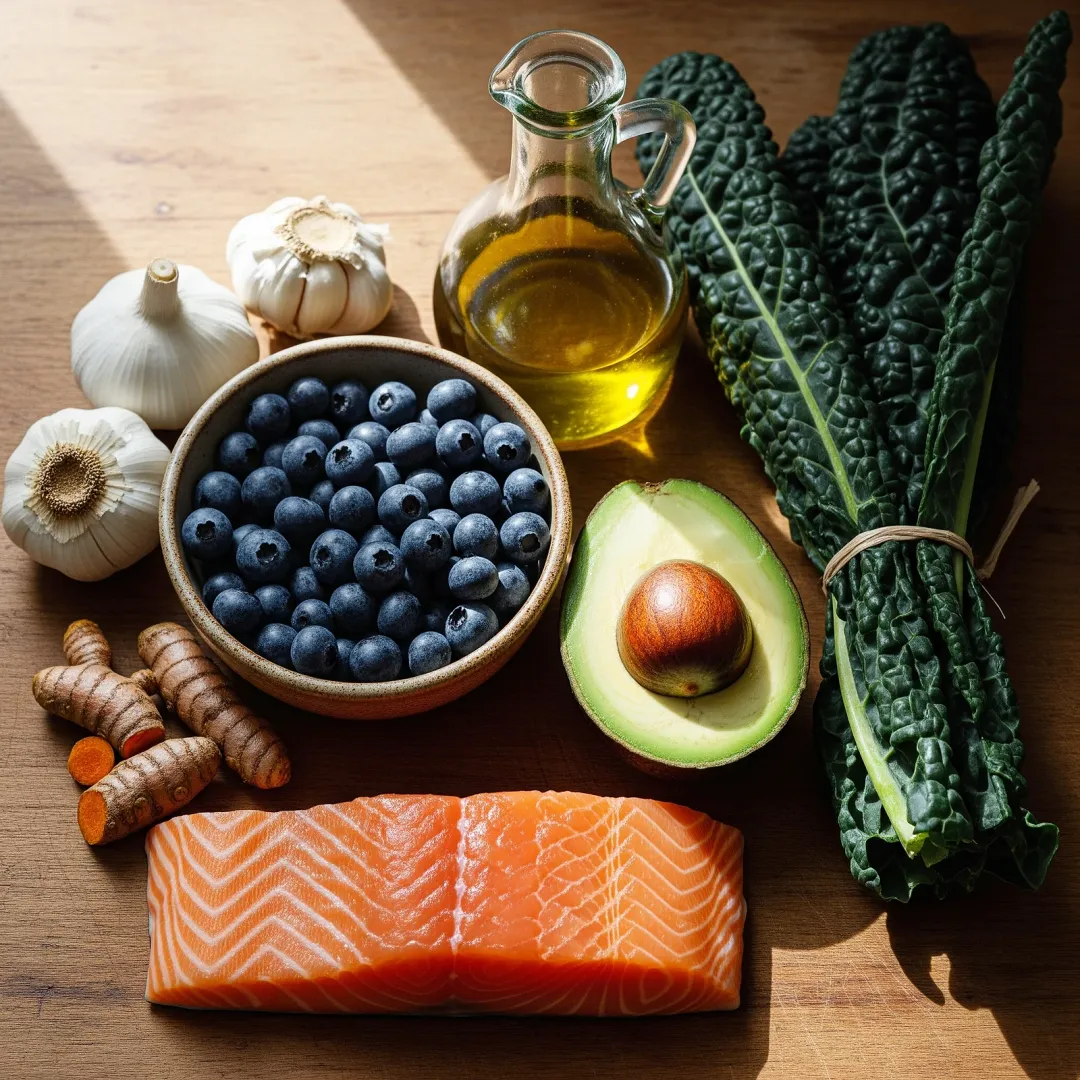
Fatty fish. Wild-caught salmon, sardines, mackerel, and herring are among the most powerful anti-inflammatory foods on the planet. They are loaded with EPA and DHA, the long-chain omega-3 fatty acids that have been shown in clinical research to reduce the production of inflammatory cytokines and eicosanoids. Aim for at least two servings a week.
Leafy greens and cruciferous vegetables. Spinach, kale, arugula, broccoli, cabbage, and Brussels sprouts are rich in vitamins C and K, folate, and a class of compounds called glucosinolates that support the body's detoxification pathways and help regulate inflammatory responses. Eat them as often as you can. Seriously, no ceiling here.
Berries. Blueberries, strawberries, raspberries, and blackberries are packed with anthocyanins, flavonoids that research shows can reduce oxidative stress and lower inflammatory markers. They also happen to be lower in sugar than most fruit, which matters because blood sugar spikes are themselves a driver of inflammation.
Extra virgin olive oil. This one is a cornerstone. High-quality EVOO contains oleocanthal, a compound that acts similarly to ibuprofen in terms of its COX-inhibiting, anti-inflammatory properties. A study in Nutrients confirmed that the polyphenols in olive oil are associated with significantly lower CRP levels. Use it generously on salads and cooked vegetables.
Turmeric. The active compound curcumin has been studied extensively for its ability to inhibit NF-kB, one of the primary molecular drivers of inflammation. The catch is bioavailability: curcumin absorbs dramatically better when paired with black pepper (piperine) and a healthy fat. Add turmeric to soups, eggs, roasted vegetables. Make golden milk. It does not need to be complicated.
Walnuts and other omega-3-rich nuts. Walnuts in particular are high in ALA (alpha-linolenic acid), the plant form of omega-3, plus polyphenols and vitamin E. They are a solid snack and genuinely earn their spot on an anti-inflammatory plate.
Bone broth and collagen-rich foods. Glycine, one of the primary amino acids in bone broth and collagen, has shown anti-inflammatory properties in emerging research. It also supports gut lining integrity, and a leaky or inflamed gut is one of the major contributors to systemic inflammation.
Garlic and onions. These allium vegetables contain quercetin and allicin, compounds with well-documented anti-inflammatory and antioxidant activity. They also feed the beneficial bacteria in your gut, and a healthier microbiome means a more regulated immune response.
Dark chocolate (yes, really). Cacao, the real stuff, not a Snickers bar, is rich in flavonoids. Look for dark chocolate that is at least 70 percent cacao and eat it in reasonable amounts. A square or two. Not the whole bar.
What to Pull Back On (Because Addition Only Gets You So Far)
I coach addition before subtraction, always. But I would be doing you a disservice if I did not name the foods that are actively working against you, because you can eat all the salmon and blueberries in the world and still be inflamed if the other side of your plate is a mess.
Refined sugar and high-fructose corn syrup. Sugar drives inflammation in multiple ways: it spikes blood glucose, promotes insulin resistance, feeds pathogenic gut bacteria, and directly activates inflammatory pathways. The research here is not subtle. Cutting added sugar is one of the highest-leverage moves you can make.
Industrial seed oils. Soybean oil, corn oil, canola oil, cottonseed oil, and sunflower oil are extremely high in omega-6 linoleic acid. That is not automatically dangerous in whole food form, but in the refined, highly processed amounts that saturate the modern food supply, the omega-6 to omega-3 ratio goes completely sideways, and that imbalance is a well-established driver of inflammation. The ratio in Western diets now runs somewhere between 15:1 and 20:1. It should be closer to 4:1.
Ultra-processed foods. This category includes the obvious junk food but also a shocking number of things marketed as healthy: protein bars, flavored yogurts, packaged deli meats, most breakfast cereals, and anything with an ingredient list that reads like a chemistry test. These foods contain emulsifiers, artificial dyes, preservatives, and refined starches that research has directly linked to elevated inflammatory markers and gut permeability.
Excess alcohol. I am not here to moralize. But alcohol, especially in more than moderate amounts, disrupts the gut lining, alters the microbiome, stresses the liver, and activates inflammatory pathways. If you are dealing with a significant inflammatory condition, pulling back here can make a noticeable difference.
Refined grains. White bread, pasta, crackers, most baked goods. These spike blood sugar fast, contribute to insulin resistance over time, and provide essentially nothing in the way of the fiber and micronutrients that support your immune regulation.
The Pattern Matters More Than Any Single Food
Here is where I want to push back a little on the reductive way we talk about nutrition, even in the real-food world. There is no single food that will save you, and there is no single food that will destroy you. What matters is the overall pattern, day after day, week after week.
The Mediterranean dietary pattern is the most-studied anti-inflammatory eating pattern in the research literature. It emphasizes exactly what I described above: fatty fish, lots of vegetables, legumes, fruit, nuts, olive oil, and minimal ultra-processed food. Decades of research have consistently associated this pattern with lower levels of inflammatory markers and dramatically lower rates of the chronic diseases that inflammation drives.
But here is the thing: a paleo or ancestral eating pattern that prioritizes quality animal proteins, vegetables, fruit, nuts, and healthy fats is operating on the exact same foundational principle. Whole food. Minimal processing. Eating things that were actually food before they got to you. You do not need to be a strict Mediterranean follower to eat in a way that cools inflammation. You just need to eat real food, most of the time.
I say this as someone who grounds her approach in the belief that our bodies were designed to function, not just survive. That we were made to be well. The further we drift from the food God actually put on this earth, the more chaotic our internal environment gets. That is not a sermon. It is just what I see in the research and in the people I coach.
Where to Start: Three Moves for This Week
I do not want to leave you with a theoretical list you do not know how to execute. Here is what I would actually tell you to do this week if you sat down for a coaching session with me.
First, add before you subtract. Pick two of the anti-inflammatory foods from the list above that you genuinely like and commit to including them in your meals every single day this week. Blueberries on your eggs? Sardines on a salad? A handful of walnuts as a snack? Done. Start there.
Second, swap the oil. If you are cooking with vegetable oil, canola oil, or any kind of seed oil, replace it this week with extra virgin olive oil for low-to-medium heat or avocado oil for higher heat. This is one swap that immediately starts shifting your omega-6 to omega-3 ratio in the right direction.
Third, cut one obvious sugar source. Not everything. Just one. The sweetened coffee drink, the afternoon packaged snack, the flavored yogurt. Just one. Replace it with something real. That is it. Small, consistent moves compound over time. That is how lasting change actually works.
And as always, talk to your doctor or a qualified healthcare provider, especially if you are managing a diagnosed inflammatory condition. Food is powerful medicine, but it works best as part of a full picture.
Disclaimer
This article is for general informational purposes only and is not medical advice. Always consult a qualified healthcare professional before making changes to your diet or health routine.
Key Takeaways
- Chronic, low-grade inflammation is a root driver of most major modern diseases, including heart disease, diabetes, and autoimmune conditions.
- Every meal either promotes or reduces inflammation. The overall dietary pattern matters more than any single food.
- Top anti-inflammatory foods include fatty fish, leafy greens, berries, extra virgin olive oil, turmeric, walnuts, garlic, and bone broth.
- The biggest inflammatory foods to reduce are refined sugar, industrial seed oils, ultra-processed packaged foods, refined grains, and excess alcohol.
- A real-food, whole-food dietary pattern, whether Mediterranean, paleo, or ancestral, is consistently associated with lower inflammatory markers in the research.
- Start with addition: add two anti-inflammatory foods this week, swap to a clean cooking oil, and cut one obvious sugar source.
Frequently Asked Questions
What foods cause the most inflammation in the body?
The biggest dietary drivers of chronic inflammation are refined sugar, industrial seed oils (like soybean, corn, and canola oil), ultra-processed packaged foods, and refined grains like white bread and pasta. These foods spike blood sugar, disrupt the gut microbiome, and activate inflammatory pathways in ways that compound over time. Excess alcohol is also a significant contributor.
How long does it take for an anti-inflammatory diet to work?
There is no universal timeline, and I want to be honest with you about that. Some people notice changes in energy, joint comfort, and digestion within a few weeks of consistently eating a more anti-inflammatory pattern. Measurable changes in lab markers like C-reactive protein often take a few months of sustained dietary change. The key word is consistent. This is not a two-week fix; it is a way of eating you build over time.
Is a paleo diet anti-inflammatory?
A well-constructed paleo diet is inherently built around anti-inflammatory principles. It emphasizes quality animal proteins, vegetables, fruit, nuts, seeds, and healthy fats, while eliminating refined grains, added sugars, industrial seed oils, and ultra-processed foods. Those are exactly the foods that research consistently associates with lower inflammatory markers. The emphasis on food quality, especially sourcing pastured and wild-caught proteins, adds another layer of anti-inflammatory benefit through better omega-3 to omega-6 ratios.
What is the single best anti-inflammatory food to add to my diet?
If I had to pick one, I would say wild-caught fatty fish, particularly salmon, sardines, or mackerel. The EPA and DHA omega-3 fatty acids in fatty fish are among the most studied anti-inflammatory compounds in the nutrition research. They directly reduce the production of inflammatory cytokines. Eating two or more servings per week is one of the highest-leverage single changes most people can make. If you genuinely cannot stand fish, a high-quality fish oil supplement is worth discussing with your healthcare provider as an adjunct, but food first.
Sources
- Nature Medicine: Chronic inflammation in the etiology of disease across the life span
- Harvard T.H. Chan School of Public Health: Anti-Inflammatory Diet
- Frontiers in Nutrition: The Extra Virgin Olive Oil Polyphenol Oleocanthal Exerts Antifibrotic Effects
- Harvard Health Publishing: Foods that fight inflammation
This article is for general informational purposes only and is not medical advice. Always consult a qualified healthcare professional before making changes to your diet or health routine.




Join the conversation
What do you think?
Free members can comment, reply and like. It takes ten seconds.