

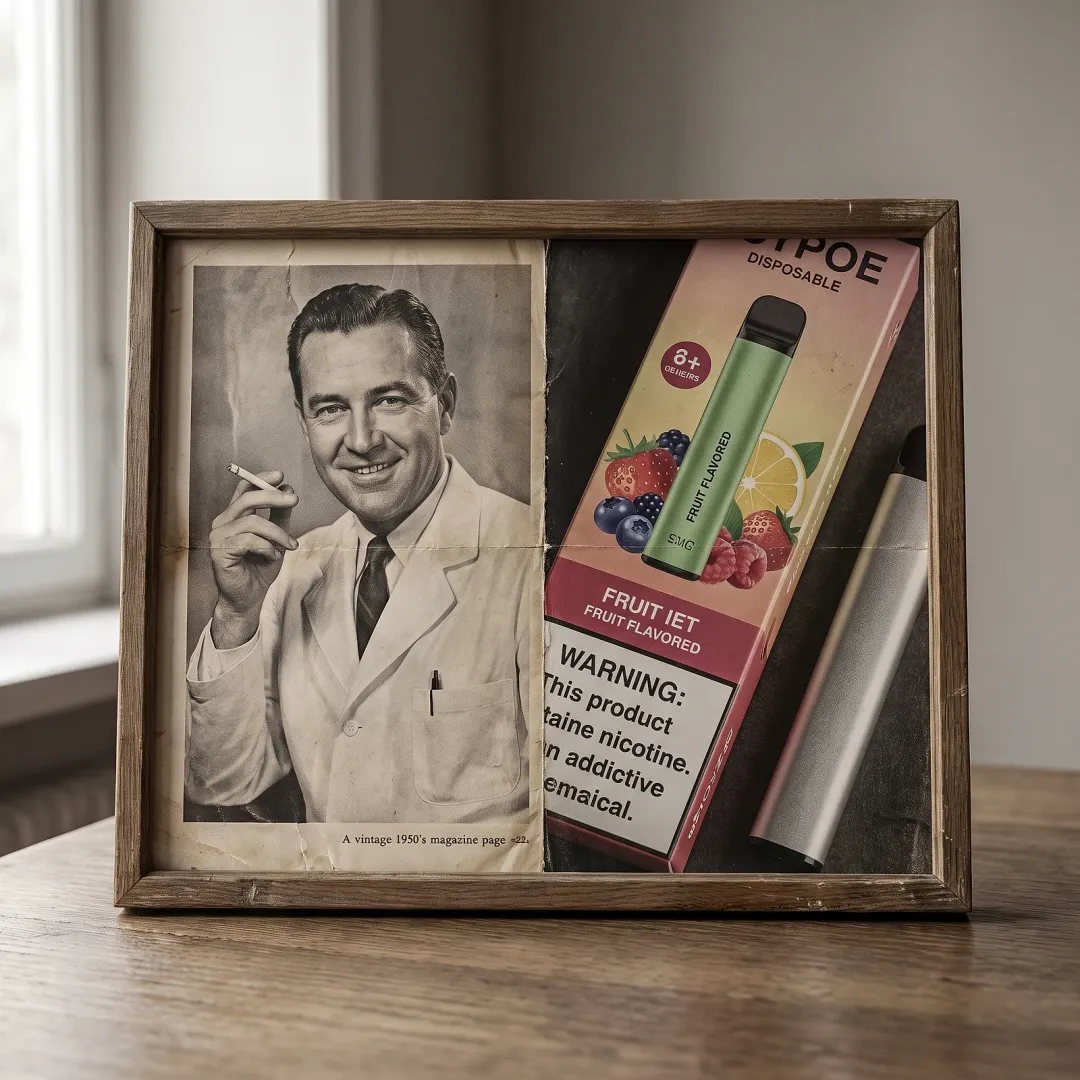

There's a trick that never gets old in corporate America. A company gets caught killing people, faces massive lawsuits, watches its public image crater, and then... it doesn't actually change. It just puts on a new coat and walks right back into the room. Big Tobacco didn't die. It rebranded. And right now, it is sitting inside some of the most influential business organizations in the world, lobbying quietly against the very regulations that might protect you and your kids.
This is not a conspiracy theory. It is a documented pattern. And I am not going to let it slide.
[video]
This article is for general informational purposes only and is not medical advice. Always consult a qualified healthcare professional before making changes to your diet or health routine.
The Rebrand Nobody Called Out Loudly Enough
For decades, we all watched Big Tobacco lie to Congress, suppress their own internal research on addiction, and spend billions making cigarettes seem cool, safe, and even doctor-approved. Then came the lawsuits, the settlements, the cultural shift, and we all collectively exhaled (pun intended) and thought, okay, that chapter is over.
It was not over.
The same tobacco giants, Philip Morris International, British American Tobacco, and their cousins, pivoted to e-cigarettes and "reduced-risk" products. They reframed the whole thing as harm reduction. And a lot of people bought it, including, I would argue, some well-meaning public health folks who should have known better. The industry needed a new story, and they built one.
But here is what they also did, quietly, methodically, and very effectively: they stayed embedded inside U.S. business associations and chambers of commerce operating worldwide. Groups that most people assume are just there to facilitate trade and economic policy. What a perfect place to hide.
The Study That Should Be Front-Page News
U.S. Right to Know, the investigative nonprofit that has become one of my go-to sources for food and health industry accountability, published findings from a new study showing that tobacco companies remain deeply embedded in influential U.S. business groups globally. According to their report, this gives the industry a discreet and powerful channel to weaken regulation and undermine public health.
Think about what "discreet and powerful" actually means in practice. It means that when a country starts moving toward stricter nicotine regulations, or when the FDA floats tighter e-cigarette rules, there are already industry voices inside the organizations shaping the response. Not voices wearing a Marlboro logo. Voices wearing the logo of a business coalition that sounds totally neutral and reasonable.
That is the game. And it has been the game for a long time, in food, in pharma, in ag, and now, still, in tobacco. The playbook does not change because it works.
Why This Is Absolutely a Real-Food, Functional-Medicine Issue
I know some of you might be thinking, Krista, you talk about food. Why are you in the tobacco lane?
Because it is the exact same lane.
Every single fight I write about, glyphosate, seed oils, artificial dyes, PFAS in packaging, conflicts of interest in nutrition science, every single one of those fights has the same structure at its core. A powerful industry uses money and proximity to decision-makers to protect its product from accountability. The specific product changes. The strategy does not.
From a functional medicine standpoint, chronic nicotine exposure, especially via inhaled aerosols carrying heavy metals, ultrafine particles, and flavoring chemicals, is a systemic stressor. Research has linked e-cigarette use to lung inflammation, oxidative stress, and cardiovascular strain. Your body treats it as a threat because it is. The mitochondria do not care whether the poison comes in a Juul pod or a cigarette. Inflammation is inflammation.
And the functional medicine principle that matters here is the same one I come back to over and over: you cannot out-supplement, out-diet, or out-lifestyle a toxic exposure you are breathing into your lungs multiple times a day. Root cause first, always.
So yes. This is my lane.
Follow the Money, Follow the Access
Here is how it works, and I want you to really understand the mechanism, because once you see it, you see it everywhere.
Big companies join trade associations, chambers of commerce, and business roundtables. They pay dues. Sometimes large ones. That buys them a seat at the table, sometimes a seat on the board, and definitely a seat in the room when policy positions are being drafted. The resulting lobbying and advocacy then goes out under the association's name, not the company's name.
So when Philip Morris International is a member of an American Chamber of Commerce in, say, Southeast Asia or Eastern Europe, and that chamber lobbies against plain packaging laws or flavor bans, the lobbying is attributed to the chamber, not to Big Tobacco. Clean hands. Respectable letterhead. Same outcome.
The U.S. Right to Know investigation documents exactly this kind of arrangement. Tobacco companies using business group membership to promote e-cigarettes and resist the health protections that governments around the world are trying to put in place.
This is regulatory capture wearing a tie and carrying a briefcase.
What About the "Harm Reduction" Argument?
I want to be straight with you here, because I think intellectual honesty matters and I am not going to just dismiss every claim on the other side.
There is a legitimate debate in public health circles about whether e-cigarettes, for existing adult smokers who cannot or will not quit, might be preferable to combustible cigarettes. Some researchers and clinicians argue that point seriously, and I am not going to tell you that debate does not exist.
But here is what I will say. That debate is being actively exploited.
The same industry that told us for decades that cigarettes were safe is now the industry telling us that their new product is a reasonable harm-reduction tool. And they are funding research, shaping narratives, and lobbying policy, all through those same "neutral" business associations, to protect their new revenue stream. The conflict of interest is staggering.
More importantly, the e-cigarette market exploded among teenagers and young adults who never smoked cigarettes to begin with. That is not harm reduction. That is customer acquisition with a new delivery system. Fruity flavors, sleek devices, social media marketing targeted at kids, and an addictive substance. My body-as-a-gift lens has absolutely no framework for calling that acceptable, and I do not care how many industry-funded studies say otherwise.
Stewardship of the body God gave you includes protecting it from industries whose business model depends on hooking you young.
The MAHA Parallel Nobody Is Drawing Clearly Enough
The Make America Healthy Again conversation has been loud about food dyes, seed oils, processed food, and pesticides. All valid, and I am here for it. But I think the tobacco-via-business-groups story deserves the same energy, and I have not seen it get it.
The principle is identical. An industry with a dangerous product, documentation of known harm, and a history of suppressing that knowledge, uses institutional access and financial influence to stay protected from accountability. The difference is just the product category.
If we are serious about transparency in our food supply, in our ag system, in our pharmaceutical regulation, then we have to be equally serious about demanding transparency in how trade organizations are being used as lobbying vehicles. Every single time. No carve-outs for industries we have just gotten used to.
I am not telling you to trust the government to fix this. History is clear that the agencies tasked with oversight are frequently captured by the industries they are supposed to regulate. That is exactly why this kind of investigative reporting from groups like U.S. Right to Know matters so much. They are filing the FOIA requests, doing the litigation, and publishing what they find. That is the accountability layer that exists when agencies fail.
We fund it with our attention and our clicks. That is not nothing.
What You Can Actually Do
I am not a policy person. I am a functional medicine health coach who cares deeply about what goes into and onto the bodies of the people I care about. So let me give you what I can actually give you.
First, if you or someone you love vapes, please do not let the "it's just vapor" myth live rent-free in your head any longer. The aerosol from e-cigarettes has been found to contain heavy metals including lead and nickel, ultrafine particles, and volatile organic compounds. This is documented in peer-reviewed research. The long-term picture is not fully written yet, precisely because these products are so new, but the early signals are not nothing.
Second, talk to your kids about this with the same seriousness you talk about drugs, because it is the same conversation. The industry designed these products to be appealing to young people. Knowing that changes the conversation.
Third, follow the money on your own. When you hear a business association or a chamber of commerce taking a position on health policy, ask who is in that organization. Who is funding it. What they sell. That question alone will tell you most of what you need to know about the position they are taking.
And finally, support investigative journalism that does this work. U.S. Right to Know is not a perfect organization, no organization is, but they are doing the FOIA litigation and the primary source reporting that holds industries accountable. That matters.
We were made with bodies worth protecting. Worth fighting for. The industries profiting from our addiction do not get to write the story about what is safe. We do. One informed choice at a time.
Key Takeaways
- Big Tobacco companies remain embedded in U.S. business associations and chambers of commerce worldwide, using them as vehicles to lobby against e-cigarette regulation and health protections, according to investigative reporting from U.S. Right to Know.
- This is the same regulatory capture playbook used in Big Food, Big Ag, and Big Pharma: the product changes, the strategy does not.
- The 'harm reduction' framing of e-cigarettes has merit for existing adult smokers in theory, but is actively exploited by an industry with a documented history of suppressing safety research and targeting young people.
- E-cigarette aerosol contains heavy metals, ultrafine particles, and volatile organic compounds. From a functional medicine standpoint, repeated inhalation of these substances is a systemic stressor and a root-cause concern.
- Supporting investigative journalism and asking 'who funds this organization?' are two concrete actions anyone can take to cut through industry-shaped narratives.
Frequently Asked Questions
Are e-cigarettes actually safer than traditional cigarettes?
The honest answer is: we do not fully know yet, because these products are relatively new and long-term data is still being gathered. For existing adult smokers, some public health researchers argue e-cigarettes may reduce exposure to combustion byproducts. But e-cigarette aerosol is not harmless. Research has identified heavy metals, ultrafine particles, and volatile organic compounds in the vapor. For non-smokers, and especially for young people who never smoked cigarettes, there is no credible 'harm reduction' argument. Always consult a qualified healthcare professional about any nicotine product.
What is regulatory capture and why does it matter for my health?
Regulatory capture is when the agencies or organizations meant to oversee and regulate an industry end up being influenced or effectively controlled by that industry. It matters for your health because it means the policies and product approvals that are supposed to protect you may actually be shaped by the companies that profit from selling you those products. You see it in food policy, pharmaceutical approvals, pesticide regulation, and now in how e-cigarettes are being treated by trade organizations worldwide.
How do tobacco companies use business associations to influence health policy?
According to investigative reporting from U.S. Right to Know, tobacco companies maintain memberships and sometimes leadership positions in U.S. chambers of commerce and business associations operating in countries around the world. Those associations then advocate for policy positions, including opposition to e-cigarette flavor bans and plain packaging laws, under the association's name rather than the tobacco company's name. This gives the industry a way to lobby against public health protections without the visibility that their own brand name would bring.
What can I do to protect my kids from e-cigarette marketing?
Talk about it directly and early. The e-cigarette industry, like the tobacco industry before it, has specifically designed its products and marketing to appeal to young people: bright colors, fruit flavors, sleek devices, and heavy social media presence. Knowing that the strategy is intentional changes the conversation with your kids. Be specific. Ask them what they see at school. And look at the products themselves: if a nicotine delivery device comes in mango or cotton candy flavor, it was not designed with adults in mind.
Sources
- U.S. Right to Know: Big Tobacco promotes e-cigarettes, undermines health protections through U.S. business groups worldwide
- ScienceDaily: THC medication made PTSD nightmares disappear for more than a third of patients
This article is for general informational purposes only and is not medical advice. Always consult a qualified healthcare professional before making changes to your diet or health routine.




Join the conversation
What do you think?
Free members can comment, reply and like. It takes ten seconds.