

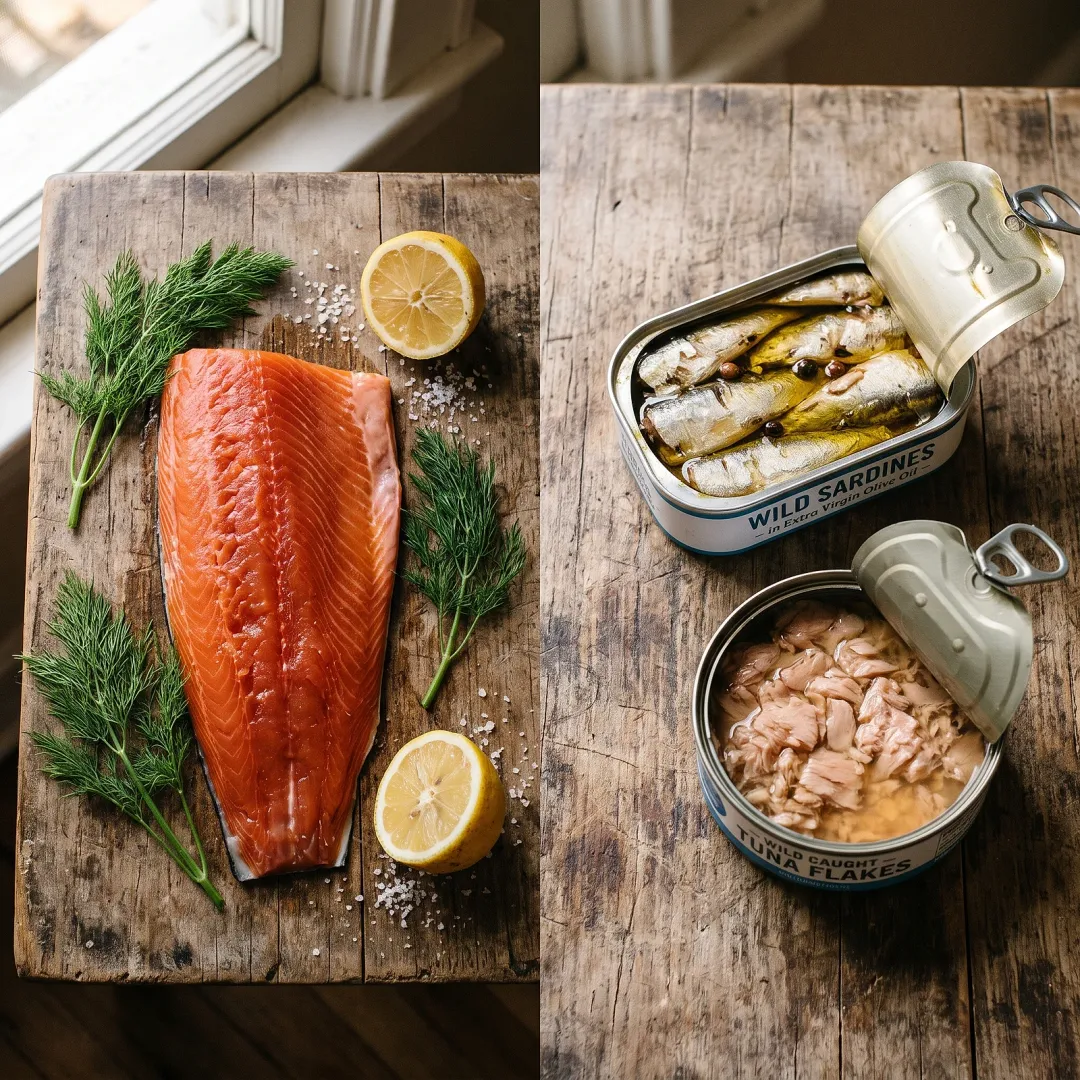

Salmon sits at the top of almost every real-food "eat more of this" list, and for good reason. The omega-3 content, the protein quality, the vitamin D that most of us are barely getting enough of. But somewhere along the way, "salmon is great for you" turned into "eat salmon every single day," and that leap deserves a harder look. Daily is not the same as often. And the answer is not as simple as yes or no.
Why Salmon Earned Its Reputation
Salmon is genuinely one of the most nutrient-dense foods you can put on a plate, and I am not being hyperbolic about that. A three-ounce serving of cooked wild Atlantic salmon delivers roughly 1,500 to 2,000 mg of combined EPA and DHA, the long-chain omega-3 fatty acids your body cannot efficiently make on its own. Those are the forms of omega-3 that research consistently links to cardiovascular support, reduced inflammatory markers, and brain health, according to the Harvard T.H. Chan School of Public Health.
Beyond the omega-3s, salmon is a complete protein, meaning it contains all nine essential amino acids. It is also one of the few dietary sources of vitamin D that actually moves the needle, with a three-ounce serving providing roughly 70 to 80 percent of the daily recommended intake depending on the variety, per the USDA FoodData Central database. Throw in B12, selenium, and potassium, and yes, this is a legitimately impressive food.
So the instinct to eat it constantly makes sense. When something is that good, more feels better. That is exactly the thinking the rest of this piece is going to push back on.
The Case FOR Eating Salmon Frequently
Before I get into the ceiling, I want to be clear about one thing: eating salmon two, three, even four times a week is not only fine for most healthy adults, it is actively encouraged by mainstream nutrition guidance. The FDA and EPA jointly recommend that adults eat two to three servings (totaling eight to twelve ounces) of a variety of fish per week, specifically because the nutritional benefits outweigh the risks for most people.
Salmon lands on the FDA's "best choices" list, the low-mercury tier, which puts it in a genuinely favorable position compared with higher-mercury fish like swordfish or king mackerel. If you are someone who tends to under-eat protein, who lives in a low-sunlight region, or who does not get a lot of variety in your fat sources, adding salmon two or three times a week could realistically shift your nutritional picture in a meaningful direction.
Frequent, yes. Daily, that is a different question.
Where "Every Day" Runs Into Real Limits
Here is where I want to be straight with you, because a lot of wellness content just stops at "salmon is amazing" and never finishes the sentence.
Mercury. Salmon is low in mercury relative to large predatory fish, but it is not zero. The FDA's mercury monitoring data puts average mercury in salmon at around 0.022 parts per million, which is genuinely low. For most adults eating a normal varied diet, this is unlikely to accumulate to a problematic level at typical serving frequencies. But eating a serving every single day does increase cumulative exposure over time, and pregnant women, nursing mothers, and young children are specifically advised to track their total weekly fish intake carefully.
PCBs and farmed salmon. This one matters more than the mercury conversation for daily eaters. Farmed Atlantic salmon, the kind that makes up the vast majority of what you see at the grocery store, has historically shown higher levels of polychlorinated biphenyls (PCBs) and other persistent organic pollutants than wild-caught varieties. A study published in Science analyzing farmed versus wild salmon from around the world found farmed salmon contained significantly higher concentrations of organochlorine contaminants including PCBs. The researchers noted that consuming more than one serving per month of some farmed varieties could potentially exceed acceptable daily intake levels for certain contaminants when assessed against some health-based guidelines. That research is from 2004 and the industry has made changes since then, but the underlying variable (what farmed fish are fed) has not been fundamentally restructured.
The practical upshot is not "never eat farmed salmon." It is that eating farmed salmon every single day without rotation is a different risk calculation than eating it twice a week.
Cost and food diversity. This one is not a toxicology argument, it is a practical one. Wild-caught salmon runs anywhere from twelve to twenty-five dollars a pound depending on your market and the season. If daily salmon means you are cutting food budget corners elsewhere, the nutritional math stops working in your favor. Real food diversity, rotating proteins, eating a wide variety of species, is actually one of the strongest patterns in the nutrition research. Any single food eaten exclusively, even a great one, narrows your nutrient profile.
Wild vs. Farmed: The Difference Is Bigger Than You Think
If daily salmon is your goal, the wild vs. farmed distinction becomes more important, not less. Wild-caught Pacific salmon, including sockeye, coho, and pink, tends to have a leaner fat profile and lower contaminant load because wild fish eat what they catch in their natural environment rather than a formulated feed pellet. The tradeoff is price and availability.
Farmed Atlantic salmon is not poison. I am not going to say that, and I am not going to tell you to panic over a salmon fillet. But if you are eating it every day, buying wild or verified low-contaminant farmed sources matters more. Look for certifications from the Aquaculture Stewardship Council (ASC) or sourcing from domestic operations with higher environmental standards.
Canned wild salmon, specifically sockeye, is one of the most underused real-food finds out there. It costs a fraction of fresh fillets, it is shelf-stable, and it delivers essentially the same omega-3 and protein payload. If daily fish is your thing and budget is a reality, canned wild salmon is your answer.
The Smarter Play: Rotate Your Fatty Fish
The honest answer to "can I eat salmon every day" is: probably not harmful in the short term for a healthy adult eating wild-caught varieties, but not the best nutritional strategy either, and potentially a contaminant concern if we are talking farmed salmon over months and years.
The smarter play is building a rotation.
Salmon two or three times a week covers your EPA and DHA needs beautifully. Canned tuna (light tuna specifically, which is lower in mercury than albacore) fills in another day or two cheaply and easily. The FDA places light canned tuna on its "best choices" list and notes adults can eat two to three servings per week without concern. Sardines are another one I have been pushing for a while because they are essentially wild, low on the food chain, low in mercury, loaded with calcium and omega-3s, and cost about two dollars a can. Mackerel (Atlantic, not king), herring, and anchovies round out the rotation.
This approach gets you the omega-3 benefits five or six days a week without over-relying on any single species, keeps your costs manageable, and diversifies your nutrient profile in a way that mono-eating salmon simply cannot do.
If you are specifically trying to push your omega-3 intake higher because your diet has been low in it, talk to your doctor or a registered dietitian before making big daily shifts. And if you are pregnant or nursing, follow the current FDA/EPA guidance on fish consumption specifically for your situation, because the weekly caps there are real and worth knowing.
What This Looks Like in a Real Week
Here is a rough rotation that gets you the fatty-fish benefits without painting yourself into the daily-salmon corner:
Monday: Canned light tuna over a big salad with olive oil and capers. Fast, cheap, solid protein.
Wednesday: Baked or pan-seared wild salmon fillet. This is your star of the week. Do it right.
Friday: Sardines straight from the can on grain-free crackers or mashed onto cucumber rounds with a squeeze of lemon and some red onion. If you have never tried sardines this way, hold your judgment until you do.
Saturday or Sunday: A second salmon serving if you love it, or swap in Atlantic mackerel or fresh cod for a different flavor profile.
That is four fish meals in a week. You are well inside the FDA's recommended range, you are covering your omega-3 bases, and you are eating a variety of species rather than doubling down on one.
And yes, the canned tuna and sardines are not glamorous. Neither is my grocery bill, and I would like to keep it that way.
---
This article is for general informational purposes only and is not medical advice. Always consult a qualified healthcare professional before making changes to your diet or health routine.
Key Takeaways
- Salmon is one of the most nutrient-dense foods available, delivering EPA, DHA omega-3s, complete protein, and vitamin D in a single serving.
- The FDA recommends two to three servings (8 to 12 oz total) of a variety of fish per week for most adults, with salmon on the low-mercury "best choices" list.
- Eating farmed salmon every single day raises contaminant considerations (especially PCBs) that do not apply at typical two-to-three-times-per-week frequency.
- Wild-caught salmon, including canned sockeye, is a lower-contaminant option and dramatically more affordable than fresh wild fillets.
- Rotating salmon with other fatty fish like canned light tuna, sardines, and Atlantic mackerel gets you daily omega-3 benefits without over-relying on any one species.
- Pregnant women, nursing mothers, and young children should follow current FDA/EPA fish consumption guidance specifically tailored to their needs.
Frequently Asked Questions
Is it safe to eat salmon every day?
For most healthy adults, eating salmon every day is unlikely to cause harm in the short term, especially if it is wild-caught. That said, the FDA recommends two to three servings (8 to 12 oz total) of a variety of fish per week rather than a single species daily. Farmed salmon carries a higher historical contaminant load (including PCBs) than wild-caught, which is a consideration worth weighing for daily consumption over the long term. Pregnant women, nursing mothers, and young children should follow the specific FDA/EPA guidance on weekly fish intake. When in doubt, talk to your doctor.
What is the difference between wild-caught and farmed salmon for daily eating?
Wild-caught salmon, particularly Pacific varieties like sockeye, coho, and pink, generally has a lower concentration of persistent organic pollutants like PCBs compared with farmed Atlantic salmon, based on research including a 2004 study published in Science. Wild salmon eat a natural diet in their environment; farmed salmon are fed formulated feed that has historically introduced higher contaminant levels. For daily or near-daily consumption, sourcing matters more. Canned wild sockeye is an affordable way to get wild-caught salmon regularly.
How many times a week should you eat salmon?
The FDA and EPA recommend adults eat 8 to 12 ounces of a variety of fish per week, with salmon listed as one of the "best choices" due to its low mercury content. Two to three servings of salmon per week fits comfortably within that range and delivers substantial omega-3, protein, and vitamin D benefits. Rotating with other fatty fish like canned light tuna, sardines, and Atlantic mackerel throughout the rest of the week is a smart way to broaden your nutrient intake.
Is canned salmon as healthy as fresh salmon?
Broadly speaking, yes. Canned wild salmon, especially sockeye, retains its omega-3 fatty acids, complete protein, and much of its vitamin D content. The USDA FoodData Central database confirms the nutritional profile is comparable to fresh cooked salmon per ounce. Canned salmon also typically includes the small soft bones, which are edible and add a meaningful dose of calcium. It is one of the best-value real foods available and a practical everyday alternative to expensive fresh fillets.
Sources
- Harvard T.H. Chan School of Public Health: Omega-3 Fatty Acids: An Essential Contribution
- USDA FoodData Central: FoodData Central Database
- U.S. Food and Drug Administration: Advice About Eating Fish
- U.S. Food and Drug Administration: Mercury Levels in Commercial Fish and Shellfish
- Science (journal): Global Assessment of Organic Contaminants in Farmed Salmon
- Aquaculture Stewardship Council: ASC Certification Standards
This article is for general informational purposes only and is not medical advice. Always consult a qualified healthcare professional before making changes to your diet or health routine.




Join the conversation
What do you think?
Free members can comment, reply and like. It takes ten seconds.