
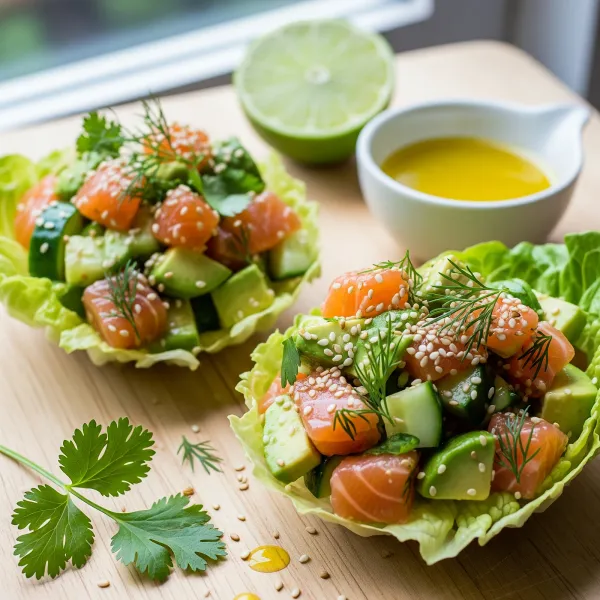
I have been obsessed with this one lately. It sounds fancy, but I promise you it takes about 15 minutes and zero cooking. No turning on the oven. No standing over a hot pan. Just a sharp knife, a bowl, and the most gorgeous combination of fresh, real ingredients you have eaten for lunch in a while. This citrus avocado salmon tartare started because I wanted something that felt a little special midday without making a whole production out of it. I work from home a lot, and I got so tired of throwing together the same boring salad or reheating leftovers for the fifth time. There had to be a better way. Wild-caught salmon is one of those foods I genuinely believe is a gift. I mean that literally. God designed these fish with exactly what our bodies need, and we have spent decades replacing real food like this with processed garbage in a box. The bright citrus, the creamy avocado, the crunch of cucumber, those fresh herbs. It is simple, it is clean, and it tastes like something you would order at a restaurant and feel good paying for. Use the freshest sushi-grade salmon you can find. That part is not negotiable. Talk to your fishmonger, buy from a trusted source, and keep it cold until the moment you dice it. Everything else is easy.
Nutritional Benefits
Wild-Caught Salmon
- One of the richest sources of omega-3 fatty acids (EPA and DHA), which support brain health, reduce inflammation, and protect cardiovascular function.
- High in complete protein, delivering all essential amino acids your body needs for muscle repair and hormone production.
- A strong source of vitamin D, selenium, and B12, all of which are commonly low in people eating a standard American diet.
Avocado
- Loaded with heart-healthy monounsaturated fats that help your body actually absorb the fat-soluble nutrients in this dish.
- High in potassium (more than a banana) and magnesium, two minerals most people are chronically short on.
- Provides nearly 7 grams of fiber per half, supporting gut health and steady blood sugar.
Coconut Aminos
- A soy-free, gluten-free alternative to soy sauce that is paleo and Whole30 compliant.
- Lower in sodium than traditional soy sauce and contains a small amount of naturally occurring amino acids.
- Adds rich, savory umami depth without any of the inflammatory compounds in soy.
Fresh Ginger
- A well-studied anti-inflammatory root that supports digestion and can help reduce nausea and bloating.
- Contains gingerols and shogaols, bioactive compounds that have antioxidant effects in the body.
- Adds a bright, slightly spicy note that makes this dressing sing without needing processed condiments.
Cucumber
- High in water content, making it naturally hydrating and great for skin health.
- Provides a satisfying crunch and fresh flavor while keeping carbs minimal.
- Contains small amounts of vitamin K and silica, which support bone density and connective tissue.
FAQs
Can I make this ahead of time?
You can prep the dressing and dice the salmon and cucumber up to a few hours ahead, but keep everything separate in the fridge. Fold in the avocado and herbs right before serving so the avocado does not brown and the texture stays perfect.
How do I know if my salmon is safe to eat raw?
Buy sushi-grade or sashimi-grade salmon from a reputable fishmonger or high-quality grocery store. This designation means it has been handled and often frozen in a way that reduces the risk of parasites. When in doubt, ask your fish counter directly. Freshness and sourcing are everything here.
Can I use a different fish?
Yes. Sushi-grade ahi tuna works beautifully in this exact recipe. You can also use cooked, chilled shrimp if you prefer not to eat raw fish. The dressing and mix-ins work with all of them.
What can I serve this with besides lettuce cups?
Thinly sliced jicama rounds make a great paleo chip situation. You can also serve it over a bed of mixed greens, spooned into halved avocados, or alongside sliced cucumber rounds for scooping.
Is this Whole30 compliant?
Yes, as written this recipe is fully Whole30 compliant. Just double-check your coconut aminos label to make sure there are no added sugars, and skip the sesame seeds and sesame oil on a strict Whole30 (sesame is technically compliant but some people react to it).
My avocado is not quite ripe. What do I do?
A slightly under-ripe avocado will still taste fine here, but the creaminess will not be quite as nice. If you have a ripe one on the counter, use it. The texture contrast between the creamy avocado and the firm, fresh salmon is a big part of what makes this dish work.
If you make this, I want to see it. Tag me on Instagram so I can share it. And if you are new here and this is your first paleo recipe, welcome. This is a great place to start. Real food does not have to be complicated, and it does not have to be boring. Save this one, share it with a friend who thinks eating healthy means eating sad, and come back because there is a lot more where this came from.
Ingredients
Instructions
Nutrition Facts
| Nutrient | Amount per Serving |
|---|