

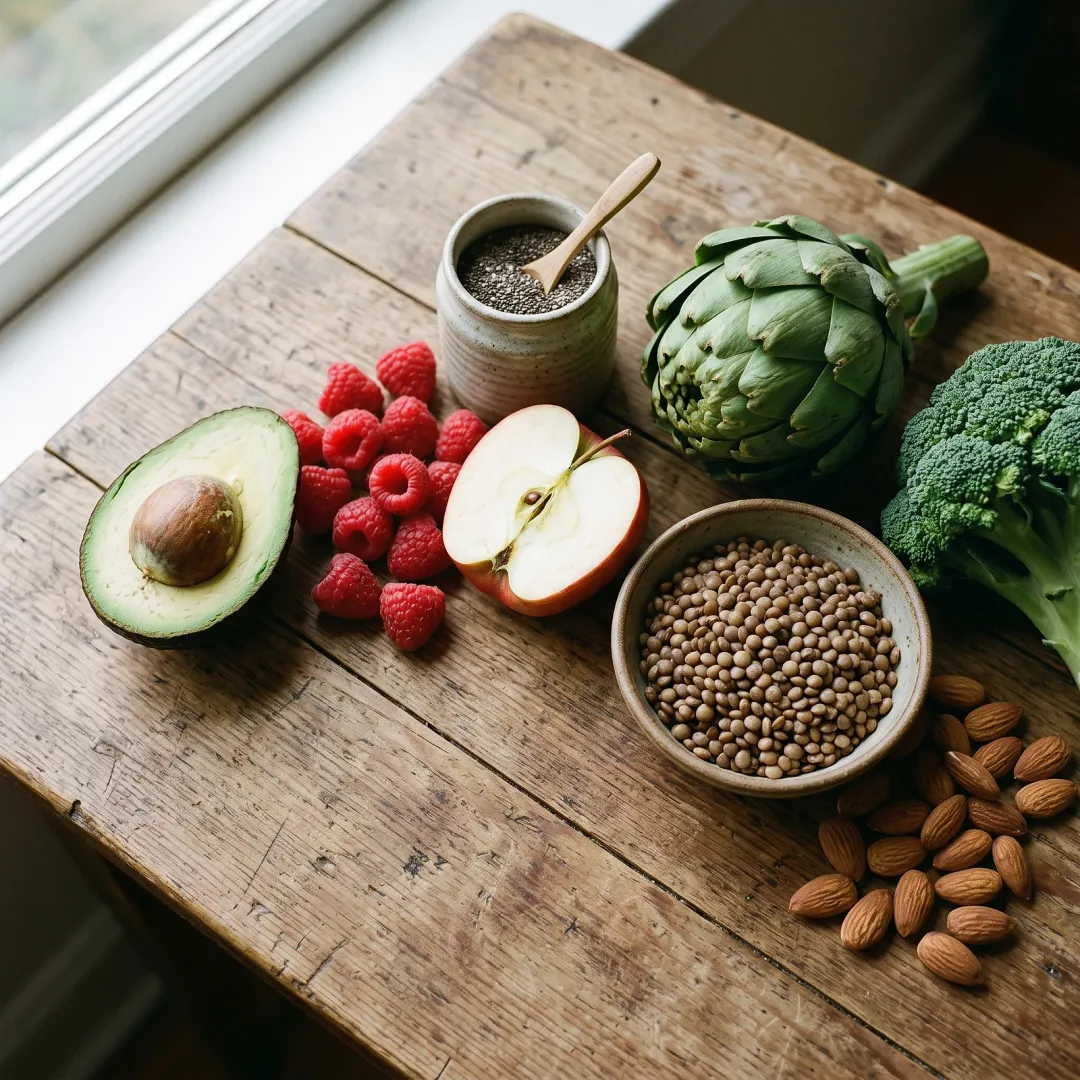

Most Americans are getting roughly half the fiber their bodies need. Half. And we wonder why digestive issues, blood sugar swings, and chronic disease are so common. Fiber is one of those nutrients that sounds boring until you actually look at what it does inside your body, and then it gets interesting fast.
What Is Dietary Fiber, Really?
Fiber is the part of plant foods that your digestive enzymes cannot break down. It passes through your small intestine mostly intact and heads into your large intestine, where things get interesting. There are two main types, and they do very different jobs.
Soluble fiber dissolves in water and forms a gel-like substance in your gut. Think oats, apples, flaxseeds, and legumes. This gel slows digestion, which is part of why soluble fiber helps steady blood sugar and lower LDL cholesterol.
Insoluble fiber does not dissolve. It adds bulk to your stool, keeps things moving, and feeds a healthy gut environment. You find it in the skins of vegetables and fruit, nuts, seeds, and whole grains.
Most whole plant foods contain both types in varying ratios. That is one of the many reasons eating a wide variety of real, whole foods matters so much. According to a comprehensive review published in ScienceDirect, dietary fiber is broadly classified as either dietary (from food) or functional (isolated and added to products), and the effects on your body can differ depending on the source. Real food fiber wins, consistently.
There is also a third category worth knowing: prebiotic fiber. These are specific fermentable fibers, like inulin and fructooligosaccharides, that selectively feed beneficial gut bacteria. Not all fiber is prebiotic, but prebiotic fiber is always a type of dietary fiber.
Why Fiber Matters: What the Research Actually Shows
The body of evidence on fiber is one of the most consistent in all of nutrition science. That is saying something in a field where studies contradict each other constantly.
Gut health and the microbiome
Your gut bacteria ferment soluble fiber and produce short-chain fatty acids (SCFAs) like butyrate, acetate, and propionate. Butyrate is the primary fuel source for the cells lining your colon, and it plays a significant role in reducing gut inflammation and maintaining the integrity of your gut lining. Research published in Frontiers in Nutrition highlights how dietary fiber directly shapes the composition of the gut microbiota and that this relationship cascades into effects far beyond the digestive tract, touching immune function, metabolic health, and even mood.
A 2025 Science Daily report on new research goes even further, noting that scientists are now calling for targeted fiber diets because different types of fiber feed different strains of bacteria, and the specificity of that relationship matters for clinical outcomes. This is frontier-level stuff, and it confirms what functional medicine has been saying for years: your gut is ground zero for whole-body health.
Blood sugar regulation
Soluble fiber slows the absorption of glucose into your bloodstream. That means a gentler rise in blood sugar after meals, less of an insulin spike, and better overall glycemic control over time. For anyone dealing with insulin resistance, prediabetes, or type 2 diabetes, this is not a small thing. The Nordic Nutrition Recommendations 2023 scoping review found consistent evidence linking higher dietary fiber intake with lower risk of type 2 diabetes across populations.
Heart health
Soluble fiber, particularly the beta-glucan type found in oats and barley, binds to bile acids in your digestive tract and helps your body excrete them. Your liver then pulls LDL cholesterol from the bloodstream to make more bile acids, which brings LDL levels down. The Springer review on dietary fiber and health parameters notes that fiber intake is associated with reduced total and LDL cholesterol, lower blood pressure, and reduced markers of cardiovascular risk.
Chronic disease and mortality
Higher fiber intake is consistently associated with lower risk of colorectal cancer, cardiovascular disease, and all-cause mortality. A major NIH-published paper on the Dietary Guidelines for Americans called for more specificity and action around fiber, noting that most Americans fall far short of recommended intake levels and that closing this gap could meaningfully reduce the chronic disease burden in this country. Recommended intake is generally 25 grams per day for women and 38 grams per day for men. Average American intake sits around 15 grams. That gap is not nothing.
Fiber and Weight: The Real Story
I want to be careful here because this space is full of oversimplified claims. Fiber is not a fat-loss magic bullet. But it does support healthy weight in ways that are well-documented.
High-fiber foods tend to be more satiating. They take longer to chew, slow gastric emptying, and trigger satiety hormones like GLP-1 and PYY. The result is that you feel full longer and are less likely to overeat. Fiber also has essentially no caloric impact in the traditional sense since your body cannot absorb it.
The ScienceDirect review on dietary fiber effects notes that fiber intake is inversely associated with body weight and adiposity in observational studies, and that the mechanisms involve appetite regulation, slowed nutrient absorption, and changes in gut hormones. It is not a weight-loss cure, but getting enough fiber from real food is one of the most consistent habits among people who maintain a healthy weight long-term.
Common Fiber Myths Worth Clearing Up
"Grains are the best source of fiber."
Nope. Vegetables, legumes, nuts, seeds, and fruit are all excellent fiber sources, many of them denser in fiber per calorie than most whole grains. If you are paleo or grain-free for any reason, you can absolutely hit your fiber goals without touching a grain.
"More fiber is always better."
Not exactly. A sudden, massive increase in fiber, especially without adequate water intake, can cause bloating, gas, and constipation rather than relief from it. The Frontiers in Nutrition research is clear that the type of fiber matters as much as the quantity, and that individual gut microbiome composition affects how well a person tolerates and benefits from specific fiber sources. Go slow, drink water, and pay attention to how your body responds.
"Fiber supplements are just as good as food fiber."
I have real hesitation here. Isolated fiber supplements do not carry the polyphenols, vitamins, minerals, and phytonutrients that come packaged with fiber in whole food. The food matrix matters. Psyllium husk has its place, and I am not saying never use it, but it should not be a substitute for eating real plants.
"Low-carb and paleo diets are automatically low in fiber."
Only if you are doing them wrong. A real-food paleo plate built around vegetables, fruit, nuts, seeds, and legumes (for those who tolerate them) can be genuinely high in fiber. More on this below.
The Best Real-Food Fiber Sources (Paleo-Friendly and Otherwise)
Here is where I want to give you something practical. These are the foods I actually use and recommend, organized by category.
Vegetables (the heavy hitters)
- Artichokes: roughly 10 grams per cooked medium artichoke
- Jerusalem sJerusalem artichokes (sunchokes): around 10 grams per cup
- Broccoli: about 5 grams per cooked cup
- Brussels sprouts: about 4 grams per cup
- Carrots, beets, sweet potatoes: 3 to 4 grams per cup
- Leafy greens: lower per serving, but volume adds up fast
Fruit
- Avocado: about 10 grams per whole fruit
- Raspberries and blackberries: 8 grams per cup, one of the best fiber sources per calorie out there
- Pears and apples (with skin): about 5 grams each
- Figs: about 3 grams each
Nuts and seeds
- Flaxseed (ground): about 3 grams per tablespoon
- Chia seeds: about 5 grams per tablespoon
- Almonds: about 3.5 grams per ounce
- Pumpkin seeds: about 1.7 grams per ounce
Legumes (if you tolerate them)
- Lentils: about 15 grams per cooked cup
- Black beans: about 15 grams per cooked cup
- Chickpeas: about 12 grams per cooked cup
Legumes are a contested food in strict paleo circles because of lectins and phytates. I get it. But properly prepared legumes, meaning soaked overnight and cooked well, have their antinutrients significantly reduced, and they are some of the most fiber-dense foods on the planet. The NIH paper on dietary fiber and chronic disease specifically calls out pulses as an underutilized, high-impact fiber source. If your gut tolerates them, they are worth considering.
How to Actually Eat More Fiber Without Forcing It
Nobody wants a fiber checklist to follow every day. That is not sustainable and it is not how real people eat. Here is how I think about it instead.
Build your plate around plants first. Half your plate should be vegetables at minimum. Not as a side thought, but as the anchor. If you are eating enough vegetables, you are almost certainly moving the fiber needle in the right direction.
Add a seed or two to everything. Ground flaxseed in your morning smoothie. Chia seeds in your water or a pudding. Pumpkin seeds on your salad. These are easy wins that add up fast.
Eat the skins. Apple peels, potato skins, cucumber skin. That is where a big chunk of insoluble fiber lives. Wash well and eat it.
Snack on real food. A handful of berries, an apple with almond butter, a small handful of almonds. These snacks hit fiber, fat, and protein in one shot and they are infinitely better than anything in a bag.
Go slow with increases. If your current fiber intake is low, do not triple it overnight. Add one or two high-fiber foods per day over a few weeks and drink more water alongside. Your microbiome needs time to adjust, and your gut will thank you for the patience.
Diversify your plants. This is the one I want you to take most seriously. The 2025 fiber research is pointing strongly toward the idea that fiber diversity, meaning different types of fiber from different plants, feeds a broader, more resilient microbiome. Eating the same three vegetables every week is not going to cut it. Aim for variety. Try something new at the farmers market. Rotate your salad greens. Eat the rainbow and actually mean it.
Who Should Be Cautious with High-Fiber Foods
Most people benefit from more fiber. But there are situations where ramping up quickly, or eating certain types, can cause real problems.
If you have irritable bowel syndrome (IBS), particularly the kind with diarrhea-predominant symptoms, certain high-FODMAP fiber sources like apples, onions, garlic, and legumes can trigger flares. Working with a practitioner to identify your specific triggers before going all-in on high-fiber eating is smart.
If you have small intestinal bacterial overgrowth (SIBO), certain fermentable fibers feed the bacteria in the wrong place and can worsen symptoms significantly. This is one area where more fiber is not always better, and where personalization really matters.
If you have Crohn's disease or ulcerative colitis, particularly during a flare, high-insoluble-fiber foods can be irritating to an already inflamed gut lining. Low-residue eating is often recommended during active flares.
And for anyone with significant gut dysbiosis or a compromised gut lining, the fiber conversation is more nuanced. Heal the gut first, then gradually increase fiber diversity. The Frontiers in Nutrition review acknowledges that individual responses to fiber vary significantly based on existing gut microbiome composition, which is exactly why one-size-fits-all advice only gets you so far.
This article is for general informational purposes only and is not medical advice. Always consult a qualified healthcare professional before making changes to your diet or health routine.
Key Takeaways
- Most Americans eat roughly half the fiber they need daily, and that gap is directly linked to higher rates of chronic disease.
- Soluble fiber slows digestion and helps regulate blood sugar and cholesterol; insoluble fiber supports bowel regularity and gut health.
- Gut bacteria ferment soluble fiber into short-chain fatty acids like butyrate, which fuel the gut lining and reduce inflammation.
- The type and diversity of fiber matters, not just the total grams. Eating a wide variety of plants feeds a broader, more resilient microbiome.
- You can absolutely hit your fiber goals on a real-food or paleo diet through vegetables, fruit, nuts, seeds, and legumes (if tolerated).
- Increase fiber gradually, drink plenty of water, and pay attention to how your gut responds. People with IBS, SIBO, or IBD should work with a practitioner.
Frequently Asked Questions
How much fiber should I eat per day?
General recommendations are around 25 grams per day for women and 38 grams per day for men, though individual needs can vary based on age, health status, and gut tolerance. Most Americans average only about 15 grams daily. Rather than obsessing over an exact number, focusing on eating a wide variety of whole plant foods, vegetables, fruit, nuts, seeds, and legumes if you tolerate them, will naturally move you in the right direction.
Can you get enough fiber on a paleo or grain-free diet?
Yes, absolutely. Grains are not the only or even the best source of fiber. Avocados, raspberries, artichokes, broccoli, chia seeds, flaxseed, almonds, and legumes (for those who include them) are all high-fiber real foods that fit within a paleo framework. A plate built around diverse vegetables, quality protein, and healthy fats can easily meet fiber needs without any grains at all.
What is the difference between soluble and insoluble fiber?
Soluble fiber dissolves in water and forms a gel in your digestive tract, which helps slow digestion, steady blood sugar, and support healthy cholesterol levels. Insoluble fiber does not dissolve; it adds bulk to stool and helps keep digestion moving regularly. Most whole plant foods contain both types, which is one more reason why eating a variety of real, whole foods beats relying on any single supplement or packaged product.
Can eating too much fiber cause problems?
Yes, for some people. Increasing fiber intake too quickly without drinking enough water can cause bloating, gas, and constipation. People with IBS, SIBO, or inflammatory bowel disease may find that certain high-fiber or high-FODMAP foods worsen their symptoms. The best approach is to increase fiber gradually, stay well hydrated, and pay attention to how your body responds. If you have a known gut condition, work with a qualified healthcare practitioner before making big dietary changes.
Sources
- ScienceDirect: Effects of dietary fiber on human health
- Frontiers in Nutrition: Dietary fiber influence on overall health
- Springer: Dietary Fiber: Importance and Impact on Health Parameters
- NIH / PubMed Central: The Dietary Guidelines for Americans (2020-2025): Pulses, Dietary Fiber, and Chronic Disease Risk
- Science Daily: Scientists call for targeted fiber diets to boost health
- NIH / PubMed Central: Dietary fiber, a scoping review for Nordic Nutrition Recommendations 2023
This article is for general informational purposes only and is not medical advice. Always consult a qualified healthcare professional before making changes to your diet or health routine.




Join the conversation
What do you think?
Free members can comment, reply and like. It takes ten seconds.