

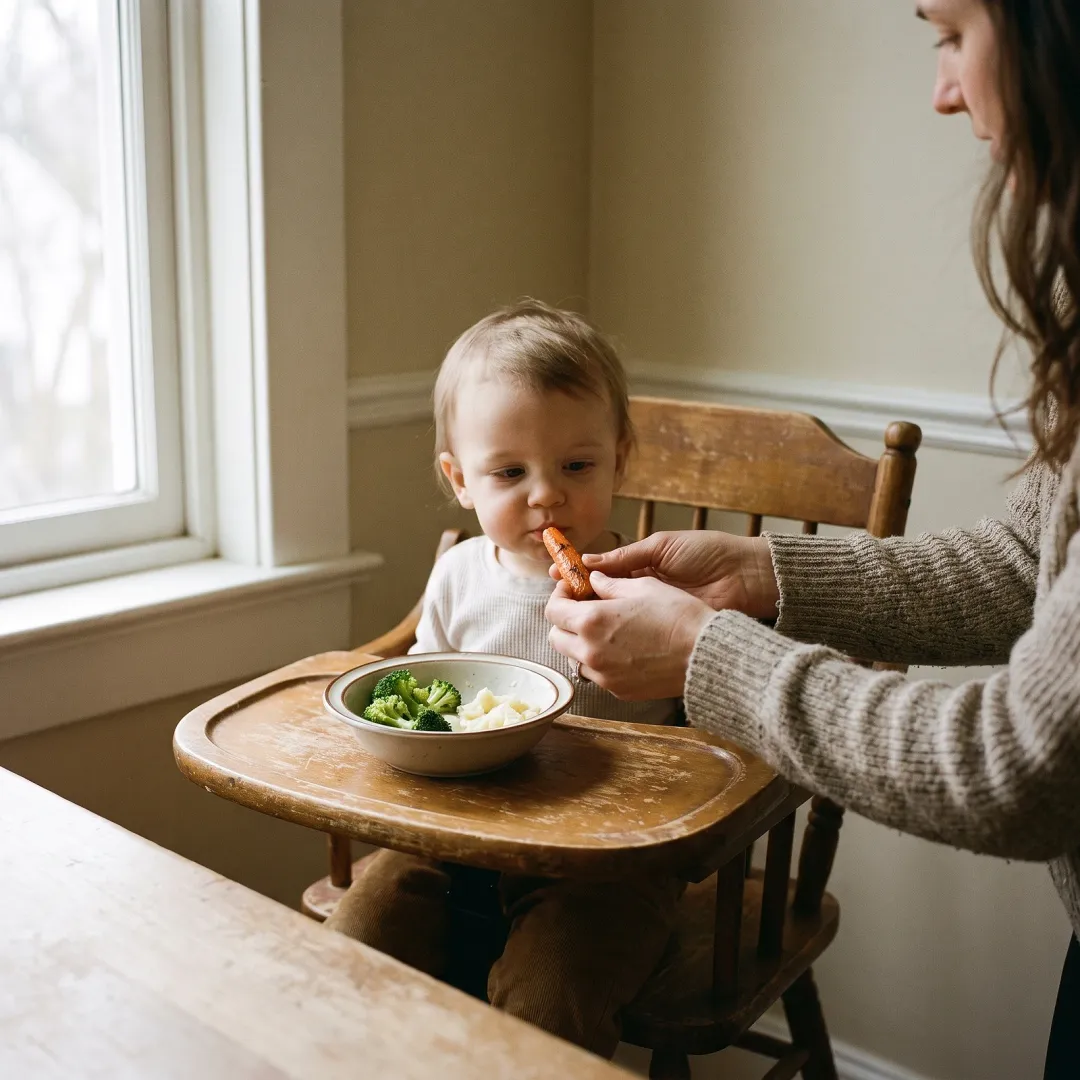

A study stopped me in my tracks recently. Not because it was surprising, exactly, but because it put hard numbers on something I have believed for years and could never fully prove. The food you give a baby in the first two years of life may be shaping their cancer risk, their biological age, and their relationship with food all the way into their seventies and eighties. Seventy years. Let that sink in.
Britain's Postwar Sugar Ration: An Accidental Experiment Nobody Could Have Planned
After World War II, Britain rationed sugar until September 1953. Not because anyone was trying to run a nutrition study. Because there wasn't enough to go around. But what that period created, completely by accident, was one of the cleanest natural experiments in nutrition science we will probably ever see.
Researchers at the University of Southern California took advantage of this and published findings in late 2024 examining what happened to children born before and after that rationing ended. Babies born or conceived during rationing spent their critical first 1,000 days with dramatically lower sugar exposure. And decades later, the differences were measurable.
People who lived those first two years under rationing had lower rates of several cancers. They showed signs of slower biological aging, meaning their cells looked younger than their chronological age suggested. They were also, still, eating less sugar and maintaining healthier overall diets around age 50. Think about that. A difference in their food environment before they could even form a memory was still showing up in their habits and their biology half a century later.
That is not a small finding. That is a seismic one.
The First 1,000 Days: Why This Window Is Not a Marketing Term
You have probably heard the phrase "the first 1,000 days" tossed around in parenting content or on formula packaging. It covers conception through roughly age two. What is actually happening during that window is breathtaking in its complexity. The gut microbiome is being built from scratch. Taste preferences and satiety signals are being calibrated. Metabolic set points are forming. Immune training is underway.
Functional medicine has talked about this for years. Early food environment shapes epigenetics, meaning it can influence which genes get turned on or off, and those changes can persist. The rationing study adds powerful human-scale evidence to what we have seen in animal research and smaller observational studies for a long time.
I am not trying to terrify parents here. I am trying to hand you something important: the knowledge that this window is real, it matters more than almost anything else, and the choices made in it are worth fighting for. Whether that means fighting the convenience of processed baby food, fighting the pressure from well-meaning relatives to give the baby a taste of cake, or fighting the marketing that tells you sweetened purees in a pouch are a healthy "on the go" option.
They are not. And now we have 70 years of British life outcomes to say so.
Who Profits When Babies Eat Sugar Early?
Here is where I am going to say the quiet part loud, because this is the part that makes me genuinely angry.
The baby food industry is a multi-billion-dollar market. And for decades, it has leaned heavily on sweetened products. Flavored cereals marketed for infants. Fruit-juice-heavy pouches with more sugar than a candy bar, ounce for ounce. "Natural flavors" in formulas that prime tiny palates to prefer sweetness. The industry has known, or should have known, that early taste calibration shapes lifelong preference. Flavor scientists have known this for years. That is not a conspiracy theory; it is literally how product development works.
And the regulatory apparatus that is supposed to protect the most vulnerable humans on the planet? The FDA has no specific sugar limits for infant foods. None. Your baby can be fed a product that tastes like dessert, carries a health-forward label with a smiling baby on it, and meets every legal standard currently on the books. That is not an oversight. That is a failure.
This is exactly the kind of food-transparency gap the Make America Healthy Again movement is trying to close: not with a new drug, not with a new supplement, but by demanding that what goes into the mouths of babies be honest, whole, and actually health-promoting. I am fully aligned with that fight. Our kids deserve it.
What Real-Food Feeding in the First 1,000 Days Actually Looks Like
Okay, so what do we do with this? Because I never want to drop a pile of alarming information on you and walk away. That is not coaching. That is just fear-mongering with a real-food logo on it.
The good news is that the blueprint is not complicated, even if it is countercultural.
If you are pregnant or breastfeeding right now, your diet matters. What you eat influences the amniotic fluid and breast milk your baby is exposed to, priming their palate early. Real, whole food for you is real, whole food for them.
When solid foods start, around four to six months depending on your child and your pediatrician, lead with vegetables. Not sweet potatoes and fruit first because they are "easiest." Bitter greens, mild vegetables, broth-cooked things. Build the palate toward savory and complex first. The rationing study kids grew up in an era before hyperpalatable processed food existed. Their normal was just food. We can recreate that.
Avoid sweetened pouches as a staple. An occasional pouch on a long travel day is not going to wreck your kid. But if pouches are the primary way your baby eats vegetables, they are also getting a sugar hit with every meal and learning that vegetables taste sweet. Real vegetables do not taste sweet. And that mismatch matters down the road.
Skip juice entirely in the first year. The American Academy of Pediatrics has said this for years. Whole fruit, not juice. The evidence on juice and depression in adults is interesting, but for infants and toddlers, juice is sugar water with a halo, and they do not need it.
Feed them what you eat. This one is simple in theory and hard in practice, but it is worth repeating. Babies who eat at the family table, with real food, in the flavors and textures the rest of the family eats, build a relationship with real food that packaged baby food simply cannot replicate.
The Stewardship Piece, Because I Have to Say It
I see this through a faith lens and I am not apologizing for that. These children are not ours to do whatever is convenient with. They are given to us, for a time, to be stewarded. And stewardship means doing the hard thing when the easy thing would hurt them.
Giving your baby a sweetened pouch every day because it keeps them quiet in the car is understandable. I am not here to shame anyone. Parenting is relentlessly hard. But the rationing study is a mirror, and what it shows us is that the food decisions made before a child can speak for themselves echo for a lifetime.
That is weight I feel. I think you do too, or you would not be here.
So we do what we can. We choose real food when we can. We push back on the industry messaging when we can. We talk to other parents and pass this information on. We advocate for regulation that actually protects infant health instead of protecting market share. And we give ourselves grace on the days we do not get it perfect, because perfection was never the goal. Intention is the goal.
The first 1,000 days are not a second chance. They are a first one. And they are worth every bit of effort we give them.
---
This article is for general informational purposes only and is not medical advice. Always consult a qualified healthcare professional before making changes to your diet or health routine.
Key Takeaways
- A landmark natural experiment using Britain's postwar sugar rationing found that lower sugar exposure in the first 1,000 days was linked to lower cancer rates, slower biological aging, and healthier diet quality 70+ years later.
- The first 1,000 days (conception through age two) are when the gut microbiome, metabolic set points, and taste preferences are established, making early food environment one of the most powerful health levers we have.
- The U.S. has no specific added sugar limits for infant foods, leaving babies legally exposed to products that are heavily sweetened but carry health-forward labeling.
- Real-food feeding in the first two years, starting with vegetables and savory flavors, breastfeeding when possible, and skipping juice and sweetened pouches as staples, is supported by the evidence and worth the countercultural effort.
- This is a food-transparency issue, not just a parenting one. Demanding honesty in infant and toddler food labeling and regulation protects the most vulnerable people who cannot advocate for themselves.
Frequently Asked Questions
What are the first 1,000 days and why do they matter for health?
The first 1,000 days refers to the window from conception through roughly age two. During this period the gut microbiome is being established, taste preferences are being calibrated, metabolic set points are forming, and epigenetic patterns are being laid down. Research suggests this window has an outsized influence on long-term health outcomes including metabolic health, immune function, and even cancer risk.
Does early sugar exposure really affect health decades later?
A natural experiment using Britain's postwar sugar rationing found that people with lower sugar exposure in their first 1,000 days had lower rates of several cancers, signs of slower biological aging, and healthier diets at middle age compared to those born after rationing ended. This type of natural experiment is considered especially valuable because it is not subject to many of the confounders that limit other nutrition studies.
Does the FDA regulate sugar in baby food?
As of this writing, the FDA does not have specific added sugar limits for infant or toddler foods. Products can legally contain significant amounts of added or concentrated sugar while carrying health-positive labeling. Advocates and researchers have called for stronger regulation in this area.
What should I feed my baby to reduce early sugar exposure?
This is a question best discussed with your pediatrician or a qualified healthcare provider for your specific child. General real-food guidance from a coaching perspective includes leading with vegetables and savory flavors when introducing solids, avoiding juice in the first year, limiting sweetened pouches as a staple, and including your baby in family table eating with whole, minimally processed foods as much as possible.
Sources
- ScienceDaily Nutrition: What you eat before age 2 may affect your health 70 years later
- ScienceDaily Diet & Weight Loss: A daily glass of fruit juice was linked to lower depression scores
This article is for general informational purposes only and is not medical advice. Always consult a qualified healthcare professional before making changes to your diet or health routine.




Join the conversation
What do you think?
Free members can comment, reply and like. It takes ten seconds.