

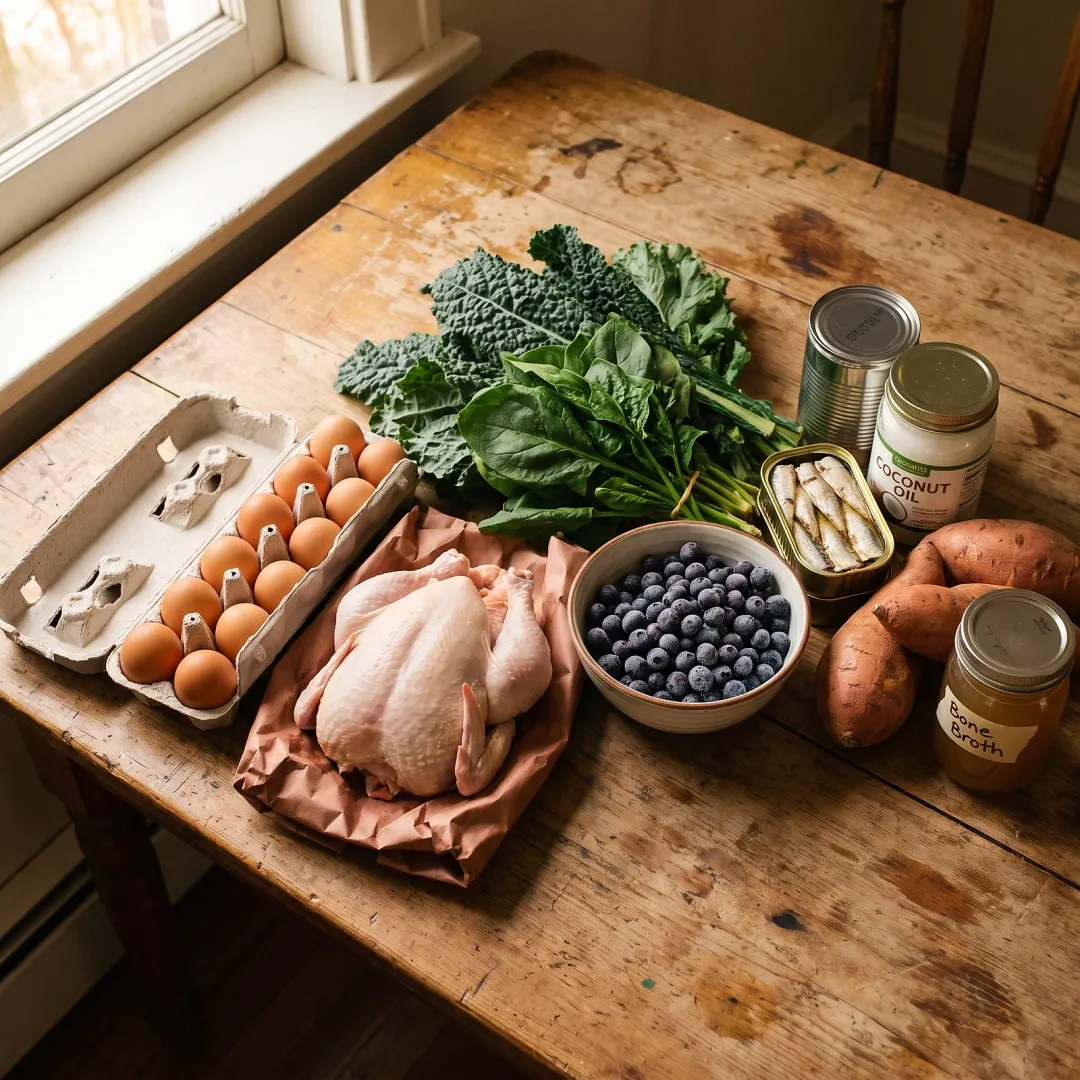

People tell me all the time that they want to eat this way but they just can't afford it. I hear you. I really do. And I am not going to sit here and pretend that a pound of grass-fed ground beef costs the same as a box of mac and cheese. It doesn't. But I will tell you this: eating paleo on a budget is not a fantasy. I have done it, I coach people through it, and the gap between "real food" and "affordable food" is a lot smaller than the internet wants you to believe. You just need a different strategy.
Why the "Paleo Is Expensive" Narrative Is Only Half True
Here is the part nobody talks about: processed food has hidden costs. You pay for it at the register, then again in copays, energy crashes, and medications down the road. I am not saying real food is free. I am saying the math looks different when you zoom out.
That said, your grocery bill is real and it matters right now. So let's get practical. The goal is not perfection. The goal is the best food you can afford, consistently. Your body is worth the effort of figuring this out.
1. Prioritize the Dirty Dozen, Relax on the Rest
You do not have to buy everything organic. Full stop. The Environmental Working Group publishes its Dirty Dozen list every year, ranking the produce with the highest pesticide residue. Those are the ones worth spending more on. Think strawberries, spinach, peppers, apples.
The Clean Fifteen? Conventional is fine. Avocados, onions, cabbage, frozen sweet peas. Buy those conventional and redirect the savings toward organic on the items that matter most. This one habit alone can meaningfully cut your produce bill without you giving up the most important quality wins.
2. Make Friends With Frozen Vegetables and Fruit
Frozen produce is not a compromise. Research from the University of California Davis found that frozen fruits and vegetables are often nutritionally comparable to fresh, and in some cases actually retain more nutrients because they are flash-frozen at peak ripeness.
Frozen wild blueberries, broccoli florets, spinach, and green beans are staples in my freezer year-round. They do not go bad before you use them, they are almost always cheaper than fresh, and they are just as good in smoothies, soups, and stir-fries. Buy a big bag and stop stressing.
3. Build Your Meals Around Cheaper Cuts of Meat
Chicken thighs. Chuck roast. Pork shoulder. Ground beef. Chicken liver. These are the budget heroes of a real-food kitchen, and honestly? They are often more flavorful and more nutrient-dense than the fancy cuts.
Organ meats in particular are some of the most nutrient-dense foods on the planet, and they are almost insultingly cheap. Beef liver, chicken hearts, and kidney are packed with B vitamins, iron, and fat-soluble vitamins. According to Nutrition Data from the USDA, beef liver is one of the most concentrated sources of vitamin A, folate, and B12 you can find in a single food. A pound of it costs less than your morning coffee.
Learn to braise. Slow cookers were practically invented for turning cheap, tough cuts into something you will want to eat all week.
4. Buy in Bulk and Batch Cook
Buying larger quantities of staples almost always costs less per unit. A two-pound bag of almond flour, a bulk package of ground beef, a big jar of coconut oil. These are investments, not splurges.
Couple that with batch cooking and you have a system. Cook a big pot of something on Sunday and you are not scrambling to make good decisions at 6pm on a Wednesday when you are tired and everything sounds easier than cooking. I covered batch-cooking proteins in detail in another post if you want the full breakdown:
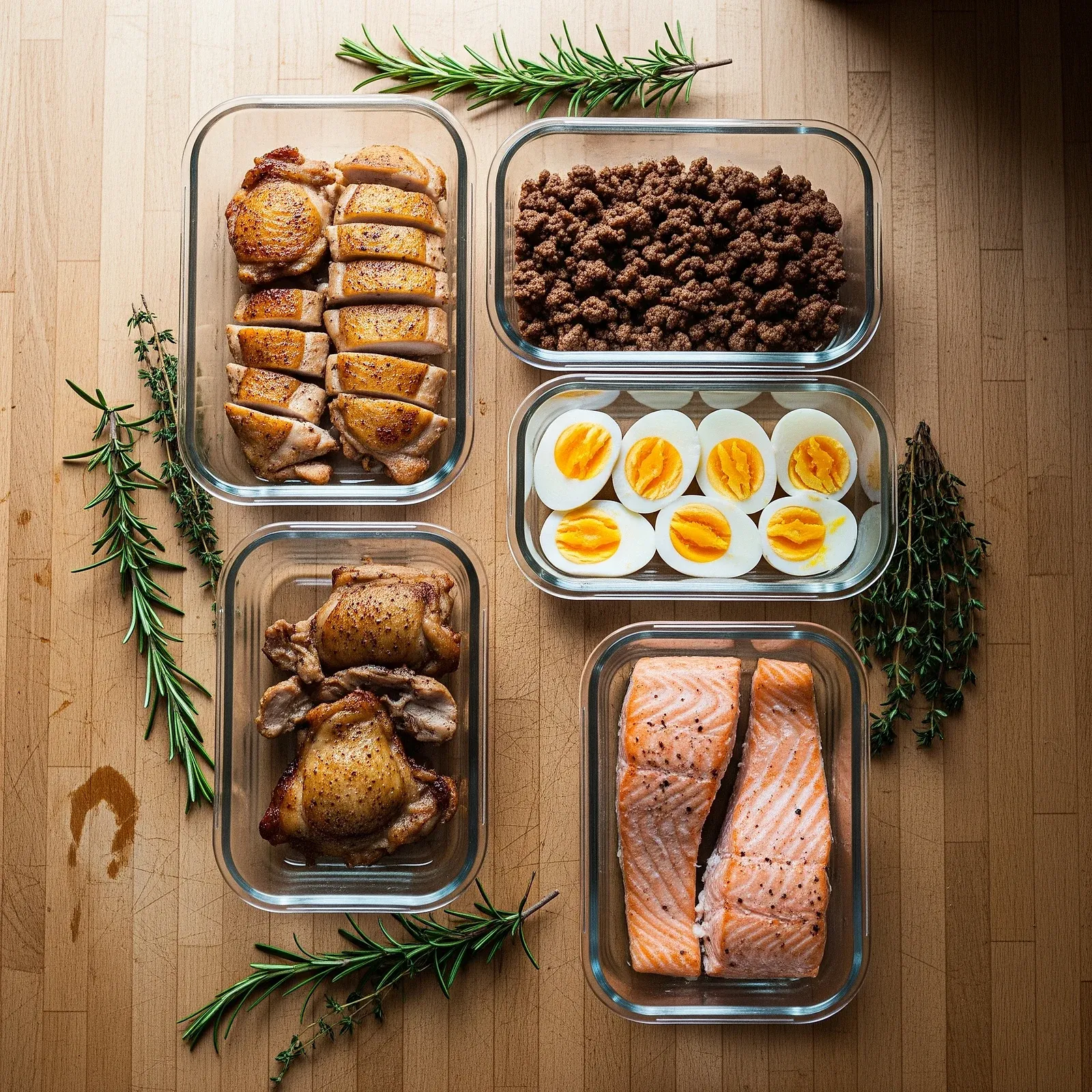
The basic idea: cook once, eat several times. Your budget and your future self will both thank you.
5. Shop the Sales and Build Your Freezer
When grass-fed beef or pastured chicken goes on sale, buy more than you need right now and freeze it. This is not hoarding. This is smart stewardship.
Most vacuum-sealed or well-wrapped meat keeps well in the freezer for three to four months according to the USDA. Ground beef, chicken thighs, pork chops, they all freeze beautifully. If you time your big protein purchases around sales, you can dramatically lower your weekly average spend without buying lower-quality meat.
6. Embrace Eggs (Seriously, Eggs Are a Gift)
A dozen eggs from a local farm or the grocery store is one of the most affordable, nutrient-dense things you can put in your cart. Eggs are a complete protein source containing all nine essential amino acids, plus fat-soluble vitamins like D and A, choline for brain health, and more. The Harvard T.H. Chan School of Public Health notes that eggs are among the most nutritious foods available.
If you can get pasture-raised, great. If the budget is tight this week, conventional eggs are still a thousand times better than a granola bar. Do not let perfect be the enemy of good.
7. Use Bone Broth as a Budget Superfood
Do not throw away your bones. After you roast a chicken or cook a pot roast, throw those bones in a pot or slow cooker with water, a splash of apple cider vinegar, some onion, carrots, and celery scraps, and let it simmer for hours. What you get is a deeply nourishing broth that costs you almost nothing.
Bone broth may support gut health, joint comfort, and collagen production, and it is essentially free if you are already buying whole chickens or bone-in cuts. Use it as a base for soups, to cook vegetables, or just heat a mug of it in the morning. It stretches your food dollar and wastes nothing, which is exactly how we are meant to treat the food we have been given.
8. Grow Something, Anything
You do not need a homestead. A pot of fresh herbs on your windowsill or a small raised bed with zucchini, tomatoes, and leafy greens can cut your produce bill more than you might expect over a season.
Fresh herbs at the grocery store are expensive for what you get. A three-dollar pot of basil from the garden center produces herbs all summer. Zucchini practically grows itself and will feed you aggressively whether you want it to or not. Even apartment dwellers can grow herbs and sprouts indoors. Start somewhere. Tend it. There is something deeply right about growing your own food.
9. Find Your Local Farmers Market (and Go Late)
Farmers markets are not always cheaper than grocery stores, but they can be, especially toward the end of the day when vendors do not want to haul unsold produce home. Show up in the last hour and ask if they have any deals on what is left. Many farmers are happy to negotiate.
You also get to talk to the person who actually grew or raised your food. Know your farmer, know your food. That kind of transparency is worth something, and often those local farms use more sustainable practices even if they are not certified organic, which can cost a fortune in paperwork.
10. Skip the "Paleo" Packaged Products
Paleo cookies, paleo granola bars, paleo protein powders. That stuff is expensive, and most of it is just junk food with better PR. You do not need it.
Real paleo eating is built on whole ingredients: meat, fish, eggs, vegetables, fruits, nuts, seeds, and healthy fats. None of those things require a fancy label or a celebrity endorsement. The more you cook from real, whole ingredients, the less you spend and the better you eat. The packaged "paleo" snack aisle exists to make money, not to make you healthy.
11. Learn to Use Canned and Dried Options Wisely
Canned wild-caught salmon and sardines are some of the cheapest, most omega-3-rich proteins you can buy. The American Heart Association notes that fatty fish like salmon and sardines are among the best dietary sources of omega-3 fatty acids, which are linked to supporting cardiovascular and brain health.
Canned coconut milk (full-fat, BPA-free can) is a fraction of the cost of specialty creams. Canned pumpkin, diced tomatoes, and artichoke hearts are solid pantry staples. Check labels for added sugar and weird oils, then stock up when these go on sale.
12. Rethink "Breakfast" and "Dinner" Foods
Leftover roasted chicken and vegetables for breakfast? Yes. A bowl of bone broth and hard-boiled eggs for lunch? Absolutely. Budget eating means releasing the idea that certain foods only belong at certain meals.
Some of the most affordable and nourishing paleo meals are just leftovers eaten at a different time of day. A big pot of slow-cooked meat and vegetables can be breakfast, lunch, and dinner across two days. That is not boring. That is efficient, and it is a much older way of eating than we realize.
A Note on Stewardship
I believe our bodies are a gift. And stewardship, real stewardship, is not just about buying the most expensive version of everything. It is about being thoughtful, reducing waste, learning to cook, choosing the best you can genuinely afford, and doing it consistently.
You do not have to shop at a boutique health food store to eat well. You do not have to spend twice your grocery budget to respect your body. You just have to be intentional. That is something every single one of us can do, regardless of income.
Start with one or two of these strategies this week. Pick the ones that feel most doable right now and go from there. Progress beats perfection every single time.
---
This article is for general informational purposes only and is not medical advice. Always consult a qualified healthcare professional before making changes to your diet or health routine.
Key Takeaways
- Use the EWG Dirty Dozen list to decide where to spend on organic and where to save with conventional.
- Frozen produce is nutritionally comparable to fresh and often significantly cheaper.
- Cheap cuts like chicken thighs, chuck roast, and organ meats are nutrient-dense budget heroes.
- Batch cooking on the weekend saves money and prevents expensive, tired weeknight decisions.
- Skip packaged "paleo" products. Real paleo is built on whole ingredients, not fancy labels.
- Eggs, canned sardines, and homemade bone broth are the most affordable, nutrient-dense items you can buy.
- Buy proteins on sale and freeze them to lower your weekly average cost without sacrificing quality.
Frequently Asked Questions
Is eating paleo actually more expensive than a regular diet?
It can be, especially if you are buying premium cuts and all-organic everything. But it does not have to be. Strategies like buying cheaper cuts of meat (chicken thighs, ground beef, organ meats), choosing frozen produce, skipping packaged paleo products, and building a freezer stockpile during sales can bring your paleo grocery bill much closer to a conventional one. The cost gap is real but far smaller than most people assume.
What are the cheapest paleo-friendly foods I can buy?
Eggs, chicken thighs, ground beef, pork shoulder, canned sardines, canned wild salmon, frozen vegetables, sweet potatoes, cabbage, onions, garlic, coconut oil, and organ meats like beef liver are all affordable and genuinely nutrient-dense paleo staples. Building your meals around these rather than expensive specialty products is the single biggest budget move you can make.
Is frozen produce okay on a paleo diet?
Yes, absolutely. Frozen vegetables and fruits are flash-frozen at peak ripeness, which locks in nutrients. Research from UC Davis found that frozen produce is often nutritionally comparable to fresh, and sometimes retains more of certain vitamins. For budget paleo eating, frozen broccoli, spinach, wild blueberries, and green beans are excellent staples.
Do I have to shop at Whole Foods or a health food store to eat paleo?
Not at all. Regular grocery stores, Costco and other warehouse clubs, farmers markets, and even discount grocers carry plenty of paleo-friendly whole foods. The key is knowing what to look for: whole meats, eggs, produce, and fats with minimal ingredients, not a specific store's logo on the bag.
Sources
- Environmental Working Group: EWG's Shopper's Guide to Pesticides in Produce (Dirty Dozen)
- Journal of Agricultural and Food Chemistry: Vitamin retention in eight fruits and vegetables: a comparison of refrigerated and frozen storage
- USDA FoodData Central: Beef Liver, Cooked: Nutritional Data
- USDA Food Safety and Inspection Service: Freezing and Food Safety
- Harvard T.H. Chan School of Public Health: The Nutrition Source: Eggs
- American Heart Association: Fish and Omega-3 Fatty Acids
This article is for general informational purposes only and is not medical advice. Always consult a qualified healthcare professional before making changes to your diet or health routine.




Join the conversation
What do you think?
Free members can comment, reply and like. It takes ten seconds.