
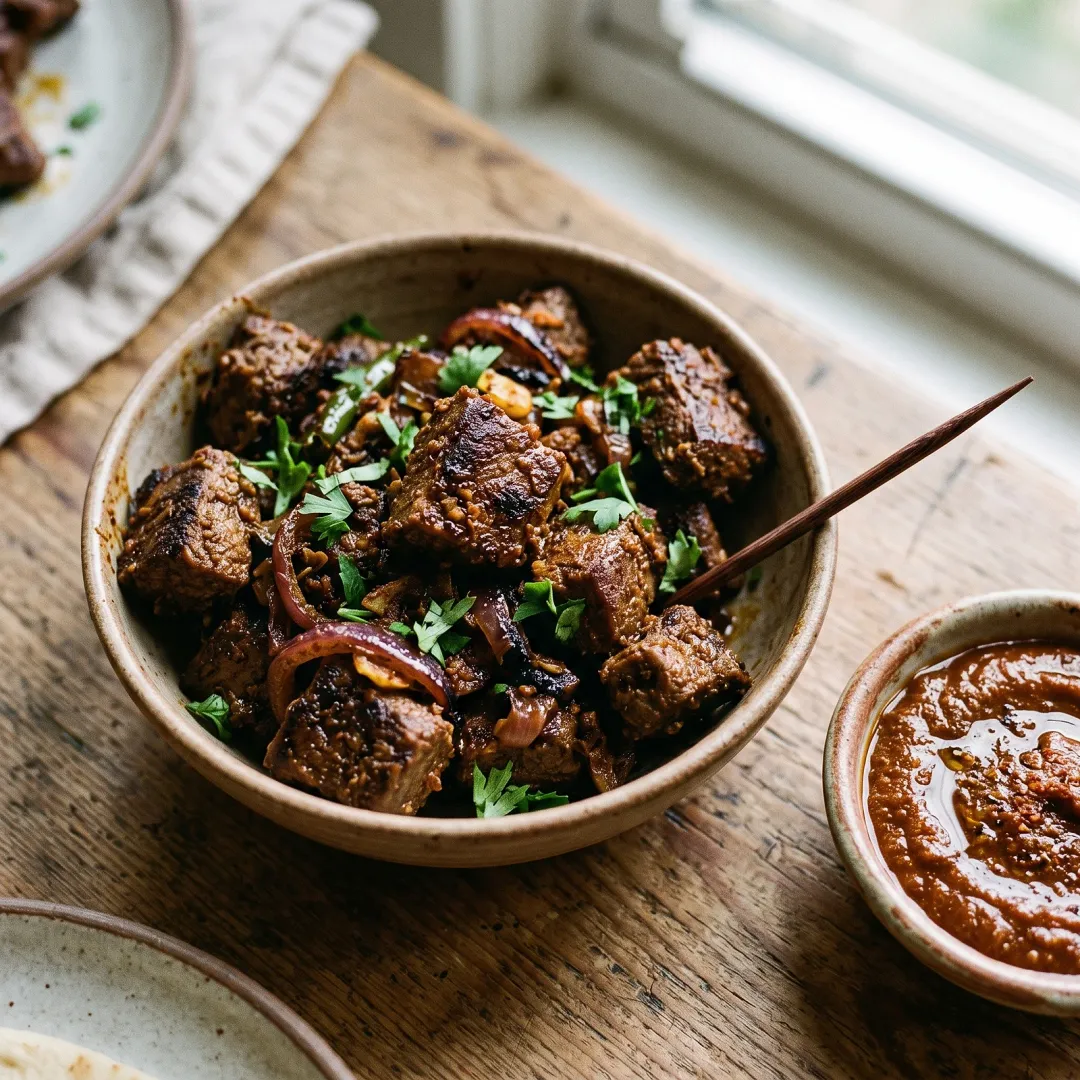

Most people have never cooked goat. A lot of people have never even eaten it. And I honestly think that is one of the great tragedies of the American food landscape, because goat is lean, deeply flavorful, and it has been a staple protein across Africa, the Middle East, and Central America for thousands of years. We just got weird about it somewhere along the way. This recipe is my love letter to Ethiopian tibs, which is traditionally sautéed meat, usually lamb or beef, fired up with spices and aromatics and served as a shared dish. I built this version around goat shoulder because the flavor it brings to the berbere spice blend is something else entirely. That hit of fenugreek and cardamom against the richness of the seared meat and the ghee-softened onions? It tastes like a place, not just a recipe. And yes, I made it paleo. Yes, it is Whole30 compliant. But I did not do that by stripping it down. I did it by leaning into what Ethiopian cooking already does so well: whole spices, clean proteins, good fat, real food. This is not a compromise. This is just how the dish wants to be.
Nutritional Benefits
Goat Meat: The Overlooked Protein Worth Getting to Know
- Goat is one of the leanest red meats available, with less total fat and saturated fat than beef, pork, or even chicken thighs per comparable serving.
- It is a strong source of complete protein with all essential amino acids, making it excellent for muscle repair, satiety, and metabolic support.
- Goat delivers a solid dose of iron (including heme iron, the form most readily absorbed by the body), which matters for energy, cognitive function, and red blood cell production.
- It contains meaningful amounts of vitamin B12, zinc, and potassium, all critical to nervous system function and immune health.
- Because goat is almost universally pasture-raised (it is very difficult to factory-farm them), you are more likely getting meat from animals that lived as they were designed to live.
Berbere Spice Blend: Anti-Inflammatory Heat
- Fenugreek, one of the defining spices in a true berbere blend, has been studied for its role in blood sugar regulation and contains compounds with anti-inflammatory properties.
- Cayenne pepper contains capsaicin, which research links to increased thermogenesis, improved circulation, and reduced inflammatory markers.
- Coriander and cumin both contain antioxidant compounds and have a long history of use in traditional medicine for digestive support.
- Cardamom provides antimicrobial compounds and has been shown to support digestive health and reduce bloating.
- The sheer density of spices in this blend means every bite delivers a spectrum of plant compounds your body can actually use.
Ghee: The Right Fat for the Job
- Ghee has a high smoke point (around 485°F), making it far safer for high-heat searing than any seed or vegetable oil, which oxidize and become inflammatory under high heat.
- It is clarified butter, meaning the milk solids have been removed, leaving it virtually free of lactose and casein, which is why it is accepted on most paleo and Whole30 frameworks.
- Grass-fed ghee is a source of fat-soluble vitamins A, D, E, and K2, as well as butyrate, a short-chain fatty acid that feeds the gut lining and supports intestinal health.
- Fat is critical for absorbing the fat-soluble nutrients in the spice blend, so the ghee here is not just for flavor. It is doing actual nutritional work.
FAQs
Where do I buy goat meat?
Halal butcher shops are your best bet and they almost always have it fresh. Many Middle Eastern and African grocery stores carry it regularly. Some farmers markets have local goat. You can also order it online from heritage meat companies. Ask your regular butcher too, they can often special order it even if it is not on display.
Can I substitute lamb or beef if I cannot find goat?
Yes. Lamb shoulder is the closest substitute in both flavor profile and fat content, and it works beautifully with berbere. Beef sirloin or chuck cut into cubes will also work well, though the flavor is less complex. Goat really is worth seeking out for this one though.
Is this recipe spicy?
It has a real kick from the cayenne, but it is not face-melting. If you are sensitive to heat, start with half the cayenne and taste the spice blend before you commit. You can also reduce the berbere in the dipping sauce. If you love heat, add a pinch more cayenne or serve with fresh sliced jalapeño on the side.
Can I make this ahead of time?
The dipping sauce keeps beautifully in the fridge for up to 5 days and actually gets better overnight as the flavors deepen. The goat is best cooked fresh since it is quick to dry out when reheated, but you can season the cubes up to 24 hours ahead and store them covered in the fridge. Pull them out 15 minutes before you cook so they come closer to room temperature.
Is goat paleo?
One hundred percent yes. Goat is a clean, whole-food animal protein with no processing, no additives, nothing weird. It fits paleo, Whole30, grain-free, gluten-free, and low-carb eating with no modifications needed.
What do I serve this with at a party?
I love putting the platter out with fresh cucumber rounds, endive leaves, and extra flat-leaf parsley for people to scoop up a bite with. If you want something to soak up that sauce, roasted plantain rounds are incredible alongside. Keep toothpicks on the platter so it stays easy to grab.
If you made these, I genuinely want to know what you thought. Goat is a protein I think more people in this space need to try, and I am on a one-woman mission to make that happen. Drop a comment below and tell me if you hunted down the goat or if you went with a substitute. And if you are building a spread of appetizers, go check out the Bacon-Wrapped Jalapeño Mango Poppers and the Crispy Baked Plantain Rounds, the three of them together make a table worth gathering around.
 That Paleo Chick
Real food that heals
That Paleo Chick
Real food that heals
RecipePaleoAppetizerGluten-Free

Fits these needs
Checked ingredient by ingredient. Tap one to see every recipe that fits.
Health needs
New to these? Read our condition guidesAlways check labels on packaged ingredients (gluten-free certification, hidden additives) and follow your clinician's advice.
Ingredients
Instructions
Nutrition Facts Amount per serving
Estimated from the ingredients. Values vary with brands and portions.

Join the conversation
Made it? Tell us how it went.
Free members can comment, reply and like. It takes ten seconds.