
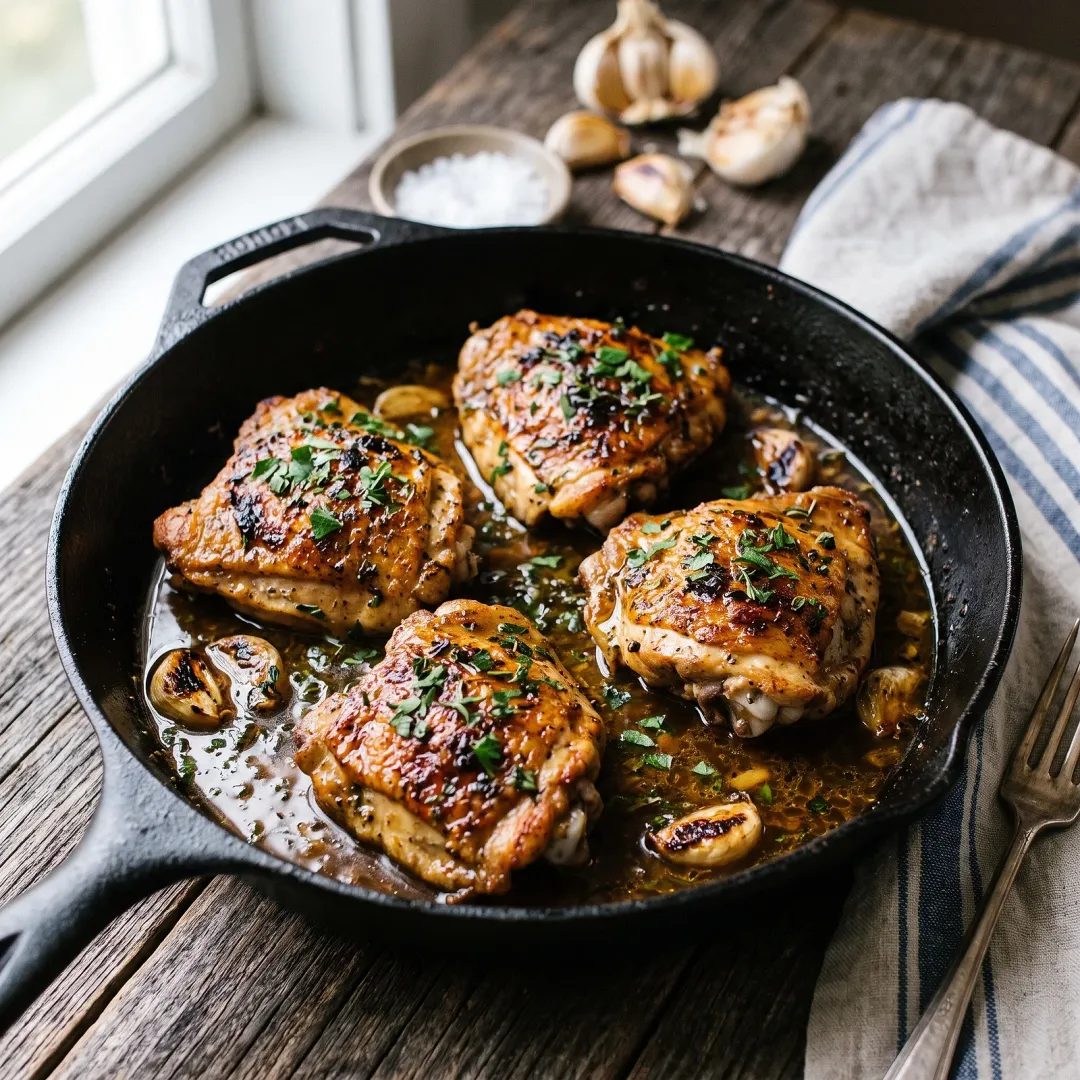

Some nights you pull chicken out of the fridge and it smells like dinner before you have even turned on the stove. That is what happens after this marinade does its work overnight. The coconut milk and apple cider vinegar brine acts the same way old-school buttermilk marinades always have, breaking down the muscle fibers just enough to make the meat incredibly tender, while that raw ACV (yes, the kind with the mother) adds a subtle tang that you taste in every bite without screaming "vinegar" at all. This is fermented cooking at its most practical. No special equipment, no waiting weeks, no fuss. Just real food doing what real food does when you give it time. I love this recipe because it hits that spot where something feels a little special but costs you maybe 15 minutes of active work. The roasted garlic pan sauce is the move that takes it from "good weeknight chicken" to "everybody at the table goes quiet for a second." That silence is the best review a dish can get.
Nutritional Benefits
Apple Cider Vinegar and the Fermentation Factor
- Raw, unfiltered apple cider vinegar contains acetic acid and beneficial bacterial cultures often called 'the mother.' Research published in the journal Bioscience, Biotechnology, and Biochemistry (Kondo et al., 2009) suggests acetic acid may support healthy blood glucose responses after meals.
- Using ACV as a marinade tenderizes protein through mild acid hydrolysis, which may also improve digestibility of the meat itself.
- Fermented foods and ingredients are linked to supporting a diverse gut microbiome, according to a 2021 study in Cell (Wastyk et al., 2021) that found fermented food consumption was associated with increased microbiome diversity.
Bone-In Chicken Thighs: The Cut Worth Choosing
- Chicken thighs provide a meaningful amount of zinc and B vitamins, particularly B3 (niacin) and B6, both of which the USDA Nutrient Database lists as important for energy metabolism and nervous system function.
- The fat in skin-on thighs is primarily monounsaturated and saturated fat from an animal source, which fits naturally within a paleo eating framework that prioritizes whole-food fats over processed seed oils.
- Cooking bone-in keeps the meat moister and allows natural collagen and marrow compounds from the bone to contribute to the finished dish.
Bone Broth Pan Sauce
- Bone broth is a source of collagen-derived peptides and amino acids like glycine and proline. A review in the International Journal of Sport Nutrition and Exercise Metabolism (Shaw et al., 2017) noted that collagen peptide supplementation alongside activity may support connective tissue health.
- Using broth instead of cream or butter to build the pan sauce keeps this dish fully dairy-free while still delivering a rich, savory base.
- The drippings from properly seared, marinated chicken contribute deeply developed flavor compounds (Maillard reaction products) that you simply cannot replicate any other way.
Fresh Herbs: More Than a Garnish
- Parsley is a surprisingly dense source of vitamin K1. The USDA FoodData Central database notes that just two tablespoons of fresh parsley provides a substantial portion of the daily recommended intake.
- Thyme contains thymol, a naturally occurring compound that has been studied for its antioxidant properties in multiple food science reviews.
- Rosemary contains rosmarinic acid and carnosic acid, compounds that research in plant food science has linked to antioxidant activity in cell-based studies.
FAQs
Can I use boneless skinless chicken thighs instead?
Yes, with a couple of adjustments. Boneless thighs will cook faster, so check for 165°F at around 15 minutes in the oven. You will not get the same crispy skin situation, but the flavor from the marinade and pan sauce still comes through beautifully. Pat them very dry before searing to get the best color.
How long does the chicken need to marinate, really?
Four hours is the minimum to get real tenderizing and flavor penetration. Overnight (8 to 12 hours) is ideal. I would not go beyond 24 hours because the acid can start to break the texture down too far and you end up with a slightly mushy surface on the meat.
Is this Whole30 compliant?
Yes, as written this recipe is Whole30-friendly. Just make sure the bone broth you use has no added sugar, sulfites, or non-compliant additives. Read the label, because some store-bought broths sneak in things that knock it out of compliance.
Can I make the roasted garlic ahead of time?
Absolutely. Roasted garlic keeps in the fridge in a small sealed container for up to a week. Having it ready to go makes this dinner even faster on a weeknight. You can also squeeze the cloves into a small jar, cover with a little avocado oil, and refrigerate for up to five days.
What should I serve this with to keep it paleo?
Roasted root vegetables (carrots, parsnips, sweet potato) are a natural fit and can often roast at the same temp as the chicken. Cauliflower mash is another great call to catch all that pan sauce. A simple arugula salad with lemon and olive oil rounds the whole meal out without any extra cooking.
Does the finished dish actually taste fermented or sour?
Not in an obvious way, no. The coconut milk mellows the apple cider vinegar a lot, and the heat of cooking further softens that tang. What you end up with is a subtle depth and brightness in the meat, not a sour or pickle-forward flavor. People who do not know what is in the marinade usually just say the chicken tastes really, really good.
If this one lands in your dinner rotation, I want to hear about it. Drop a comment below and tell me how it went, what you served it with, or what you changed. And if you are new around here and want more real-food dinners that actually work on a Tuesday night, go ahead and subscribe. I am always cooking.
Buttermilk-Style Fermented Chicken Thighs with Roasted Garlic and Herb Pan Sauce
Bone-in chicken thighs marinated in a tangy coconut milk and apple cider vinegar brine, then pan-seared and finished with a roasted garlic herb pan sauce. Deeply flavorful, paleo-friendly, and built for a real weeknight dinner.
Ingredients
- 4 bone-in, skin-on chicken thighs (about 2.5 lbs total)
- 1 cup full-fat coconut milk (canned, unsweetened)
- 3 tablespoons raw, unfiltered apple cider vinegar (with the mother)
- 1 teaspoon fine sea salt (for the marinade)
- 1/2 teaspoon black pepper (for the marinade)
- 1/2 teaspoon garlic powder
- 1/2 teaspoon onion powder
- 1/4 teaspoon smoked paprika
- 1 whole head of garlic
- 2 tablespoons avocado oil, divided
- 1/2 teaspoon fine sea salt (for searing)
- 1/4 teaspoon black pepper (for searing)
- 1/2 cup chicken bone broth (unsweetened, no additives)
- 1 teaspoon fresh lemon juice
- 2 tablespoons fresh flat-leaf parsley, finely chopped
- 1 tablespoon fresh thyme leaves
- 1 teaspoon fresh rosemary, finely minced
Instructions
- MARINATE THE CHICKEN (at least 4 hours, up to overnight): In a large bowl or zip-top bag, whisk together the coconut milk, apple cider vinegar, 1 teaspoon sea salt, 1/2 teaspoon black pepper, garlic powder, onion powder, and smoked paprika. Add the chicken thighs, making sure every piece is fully coated. Cover or seal and refrigerate for at least 4 hours. Overnight gives you the best depth of flavor and the most tender meat.
- ROAST THE GARLIC: When you are ready to cook, preheat your oven to 400°F. Slice the top off the head of garlic to expose the cloves, drizzle with about half a teaspoon of avocado oil, wrap loosely in foil, and roast for 35 to 40 minutes until the cloves are golden, soft, and deeply fragrant. Set aside to cool slightly.
- PREP THE CHICKEN: Pull the chicken out of the marinade and let it sit on a paper towel-lined plate for about 5 minutes. Pat the skin dry as thoroughly as you can. Discard the marinade. Season the skin side with the additional 1/2 teaspoon salt and 1/4 teaspoon pepper.
- SEAR THE CHICKEN: Heat 1.5 tablespoons of avocado oil in a large oven-safe skillet (cast iron is perfect here) over medium-high heat until the oil shimmers. Place the chicken thighs skin-side down. Do not move them. Sear for 7 to 8 minutes until the skin is deep golden brown and releases easily from the pan.
- FINISH IN THE OVEN: Flip the thighs so they are skin-side up. Transfer the skillet to the preheated 400°F oven. Roast for 18 to 22 minutes until the internal temperature at the thickest part reads 165°F on an instant-read thermometer.
- REST THE CHICKEN: Transfer the cooked thighs to a plate and tent loosely with foil. Let them rest for 5 minutes while you build the pan sauce.
- BUILD THE ROASTED GARLIC HERB PAN SAUCE: Return the skillet to the stovetop over medium heat. Squeeze the roasted garlic cloves out of their skins directly into the pan, then use a wooden spoon to smash them into the drippings. Pour in the bone broth and stir, scraping up any browned bits from the bottom of the pan. Let it simmer for 2 to 3 minutes until slightly reduced. Stir in the lemon juice, parsley, thyme, and rosemary. Taste and adjust salt if needed.
- SERVE: Spoon the roasted garlic herb pan sauce generously over the chicken thighs. Serve immediately alongside your favorite roasted vegetables or a simple green salad.
Nutrition per serving
- Calories: 420
- Total Fat: 29g
- Carbohydrates: 6g
- Protein: 34g
- Dietary Fiber: 1g
- Sugar: 2g
 That Paleo Chick
Real food that heals
RecipePaleoDinnerGluten-Free

Fits these needs
Checked ingredient by ingredient. Tap one to see every recipe that fits.
Ingredients
Instructions
Nutrition Facts Amount per serving
Estimated from the ingredients. Values vary with brands and portions.



Join the conversation
Made it? Tell us how it went.
Free members can comment, reply and like. It takes ten seconds.