

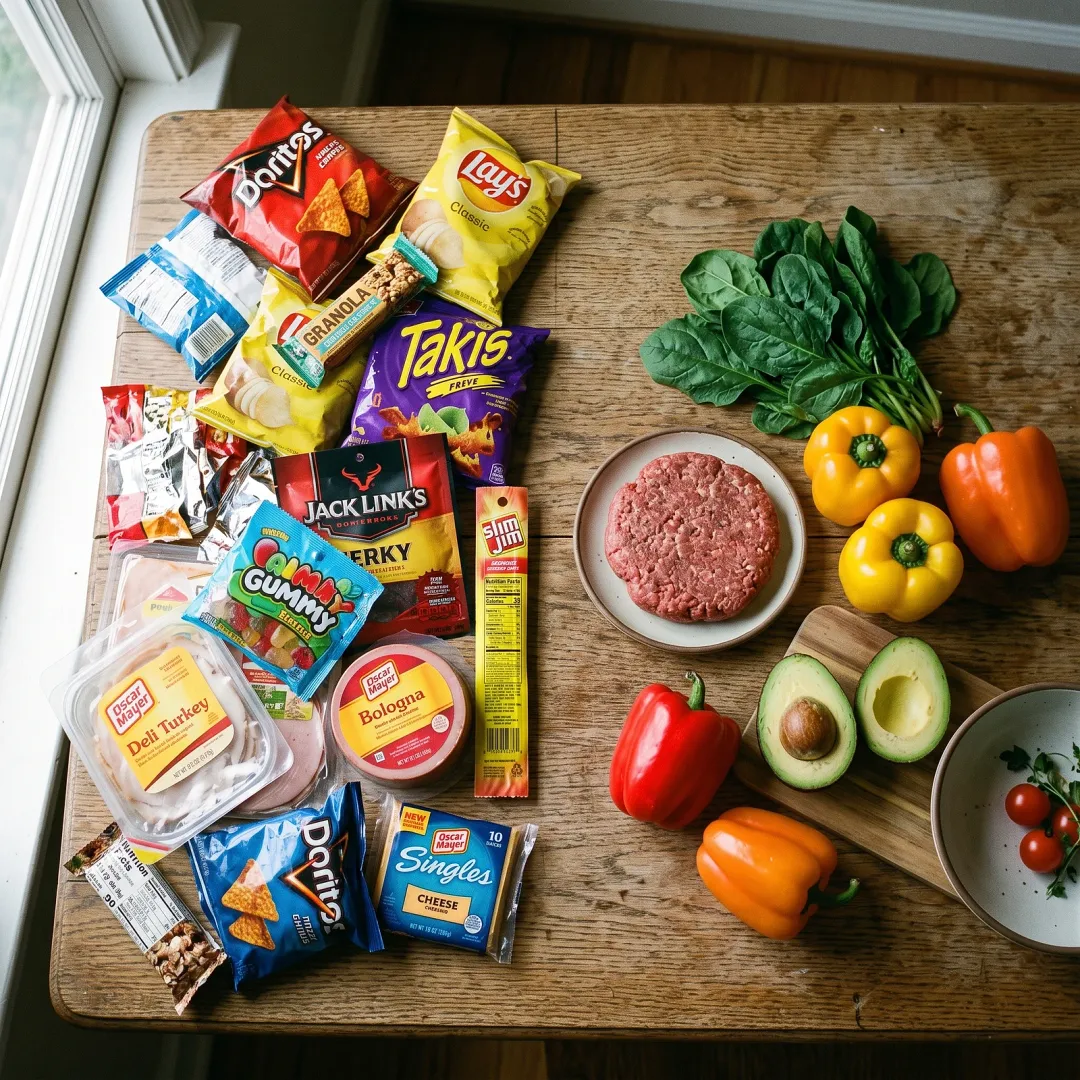

Every week there is a new food to fear. Lectins. Oxalic acid. Non-organic apples. Tap water. Plastic cutting boards. At some point the list gets so long that people either spiral into paralysis or they check out entirely and eat gas-station sushi because nothing matters anyway. Neither of those is where I want you to land.
The truth is that not all food exposures are equal. Some carry a real, documented body of evidence. Others are extrapolated from rat studies using doses no human could ever achieve, or they are amplified by a company that happens to sell the "solution." Knowing the difference is one of the most useful things you can do for your health, because attention is finite. Spend it on the wrong things and you burn yourself out before you ever fix the right ones.
This is the breakdown I wish someone had handed me when I first started this journey. What is actually worth changing, what the evidence says, and what you can let go of without guilt.
Why "Everything Is Toxic" Thinking Backfires
Fear is a real driver of behavior change, and the wellness industry knows it. But chronic, low-grade fear about food also activates the same stress response in your body that actual threats do. When everything feels dangerous, nothing feels manageable, and most people eventually disengage.
The functional medicine framework I work from asks a different question: what is the actual dose, duration, and route of exposure, and what does the evidence show at realistic human levels? That question cuts through a lot of noise very fast.
The exposures worth prioritizing share a few common traits: they show up consistently across multiple independent studies, the effect is seen at doses real people actually encounter, and there is a plausible biological mechanism that researchers understand. The noise, by contrast, is usually one alarming headline, one poorly designed study, or a scare tactic with a product attached.
Let's go through both.
Exposure #1 Worth Changing: Pesticide Residues on High-Load Produce
This one is real, and it is documented. The Environmental Working Group's annual Dirty Dozen list is not perfect science on its own, but the underlying USDA Pesticide Data Program that feeds it is a solid government dataset. And there is independent research to back the concern.
A 2019 JAMA Internal Medicine study following 68,946 French adults found that higher consumption of organic foods was associated with a reduced likelihood of developing certain cancers compared to those who rarely or never ate organic. Observational data, yes, with all the limits that carries. But it adds to a growing body of research that real, sustained dietary pesticide exposure is not nothing.
The practical move here is targeted, not total. You do not need to buy everything organic. Prioritize the produce that consistently shows the highest residue loads: strawberries, spinach, peppers, and apples show up year after year. Thick-skinned produce like avocados, onions, and pineapple consistently land on the Clean Fifteen and are much lower priority. That is a strategic spend, not a panic buy.
Grass-fed beef is also worth mentioning here. Cattle raised on pasture and finished on grass accumulate fewer pesticide residues than those raised in concentrated feeding operations where feed quality is more variable. The swap to grass-fed is one I lean on practically when I am building out a real-food plate.
Exposure #2 Worth Changing: Ultra-Processed Food Additives
The additive category is where I see the most confusion, because people fixate on individual ingredients while missing the forest for the trees.
The research on ultra-processed food (UPF) as a category is becoming hard to ignore. A 2024 meta-analysis published in the BMJ that pooled data from 9.9 million people across 45 studies found that higher UPF consumption was associated with significantly greater risk for 32 different adverse health outcomes, including cardiovascular disease, type 2 diabetes, mental health disorders, and mortality. The associations held even after adjusting for diet quality overall, which suggests something beyond just poor macronutrient profiles is at play.
Researchers point to several suspects: emulsifiers, artificial colorings, and certain preservatives that may alter the gut microbiome or trigger low-grade systemic responses. The emulsifier story in particular is interesting. Animal research published in Nature showed that common emulsifiers like carboxymethylcellulose and polysorbate 80 altered gut microbiota composition and promoted intestinal inflammation in mice. Human trials are still underway, but the mechanism is plausible and the signal is consistent enough to take seriously.
My take: you do not need to memorize a list of 200 banned additives. You need to eat food that has fewer than five recognizable ingredients most of the time. That single habit handles the majority of this exposure without requiring a chemistry degree.
Exposure #3 Worth Changing: High Dietary Nitrite from Processed Meats
This one lands differently from most food scares because it applies to a food a lot of real-food eaters think is fine: cured deli meat, bacon, and hot dogs with synthetic nitrites added.
The World Health Organization classified processed meat as a Group 1 carcinogen in 2015, meaning there is sufficient evidence in humans linking it to colorectal cancer risk. The classification is specifically tied to synthetic nitrites and the nitrosamines they can form during processing and cooking at high heat. Uncured meats with no added nitrites (only naturally occurring nitrates from celery powder) are a different story, though the research there is still evolving.
This does not mean you can never eat bacon. It means the every-day-without-thinking habit of grabbing whatever deli meat is on sale deserves an upgrade. Look for products with no added sodium nitrite, minimal ingredients, and from brands you can actually vet. Grass-fed beef burger patties from a rancher you trust are a cleaner swap for the protein hit without the additive load.
Noise #1: Dietary Lectins (For Most Healthy People)
The lectin panic of the mid-2010s sold a lot of books and a lot of supplements. And yes, lectins are real compounds in beans, grains, and nightshades that in very high doses, or when eaten raw, can interfere with digestion.
But here is the context that gets left out: traditional food preparation methods neutralize the majority of lectins in most foods. Soaking, sprouting, fermenting, and cooking all dramatically reduce lectin content. A review published in Nutrients found that proper cooking essentially eliminates the lectins in red kidney beans that cause problems when the beans are eaten raw or undercooked.
For people with specific autoimmune conditions or severe gut permeability issues, a temporary elimination of high-lectin foods as a clinical tool under the guidance of a practitioner can be useful. That is not the same as telling everyone to throw out tomatoes forever. The broad fear of dietary lectins in cooked, whole foods is not supported by the weight of evidence for the general healthy population.
This one got big because it gave people a reason to avoid legumes and grains (foods that were already being questioned in real-food circles) and because there was a supplement line attached. That is a pattern worth recognizing.
Noise #2: Organic vs. Conventional for Low-Residue Produce
Spending money on organic avocados, onions, asparagus, or sweet corn is, based on current evidence, mostly a financial choice rather than a health necessity. The USDA consistently finds very low to no detectable pesticide residues on these foods whether conventional or organic.
I am not saying organic certification is meaningless. I am saying your dollar has a marginal return, and if budget is a real constraint (it is for most people), this is where I tell people to spend it somewhere else. Prioritize the high-residue produce, quality proteins like grass-fed beef, and reducing your UPF load. Those moves have more evidence behind them than paying a premium for organic onions.
The goal here is not purity. It is strategic reduction of the highest-burden exposures.
Noise #3: "Toxic" Cooking Oils at Normal Home-Cooking Temperatures
The seed oil conversation is real and worth having at the right level. Industrially extracted oils high in omega-6 polyunsaturated fats, consumed in the enormous quantities the modern Western diet delivers, are worth reducing. That is a legitimate concern about the overall dietary pattern.
What is not well-supported: the idea that using a small amount of avocado oil or even a conventional olive oil once in a while at normal sauté temperatures is acutely dangerous. The oxidation concern is real at very high heat or with heavily refined oils used repeatedly, as in commercial deep frying. At home, on a stove, for a few minutes, with a quality oil, you are not poisoning yourself.
The practical takeaway: use stable fats (beef tallow, coconut oil, quality butter or ghee if you tolerate dairy, avocado oil) for your regular cooking, and stop bathing in omega-6-heavy oils as a dietary staple. That is the real move. The granular fear about a single drizzle of olive oil on your salad is noise.
How to Triage Your Own Food Concerns Without Losing Your Mind
A few questions I run through when a new food fear lands in my feed:
First, what is the study design? A rat study using megadoses is not the same as a large human cohort study. One is hypothesis-generating. The other is evidence.
Second, who is funding the research or amplifying the story? Is there a supplement or alternative product being sold alongside the warning? That is not an automatic disqualifier, but it is a flag.
Third, is the effect seen at doses and exposures realistic for a normal human diet? If you would have to eat 47 pounds of something daily to replicate the study conditions, you can breathe.
Fourth, is there consistency across independent research groups? One study is interesting. A 2020 systematic review in Lancet Planetary Health30179-7/fulltext) finding consistent associations across multiple cohorts is a different weight of evidence entirely.
God made this body resilient. It is not made of glass, and it does not require obsessive perfection to function well. What it responds to is a consistent overall pattern: mostly real food, minimally processed, with intentional choices about the highest-burden exposures. That framework, practiced over time, is worth more than any single food swap.
This article is for general informational purposes only and is not medical advice. Always consult a qualified healthcare professional before making changes to your diet or health routine.
Key Takeaways
- Pesticide residues on high-load produce (strawberries, spinach, peppers) are backed by real data; prioritize those for organic over low-residue produce like avocados and onions.
- Ultra-processed food as a category carries the strongest and most consistent body of evidence linking diet to adverse health outcomes; reducing UPF load matters more than any single additive.
- Processed meats with added synthetic nitrites are classified by the WHO as a Group 1 carcinogen; choosing quality, minimally processed proteins like grass-fed beef is a practical upgrade.
- Dietary lectin fear for healthy people eating properly cooked food is largely unsupported by the weight of evidence; proper cooking neutralizes most problematic lectins.
- The seed oil concern is real at the dietary pattern level; the granular fear about a single drizzle of quality oil at home cooking temperatures is mostly noise.
- Use study design, funding, realistic dose, and research consistency to triage food fears before changing your habits.
Frequently Asked Questions
Which foods are most worth buying organic?
Based on USDA pesticide residue data, produce with consistently high residue loads (like strawberries, spinach, bell peppers, and apples) are the highest priority for buying organic. Thick-skinned produce like avocados, onions, and pineapple consistently test very low and are much lower priority. Spending selectively gives you the most risk reduction for your budget.
Are lectins actually dangerous?
For most healthy people eating properly cooked food, the evidence does not support widespread lectin avoidance. Cooking, soaking, and fermenting dramatically reduce lectin content in beans and grains. Raw or severely undercooked beans are a legitimate concern, but cooked whole foods with lectins are generally well-tolerated. People with specific autoimmune or gut conditions may benefit from a temporary elimination under practitioner guidance, but that is a different context from general population advice.
Is eating processed meat really that risky?
The WHO classified processed meat (products like deli meats, hot dogs, and bacon made with added sodium nitrite) as a Group 1 carcinogen based on evidence linking regular consumption to increased colorectal cancer risk. This does not mean one serving sends you to the hospital; it is a risk that compounds with frequency and quantity. Choosing minimally processed, uncured meats without added synthetic nitrites, or swapping to quality whole-food proteins, is a reasonable practical upgrade.
How do I know if a food fear is real or just hype?
Run through four questions: What type of study is this (animal vs. large human cohort)? Is the dose used in the study realistic for a normal diet? Who is funding or amplifying the research, and is there a product attached? And does the finding repeat across independent research groups? A single alarming headline rarely meets all four criteria. A consistent body of independent human research at realistic doses is a different weight of evidence.
Sources
- Environmental Working Group: EWG's 2024 Shopper's Guide to Pesticides in Produce (Dirty Dozen)
- JAMA Internal Medicine: Association of Frequency of Organic Food Consumption With Cancer Risk (NutriNet-Santé Study)
- The BMJ: Ultra-processed food exposure and adverse health outcomes: umbrella review of epidemiological meta-analyses
- Nature: Dietary emulsifiers impact the mouse gut microbiota promoting colitis and metabolic syndrome
- IARC / World Health Organization: IARC Monographs Volume 114: Consumption of Red Meat and Processed Meat
- Nutrients (MDPI): Lectins: Processing and Nutritional Implications
- The Lancet Planetary Health: Food in the Anthropocene: the EAT-Lancet Commission on healthy diets from sustainable food systems
This article is for general informational purposes only and is not medical advice. Always consult a qualified healthcare professional before making changes to your diet or health routine.



Join the conversation
What do you think?
Free members can comment, reply and like. It takes ten seconds.