

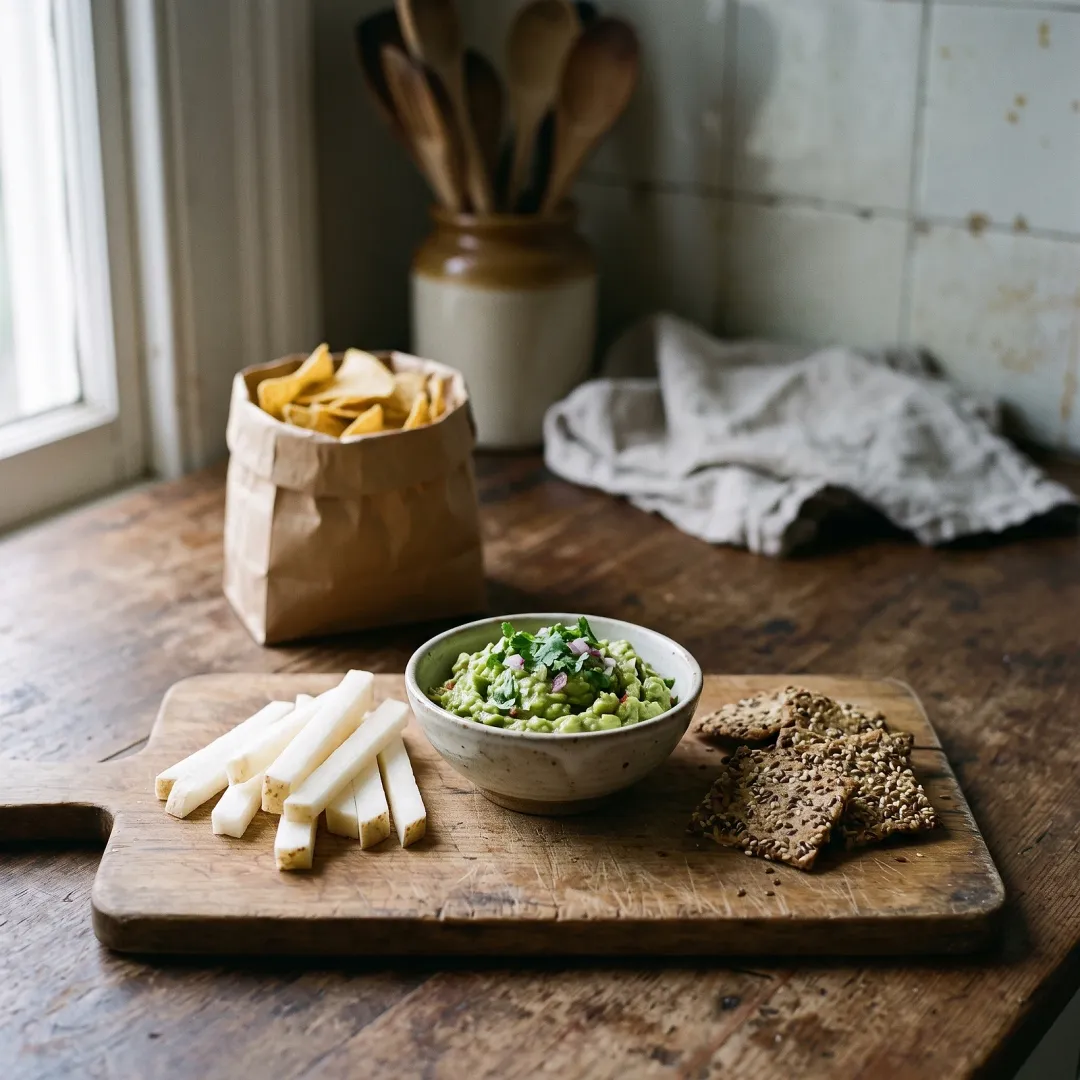

The chip bowl at a party is basically gravity. You walk past it three times telling yourself you're not going to, and then suddenly half the bag is gone and you're standing there licking your fingers. I've been that person. The problem isn't the crunch, it's what most tortilla chips are actually made of.
What's Actually in a Tortilla Chip
Corn, oil, and salt sound simple enough. The issue is the oil. Most mainstream tortilla chips are fried in refined vegetable oils, sunflower, canola, corn, or soybean, which are high in omega-6 fatty acids. The average American already eats far more omega-6 than omega-3, and that ratio matters for how your body manages inflammation. Beyond the oil, many chips contain "natural flavors" (a catch-all that can mean almost anything), maltodextrin, and in some cases MSG under a different name. You're not eating corn. You're eating corn-flavored seed-oil delivery vehicles.
This is the swap that's worth making. Not because chips are poison, but because you can get the same crunch with food that's actually doing something for you.
This article is for general informational purposes only and is not medical advice. Always consult a qualified healthcare professional before making changes to your diet or health routine.
Good: Grain-Free Tortilla Chips (Same Ritual, Cleaner Ingredients)
If the social situation, the guacamole, or your own sanity demands a chip-shaped chip, there are grain-free options made from cassava flour or almond flour that skip the refined seed oils entirely. Brands like Siete use avocado oil instead. Same scoop, same crunch, same dip-ability.
What honestly changes: Price. Grain-free chips cost more, sometimes twice as much per ounce. If budget is tight, these are a special-occasion upgrade, not an everyday thing. That's an honest truth this column is not going to paper over.
When to reach for it: Any time you need an actual chip. Nachos, salsa night, a party spread where a pile of sliced cucumbers would make people think you hate them.
Better: Seed Crackers or Veggie Dippers
Sliced cucumber, bell pepper strips, jicama sticks, or celery hold up to guacamole, salsa, and hummus (if you do legumes) far better than people expect. They add water content, a little fiber, and actual micronutrients with zero refined oil.
Seed crackers made from flax, sunflower, and pumpkin seeds are another solid step up. You can buy them or make a simple sheet-pan batch with just seeds, water, salt, and whatever seasoning you like. They bake thin and crispy and they carry dip just fine.
Jicama is worth a special mention here. It's a root vegetable with a satisfying crunch, mild sweetness, and a decent amount of prebiotic fiber. Cut it into thin planks and it scoops like a champ.
What honestly changes: Texture is different. Jicama has more give than a chip. Crackers can be brittle. Neither will survive a thick, chunky salsa the way a sturdy chip does. Know that going in.
Best: Baked Chicken Skin Crisps or Homemade Veggie Chips
Stay with me on the chicken skin. When you roast a whole chicken or even just thighs, the skin that crisps up in the pan is basically a chip. Pull it off, salt it, and eat it with something bright, a squeeze of lime, some pico de gallo. It is absurdly satisfying and it's nose-to-tail eating that cuts food waste.
For something that looks more like a chip, homemade baked zucchini chips or thin-sliced baked sweet potato rounds made with a drizzle of avocado or coconut oil are as close to a chip as a vegetable can get. Slice them thin (a mandoline helps), season well, and give them enough oven time to actually crisp. Pulling them out too early is the most common mistake.
What honestly changes: Time and effort. These are not weeknight-grab-from-the-bag options. They are weekend-batch, eat-throughout-the-week options. If you're not a meal-prepper, this rung on the ladder may not stick. The grain-free chip swap or the veggie dipper step may be the more realistic long game for you, and that is completely fine.
When the swap isn't worth it: A chip is a chip at a birthday party. If you're standing at a table celebrating someone and the only option is a bag of corn chips, eat the corn chips and enjoy the party. Stress over a handful of corn chips does more damage than the chips do. The swap matters in your house, in your pantry, on a regular Tuesday.
How to Make It Stick
The crunch craving is real. It is not a character flaw. Your brain genuinely responds to crunchy textures as a sensory signal, and trying to kill the craving with willpower instead of satisfying it differently is a losing game.
Pick one rung on this ladder and swap it into one situation this week. The snack you prep on Sunday is the snack you eat on Wednesday when you're tired and hungry and the chip bag is the path of least resistance. Front-load the work and the swap handles itself.
Get your guacamole game tight too. A good dip makes any vessel taste better. Ripe avocado, lime, salt, garlic, diced jalapeño, fresh cilantro. If the dip is excellent, nobody cares what you're scooping it with.
Key Takeaways
- Most tortilla chips are fried in refined seed oils high in omega-6, which is the real problem, not the corn itself.
- Good step: swap to grain-free chips (cassava or almond flour, avocado oil) for the same experience with cleaner ingredients.
- Better step: use jicama planks, sliced veggies, or seed crackers as dippers that also bring real nutritional value.
- Best step: baked chicken skin crisps or homemade veggie chips are the most whole-food option but require real prep time.
- The swap matters at home. At a party, eat the chip and enjoy yourself.
Frequently Asked Questions
What is a healthy swap for tortilla chips on a paleo diet?
On a paleo diet, the easiest swap is grain-free chips made from cassava or almond flour and cooked in avocado oil. From there, jicama planks, sliced bell peppers, and seed crackers are great real-food alternatives that dip just as well. Crispy chicken skin is a more adventurous but genuinely satisfying option.
Are tortilla chips actually bad for you?
It depends on what's in them. Corn itself isn't the issue. The bigger concern with most commercial tortilla chips is the refined seed oils they're fried in, like canola, soybean, or corn oil, which are high in omega-6 fatty acids. Eating them occasionally is not a crisis, but making them a daily habit means regularly consuming refined oils that may not serve your body well long term.
What can I dip in guacamole instead of chips?
Jicama planks are a top pick, they're sturdy, mildly sweet, and scoop guacamole well. Sliced cucumber, bell pepper strips, and celery also work. Grain-free cassava chips are the closest to a traditional chip experience. Seed crackers are a good middle-ground option with more structure than a raw vegetable.
Are grain-free chips actually healthier?
They can be a meaningful upgrade depending on the ingredients. The main win is the oil: grain-free chips from brands like Siete use avocado oil instead of refined seed oils, which changes the fat profile significantly. They're still a processed snack, not a superfood, but as chips go, they're a cleaner option. The honest downside is cost; they're typically more expensive than conventional tortilla chips.
Sources
- NCBI / PMC: The importance of the ratio of omega-6/omega-3 essential fatty acids
- Healthline: Jicama: Nutrition Facts and Health Benefits
- PubMed: Sensory-specific satiety and the role of crunchy textures in food consumption
This article is for general informational purposes only and is not medical advice. Always consult a qualified healthcare professional before making changes to your diet or health routine.

Join the conversation
What do you think?
Free members can comment, reply and like. It takes ten seconds.