


So you finished your antibiotics. The infection is gone, and you're supposed to feel better. But your stomach is a disaster, your energy is tanked, you might be dealing with a yeast issue or loose stools or just this general blah feeling you can't shake. Nobody warned you about this part. Your doctor said "finish the full course" and sent you home. That's it. That's the whole instructions. I hear this from clients all the time, and it fires me up every single time, because what happens to your gut after antibiotics is a big deal, and you deserve to know what to actually do about it.
What Antibiotics Actually Do to Your Gut (The Part Nobody Explains)
Here's the thing about antibiotics: they do not discriminate. They are designed to kill bacteria, and that's exactly what they do, the harmful ones AND the beneficial ones living in your gut. Your gut microbiome is this massive, complex community of trillions of bacteria, fungi, and other microorganisms that run a shocking amount of your health. We're talking digestion, immune function, mood, hormone metabolism, inflammation, blood sugar regulation. All of it is connected to what's living in your gut. Research published in the journal Nature has shown that even a single short course of antibiotics can significantly reduce microbial diversity in the gut, with some bacterial species taking months to recover and others not fully returning at all without deliberate intervention. That's not a small thing. Microbial diversity is essentially the measure of how resilient and functional your gut ecosystem is. Less diversity equals a more vulnerable gut. The disruption also creates an opening. When the good bacteria get wiped out, opportunistic organisms like Candida (a yeast) can move in and take up space. This is why so many women end up with a yeast infection after antibiotics, and why others experience bloating, loose stools, constipation, or a weird mix of all three. Your gut is trying to figure out who's in charge now, and the answer right after antibiotics is kind of nobody. That's the gap we need to close.
Why This Matters Beyond Your Stomach
I want you to understand that gut healing after antibiotics is not just about feeling less bloated. I say this as a functional-medicine health coach because the downstream effects of a disrupted microbiome touch nearly every system in your body. About 70 to 80 percent of your immune system lives in and around your gut. When your microbiome is out of balance, your immune function takes a hit. You may notice you get sick more easily in the months after a course of antibiotics, or that seasonal allergies feel worse, or that your skin flares up. These are not random coincidences. Your gut also produces a significant portion of your serotonin, the neurotransmitter most associated with mood and emotional regulation. Research has consistently linked gut dysbiosis (that's the fancy term for an imbalanced microbiome) with increased anxiety and low mood. So if you feel more anxious or flat after antibiotics, your gut may genuinely be contributing to that. And from a blood sugar and metabolic standpoint, the gut microbiome plays a real role in how your body processes food, regulates insulin sensitivity, and manages inflammation. This is a root-cause lens thing. You cannot separate gut health from the rest of your health. They are one system.
The Real-Food Foundation: What to Eat to Rebuild Your Gut
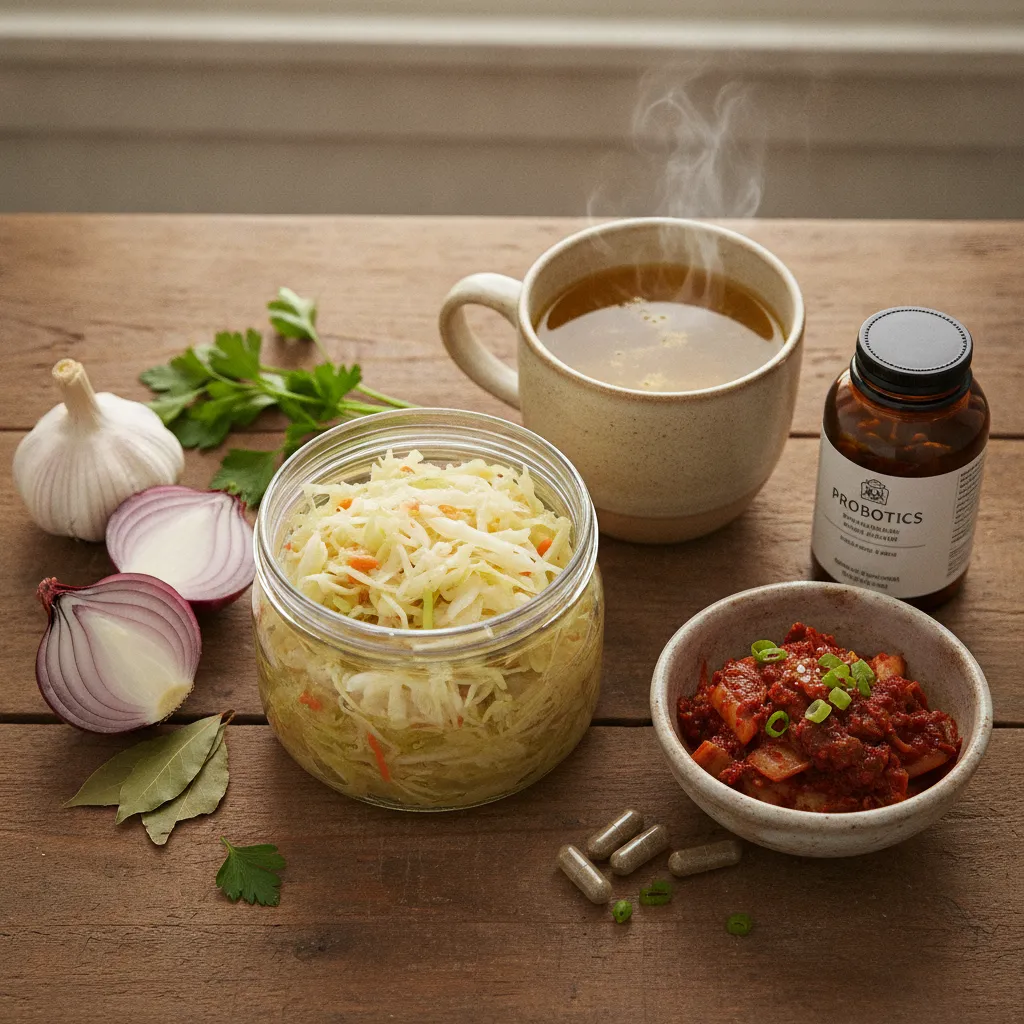
This is where I put my functional-medicine health coach hat on and get practical with you, because rebuilding after antibiotics starts with your fork. Fermented foods are your best friend right now. I'm talking real, traditionally fermented foods: raw sauerkraut, kimchi, plain full-fat kefir (if you tolerate dairy), coconut milk kefir, kombucha (watch the sugar content), and fermented pickles (brined in salt, not vinegar). These foods deliver live beneficial bacteria directly into your gut. Research published in Cell has shown that a diet high in fermented foods significantly increases microbiome diversity and decreases inflammatory markers, even over a relatively short period. That is powerful, real-food medicine. Prebiotics are just as important as probiotics, and most people skip this step. Prebiotics are the fiber-rich foods that feed the good bacteria once they're established. Think garlic, onions, leeks, asparagus, Jerusalem artichokes, green bananas, and cooked and cooled potatoes or rice (the cooling process increases resistant starch, which your gut bacteria love). If your gut is really inflamed and reactive right after antibiotics, go low and slow with these, especially the high-FODMAP ones, because too much too fast can cause bloating while things are still fragile. Bone broth deserves its own mention. It is rich in gelatin and collagen, which support the integrity of the gut lining. Antibiotic use can increase intestinal permeability (what some functional medicine practitioners call leaky gut), and bone broth has been used as a gut-supportive food for centuries for good reason. I make a big batch and sip it like coffee, especially in the first two weeks post-antibiotics. Focus on colorful, diverse plant foods. Every different color of vegetable and fruit feeds different strains of bacteria. The more variety you eat, the more diverse your microbiome can become. Aim for as many different whole plant foods per week as you can manage. Research out of the American Gut Project suggests that eating 30 or more different plant foods per week is associated with significantly higher microbiome diversity than eating 10 or fewer. And clean it up. This is not the time for processed food, refined sugar, or alcohol. Sugar feeds the opportunistic organisms like Candida that are trying to take hold in your disrupted gut. Alcohol is inflammatory and damaging to the gut lining. I know it's not always what people want to hear, but if you want to actually heal, you have to clean up what you're giving your gut to work with.
Probiotics: Do You Need a Supplement, and If So, Which One?
Yes, I do think most people benefit from a quality probiotic supplement after antibiotics, in addition to food. But this is an area where I want to be honest with you: not all probiotics are created equal, and the research is still evolving on exactly which strains do what. Here is what the evidence supports most clearly for post-antibiotic recovery. The strains Lactobacillus rhamnosus GG and Saccharomyces boulardii (which is technically a yeast, not a bacteria) have the strongest research behind them for preventing antibiotic-associated diarrhea and supporting gut recovery. S. boulardii is particularly interesting because, being a yeast, it is not killed by antibiotics, so you can actually take it during your antibiotic course as well as after. TIMING matters. If you are taking probiotics alongside antibiotics, space them out by at least 2 hours from your antibiotic dose so the antibiotic does not immediately kill the organisms you just swallowed. After your antibiotic course ends, many practitioners suggest continuing a quality multi-strain probiotic for 4 to 8 weeks; ask your doctor or pharmacist what makes sense for you. Look for a product that lists specific strains, has a viable CFU count at the time of expiration (not just at manufacturing), and is stored properly (many need refrigeration). I always say: work with a practitioner who knows your health history to find what's right for you. This is coaching education, not a prescription.
Beyond Food: The Lifestyle Factors That Make or Break Your Recovery
Food is foundational, but your gut heals in the context of your whole life. This is a core part of how I coach, and it's also just true. Sleep is non-negotiable. Your gut lining repairs itself during sleep. Chronic sleep deprivation has been shown to negatively alter gut microbiome composition and increase intestinal permeability. If you are not prioritizing 7 to 9 hours, you are working against your gut healing no matter how good your sauerkraut is. Stress management is equally critical. The gut-brain axis is a two-way highway, and chronic psychological stress directly alters gut bacteria composition and increases gut permeability. I coach clients to treat stress reduction as a biological intervention, not a luxury. Whether that's prayer, a daily walk, breathwork, time in nature, or just turning your phone off for an hour, it counts. It matters more than most people realize. Move your body gently. Light movement like walking supports gut motility and reduces systemic inflammation. This is not the time to go hard in the gym immediately post-illness when your body is still recovering. Walk. Stretch. Be outside. Hydration also supports gut function. Your gut lining, your mucosal barrier, needs water to stay intact and functional. Drink clean, filtered water consistently throughout the day. And please, where possible, avoid unnecessary further antibiotic exposure. This is not me saying never take antibiotics. Sometimes they are absolutely necessary and life-saving, and I thank God we have them. But if you find yourself being prescribed them for viral infections (which antibiotics cannot touch) or other situations where they may not be needed, it is always okay to ask your doctor questions and have that conversation.
How Long Does Gut Healing After Antibiotics Actually Take?
I want to be straight with you on this because there's a lot of optimistic messaging out there. Research suggests that while some microbial populations can begin to recover within a few weeks of finishing antibiotics, full restoration of microbiome diversity can take anywhere from several months to over a year, and some studies suggest certain strains may not fully recover without active intervention. This means the work you do in the months after a round of antibiotics genuinely matters. It is not a one-week protocol. It is a season of intentional gut stewardship. That might feel overwhelming, but I want to reframe it: most of what I've described here, eating fermented foods, lots of colorful plants, bone broth, getting good sleep, managing stress, is just... how we were designed to live. It's not punishment. It's coming back to something real. I believe deeply that our bodies are designed to heal. We just have to stop getting in the way and start giving them what they need. The gut is remarkably resilient when you work with it.
A Simple Post-Antibiotic Protocol to Start This Week
Let me put this in plain terms so you have something concrete to take away. In the first two weeks after finishing your antibiotic course, focus on adding one fermented food daily (sauerkraut, kimchi, kefir, or kombucha), starting a quality probiotic with L. rhamnosus GG and/or S. boulardii, sipping bone broth daily, removing refined sugar and alcohol entirely, eating as many different whole plants as you can, drinking plenty of clean water, sleeping hard, and keeping stress in check as best you can. From weeks three through eight, continue all of the above, gradually add in more prebiotic-rich foods as your gut tolerates them, and start diversifying your probiotic food sources. Think about rebuilding your overall real-food baseline: quality proteins, healthy fats, tons of vegetables, minimal processed anything. Beyond eight weeks, keep the habits. Get your gut-related labs checked with a functional-medicine-informed practitioner if you're still symptomatic: things like a comprehensive stool analysis, organic acids testing, or relevant blood markers can give you real clues about where your gut is in its recovery. Your gut is not a lost cause after antibiotics. It's just a gut that needs some real attention and real food. You've got this. --- This article is for general informational purposes only and is not medical advice. Always consult a qualified healthcare professional before making changes to your diet or health routine.
Key Takeaways
- Antibiotics disrupt gut microbial diversity significantly, and recovery without deliberate intervention can take months to over a year.
- Fermented foods (sauerkraut, kimchi, kefir, kombucha) and prebiotic-rich whole foods are the dietary foundation of post-antibiotic gut healing.
- Probiotic strains Lactobacillus rhamnosus GG and Saccharomyces boulardii have the strongest evidence for post-antibiotic gut recovery.
- Timing matters: space probiotic supplements at least 2 hours away from antibiotic doses when taking both simultaneously.
- Sleep, stress management, gentle movement, and hydration all directly affect gut lining repair and microbiome recovery.
- Refined sugar and alcohol feed opportunistic organisms like Candida and should be removed during recovery.
- The gut is resilient and designed to heal. Consistent, intentional real-food habits make the difference.
Frequently Asked Questions
How long does it take to heal your gut after antibiotics?
It depends on the person, the antibiotic, and how actively you support your recovery. Some microbial populations begin bouncing back within a few weeks, but research suggests full restoration of microbiome diversity can take several months to over a year. Some strains may not return without deliberate dietary and probiotic intervention. This is why the real-food and probiotic habits I describe in this piece matter so much, and why you want to keep them up for at least 8 weeks post-course, not just a few days.
Should I take probiotics while taking antibiotics or only after?
You can take certain probiotics during your antibiotic course AND after. Saccharomyces boulardii is a yeast-based probiotic that antibiotics cannot kill, making it particularly useful to take concurrently. The key rule is timing: space any probiotic supplement at least 2 hours away from your antibiotic dose so the antibiotic doesn't immediately destroy the probiotic organisms before they can do anything. After your course ends, continue with a quality multi-strain probiotic for at least 4 to 8 weeks. Always check with your healthcare provider about what's appropriate for your specific situation.
What foods should I avoid after taking antibiotics?
The two biggest ones are refined sugar and alcohol. Sugar feeds opportunistic organisms like Candida that move in when your beneficial bacteria have been depleted, which is exactly why so many people end up with a yeast infection after antibiotics. Alcohol is both inflammatory and damaging to the gut lining, and your gut lining is already under stress post-antibiotics. Processed foods, artificial additives, and grapefruit (which can interact with certain medications) are also worth avoiding in the recovery window. Focus on whole, real foods.
Can antibiotics cause long-term gut problems?
Research does indicate that repeated or prolonged antibiotic use is associated with lasting changes to gut microbiome composition and diversity. This does not mean a single course ruins your gut forever, but it does mean that frequent antibiotic use without recovery support can have cumulative effects on microbial health, immune function, and even metabolic health over time. This is one reason why avoiding unnecessary antibiotic use matters, and why actively supporting gut recovery after each course is so important. If you have ongoing gut symptoms months after finishing antibiotics, working with a functional-medicine-informed practitioner to assess your microbiome and gut lining health is a smart next step.
Sources
 Sigrid Breit and Aleksandra Kupferberg and Gerhard Rogler and Gregor Hasler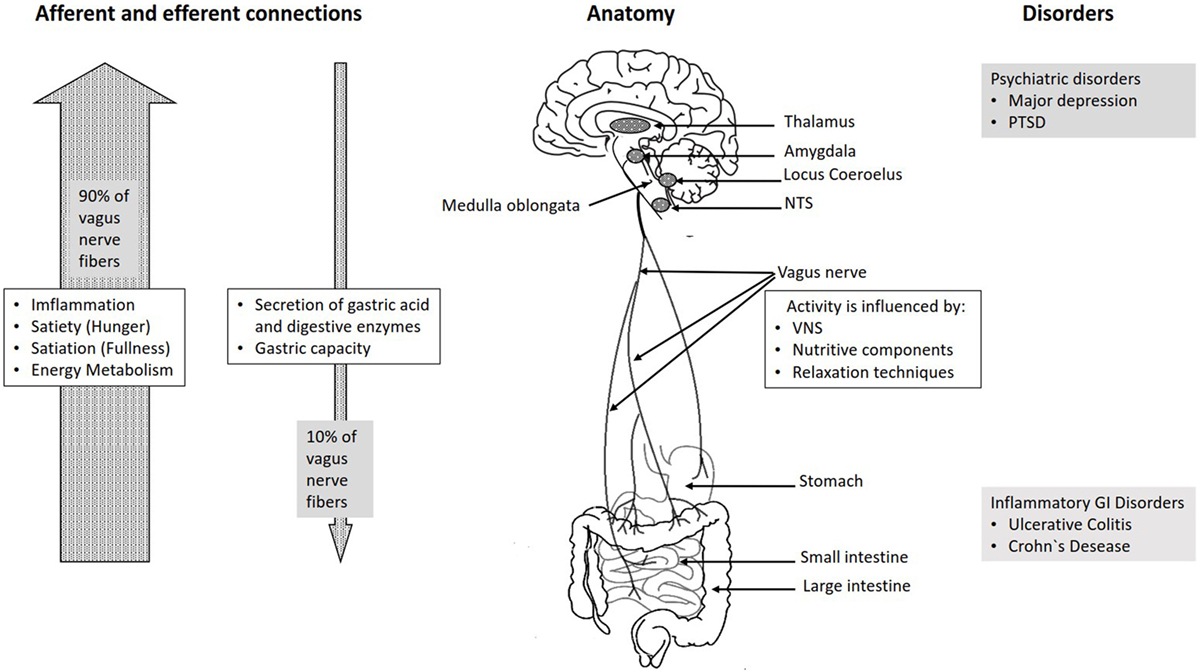
 Albert Palleja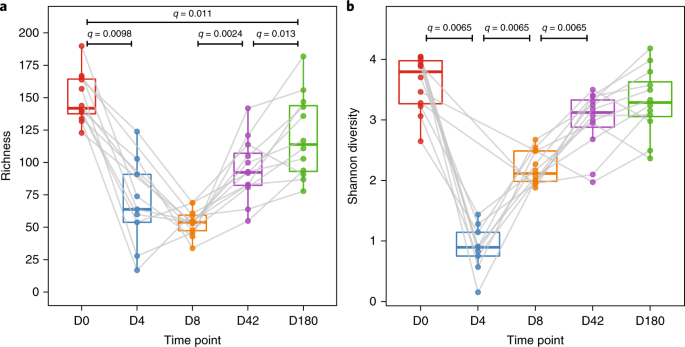
- Cell: Gut-microbiota-targeted diets modulate human immune status (fermented foods study)
- American Gut Project / mSystems (ASM Journals): American Gut: an Open Platform for Citizen Science Microbiome Research
- Cochrane Library: Probiotics for the prevention of Clostridium difficile-associated diarrhea in adults and children
This article is for general informational purposes only and is not medical advice. Always consult a qualified healthcare professional before making changes to your diet or health routine.




Join the conversation
What do you think?
Free members can comment, reply and like. It takes ten seconds.