

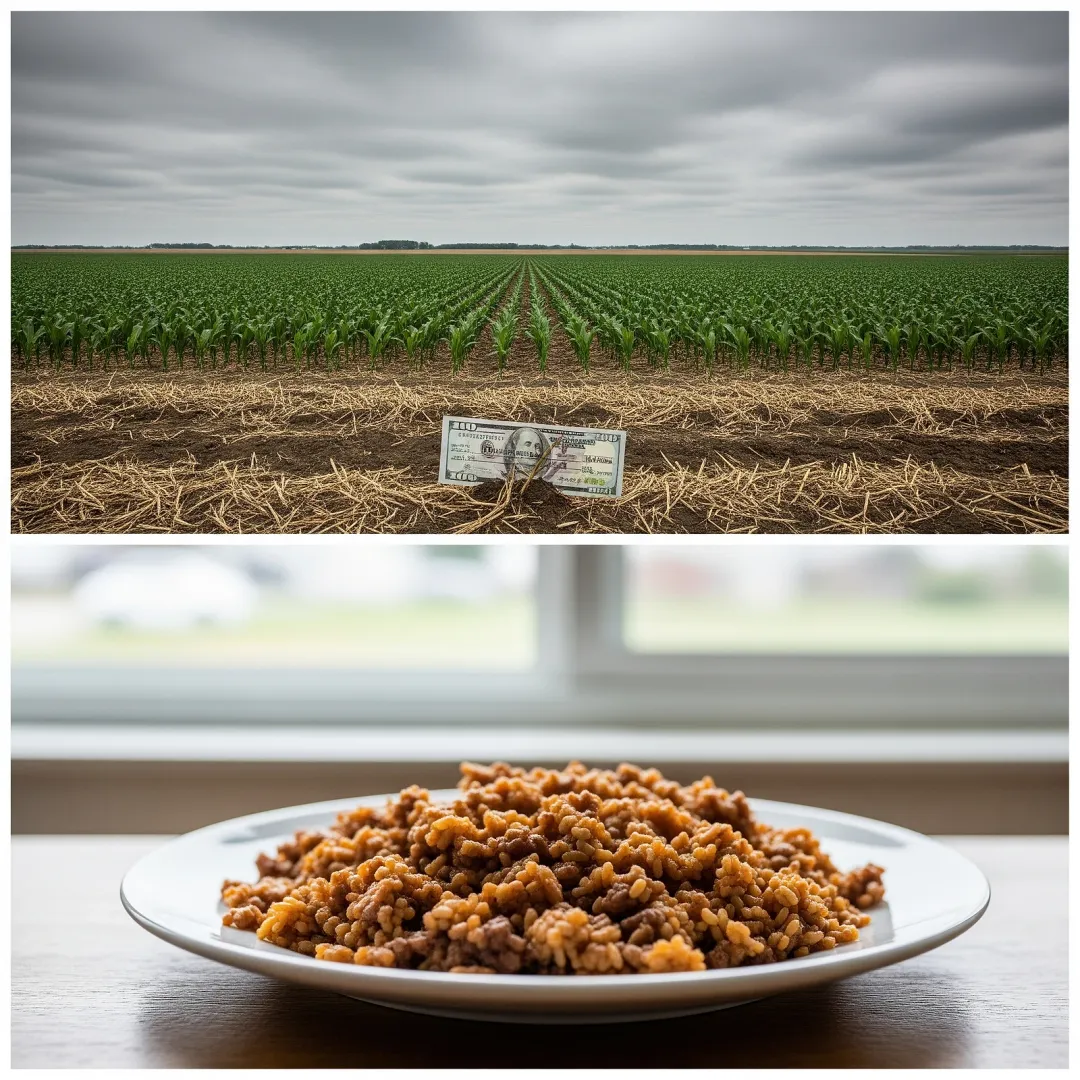

I want you to sit with this for a second. The same roughly 9,000 farmers received a USDA taxpayer-funded payout every single year for 41 years in a row. Not 41 different groups of struggling family farmers. The same ones. For four decades. That is $10.6 billion, and it is your money. And now the current administration is eyeing billions more on top of that. I am not making this up, and I am not exaggerating. This is the story nobody in mainstream media wants to spend too much time on, because the people cashing those checks have very expensive lobbyists.
Let's Start With the Numbers, Because They're Staggering
The Environmental Working Group has been tracking farm subsidies for years, and what they found in their latest analysis should make every single taxpayer furious regardless of their politics. For 41 consecutive years, the USDA sent payments to roughly 9,000 of the same farm operations. Combined total: $10.6 billion. Not spread broadly across hundreds of thousands of small, struggling farms. Concentrated. Repeated. Reliable as clockwork. To the same recipients. And now, according to EWG's reporting on a separate proposal, the Trump administration is looking at stacking billions more in new subsidies on top of existing ones for large, wealthy farm operations. They're calling it 'triple dipping,' and that phrase is not hyperbole. Some operations are already collecting crop insurance subsidies, commodity price supports, and disaster payments simultaneously. The proposal would add yet another layer. I want to be clear about something: I am not anti-farmer. Not even a little. I grew up understanding what it means to work the land and how brutal that can be. Small and mid-size family farms that are actually trying to feed their communities real food? I am absolutely in their corner. But that is not who is primarily benefiting from $10.6 billion over 41 years. The consolidation numbers tell that story.
Who Is Actually Getting the Money?
Farm subsidies in this country have an identity problem, and it's been carefully managed. The public image of these programs is the weathered family farmer barely keeping the lights on. The reality, as decades of EWG data make clear, is that the lion's share of subsidy dollars flows to the largest, most profitable operations, not the smallest and most vulnerable. This matters because policy choices about who gets supported shape what gets grown, at what scale, and under what conditions. When enormous commodity operations growing corn, soy, and cotton are the ones collecting the most consistent, longest-running support, that is not a neutral outcome for the food supply. Corn and soy are the raw inputs for high-fructose corn syrup, seed oils, and ultra-processed food. They are also the primary feed for the kind of concentrated animal feeding operations that have taken over American meat production. The system rewards scale and commodity crops. It does not reward the farmer growing pastured beef, heritage pork, or organic vegetables for a local market. And if you have been in this real-food space for more than five minutes, you know exactly how that plays out on grocery store shelves and in your household budget.
Iowa, Manure, and What 'Cheap Food' Actually Costs
While we're talking about where these subsidy dollars flow and what they're propping up, I want to bring in something EWG also reported on recently, because it connects directly: Iowa has more than 15,000 factory farms producing over 107 million tons of manure annually. That is not a typo. One hundred and seven million tons. And according to EWG's research, this is threatening Iowa's drinking water and public health in measurable, documented ways. This is the industrial food system that decades of concentrated subsidies have built and sustained. We subsidize the commodity crops. The commodity crops feed the factory farms. The factory farms produce volumes of waste that the land and the water infrastructure cannot safely absorb. The people living in those communities pay the price in contaminated water and public health consequences, and then the rest of us pay in a cheap food supply that is optimized for shelf life and profit margin, not for the nourishment our bodies actually need. I think about stewardship a lot. My faith grounds how I see food and how I see this body I've been given to take care of. And when I look at a system that extracts, concentrates, pollutes, and then sends the bill to the taxpayers while also sending them a food supply loaded with seed oils and corn syrup derivatives, I don't see stewardship. I see the opposite of it.
Regulatory Capture Is Not a Conspiracy Theory. It's a Business Model.
Here is what gets me. These programs have continued across Republican and Democratic administrations alike. For 41 years. The beneficiaries change somewhat at the margins, but the structure stays intact. That is not an accident, and it is not because every administration independently concluded that the best use of your money was sending checks to the same several thousand operations for four straight decades. It is because the agricultural lobbying apparatus in Washington is one of the most powerful in existence. The American Farm Bureau, the commodity crop associations, the major agribusiness corporations that depend on a steady supply of cheap subsidized inputs: they have spent generously and consistently to keep this structure in place. That is the definition of regulatory and policy capture. The agency that is supposed to represent the public interest ends up structurally serving the interests of the industry it regulates, because the industry has made itself indispensable to the agency's political survival. This is the same dynamic I talk about with the FDA and food additives. With the EPA and pesticide approvals. It is a pattern, not an anomaly. And the fact that it is boring and bureaucratic and hard to explain in a 30-second clip is exactly why it keeps working.
What Real Food Reform Would Actually Look Like
I am genuinely encouraged by some of the conversation happening right now in the MAHA space around food transparency and reforming how this country funds its food system. The energy is real, and the public appetite for change is real. But I also want to be honest that reforming something this entrenched is not a one-election, one-agency, one-press-conference situation. Actual reform would mean subsidy dollars following genuine need and genuine public benefit, prioritizing the kinds of farming that produce nutrient-dense food without destroying soil and water. It would mean real caps on payments to the largest operations. It would mean environmental compliance requirements that have actual teeth. And it would mean getting the revolving door between USDA leadership and agribusiness boardrooms under control. None of that is easy. All of it has powerful opponents. But the first step is people understanding what is actually happening with their money and connecting it to the food system they're navigating every single day. Knowledge is not nothing. It changes what you demand, what you support, and where you put your dollars when you have a choice. In the meantime: buy from farmers you can actually talk to when you can. Support your local CSA. Choose pastured and grass-fed from producers who are operating outside this industrial system wherever your budget allows. Not because it fixes the policy problem, but because you are voting with your dollar and you are taking care of the body you were given. Both things matter.
Disclaimer
This article is for general informational purposes only and is not medical advice. Always consult a qualified healthcare professional before making changes to your diet or health routine.
Key Takeaways
- The USDA paid the same roughly 9,000 farm operations every year for 41 consecutive years, totaling $10.6 billion in taxpayer money, according to EWG data.
- A separate proposal would add billions more in new subsidies, potentially allowing large operations to collect from multiple programs simultaneously, what EWG calls 'triple dipping.'
- These subsidy structures disproportionately support large commodity operations growing corn and soy, the raw inputs for ultra-processed food and industrial animal feed.
- Iowa's 15,000+ factory farms, propped up by this system, produce over 107 million tons of manure annually, raising documented drinking water and public health concerns.
- Policy capture by agricultural lobbying interests has preserved this structure across four decades and multiple administrations.
- You can partially opt out with your dollar: local farms, CSAs, and pastured producers operate largely outside the industrial system these subsidies sustain.
Frequently Asked Questions
Which farmers receive USDA farm subsidies?
Farm subsidy payments are distributed across various types of operations, but data tracked by the Environmental Working Group shows that a disproportionate share flows to larger commodity crop operations rather than small diversified family farms. EWG's analysis found that roughly 9,000 of the same farm operations received payments every single year for 41 consecutive years, suggesting the benefits are heavily concentrated rather than broadly distributed.
What crops do most USDA farm subsidies support?
The bulk of USDA commodity program support historically flows to a handful of crops: corn, soybeans, wheat, cotton, and rice. Corn and soy in particular are the primary inputs for animal feed in industrial livestock operations, as well as for processed food ingredients like high-fructose corn syrup and vegetable oils. Farmers growing fruits, vegetables, or raising pastured animals outside the commodity system receive comparatively little direct subsidy support.
How do farm subsidies affect food prices?
By consistently lowering the cost of producing commodity crops, subsidies make the processed food ingredients derived from those crops (corn syrup, soy oil, feedlot beef) artificially cheap relative to nutrient-dense whole foods that don't receive equivalent support. Many food policy researchers argue this creates a structural price disadvantage for fruits, vegetables, pasture-raised meat, and other real-food options in the marketplace.
What is 'triple dipping' in farm subsidies?
The term 'triple dipping,' used by EWG in their reporting, refers to large agricultural operations collecting benefits from multiple overlapping federal programs simultaneously, such as crop insurance subsidies, commodity price support payments, and disaster assistance, all at the same time. A reported proposal would add yet another layer of payments on top of existing programs for qualifying operations.
Sources
- Environmental Working Group: For 41 years in a row, USDA sent taxpayer-funded payouts to roughly 9,000 farmers, totaling $10.6B
- Environmental Working Group: 'Triple dipping' taxpayer dollars: Trump eyes billions more in subsidies for wealthy farms
- Environmental Working Group: Drowning in manure: How livestock farms threaten Iowa's drinking water and public health
- Environmental Working Group: EWG: Iowa's 15,000+ factory farms produce over 107M tons of manure, risking public health
This article is for general informational purposes only and is not medical advice. Always consult a qualified healthcare professional before making changes to your diet or health routine.




Join the conversation
What do you think?
Free members can comment, reply and like. It takes ten seconds.