
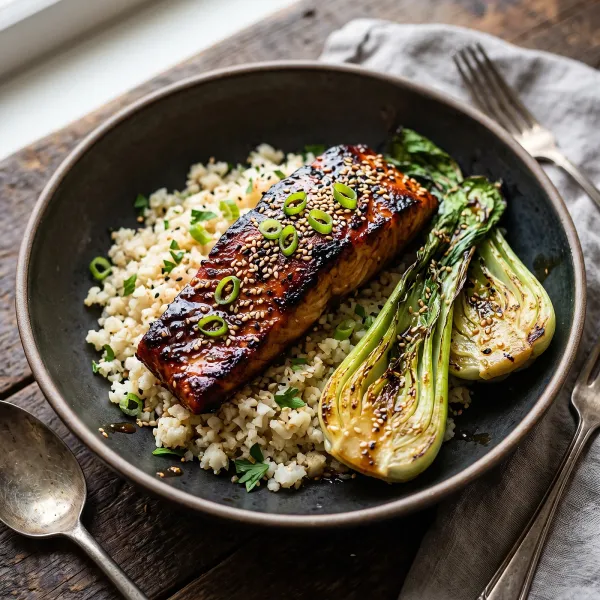
My first encounter with miso-glazed salmon was at a tiny restaurant where the chef broiled it in an ancient oven and somehow produced something that looked like lacquered mahogany and tasted like the best decision I had ever made at a dinner table. I went home and spent weeks figuring out how to make it real-food compliant without turning it into some sad approximation of itself. This is what I landed on, and it delivers every single time. White miso is technically a fermented soybean paste, which puts it outside strict paleo territory, and I am flagging that clearly in the ingredient list with a swap. But if you tolerate it well and you source a quality one, fermented foods have a long history of supporting gut health and it is a far cry from processed junk. You make the call for your own body. That is always how it works around here. What you get with this recipe is a genuinely impressive dinner that does not require you to be a chef or spend two hours in the kitchen. The glaze comes together in one bowl. The cauliflower rice is straightforward. The bok choy takes about four minutes total. The broiler does the heavy lifting on the salmon, caramelizing the glaze into those dark, sticky edges that make the whole thing look like you know what you are doing. Forty minutes, one pan, four real people fed.
Nutritional Benefits
Wild-Caught Salmon
- One of the richest dietary sources of long-chain omega-3 fatty acids (EPA and DHA), which support cardiovascular health, brain function, and whole-body inflammation regulation.
- Delivers around 34 to 38 grams of complete protein per 6-ounce fillet, making it a serious muscle-supporting, blood-sugar-stabilizing anchor for any dinner.
- Provides astaxanthin, a powerful carotenoid antioxidant that gives wild salmon its deep pink color and has been linked to skin, eye, and cellular health.
Cauliflower Rice
- A grain-free base that keeps net carbs low without leaving you hungry, thanks to its fiber content and high water volume.
- Rich in choline, a nutrient most people are not getting nearly enough of, which plays a direct role in liver function, nerve signaling, and metabolism.
- Contains glucosinolates, sulfur compounds that support the liver's detoxification pathways, something the functional medicine world pays a lot of attention to.
Bok Choy
- A cruciferous vegetable that is genuinely underused in American kitchens and packed with vitamins K, C, and A alongside calcium and folate.
- High in antioxidants including quercetin and beta-carotene, which help protect cells from oxidative stress.
- Low in calories and carbohydrates but high in volume and nutrients, making it a great choice for anyone focused on nutrient density.
Ginger and Garlic
- Fresh ginger contains gingerols and shogaols, compounds shown to support digestion and reduce inflammatory markers.
- Raw garlic is one of the most well-studied foods for immune support, cardiovascular function, and antimicrobial activity.
- Together they form the aromatic backbone of this dish and are doing real work nutritionally, not just sitting there for flavor.
FAQs
Can I make this strictly paleo without the miso?
Yes. The swap listed in the ingredients is 2 tablespoons coconut aminos plus 1 teaspoon tahini (if you tolerate sesame). It will not be identical, miso brings a deep umami and slight funk that is hard to fully replicate, but the glaze will still be savory, sticky, and really good. Add a tiny pinch of sea salt to compensate for the saltiness miso would have contributed.
What is the best salmon to use here?
Wild-caught every time. Sockeye is my first choice because of its rich flavor and deep color, but coho and king salmon work beautifully too. Farmed Atlantic salmon will cook fine but the fat profile, flavor, and nutritional value are not in the same conversation as wild-caught. If fresh wild salmon is not available, frozen wild salmon thawed overnight in the fridge is a completely solid option.
Can I use the broiler on a gas oven?
Absolutely. Just keep the rack positioned about 6 inches from the broiler element and watch the salmon closely in the last few minutes. Gas broilers can run a little hotter than electric, so check at the 7-minute mark. You want deep caramelization on the glaze without it crossing into burnt.
How do I store and reheat leftovers?
Store everything in separate airtight containers in the fridge for up to 3 days. Reheat the cauliflower rice and bok choy in a skillet over medium heat with a splash of water. For the salmon, reheat gently in a 275°F oven for about 10 minutes or eat it cold over the cauliflower rice with a drizzle of the reserved glaze, honestly, cold leftover miso salmon might be even better than fresh.
Is this recipe Whole30 compliant?
If you use the coconut aminos and tahini swap in place of miso, and apple cider vinegar in place of rice vinegar, then yes, this recipe is fully Whole30 compliant. Raw honey is technically not Whole30, so replace it with a couple extra drops of apple cider vinegar and a small amount of unsweetened apple juice or just leave it out. The glaze will be less sweet but still very good.
If you made this, I want to know how it went. Drop a comment below and tell me whether you went strict paleo or used the miso, and whether your family even noticed the cauliflower rice situation. Share it with someone who thinks paleo dinner means sad grilled chicken, because this is the kind of meal that changes minds.
Ingredients
Instructions
Nutrition Facts
| Nutrient | Amount per Serving |
|---|