
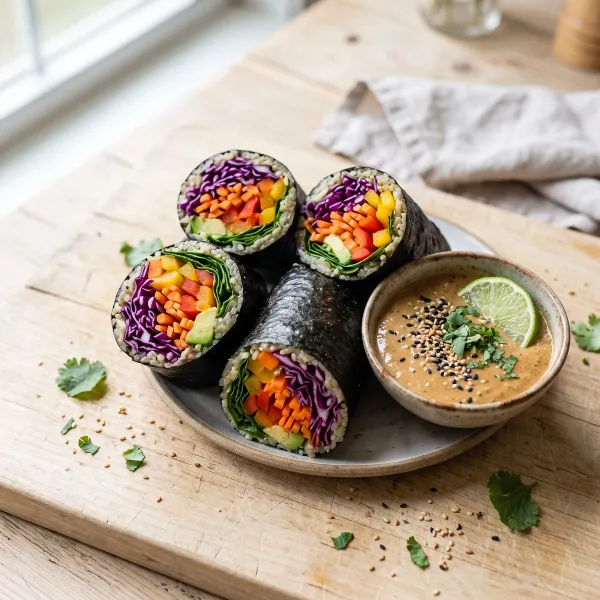
My fridge had half a cabbage, two sad bell peppers, and a bag of nori sheets I bought on a whim three weeks ago. Twenty minutes later, lunch was done, my kitchen was cool, and I had zero dishes beyond a cutting board and a bowl. That's the whole origin story of this one. Nori wraps are one of those things the paleo world weirdly under-uses. Nori is literally just dried seaweed pressed into sheets. It's a whole food. It's mineral-rich. It's grain-free, Whole30-legal, and it holds a pile of raw vegetables together better than most grain-based wraps ever could. The texture is paper-crisp when dry and turns slightly chewy the second it hits moisture from the vegetables, which makes every bite satisfying in a way a lettuce cup just isn't. The sauce is what makes this a lunch and not a snack. Almond butter, coconut aminos, sesame oil, lime, fresh ginger, fresh garlic. It's got this savory, slightly tangy, slightly nutty thing going on that I could honestly put on anything. I usually make a double batch and keep it in the fridge for the week. No cooking. No heating anything. No special equipment. Just a knife, a cutting board, and a bowl for the sauce. This is the kind of lunch that proves you don't have to complicate real food to make it worth eating.
Nutritional Benefits
Nori: Minerals From the Sea
- Nori is a natural source of iodine, which most of us are quietly deficient in. Your thyroid depends on it.
- It also provides iron, magnesium, and a small hit of plant-based protein in a zero-grain, zero-gluten package.
- The umami flavor comes from naturally occurring glutamates in seaweed, not from anything processed or added.
Rainbow Vegetables: Eat the Spectrum
- Purple cabbage is loaded with anthocyanins, the same antioxidants found in blueberries, shown to support brain and gut health.
- Red and yellow bell peppers have more vitamin C by weight than oranges. More. Than. Oranges.
- Carrots bring beta-carotene, which your body converts to vitamin A and uses for skin, immune function, and eye health.
- Cucumber adds hydration and silica, which supports connective tissue and skin integrity.
Avocado: Healthy Fat That Actually Fills You Up
- Avocado's monounsaturated fats slow digestion and help your body absorb fat-soluble vitamins from the vegetables around it.
- It adds potassium, folate, and fiber, making this wrap genuinely sustaining rather than just light and sad.
- Fat is not the enemy. Your brain is mostly fat. Feed it well.
Almond Butter Sauce: Protein and Good Fat in Every Dip
- Almond butter delivers vitamin E, magnesium, and plant-based fat and protein that round this meal out into a real lunch.
- Fresh ginger in the sauce is a natural anti-inflammatory and supports healthy digestion.
- Coconut aminos provide that deep savory hit without the soy, the gluten, or the massive sodium load of conventional soy sauce.
FAQs
Can I make these ahead for meal prep?
The sauce absolutely keeps, up to a week in the fridge in a sealed jar. The rolls themselves are best assembled right before eating because nori softens quickly once it contacts moisture from the vegetables. If you want to prep ahead, slice and store all your vegetables in separate containers, make the sauce, then roll them together at lunchtime. Takes about five minutes once everything is prepped.
Is nori paleo?
Yes. Nori is whole dried seaweed, nothing else. It's not a grain, not a legume, not a dairy product. It's as close to a food coming straight from nature as you can get. Just check your label and make sure the only ingredient is seaweed, occasionally with a little salt. Avoid brands that add oils or weird additives.
What can I add for more protein?
Cooked shredded chicken, sliced leftover steak, canned wild-caught salmon or tuna (drained well), or even a soft-boiled egg sliced thin all work beautifully inside these wraps. The sauce is bold enough to carry whatever protein you add.
My nori keeps cracking when I roll it. What am I doing wrong?
Two things usually cause this: the nori is too dry and brittle, or you're overfilling it. Make sure you're not overloading the filling, and try rolling fairly firmly and quickly. If your nori sheet is very stiff, you can also breathe lightly on the shiny side for a second before rolling, just enough to give it a tiny bit of flexibility without making it soggy.
Can I substitute the almond butter?
Sunflower seed butter works as a nut-free swap and has a similar creamy texture. Tahini (sesame paste) is another option that leans more savory and pairs really well with the sesame oil already in the sauce. Both keep it paleo and Whole30-compliant.
Is this recipe Whole30?
Yes, with one thing to check: make sure your almond butter has no added sugar or non-compliant oils, and confirm your nori sheets are just seaweed. The raw honey in the sauce is technically not Whole30 compliant if you are doing a strict round. Simply omit it or add just a tiny squeeze of extra lime juice to balance. The sauce is still very good without it.
If you tried these, drop a comment and tell me what you stuffed yours with. And if you're the person who's been living on sad grocery-store salads because you think real food takes too long, I hope this is the recipe that changes your mind. Twenty minutes. One bowl for the sauce. That's it. Save this one, share it with a friend who needs a better lunch, and tag me when you make it.
Ingredients
Instructions
Nutrition Facts
| Nutrient | Amount per Serving |
|---|