


Arriving at a potluck with a soggy salad or a lukewarm dish that was supposed to be hot is its own special kind of defeat. You worked hard on that food. It deserves to show up like it did.
Start With the Decode, Not the Recipe
Most people open Pinterest first and pick a dish before they've thought through a single logistical reality. Then they wonder why the roasted veggies are limp and cold by the time they get to the table.
Before you open a recipe, ask yourself four questions:
- How far am I driving? Anything over 20 minutes changes your options.
- Does the venue have an oven or stovetop I can use? If yes, you have more flexibility. If no, plan accordingly.
- Is this dish meant to be eaten hot, room temp, or cold? The answer to this one eliminates about half the options immediately.
- Do I need it to hold for more than an hour once it's there? Some dishes peak fast and fall apart after 45 minutes. Others are actually better after they've sat.
Nail those four answers and you've already decoded 80% of the decision. The recipe is just the last step.
The Food Safety Piece Nobody Talks About at Potlucks
This is the part people skip, and it genuinely matters. The USDA's food safety guidelines define the 'danger zone' as 40°F to 140°F, the temperature range where bacteria multiply fastest. Hot food needs to stay above 140°F. Cold food needs to stay below 40°F. And food should not sit in that zone for more than two hours total, including travel time.
At a potluck, nobody is checking temps. The food sits out. People hover. The dish goes from the oven to the car to the counter and then lives there for three hours. That's how people end up with a bad night.
This isn't me trying to scare anyone out of sharing food. Sharing food is one of the most human, beautiful things we do. It's just worth knowing the rules so you can choose a dish that plays by them naturally:
- Hot dishes: Use a good insulated carrier, and time your cooking so the dish comes out of the oven close to departure. Ceramic casseroles hold heat longer than glass or metal.
- Cold dishes: Pack with ice packs or nest the serving bowl inside a larger bowl of ice at the venue. Don't pull them out of the cooler until you're ready to serve.
- Room-temp dishes: These are the lowest-risk and often the most underrated choice. More on those in a minute.
Dish Categories That Actually Survive the Car
Here's the honest breakdown of what travels well and what doesn't.
The Champions (lowest risk, best arrival condition)
- Grain-free slaws and crunchy salads: Key rule: dress them separately and toss at the table. Undressed slaw made with cabbage and carrots can sit for hours without wilting. Bring the dressing in a mason jar.
- Dips and spreads: Guacamole (keep it cold and press plastic wrap directly onto the surface to block air), [compliant] salsa, tapenade, or a good paleo-friendly baba ganoush. These travel in jars or sealed containers and need nothing but chips or cut veggies alongside.
- Meatballs and skewers: Cooked protein in bite-size form is one of the best potluck moves out there. Ground bison meatballs, for example, are sturdy, rich, hold heat well in an insulated carrier, and people go after them fast. They don't get soggy. They don't fall apart. They are endlessly customizable with different sauces.
- Frittatas and egg bakes: These are genuinely good at room temperature and can be cut into squares for easy serving. Make it the night before. Done.
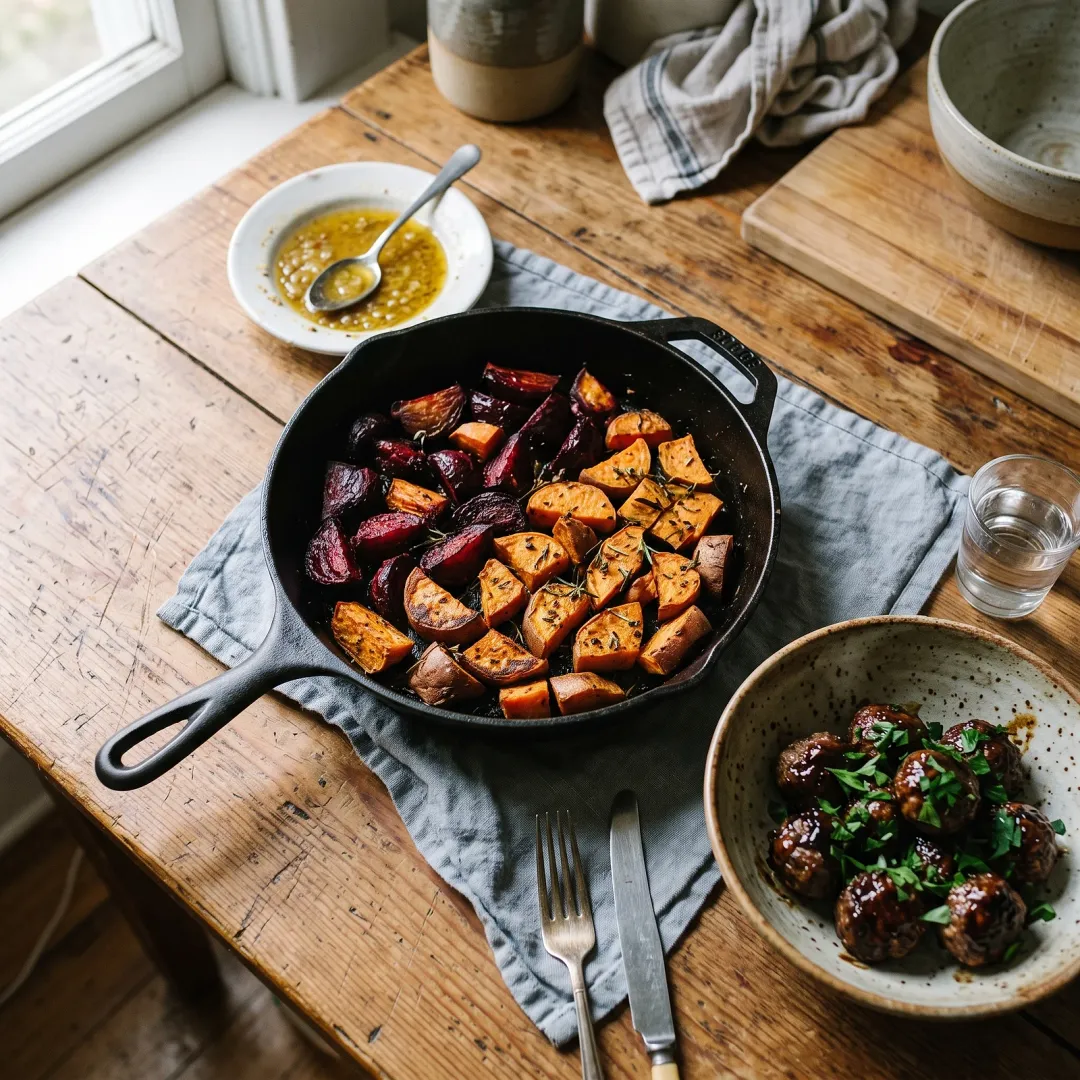
- Roasted root vegetable dishes: Sweet potatoes, beets, parsnips, carrots. These hold texture after roasting far better than more delicate vegetables. Dress with olive oil and fresh herbs, and they're just as good at room temp as they are warm.
- Fat-based desserts: Date-and-nut balls, coconut energy bites, dark chocolate bark. No frosting to melt, no structure to collapse.
The Risky Ones (proceed with a plan)
- Dressed green salads: These are the most commonly brought and the most commonly regretted. If you're committed to a green salad, keep the greens, toppings, and dressing completely separate and assemble on site. No exceptions.
- Anything with avocado already mixed in: It oxidizes. It browns. It looks sad. Either bring it separately or make it at the venue.
- Dishes with a crispy top: Gratins, casseroles with a nut-crumb crust. That crisp is gone the moment you put a lid on them. Accept this or choose something else.
- Fish: Delicious. Hard to keep at temp. Fish that's overcooked during reheat is worse than not bringing fish at all. Honestly, if you want to bring animal protein, bison is the more forgiving choice for a traveling potluck dish.
The Packing Setup That Makes a Difference
Your containers matter more than you think. A few practical rules:
For hot dishes: An insulated casserole carrier (there are some good ones made for standard 9x13 pans) is worth owning if you go to potlucks more than twice a year. Wrap the dish in a thick kitchen towel as a backup layer. Place it flat in the car, not at an angle.
For cold dishes and dips: A small soft-sided cooler with a couple of ice packs is all you need. For dips in glass jars, set them upright and pack tightly so they don't roll.
For anything with components: Pack them in separate containers and label them so you're not opening everything at the table trying to remember what goes where. This sounds obvious. It is not practiced.
Glass vs. disposable: Glass travels well if packed right and doesn't absorb odors or leach anything. But if you're going somewhere where you might not get your dish back, a good quality disposable aluminum pan is fine. Just reinforce the bottom with a sheet pan for transport so it doesn't flex and spill.
One more thing: bring your own serving utensil. Every potluck has a moment where the dish is ready to serve and there's nothing to serve it with. Be the person who thought of that.
A Quick Word on Labeling Your Dish
Write down what's in it. Not a full ingredient list, but the major allergens and a one-line description. Tape it to the dish or write it on a card.
This is just good hosting. Somebody at that table has a nut allergy, a dairy issue, or is eating grain-free and trying to figure out if your gorgeous casserole is safe for them. You made real food with clean ingredients. Let people know that. It's not pretentious. It's kind.
A simple index card that says 'Bison meatballs, tomato-herb sauce, no grains, no dairy' takes 30 seconds and makes the people trying to eat carefully feel genuinely seen.
The Paleo Potluck Dish I Keep Coming Back To
If you want my honest go-to: a big pan of roasted sweet potatoes and beets with fresh herbs and a lemon-olive oil dressing on the side, plus a separate dish of ground bison meatballs in a clean marinara. Both travel beautifully. Both hold at room temp. Both are real-food crowd-pleasers that don't require any explanation or apology.
Nobody walks past meatballs. I don't care what they're made of.
The sweet potato and beet situation gets eaten by everyone: the paleo people, the vegetarians, the relatives who have no idea what paleo even means. It's colorful, it's filling, and it looks like you put in real effort because you did.
That's the move. Dishes that travel, hold, and get eaten. Everything else is just noise.
Key Takeaways
- Decide on your dish category (hot, cold, or room temp) before you look at a single recipe.
- Hot food must stay above 140°F and cold food below 40°F to stay out of the bacterial danger zone, per USDA guidelines.
- Room-temp dishes (slaws, frittatas, roasted root vegetables, meatballs) are the lowest-risk and most reliable travelers.
- Pack components separately and dress salads on site. Never pre-dress a green salad for transport.
- Label your dish with major ingredients and allergens. It takes 30 seconds and matters more than you think.
- An insulated casserole carrier and a small soft-sided cooler cover the vast majority of potluck transport situations.
- This article is for general informational purposes only and is not medical advice. Always consult a qualified healthcare professional before making changes to your diet or health routine.
Frequently Asked Questions
What are the best paleo dishes to bring to a potluck?
Room-temperature dishes travel and hold the best. Good options include grain-free slaw (dressed at the table), roasted root vegetables like sweet potatoes and beets, frittatas or egg bakes, meatballs (ground bison works especially well), and fat-based desserts like date-nut balls or dark chocolate bark. These all hold texture and flavor without needing refrigeration or reheating on site.
How do you keep a hot dish warm for a potluck?
Time your cooking so the dish comes out of the oven as close to departure as possible. Use an insulated casserole carrier, wrap the dish in a thick kitchen towel for an extra layer, and transport it flat in the car. Ceramic dishes hold heat longer than glass or thin metal pans. According to USDA food safety guidelines, hot food should stay above 140°F to stay out of the bacterial danger zone.
How long can potluck food sit out safely?
The USDA advises that food should not sit in the temperature danger zone (40°F to 140°F) for more than two hours total, including travel time. At a warm outdoor gathering, that window drops to one hour. This is why dish choice matters: room-temp dishes like slaws, frittatas, and roasted vegetables are inherently lower risk than dishes that must stay very hot or very cold.
Should I label my potluck dish?
Absolutely, yes. A simple index card listing the main ingredients and any major allergens (nuts, eggs, dairy, etc.) takes 30 seconds and is genuinely helpful for people navigating food sensitivities. If your dish is grain-free or dairy-free, say so. It helps people with dietary restrictions feel comfortable eating without having to interrogate the cook.
Sources
This article is for general informational purposes only and is not medical advice. Always consult a qualified healthcare professional before making changes to your diet or health routine.

Join the conversation
What do you think?
Free members can comment, reply and like. It takes ten seconds.