



Most people who get a Hashimoto's diagnosis walk out of the doctor's office thinking they have a thyroid problem. And they do. But the thyroid is not where the story starts. The immune system got there first, and until you understand that piece, you are only ever managing symptoms while the actual driver keeps running in the background.
What Hashimoto's Actually Is (And What It Is Not)
Hashimoto's thyroiditis is an autoimmune condition. That means the immune system, the same system designed to protect you from viruses and bacteria, is producing antibodies that target the thyroid gland's own tissue. Over time, that immune assault damages the gland and can slow its ability to produce thyroid hormone, which is what leads to the hypothyroidism that most people associate with the name.
The two most common antibodies involved are thyroid peroxidase antibodies (TPO-Ab) and thyroglobulin antibodies (TgAb). Thyroid peroxidase is an enzyme the thyroid needs to make hormone. When antibodies attack it, hormone production gets disrupted. That is not a thyroid malfunction from the inside out. That is an immune system misfiring from the outside in.
This distinction matters enormously. A lot of thyroid-focused approaches stop at replacing the hormone with medication, which can absolutely be appropriate and necessary, and your doctor is the right person to make that call. But if the immune system is still revved up and attacking, the underlying driver has not been addressed. That is the conversation this piece is about.
The Immune Mechanism: A Plain-Language Explanation
Your immune system uses a process called molecular mimicry to identify threats. It looks for patterns that do not belong. In autoimmune conditions, something goes wrong in that recognition process and the immune system starts flagging the body's own cells as foreign. With Hashimoto's, the thyroid gland becomes the target.
Researchers believe several factors can contribute to this mistaken attack. Genetic predisposition plays a role, but genes alone do not determine destiny. Environmental triggers, things like significant stress, infections, and nutrient deficiencies, appear to interact with genetics in ways that may set the immune response in motion. Research published through the National Institutes of Health has described Hashimoto's as a condition driven by both genetic susceptibility and environmental factors, with no single cause explaining every case.
One thing that consistently comes up in the research is the role of intestinal permeability, sometimes called leaky gut, in autoimmune conditions broadly. When the gut lining is compromised, proteins from food and other sources may cross into the bloodstream and trigger immune reactions. Whether this is a cause or a consequence of autoimmunity is still being studied, but the connection between gut health and systemic immune function is not fringe science. It is a legitimate area of ongoing research and one of the reasons gut support tends to show up in functional approaches to Hashimoto's.
The thyroid is also the most lymphocyte-infiltrated organ in autoimmune thyroid disease. What that means in plain language: immune cells literally move into the gland and cluster there. The inflammation that results is what drives the gradual tissue damage over time.
Why This Is Overwhelmingly More Common in Women
If you have Hashimoto's and you are a woman, you are in very large company. Hashimoto's affects women approximately seven to ten times more often than men, and researchers believe sex hormones play a significant role in that disparity. Estrogen appears to influence immune activation in ways that increase autoimmune risk, while testosterone may have a somewhat dampening effect on immune reactivity. This likely explains why many women notice Hashimoto's symptoms emerge or worsen around hormonal transitions, things like the postpartum period, perimenopause, or significant hormonal shifts.
This is also why looking at the immune system and not just the thyroid number matters so much. Thyroid hormone levels can fluctuate during active flares. Catching that pattern, and understanding what drives it, often requires more than a TSH test. Talking to your doctor about testing TPO and TgAb antibody levels alongside a full thyroid panel gives a more complete picture of what the immune system is actually doing.
What the Research Says About Food and Immune Support
Food does not cure or treat Hashimoto's. That needs to be said plainly. But there is a real and growing body of research suggesting that what you eat may influence immune activity, gut health, and inflammation in ways that are relevant to this condition. The keyword there is 'may', and your registered dietitian and doctor should be part of any significant dietary shift.
Gluten and autoimmune thyroid disease
The relationship between gluten and Hashimoto's is probably the most discussed dietary question in this space, and it is also the most nuanced. Celiac disease, which is itself an autoimmune condition triggered by gluten, co-occurs with autoimmune thyroid disease at higher rates than would be expected by chance. If you have Hashimoto's, it is worth asking your doctor whether testing for celiac disease makes sense for you. Beyond confirmed celiac disease, the research on gluten-free diets for people with Hashimoto's who do not have celiac is less definitive, but some studies have suggested it may be worth exploring with your care team.
Selenium
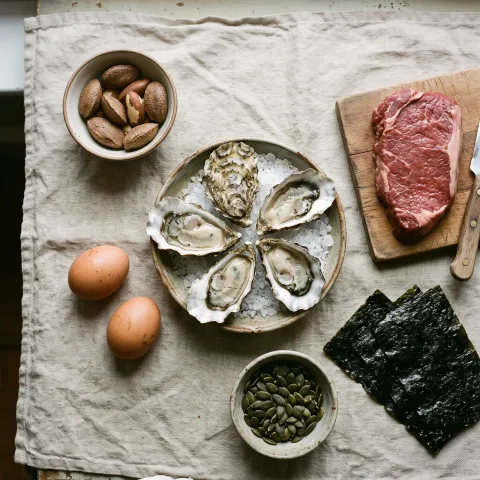
Selenium is a trace mineral that the thyroid depends on heavily. It is involved in converting the inactive form of thyroid hormone (T4) into the active form (T3), and it also plays a role in the antioxidant systems that protect thyroid tissue. Research has linked selenium deficiency to higher thyroid antibody levels, and some studies suggest that adequate selenium intake may be associated with reduced TPO antibody levels. Food sources include brazil nuts, turkey, eggs, and organ meats. Talk to your doctor before supplementing selenium, because too much is as problematic as too little.
Iodine
Iodine is essential for thyroid hormone production, but the picture with Hashimoto's is complicated. Very high iodine intake has been associated with triggering or worsening autoimmune thyroid activity in susceptible individuals, possibly because excess iodine can increase the immunogenicity of thyroglobulin. This does not mean eliminating iodine from your diet, it means being cautious with high-dose iodine supplements specifically. Whole food sources at normal dietary amounts are a different conversation than megadose supplementation. This is exactly the kind of nuance to work through with your doctor.
Anti-inflammatory eating patterns
More broadly, dietary patterns that support lower systemic inflammation are consistently associated with better immune regulation. That means prioritizing vegetables, quality animal proteins like turkey and pastured eggs, healthy fats, and minimizing ultra-processed foods, refined sugars, and industrial seed oils. None of that is specific to Hashimoto's. All of it is consistent with supporting the immune system that is driving the condition.
Vitamin D
Vitamin D deficiency shows up repeatedly in the research on autoimmune conditions. Several studies have reported lower vitamin D levels in people with Hashimoto's compared to healthy controls, and there is biological plausibility here because vitamin D receptors are present on immune cells and play a role in regulating immune response. Getting your vitamin D levels tested is a reasonable ask for your doctor if you haven't done it recently.
Lifestyle Factors That Show Up in the Research
Nutrition is one input. The immune system does not live in a vacuum, though, and the research on Hashimoto's reflects that.
Stress and immune dysregulation
Chronic stress elevates cortisol, and prolonged cortisol elevation has well-documented effects on immune regulation, including the kind of immune dysregulation that underpins autoimmune conditions. This does not mean stress caused your Hashimoto's. It means that stress management is not optional self-care fluff when you are dealing with an immune-driven condition. It is a legitimate part of the picture.
Sleep
Immune function and sleep are deeply intertwined. Sleep deprivation has measurable effects on immune cell activity and inflammatory markers. Getting consistent, quality sleep is about more than feeling rested. For anyone managing an autoimmune condition, it is a real variable.
Environmental factors and thyroid health
Some environmental compounds, including certain pesticides and endocrine-disrupting chemicals, have been studied for their potential to interfere with thyroid function and immune activity. The National Institute of Environmental Health Sciences has identified the thyroid as particularly vulnerable to endocrine disruption. Reducing exposure to processed foods, filtered water, and cleaner personal care products are practical steps, not guaranteed solutions, but reasonable ones from a root-cause perspective.
How to Talk to Your Doctor About the Immune Side of Hashimoto's
If your Hashimoto's care has focused primarily on TSH and whether your medication dose needs adjusting, that is not unusual. But you can advocate for a fuller picture without being adversarial about it. Your doctor is on your side.
Here are some things worth raising at your next appointment:
Ask about antibody testing. TPO-Ab and TgAb levels can tell you something about the activity of the immune process, not just what the thyroid output looks like right now. Tracking these over time can be informative.
Ask about a full thyroid panel. TSH alone does not capture T3, T4, or antibody levels. If you are still symptomatic on a normal TSH, the full picture may reveal more.
Ask about celiac screening. Given the documented overlap between celiac disease and autoimmune thyroid conditions, it is a reasonable question.
Ask about vitamin D and selenium levels. Both come up consistently in the Hashimoto's research, and both are testable.
Consider a registered dietitian who has experience with autoimmune conditions. The Academy of Nutrition and Dietetics has a directory for finding credentialed practitioners. Dietary changes in autoimmune conditions are not one-size-fits-all and working with someone who knows the nuances is worth it.
The goal is a care team that sees the whole picture: the thyroid as the site and the immune system as the driver. Those two parts of the conversation belong together.
The Stewardship View: Why This Matters Beyond the Diagnosis
There is a reason I am drawn to the functional medicine lens on conditions like Hashimoto's, and it is not because it is trendy. It is because it asks the deeper question: what is the body trying to tell us, and what does it need to function the way it was designed to?
An immune system misfiring is not a character flaw. It is not a punishment. It is a signal that something in the system is out of balance, and in many cases there are real, evidence-grounded things that can support it. That does not mean food fixes everything. It means you are not helpless, and you are not just waiting for the next medication adjustment. You are a steward of this body, and stewardship includes asking better questions.
Hashimoto's is a condition you manage long-term alongside your medical team, with real food and thoughtful lifestyle choices as genuine inputs, not wishful thinking.
Key Takeaways
- Hashimoto's thyroiditis is an autoimmune condition. The immune system is attacking the thyroid, which means the immune system is the driver, not just the thyroid itself.
- Antibodies (TPO-Ab and TgAb) are what damage thyroid tissue over time. Asking your doctor to test them gives a more complete picture than TSH alone.
- Gut health, selenium status, vitamin D levels, and gluten sensitivity are all areas the research connects to autoimmune thyroid activity. Each one is worth a conversation with your doctor or a registered dietitian.
- High-dose iodine supplementation may worsen Hashimoto's activity in some people. Whole food iodine sources at normal dietary amounts are a different situation. Talk to your doctor before supplementing.
- Chronic stress and poor sleep are not minor inconveniences for someone managing an autoimmune condition. Both influence immune regulation and belong in the management conversation.
- Food and lifestyle choices may support immune health alongside medical care. They do not replace your thyroid medication or your doctor's guidance.
Frequently Asked Questions
What is the difference between Hashimoto's thyroiditis and hypothyroidism?
Hypothyroidism means the thyroid is not producing enough hormone. Hashimoto's thyroiditis is the autoimmune condition that is the most common cause of hypothyroidism in countries with adequate iodine intake. Not everyone with Hashimoto's has hypothyroidism right away, and not all hypothyroidism is caused by Hashimoto's. The key difference is that Hashimoto's involves antibodies attacking thyroid tissue, while hypothyroidism is simply low thyroid hormone output, regardless of cause. Your doctor can differentiate these with the right tests.
What foods should I avoid with Hashimoto's thyroiditis?
There is no universal avoid list that applies to every person with Hashimoto's, and anyone who tells you otherwise is oversimplifying. The most evidence-grounded area to explore with your doctor or registered dietitian is gluten, particularly if you have not been tested for celiac disease, which co-occurs with autoimmune thyroid conditions at above-average rates. Beyond that, minimizing ultra-processed foods, refined sugars, and industrial seed oils is consistent with supporting overall immune and gut health. High-dose iodine supplements are worth discussing carefully with your doctor, as some research suggests excess iodine may worsen autoimmune thyroid activity in susceptible people.
Can you have Hashimoto's with normal TSH levels?
Yes. TSH can fall within the standard reference range while thyroid antibodies are elevated and immune activity is ongoing. This is part of why antibody testing (TPO-Ab and TgAb) gives a more complete picture than TSH alone. Some people have elevated antibodies for years before TSH shifts. If you have symptoms that suggest thyroid involvement but a normal TSH, it is worth asking your doctor about a full thyroid panel including antibody levels.
Is Hashimoto's thyroiditis an autoimmune disease?
Yes. Hashimoto's thyroiditis is classified as an organ-specific autoimmune disease, meaning the immune system is producing antibodies that target a specific organ, in this case the thyroid gland. This is why functional and integrative approaches to Hashimoto's focus on immune system support and gut health alongside thyroid hormone management, rather than treating the thyroid in isolation.
Sources
- National Institute of Diabetes and Digestive and Kidney Diseases (NIDDK): Hashimoto's Disease
- StatPearls / NCBI Bookshelf: Hashimoto Thyroiditis
- NCBI / PMC: Hashimoto's Thyroiditis: Epidemiology, Pathogenesis, Clinicopathological and Sonographic Characteristics
- NCBI / PMC: Intestinal Permeability and Its Regulation by Zonulin: Diagnostic and Therapeutic Implications
- American College of Gastroenterology (gastro.org): Celiac Disease
- NCBI / PMC: The Role of Selenium in Thyroid Autoimmunity and Cancer
- NCBI / PMC: Iodine and Thyroid Autoimmunity
- NCBI / PMC: Dietary Patterns and Hashimoto's Thyroiditis: A Review
- NCBI / PMC: Stress, the Immune System and Autoimmunity
- NCBI / PMC: Sleep and Immune Function
- National Institute of Environmental Health Sciences (NIEHS): Endocrine Disruptors
- Academy of Nutrition and Dietetics: Find a Nutrition Expert
Cook for it
Start with one of these AIP-Friendly recipes:
- Blueberry Basil Shrub Sparkling Drink
- Sparkling Peach Ginger Paleo Mocktail
- Apple Cider Vinegar Honey Ginger Shrub Tonic
Browse every AIP-Friendly recipe
This article is for general informational purposes only and is not medical advice. Always consult a qualified healthcare professional before making changes to your diet or health routine. Nothing here diagnoses, treats or cures any condition, and food is support alongside medical care, not a replacement for it. If you have, or think you may have, the condition discussed here, work with your doctor or a registered dietitian, and do not start, stop or change any medication without talking to them first.

Join the conversation
What do you think?
Free members can comment, reply and like. It takes ten seconds.