

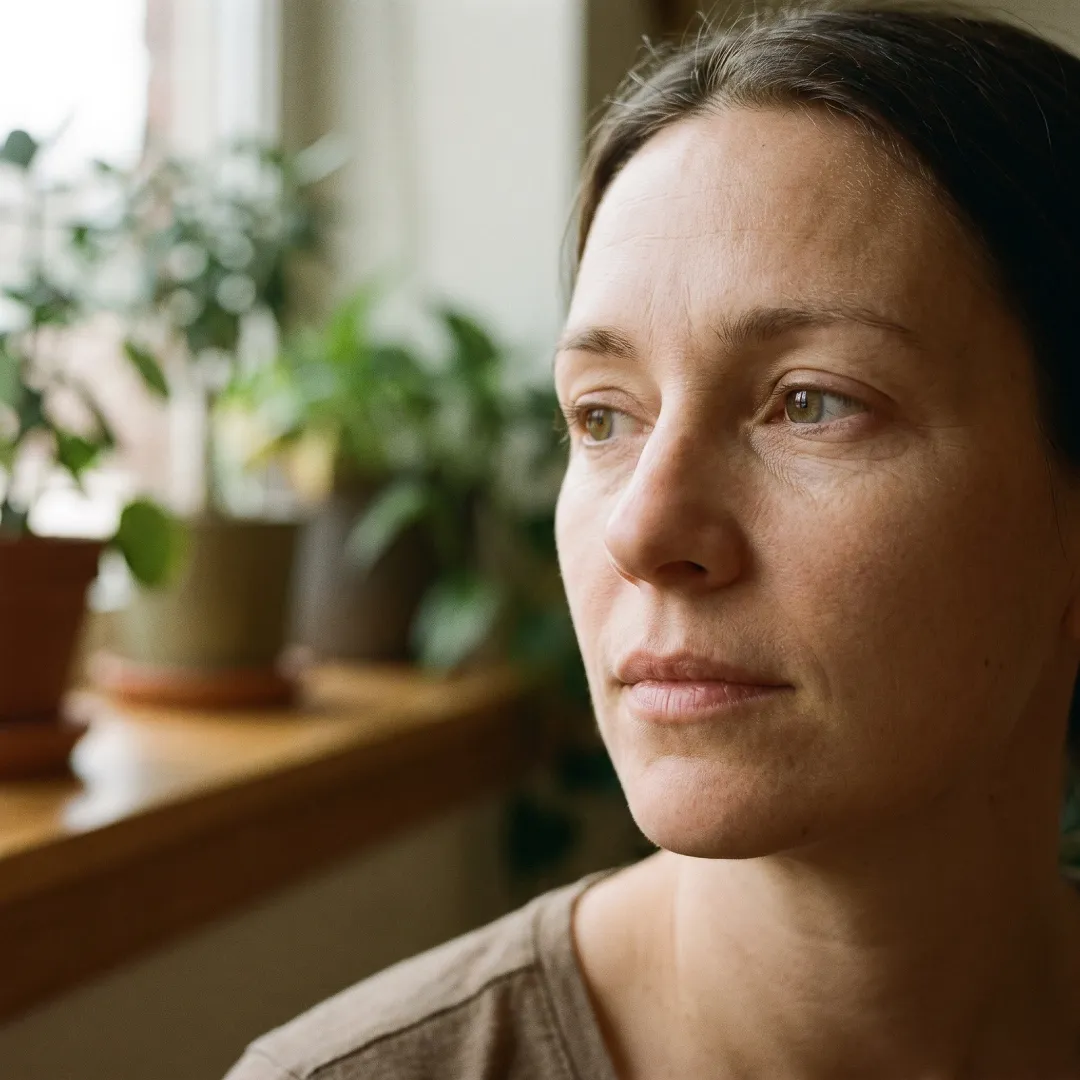

If you have rosacea, you have probably been handed a topical cream, maybe an antibiotic prescription, and a list of things to avoid, and then sent on your way. And maybe it helped a little. But the redness kept coming back, or the flares got worse under stress, or you noticed it was tied to what you ate. That is not a coincidence. That is your body speaking. And in my coaching practice, that is exactly where I start: not with the skin, but with everything underneath it.
First, Let's Be Clear About What Rosacea Is (And Isn't)
Rosacea is a chronic inflammatory skin condition. Flushing, persistent redness, visible blood vessels, bumps that look like acne, and sometimes eye irritation are the classic signs. It tends to hit fair-skinned women in midlife hardest, though it absolutely shows up in men and in people of all skin tones. It's more common than most people realize. Research estimates suggest it affects somewhere between 5 and 10 percent of the global population.
Here's what rosacea is NOT: it is not just sensitive skin. It is not a cosmetic nuisance you manage with the right foundation. It is not a sign that you're drinking too much wine, even if wine does trigger flares. It is a systemic inflammatory condition with roots that go much deeper than your pores. And when you treat it only on the surface, you are not solving the problem. You are quieting the alarm without checking what set it off.
The Gut-Skin Connection: Your Skin Talks When Your Gut Can't
This is where I always start with clients. The gut-skin axis is real, it is documented, and it is one of the most underappreciated connections in conventional dermatology.
Researchers have found a significant association between rosacea and small intestinal bacterial overgrowth (SIBO). A 2008 Italian study found that rosacea patients had a dramatically higher rate of SIBO compared to healthy controls, and when SIBO was treated, rosacea symptoms improved substantially in the majority of patients. Let that sink in. Treating a gut condition improved a skin condition. That is the gut-skin axis in action.
Helicobacter pylori, the bacteria associated with ulcers, has also been linked to rosacea in multiple studies. The proposed mechanism is that H. pylori may stimulate the release of a protein called gastrin, which can promote flushing and skin inflammation. A review published in the journal Gut Pathogens noted the associations between gut microbiome disruption and rosacea, and called for more research into gut-targeted therapies.
When I work with someone who has rosacea, one of my first questions is about their gut history. Have they had food poisoning? Multiple rounds of antibiotics? Chronic bloating, constipation, or diarrhea? Acid reflux? These are all clues. The gut is always part of the conversation.
Immune Dysregulation: Your Skin Is Stuck in Fight Mode
Rosacea is fundamentally an immune condition. The skin of someone with rosacea has an overactivated innate immune response, meaning the body's first line of defense is constantly firing even when there's no actual threat.
One of the key players here is a protein called cathelicidin. In healthy skin, cathelicidin is an antimicrobial peptide that shows up when there's an actual pathogen. In people with rosacea, cathelicidin is produced in excess AND it's processed into a form that triggers inflammation and blood vessel changes. Research published by the National Rosacea Society and in dermatology journals has highlighted this immune pathway as central to rosacea's development.
This is why rosacea flares under stress, after illness, with certain foods, and with temperature changes. The immune system is already running hot. Any additional input, physical, emotional, or environmental, can tip it over the edge. The goal from a coaching standpoint is to reduce the overall burden on that immune system, so the threshold for a flare gets higher.
Demodex Mites: Yes, This Is a Thing, and No, Don't Freak Out
I know. Stay with me.
Demodex folliculorum are microscopic mites that naturally live on human skin, specifically in the hair follicles and sebaceous glands of the face. Almost everyone has them. But in people with rosacea, Demodex populations tend to be significantly higher, and researchers believe that an overgrowth of these mites, and the bacteria they carry, can trigger and amplify the immune response behind rosacea flares.
A 2014 review in the British Journal of Dermatology found that Demodex density was significantly higher in rosacea patients than in controls, and that the mite's gut bacterium, Bacillus oleronius, may be triggering the inflammatory cascade in susceptible individuals.
I am not bringing this up to gross you out. I am bringing it up because it matters to the root-cause picture. If Demodex overgrowth is part of what's driving your rosacea, topical steroids and random prescriptions are not going to address that. You need a practitioner who is looking at the full picture.
The Nervous System Angle Nobody Is Talking About
Here is something I find incredibly interesting, and I do not hear enough people in the health space talking about it for rosacea specifically: the nervous system connection.
Rosacea is classified into subtypes, and one of them, erythematotelangiectatic rosacea (the kind with persistent flushing and visible blood vessels), is closely tied to neurovascular reactivity. The blood vessels in the face of someone with rosacea are hyperreactive. They dilate more, more quickly, in response to triggers that wouldn't faze someone without the condition. Heat, cold, spicy food, alcohol, exercise, emotional stress, embarrassment, all of these can trigger a flush.
This is not just skin being sensitive. This is the nervous system signaling through the skin. Chronic stress, a dysregulated autonomic nervous system, elevated cortisol, all of these can worsen neurovascular reactivity. Research has suggested that neuropeptides released during stress play a direct role in rosacea pathogenesis, contributing to inflammation and vascular changes in facial skin.
This is why stress management is not a soft, fluffy suggestion for my rosacea clients. It is a clinical priority. Breathwork, nervous system regulation, sleep quality, and genuine stress reduction are all part of the protocol. Not because I want to be woo-woo about it. Because the science supports it.
Environmental Triggers Are Real, But They're Downstream
Yes, triggers matter. Sun exposure, heat, wind, certain skincare ingredients, alcohol (especially red wine), spicy food, hot beverages, intense exercise, these can all set off a rosacea flare. The National Rosacea Society has published survey data on the most common triggers across thousands of rosacea patients.
But here is my coaching take: triggers are downstream. They are the match. The question is why is there so much dry tinder to begin with? Two people can drink a glass of red wine. One flares and one doesn't. The difference is not the wine. It's the underlying systemic burden, the gut health, the immune regulation, the nervous system tone, the overall inflammatory load.
When you address root causes, triggers often become less reactive. Not always gone, but less intense and less frequent. That's the goal. Not white-knuckling a trigger list for the rest of your life, but reducing the internal fire so that the triggers don't throw you into a five-day flare.
What I Actually Coach on With Rosacea Clients
I want to be clear: I am a health coach, not a dermatologist, and rosacea deserves a proper medical workup alongside the coaching work. But here is the root-cause framing I bring to the conversation.
Start with the gut. Ask your functional medicine provider about testing for SIBO, H. pylori, and gut microbiome health. If your gut is a mess, your skin is going to show it. A real-food approach that supports gut lining integrity, reduces inflammatory foods, and nourishes a diverse microbiome is foundational, not optional.
Look at your stress load honestly. Not just what you think is stressful. Your nervous system counts things like poor sleep, undereating, overtraining, relationship tension, and financial worry as stressors. All of it adds to the pile. Nervous system regulation practices, sleep, and genuine rest are not luxuries for rosacea. They are tools.
Support your skin barrier, simply. Rosacea skin tends to have a compromised barrier. That means fewer products, not more. Harsh cleansers, alcohol-based toners, and layering a dozen actives are often making it worse. Simple, fragrance-free, and gentle is almost always the right direction while you're addressing internal root causes.
Reduce overall inflammatory burden. This does not mean a radical elimination diet forever. It means paying attention to what you are putting in and on your body. Ultra-processed food, refined seed oils, excess sugar, and alcohol all drive systemic inflammation. Real, whole food is always the starting point.
Work with a provider who is willing to look upstream. A dermatologist who only offers topical antibiotics and lasers is not wrong, those can help manage symptoms. But if you want to understand WHY you have rosacea and address the underlying drivers, you need someone who will actually look at your gut health, your immune markers, your stress hormones, and your full history. That's the kind of partnership worth seeking out.
A Word on Faith and the Long Game
I believe these bodies we live in are not accidental. They are made with intelligence, and they communicate constantly. Rosacea is a signal. It is uncomfortable and frustrating, especially on your face where the world can see it. I know that can carry its own emotional weight.
But that signal is worth listening to. Not panicking over, not covering up forever, and certainly not hating your body over. The fact that your skin is reacting is your body's way of saying something underneath needs attention. That is actually a gift of information, even when it doesn't feel like one.
You are not broken. You are not stuck with this forever. You are someone who hasn't yet found the root of it. And that is exactly where the work begins.
Key Takeaways
- Rosacea is a systemic inflammatory condition, not just a skin problem, and surface treatments alone rarely solve it.
- The gut-skin axis is central: SIBO and H. pylori have both been linked to rosacea in clinical research.
- An overactivated innate immune response, driven in part by excess cathelicidin production, is a core mechanism in rosacea.
- Demodex mite overgrowth and associated bacteria may amplify the inflammatory cascade in susceptible people.
- The nervous system and chronic stress drive neurovascular reactivity, making stress regulation a clinical priority, not a soft suggestion.
- Triggers are real but downstream. Reducing the systemic inflammatory burden can make triggers less reactive over time.
- A root-cause approach includes gut assessment, nervous system support, real-food nutrition, simple skincare, and working with a provider willing to look upstream.
Frequently Asked Questions
What is the root cause of rosacea?
Rosacea doesn't have a single root cause. Research points to several overlapping drivers: gut dysfunction (including SIBO and H. pylori infection), an overactivated innate immune response, Demodex mite overgrowth, and nervous system dysregulation. Addressing these underlying systems, rather than only managing surface symptoms, is the functional medicine approach to rosacea.
Is rosacea linked to gut health?
Yes. Multiple studies have found a significant association between rosacea and gut conditions like small intestinal bacterial overgrowth (SIBO) and H. pylori infection. A 2008 Italian study found that treating SIBO led to notable improvement in rosacea symptoms for the majority of patients studied. The gut-skin axis is a real and well-documented pathway.
Can stress make rosacea worse?
It can, and this isn't just anecdotal. Stress triggers the release of neuropeptides that directly contribute to vascular changes and inflammation in facial skin. The blood vessels in rosacea-prone skin are already hyperreactive, and chronic stress, poor sleep, or a dysregulated nervous system can lower the threshold for a flare significantly.
What is the functional medicine approach to rosacea?
A functional medicine approach to rosacea starts with identifying the underlying drivers rather than only suppressing symptoms. This typically includes assessing gut health (SIBO, H. pylori, microbiome diversity), evaluating immune and inflammatory markers, addressing chronic stress and nervous system regulation, simplifying the skincare routine, and shifting to a whole-food anti-inflammatory diet. It works best alongside, not instead of, medical care from a qualified provider.
Sources
- NCBI / PMC (Gut Pathogens): Rosacea, Microbiome, and Gut-Skin Axis
- Clinical Gastroenterology and Hepatology: Small intestinal bacterial overgrowth in rosacea: clinical effectiveness of its eradication
- PubMed / British Journal of Dermatology: Demodex Folliculorum Density and Rosacea
- International Journal of Molecular Sciences: Managing a Burning Face: Clinical Manifestations and Therapeutic Approaches for Neurogenic Rosacea
- National Rosacea Society: Rosacea Triggers Survey and Patient Resources
This article is for general informational purposes only and is not medical advice. Always consult a qualified healthcare professional before making changes to your diet or health routine.




Join the conversation
What do you think?
Free members can comment, reply and like. It takes ten seconds.