

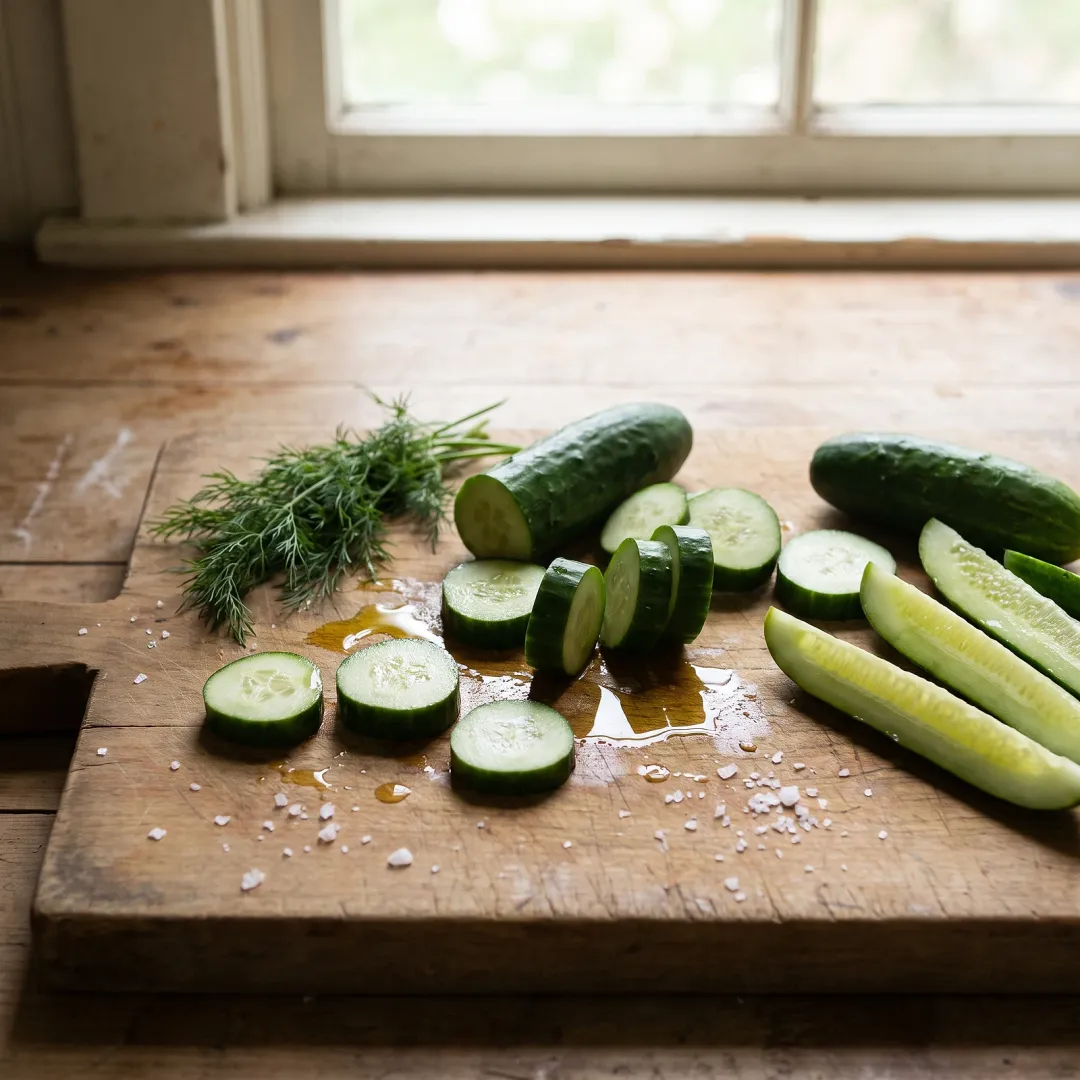

Cucumbers were never the thing I got excited about. Berries, pastured meat, good olive oil, yes. But cucumbers? They kind of sat there in the crisper drawer, getting used mostly as a vehicle for guacamole. Then I started actually looking at the research on them, and I had one of those quiet little moments where I realized I had seriously underestimated a food that costs almost nothing and is available basically everywhere. What cucumbers are really doing for you is more than you think.
What Is a Cucumber, Exactly?
Cucumbers (Cucumis sativus) belong to the Cucurbitaceae family, which also includes zucchini, pumpkins, and melons. They originated in South Asia and have been cultivated for at least 3,000 years. Today you will find a few main types in your grocery store or farmers market: the standard slicing cucumber, the longer English (or hothouse) cucumber, the small bumpy pickling cucumber, and the Persian cucumber, which is shorter, thin-skinned, and barely seedy.
Botanically speaking, cucumbers are a fruit. In the kitchen, we treat them as a vegetable. For our purposes here, that distinction does not really matter. What matters is what is inside them.
One thing I want to flag right away: cucumbers are about 95 to 96 percent water by weight. That sounds like a knock, like they are nutritionally empty. It is not. That water content is actually one of the most interesting things about them, and I will explain why in a minute.
Cucumber Nutrition: More Than Water
One cup of sliced cucumber with the peel on (about 119 grams) provides roughly 16 calories, 0.7 grams of protein, 2.9 grams of carbohydrate, and 0.9 grams of fiber. Not a calorie bomb, obviously. But the micronutrient picture is worth paying attention to.
According to the USDA FoodData Central database, that same cup of cucumber with the peel delivers:
- Vitamin K: around 17 micrograms, which is about 14 to 19 percent of most adults' daily needs
- Vitamin C: a modest amount, roughly 2.8 milligrams
- Potassium: about 193 milligrams
- Magnesium: around 17 milligrams
- Manganese: a small but present amount
Vitamin K is often the one that surprises people. It plays a critical role in blood clotting and bone metabolism. Potassium supports healthy fluid balance. These are not flashy numbers, but when you are eating real, whole food across the day, every ingredient is contributing. That is the real-food mindset.
One important note: leave the peel on whenever possible. A significant portion of the fiber and a chunk of the vitamins sit right there in or just under the skin. Peeling it strips that away. Buy organic if you can, especially since conventionally grown cucumbers are often coated with a wax layer and show up on environmental watchdog lists for pesticide residue.
The Antioxidant Profile: Cucurbitacins, Flavonoids, and Lignans
Here is where cucumbers get genuinely interesting. They contain several classes of antioxidant compounds that researchers have been studying seriously.
First, cucurbitacins. These are the bitter-tasting triterpenoid compounds found in the Cucurbitaceae family. In modern cucumbers they have largely been bred out of the edible flesh (because bitterness was not exactly a selling point), but they remain more concentrated in the peel and the stem end. A review published in the journal Scientific Reports highlighted cucurbitacins as biologically active compounds with significant antioxidant and anti-inflammatory properties in cell and animal studies. The human research is still early, but the mechanistic case is solid enough to take seriously.
Second, flavonoids. Cucumbers contain quercetin, kaempferol, and apigenin. Quercetin in particular has a substantial body of research behind it. A 2016 review in Nutrients summarized quercetin's role as a plant-based antioxidant that may help reduce oxidative stress and support healthy inflammatory responses. You will find it most concentrated in, yes, the peel.
Third, lignans. Cucumbers contain the plant lignans pinoresinol, lariciresinol, and secoisolariciresinol. Lignans are phytoestrogens, meaning they have a weak estrogen-like activity in the body, but more relevant here is their antioxidant function. These compounds have been studied for their potential role in reducing oxidative damage at the cellular level.
Put it all together and you have a vegetable that is doing real antioxidant work, quietly, every time you eat it. Nothing dramatic. Just steady, faithful support for a body that is under daily oxidative pressure from life.
Hydration: Why Eating Your Water Actually Matters
I mentioned that cucumbers are roughly 95 to 96 percent water. Most people hear that and shrug. But eating water from food is genuinely different from drinking it, and that difference is worth understanding.
When you consume water through whole foods, it is released slowly during digestion. It comes packaged with electrolytes like potassium and magnesium, and with fiber that slows the process down further. That means your cells get a slower, more sustained delivery of hydration rather than a quick flood that your kidneys send straight out. A paper in Nutrients reviewing dietary water intake across food groups confirmed that water-rich vegetables and fruits contribute meaningfully to overall hydration status, particularly for people who are not great at hitting their plain water intake.
This matters more in summer, for athletes, for older adults whose thirst signaling can diminish, and for kids who will happily eat cucumber slices when they would never voluntarily drink another glass of water. It is a real, practical hydration tool, not just filler.
For a paleo eater, this is also a natural fit. Our ancestors were eating water-dense plants regularly. The body expects hydration to come from food as well as from drinking. We did not evolve with a bottle of Gatorade. We evolved eating the whole plant.
Anti-Inflammatory Properties: What the Research Shows
Chronic, low-grade inflammation is at the root of most of the chronic conditions I talk about in my coaching work. So when I look at a food, one of the questions I ask is: is this feeding inflammation or is it doing something to quiet it?
Cucumbers come out on the quieter side. The quercetin, kaempferol, and cucurbitacin compounds I mentioned above have all shown anti-inflammatory activity in research settings. The most direct work on cucumbers specifically comes from a 2010 study published in the Journal of Young Pharmacists that found cucumber extract demonstrated analgesic (pain-reducing) and anti-inflammatory effects in animal models, attributed to the flavonoid and tannin content.
Animal and cell studies are not the final word on human health, and I always say that. But the compounds responsible for these effects are well-characterized, and the broader human literature on quercetin and inflammation gives them biological credibility. A meta-analysis in the British Journal of Nutrition found that quercetin supplementation was associated with significant reductions in inflammatory markers like C-reactive protein (CRP) in human trials. You are getting quercetin from the whole food, not a supplement, so the dose is smaller, but it is real and it is packaged with cofactors the way God intended.
Bottom line: cucumbers are not going to single-handedly put out a fire of systemic inflammation. But as part of a broad, real-food anti-inflammatory diet, they are a consistent, gentle contributor. Every meal matters. Every ingredient counts.
Skin Health: From the Inside Out
Cucumbers have a long folk-medicine history for skin, and the topical use (hello, spa cucumbers on the eyes) is real but limited in scope. What interests me more is what happens when you eat them regularly.
The silica content in cucumbers is one piece of this. Silica is a trace mineral involved in collagen synthesis and connective tissue integrity. It is not something most people think about, but research published in the Archives of Dermatological Research has linked dietary silica intake to improvements in skin elasticity and overall skin quality. Cucumbers are one of the better dietary sources of silica in a whole-food diet.
The vitamin C content, while modest, also contributes to collagen production. The antioxidant compounds help reduce the oxidative stress that accelerates visible aging at the skin level. And the hydration factor feeds into skin appearance in ways that are genuinely measurable. Dehydrated skin looks dull, tight, and more lined. Well-hydrated skin from food sources holds up better.
I am not making a beauty-product claim here. I am saying that a body consistently fed water-dense, antioxidant-rich, silica-containing whole foods is going to support its own repair processes more effectively. The skin is the largest organ. It reflects what is happening inside.
Who Should Be Cautious with Cucumbers?
Cucumbers are very well tolerated by the vast majority of people. But a few groups should pay attention.
People on blood thinners (anticoagulant medications like warfarin): the vitamin K content in cucumbers is meaningful, and since vitamin K plays a direct role in clotting, dramatic changes in vitamin K intake can affect how these medications work. If you are on a blood thinner, talk to your prescribing doctor or pharmacist before significantly increasing your cucumber intake. This does not mean you cannot eat them, it means consistency matters and your provider should know.
People with cucumber or cucurbit allergy: true cucumber allergy is not common, but it exists, and cross-reactivity with other members of the Cucurbitaceae family (melons, zucchini, pumpkin) can occur. Oral allergy syndrome, where the mouth and throat itch or tingle after eating raw cucumber, is more common and is usually linked to birch pollen allergy. Cooking cucumbers typically neutralizes the offending proteins.
People with sensitive digestion: some people find raw cucumbers, especially with the seeds and skin, contribute to bloating or gas. If that is you, try the seedless English or Persian varieties, peel them, or ferment them into pickles (more on that below). That is not a reason to avoid them, just a reason to adjust.
Everyone else? Eat the cucumber. Leave the peel on.
How to Actually Use Cucumbers in a Real-Food Kitchen
This is the part I love, because cucumbers are one of the most versatile, low-effort real foods in the game. Here is how I use them regularly:
Raw, sliced or speared. This is the obvious one. Sliced with a sprinkle of sea salt and a drizzle of good olive oil is genuinely a snack I eat all the time. Add some fresh dill and it is transcendent. Simple, no recipe required.
In salads. Cucumber adds crunch and freshness to any salad without competing with other flavors. I love it with tomatoes, red onion, kalamata olives, and a lemon-olive oil dressing. Very Mediterranean. Very easy.
As a scoop or vessel. Thick cucumber rounds work as a paleo-friendly chip substitute for dips, guacamole, and egg salad. Hollowed-out cucumber halves make a crunchy little boat for tuna salad. This is one of my go-to lunches.
In cold soups. Gazpacho is the classic, but a simple cold cucumber-avocado soup with lime and cilantro takes about five minutes in a blender and is genuinely refreshing on a hot day.
Fermented as pickles. Lacto-fermented cucumber pickles are a traditional real food with a long history. The fermentation process creates beneficial bacteria, and the resulting product is a completely different food from the vinegar-brined pickles at the store (which are often loaded with sodium and lack the live cultures). If you are into fermenting, cucumbers are a fantastic starting point.
In smoothies. I know it sounds weird but half a cucumber in a green smoothie adds serious hydration and a fresh, clean flavor without sweetness. It disappears into the blend. Try it once before you judge me.
The bottom line is that cucumbers are cheap, widely available, require zero cooking, and have a neutral enough flavor to work in almost anything. From a cost-per-nutrient-delivered standpoint, they are one of the better deals in the real-food world.
The Real-Food Bottom Line on Cucumbers
Look, I am not going to oversell you on cucumbers. They are not going to fix everything. No single food does. That is not how this works, and anyone who tells you otherwise is selling something.
But here is what I actually believe after looking at the research through a real-food, functional-medicine lens: cucumbers are a legitimately valuable everyday food that most people walk right past. Their antioxidant compounds, particularly quercetin and the cucurbitacins, are doing real biological work. Their silica content supports your body's structural repair. Their hydration contribution is meaningful and sustained. Their anti-inflammatory profile, while modest on its own, is consistent with the overall dietary pattern that keeps chronic inflammation in check.
And they cost about a dollar. Sometimes less.
The body we have been given is worth stewarding well, and part of stewarding it well is taking seriously the simple, quiet, unglamorous foods that show up every week and just keep doing their job. Cucumbers are one of those foods. Eat them. Leave the peel on. And maybe stop sleeping on the salad bar.
This article is for general informational purposes only and is not medical advice. Always consult a qualified healthcare professional before making changes to your diet or health routine.
Key Takeaways
- Cucumbers are roughly 95 to 96 percent water, but that high water content delivers slow, sustained hydration alongside electrolytes and fiber, making it genuinely different from drinking plain water.
- The peel is where the real nutrition lives: vitamin K, quercetin, fiber, and cucurbitacin compounds are most concentrated there, so leave it on whenever possible.
- Cucumbers contain several antioxidant compound classes, including quercetin, kaempferol, lignans, and cucurbitacins, all of which have shown anti-inflammatory activity in research settings.
- Silica in cucumbers may support collagen synthesis and skin elasticity, contributing to skin health from the inside out.
- People on blood-thinning medications should keep their cucumber intake consistent rather than dramatically increasing it, due to the vitamin K content.
- Cucumbers are extremely versatile: eat them raw, in salads, as a dip vehicle, in cold soups, blended into smoothies, or lacto-fermented as real pickles.
Frequently Asked Questions
Are cucumbers good for you or are they mostly just water?
Both things are true, and the water part is not the knock it sounds like. Cucumbers are about 95 to 96 percent water, but that water is delivered slowly during digestion alongside electrolytes like potassium and magnesium, making it a meaningful hydration source. Beyond water, they contain vitamin K, quercetin, cucurbitacins, lignans, and silica, all of which have documented biological activity in research. They are a genuinely useful real food, especially when you eat the peel.
Is cucumber peel safe to eat and should you leave it on?
Yes, the peel is safe to eat and you should leave it on whenever possible. A significant portion of the fiber, vitamin K, quercetin, and other antioxidant compounds in cucumbers are concentrated in or just under the skin. If you are buying conventional cucumbers, wash them thoroughly since they are often coated with wax and may carry pesticide residue. Buying organic and eating the peel is the best of both worlds.
Are cucumbers anti-inflammatory?
The research supports calling them anti-inflammatory in a quiet, consistent way. The quercetin, kaempferol, and cucurbitacin compounds in cucumbers have shown anti-inflammatory activity in cell, animal, and some human studies. A meta-analysis in the British Journal of Nutrition found that quercetin specifically was associated with reductions in CRP, a key inflammatory marker, in human trials. Cucumbers alone will not resolve systemic inflammation, but as part of a broader real-food dietary pattern, they are a consistent contributor.
Are cucumbers paleo?
Yes, cucumbers are paleo-friendly. They are a whole, unprocessed vegetable (botanically a fruit) with no grains, legumes, dairy, or refined ingredients. They fit naturally into a paleo or real-food eating pattern and are one of the most versatile, affordable, and low-effort options in the produce section.
Sources
- USDA FoodData Central: Cucumber, with peel, raw
- The American Journal of Chinese Medicine: Cucurbitacins: A Systematic Review of the Phytochemistry and Anticancer Activity
- Nutrients / PMC: Quercetin, Inflammation and Immunity
- Nutrients / PMC: Water, Hydration and Health
- International Journal of Food Sciences and Nutrition: Impact of quercetin on systemic levels of inflammation: a meta-analysis of randomised controlled human trials
- Archives of Dermatological Research / PubMed: Dietary silicon intake and absorption
This article is for general informational purposes only and is not medical advice. Always consult a qualified healthcare professional before making changes to your diet or health routine.


Join the conversation
What do you think?
Free members can comment, reply and like. It takes ten seconds.