

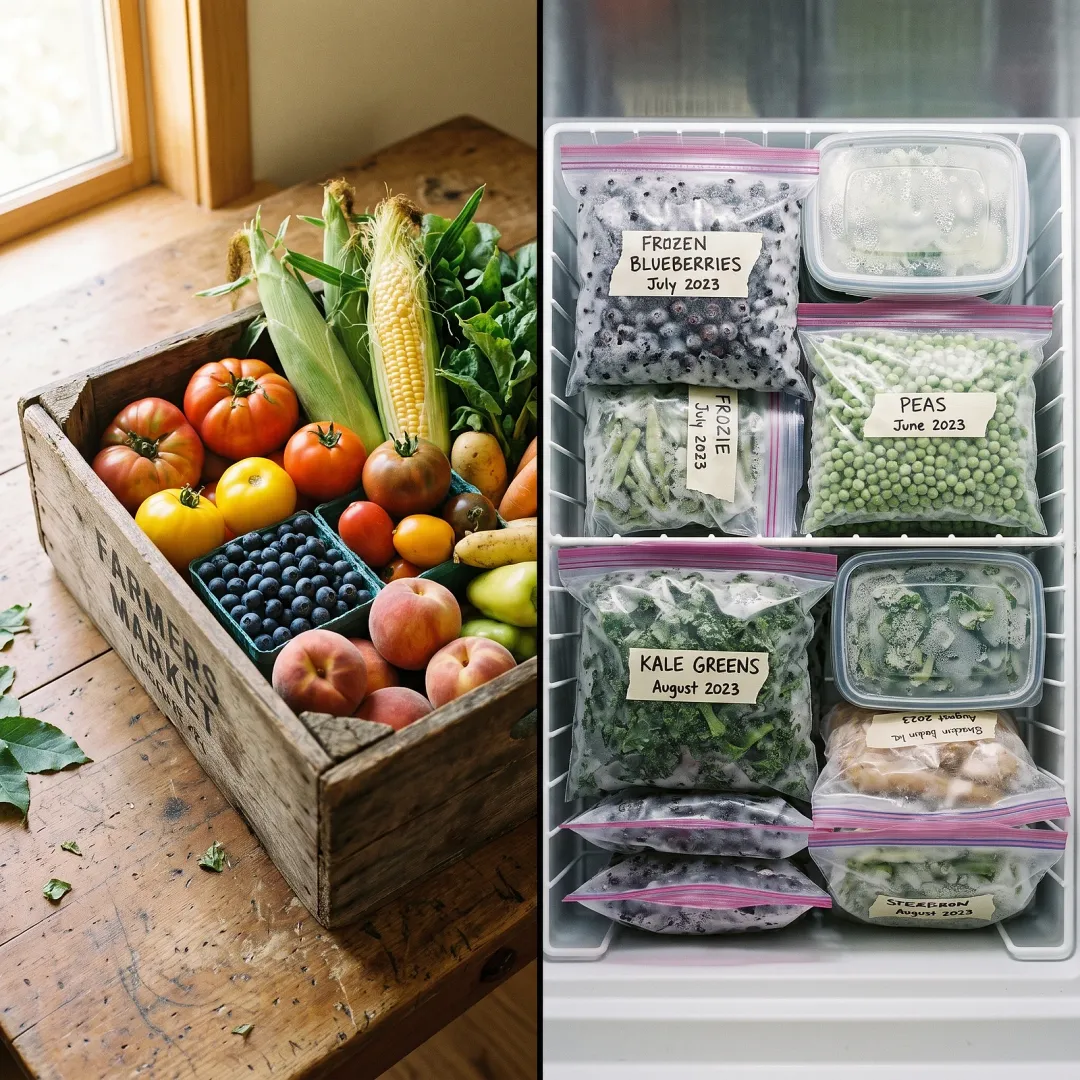

The farmers market is gorgeous in July. It is also $4 for a pint of blueberries, and that pint disappears before you get home. Meanwhile, the frozen blueberries in the back of your freezer, picked at peak ripeness and flash-frozen within hours, have been sitting there quietly, costing half as much, and holding onto most of their nutrition. So which one is better? The honest answer is that it depends entirely on what you are buying, what time of year it is, and what you are planning to do with it. Neither fresh nor frozen wins across the board. What wins is knowing the difference.
Why Seasonal Eating Matters (Beyond the Buzzword)
Eating with the seasons is not a trend. It is how people ate for most of human history, and it turns out there is a real nutritional reason for that. Produce starts losing nutrients from the moment it is harvested. A 2008 study published in the Journal of Agricultural and Food Chemistry found that some fresh vegetables can lose 15 to 55 percent of their vitamin C within a week of harvest, depending on storage conditions and transportation time. When you buy a tomato in January in Minnesota, that tomato was picked weeks ago, likely in a different country, and ripened with ethylene gas in transit. It is not the same food as a tomato picked ripe off the vine in August.
Buying seasonally, ideally from local or regional sources, shortens that gap between harvest and your plate. Shorter gap means more nutrients, better flavor, and frequently a lower price because the food is not being shipped across two continents. The USDA's Agricultural Marketing Resource Center notes that locally grown, in-season produce often costs less at farmers markets and roadside stands than out-of-season equivalents at conventional grocery stores, precisely because supply is high and transportation costs are low.
But here is the part that gets skipped in most "eat seasonally" posts: not everyone lives near a farmers market, not every season is abundant in every region, and a grocery budget is a real, finite thing. That is where frozen comes in, and that is where it genuinely earns its place.
The Case for Frozen: It Is Not the Backup Plan You Think It Is
Frozen produce has a reputation problem it does not deserve. Most of it is harvested at peak ripeness and flash-frozen within hours, which effectively locks in nutrients at their highest point. A 2017 study from the University of California, Davis compared nutrient content of fresh versus frozen vegetables across multiple studies and found that frozen vegetables were nutritionally comparable to fresh, and in some cases, for certain nutrients in certain vegetables, actually higher than their fresh counterparts that had been stored for several days.
That last part matters. "Fresh" at a conventional grocery store often means three to five days of refrigerated storage after a long transit. Frozen, by contrast, captured the nutrition at harvest. For most people eating most of the time, high-quality frozen is an excellent choice, especially in the off-season.
Where frozen earns a permanent spot in a real-food kitchen:
Berries. Blueberries, raspberries, strawberries, and cherries are the clearest win for frozen outside of peak summer. The texture softens when thawed, so they are not ideal for eating by the handful, but for smoothies, cooking, or baking, frozen berries are indistinguishable from fresh, and the nutrient content holds up well.
Peas. Fresh peas have an incredibly narrow window of peak flavor, measured in hours after picking. Frozen peas are processed so quickly after harvest that they regularly outperform grocery-store "fresh" peas on both sweetness and nutrition. This is not even a debate among food scientists.
Spinach, kale, and other greens. For cooked applications, frozen greens are perfectly solid. The texture changes make them unsuitable for a raw salad, but for soups, stews, omelets, or a side sauté, they work just as well.
Corn. Same story as peas. The sugar in corn converts to starch rapidly after picking, so frozen corn captured at peak sweetness beats corn that traveled for days.
Wild game. If you hunt or buy directly from a hunter, venison is a great example of seasonal food that freezes exceptionally well. Properly vacuum-sealed venison holds its quality for up to a year in the freezer. Eating venison in February from your own fall harvest is real seasonal eating, just time-shifted, and it costs a fraction of what you would pay per pound for comparable quality at a butcher.
When Fresh, In-Season Wins and It Is Not Close
There are foods and moments where fresh, local, and in-season is genuinely irreplaceable and the price is worth it.
Tomatoes. A peak-summer, vine-ripened tomato and a frozen tomato are two different foods. Freezing collapses the cell structure of tomatoes, leaving a mushy result that works fine in a sauce but is worthless as an eating tomato. If you want a tomato that tastes like something, buy it fresh, in season, locally. July through September, depending on your region, is the window. Outside that window, a canned whole tomato (from a reputable brand, ideally in a glass jar or BPA-free can) is a better choice than a mealy off-season fresh tomato.
Peaches, nectarines, and stone fruit. Freezing works fine for cooking applications, but the experience of eating a properly ripe, fresh peach in August is not replicable. Buy them fresh when they are in season, eat them fast, and if you have too many, freeze them yourself for baking later. You will not regret it.
Lettuce and delicate salad greens. These do not freeze. The window for local lettuce is spring and fall in most of North America, before it bolts in summer heat. Buy it fresh, eat it within a few days.
Herbs. Fresh basil, cilantro, and parsley lose almost everything that makes them worth using when frozen, including texture, color, and a significant portion of volatile aromatic compounds. Basil in July from a local farm is a wildly different ingredient from frozen basil in a cube. The one exception is pesto: you can make it fresh in quantity and freeze the finished pesto, and it holds remarkably well.
Root vegetables in fall and winter. This is where seasonal eating gets underrated. Carrots, parsnips, turnips, beets, celeriac, and winter squash are at their peak and their cheapest in fall. They are also storage vegetables, meaning they hold well in a cool, dry space for weeks. Buying these in bulk during fall harvest season from a farmers market or CSA is one of the most budget-friendly moves in a seasonal eating plan.
A Season-by-Season Cheat Sheet for Budget Shopping
You do not have to memorize everything. Here is a simple framework for where to put your fresh-produce dollars by season, and where to lean on frozen.
Spring: Fresh asparagus, radishes, peas, spinach, and rhubarb are worth buying in season, the prices drop as supply rises and the flavor is noticeably better. Frozen peas and greens remain reliable workhorses for everything else.
Summer: This is the season to go heavy on fresh. Berries, tomatoes, zucchini, cucumbers, corn, peppers, green beans, and stone fruit are all at their nutritional peak, their flavor peak, and frequently their lowest price of the year. This is also the time to buy in bulk, freeze what you can (berries especially), and take full advantage. A chest freezer paid for itself within two summers for me just in local berries and venison.
Fall: Root vegetables, winter squash, apples, pears, and brassicas like broccoli, cauliflower, and cabbage shine in fall. Buy them fresh and local, and use their long storage life to your advantage. Cabbage is one of the most underrated budget foods in existence, cheap, nutritious, and it lasts for weeks in the refrigerator.
Winter: This is where frozen earns its keep across the board. Supplement with fresh citrus (peak season runs November through March for most varieties), which travels reasonably well because the thick peel protects it. For everything else, frozen is your nutritional friend in winter. Embrace it without guilt.
The Harvard T.H. Chan School of Public Health puts it plainly: frozen fruits and vegetables are a healthy and economical choice, particularly when fresh options are out of season or cost-prohibitive. That is not a consolation prize. That is a real strategy.
Budget Moves That Make Seasonal Eating Actually Work
Wanting to eat seasonally and being able to afford it are two different conversations if you do not have a plan. Here are the practical ones that actually move the needle.
Buy in bulk at peak season and freeze it yourself. Blueberries in July can be $1.50 a pint at a U-pick farm or a roadside stand. Spread them on a sheet pan, freeze them flat, then transfer to a bag. You now have local blueberries in January for a fraction of what you would pay for fresh out-of-season berries.
Join a CSA or buy a farm share. Community Supported Agriculture programs, where you pay upfront for a weekly box of whatever the farm is growing, frequently cost less per pound than grocery store prices and keep you eating seasonally by default because you have no choice but to cook what showed up in your box. The USDA maintains a CSA and local food directory to help you find options in your area.
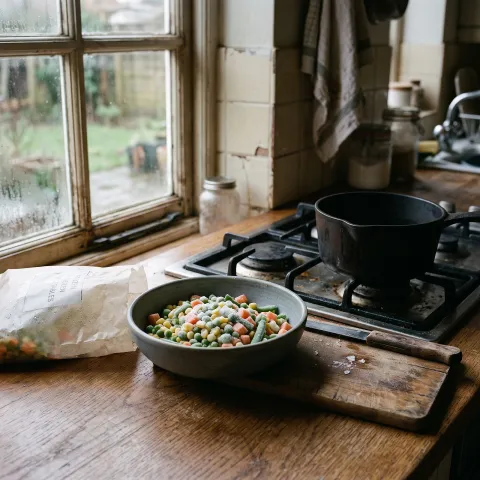
Do not overlook the freezer section for vegetables you will cook anyway. If you are making a soup, a stir-fry, or a casserole, frozen broccoli, frozen green beans, and frozen mixed vegetables perform at the same level as fresh. Save your fresh-produce budget for the things where it actually matters.
Eat the whole animal seasonally. If you have access to venison, either through hunting or from a local source, you are eating one of the most seasonally appropriate proteins in North America. Deer are harvested in fall and winter. Venison is lean, nutrient-dense, and, if you hunt, nearly free per pound once you account for the initial investment. It freezes beautifully. A whole deer processed in November can feed a family through spring, and that is as seasonal as it gets.
Prioritize organic for the Dirty Dozen, not across the board. The Environmental Working Group's annual Dirty Dozen list identifies the fruits and vegetables with the highest pesticide residue. Buying organic for those specific items and conventional for the rest stretches your budget without abandoning the principle. Seasonal buying already helps here, because local in-season produce is frequently sprayed less than commodity produce grown year-round in intensive operations.
Get comfortable with canned. Canned tomatoes, canned pumpkin, canned artichoke hearts, and canned beans (if legumes are in your rotation) are legitimate tools in a seasonal, real-food kitchen. Read the label: the only ingredient should be the vegetable itself, maybe salt. No citric acid soup, no additives you cannot pronounce.
The Honest Bottom Line
Eating with the seasons was never supposed to be precious. It is not about the Instagram-worthy farmers market haul or the perfectly curated produce basket. It is about understanding how food actually works: that freshness matters, that proximity to harvest matters, that the supply-and-demand reality of a season means local food costs less when there is a lot of it, and that frozen produce captured at its peak is a legitimate nutritional choice the rest of the year.
The people who ate this way before it had a name did not do it because it was fashionable. They did it because it was how the food worked, and it kept them fed and healthy. We got away from that when the industrial food supply started making everything available year-round, and we paid a price in both food quality and grocery bills.
You do not have to choose between eating well and eating affordably. The seasonal calendar, paired with a good freezer and a willingness to use frozen when it makes sense, is genuinely one of the most practical real-food strategies there is. Work the seasons. Let your freezer carry the off-season. Know which battles are worth fighting at the fresh counter, and skip the ones that are not.
That is it. That is the whole thing.
This article is for general informational purposes only and is not medical advice. Always consult a qualified healthcare professional before making changes to your diet or health routine.
Key Takeaways
- Fresh, local, and in-season produce is at its nutritional peak and often its lowest price during its natural harvest window.
- Frozen produce is typically harvested at peak ripeness and flash-frozen within hours, making it nutritionally comparable to fresh, and sometimes better than 'fresh' that has spent days in transit.
- The best choice depends on the food: tomatoes, stone fruit, and delicate greens belong fresh and in-season; berries, peas, corn, and cooking greens are excellent frozen year-round.
- Seasonal animal proteins like venison freeze exceptionally well, making fall-harvest proteins viable through spring.
- Practical budget moves include U-pick buying and home freezing at peak season, joining a CSA, and saving the organic spend for the EWG Dirty Dozen.
- Winter is frozen produce's strongest season; citrus is one of the few fresh options worth buying in cold months because it naturally stores and ships well.
Frequently Asked Questions
Is frozen produce as nutritious as fresh?
For most vegetables and fruits, yes. Frozen produce is typically harvested at peak ripeness and flash-frozen within hours, which locks in nutrients at their highest point. A 2017 UC Davis analysis found frozen vegetables are nutritionally comparable to fresh and, in some cases, retain more of certain nutrients than fresh produce that has spent several days in transit and cold storage. The key exception is texture: frozen produce softens on thawing, so it works better in cooked applications than as a raw eating vegetable.
What produce is cheapest to buy in season?
It varies by region, but broad seasonal patterns hold across most of North America. Summer brings the lowest prices on berries, tomatoes, zucchini, corn, and stone fruit as local supply peaks. Fall drops the price on root vegetables, winter squash, cabbage, apples, and pears. Spring makes asparagus, peas, and spinach more affordable. In winter, frozen is usually the most economical option for most vegetables, with fresh citrus as a notable exception since it ships and stores naturally well.
What is a CSA and is it actually budget-friendly?
CSA stands for Community Supported Agriculture. You pay upfront for a regular share of whatever a local farm produces during the growing season, typically a weekly box of vegetables, and sometimes fruit, eggs, or meat. Because you are buying directly from the farm with no middleman, CSA shares frequently cost less per pound than grocery store prices for comparable produce. The USDA maintains a searchable CSA directory at ams.usda.gov so you can find programs in your area.
Should I always buy organic to eat seasonally on a budget?
Not necessarily. A practical middle ground is to prioritize organic for the items on the Environmental Working Group's annual Dirty Dozen list, which identifies the fruits and vegetables with the highest measured pesticide residue, and buy conventional for everything else. Seasonal buying from local farms already reduces pesticide exposure somewhat, since local in-season crops are often managed less intensively than commodity produce grown year-round. Buying organic across the board is not always financially realistic, and spending strategically gets you most of the benefit at a fraction of the cost.
Sources
- Journal of Agricultural and Food Chemistry: Nutritional Comparison of Fresh, Frozen, and Canned Fruits and Vegetables
- University of California, Davis: Comparison of Freshness and Nutrient Composition of Frozen vs. Fresh Produce
- Harvard T.H. Chan School of Public Health, The Nutrition Source: Ask the Expert: Frozen Fruits and Vegetables
- USDA Agricultural Marketing Resource Center: Local Food Marketing Practices
- USDA Agricultural Marketing Service: Local Food Directories: CSA Directory
- Environmental Working Group: EWG's Dirty Dozen: Shopper's Guide to Pesticides in Produce
This article is for general informational purposes only and is not medical advice. Always consult a qualified healthcare professional before making changes to your diet or health routine.

Join the conversation
What do you think?
Free members can comment, reply and like. It takes ten seconds.