
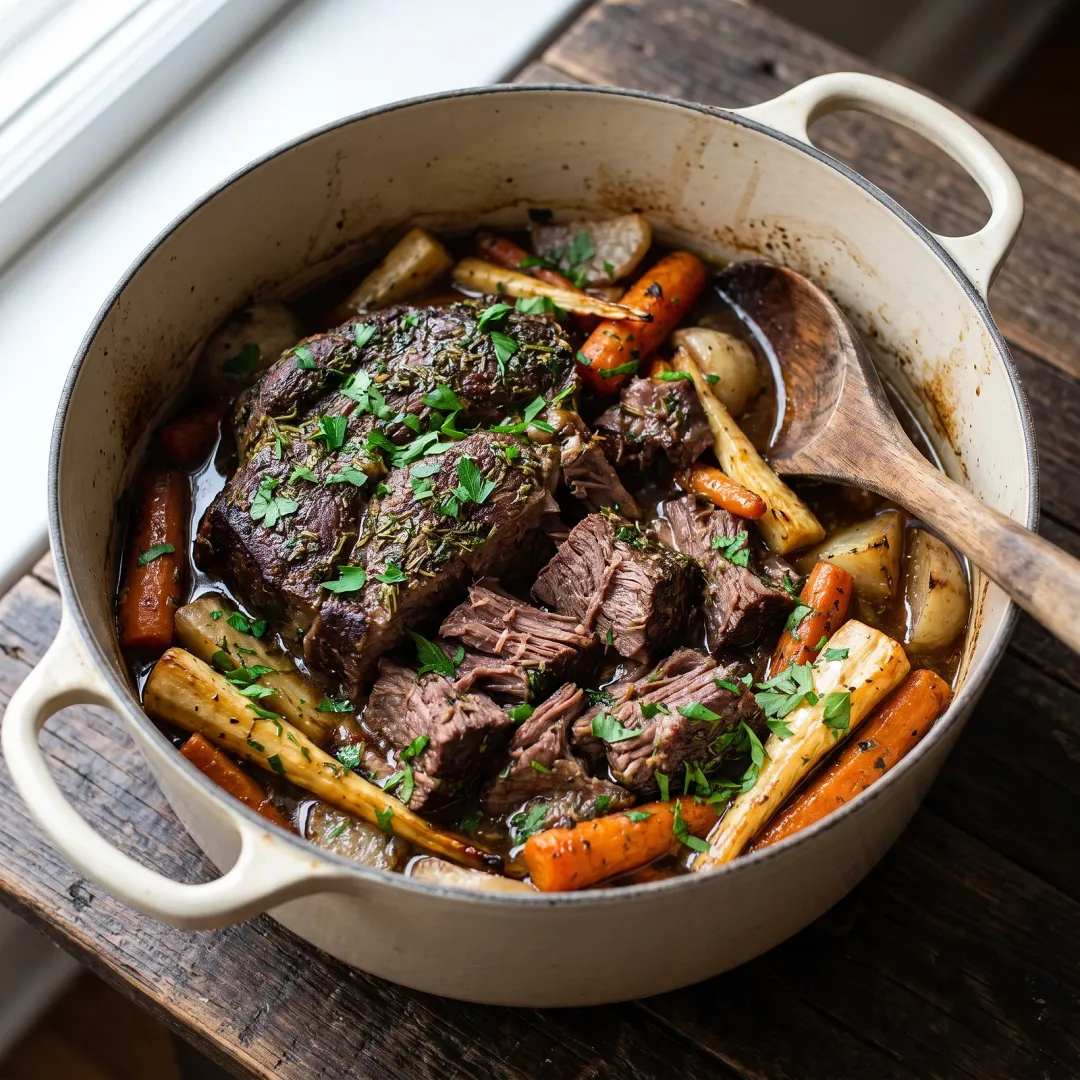

There are some recipes that just feel like home. This is one of them. A big, beautiful beef chuck roast that you toss in the slow cooker in the morning and come back to a house that smells like everything is going to be okay. That is not an exaggeration. My family goes quiet when I put this on the table, and that is really saying something. I'll be honest, I spent years thinking pot roast was just a sad, soggy thing my grandmother made from a can of cream of mushroom soup. When I cleaned up my diet and started paying attention to what actually went into my food, I had to reinvent so many comfort food classics from scratch. This one turned out better than anything I remembered. The herb crust that gets seared onto the beef before it slow cooks is everything. It forms this gorgeous, deeply savory bark that slowly melts into the broth over eight hours and creates a gravy that will make you want to drink it from a mug. Grass-fed chuck roast, bone broth, real vegetables, fresh herbs. That's the whole list. Nothing from a packet, nothing from a can with a label that reads like a chemistry exam. Just real food doing exactly what it was designed to do, nourish you all the way down.
Nutritional Benefits
Grass-Fed Beef Chuck
- Higher in omega-3 fatty acids and conjugated linoleic acid (CLA) compared to conventionally raised beef, both linked to reduced inflammation.
- Exceptional source of complete protein, heme iron, zinc, and B12, nutrients your body absorbs far more efficiently from animal sources than from plant alternatives.
- Chuck roast is rich in collagen, which breaks down into gelatin during slow cooking and supports gut lining integrity, joint health, and skin elasticity.
Bone Broth Base
- Provides glycine, proline, and other amino acids that support gut repair and immune function.
- Adds a natural source of minerals like magnesium, calcium, and phosphorus to the dish without any supplementation.
- The gelatin in bone broth enhances the texture of the braising liquid into a naturally thickened, rich gravy with zero flour or starch needed.
Root Vegetables
- Carrots are loaded with beta-carotene, which your body converts to vitamin A for immune support and eye health.
- Parsnips bring a good dose of folate, vitamin C, and prebiotic fiber that feeds your beneficial gut bacteria.
- Turnips are a lower-starch option that adds bulk and nutrients, particularly vitamin C and glucosinolates, without spiking blood sugar the way white potatoes do.
Fresh Herbs and Garlic
- Rosemary and thyme are both rich in antioxidant compounds, including rosmarinic acid, that help combat oxidative stress.
- Fresh garlic provides allicin, one of the most well-studied natural antimicrobial and anti-inflammatory compounds in the food supply.
- Parsley is a surprisingly powerful source of vitamin K and vitamin C for something most people treat as a garnish.
FAQs
Can I use a different cut of beef?
Chuck roast is really the ideal cut for this because of its fat marbling and collagen content, both of which are essential for that fall-apart texture and rich braising liquid. You could use a bottom round roast in a pinch, but it will be a bit leaner and can dry out more easily. If you go that route, check it a little earlier and don't skip the searing step.
Do I have to sear the meat first?
Technically no, but I am telling you, please do it anyway. Searing is where the Maillard reaction happens and it creates hundreds of new flavor compounds that do not develop any other way. That step takes maybe 10 minutes and it is the difference between a good pot roast and a knock-your-socks-off pot roast. Don't skip it.
Is this Whole30 compliant?
Yes, as written this recipe is fully Whole30 compliant. Just double-check your specific bone broth and tomato paste labels to make sure no sugar or non-compliant additives snuck in. The coconut aminos and balsamic vinegar are both Whole30-approved.
Can I make this in the oven instead of a slow cooker?
Absolutely. After searing the roast and building the braising liquid, transfer everything to a Dutch oven. Cover tightly with a lid and cook at 300°F for 3.5 to 4 hours, until the meat is completely tender and pulls apart easily.
What do I do with the leftovers?
Oh, this is where it gets really good. Leftover shredded beef reheats beautifully and the flavor deepens overnight. Use it in lettuce wraps, pile it over cauliflower mash, stuff it into paleo-friendly peppers, or just eat it cold straight from the container. Store it with the gravy so it stays moist. It keeps well in the fridge for up to 4 days or in the freezer for 3 months.
My gravy is too thin. How do I thicken it without flour or cornstarch?
Pour the cooking liquid into a small saucepan and simmer it over medium heat, uncovered, for 10 to 15 minutes until it reduces and concentrates. That's it. The natural gelatin from the bone broth and the collagen from the beef will help it thicken as it reduces and as it cools slightly. No thickeners needed.
If you make this, I want to hear about it. Drop a comment below and tell me how it went, or tag me on Instagram so I can see your beautiful roast. And if you have a friend who still thinks eating healthy means giving up comfort food, send this one their way. This is the kind of meal that changes minds.
 That Paleo Chick
Real food that heals
That Paleo Chick
Real food that heals
RecipePaleoDinnerGluten-Free

Fits these needs
Checked ingredient by ingredient. Tap one to see every recipe that fits.
Always check labels on packaged ingredients (gluten-free certification, hidden additives) and follow your clinician's advice.
Ingredients
Instructions
Nutrition Facts Amount per serving
Estimated from the ingredients. Values vary with brands and portions.

Join the conversation
Made it? Tell us how it went.
Free members can comment, reply and like. It takes ten seconds.