
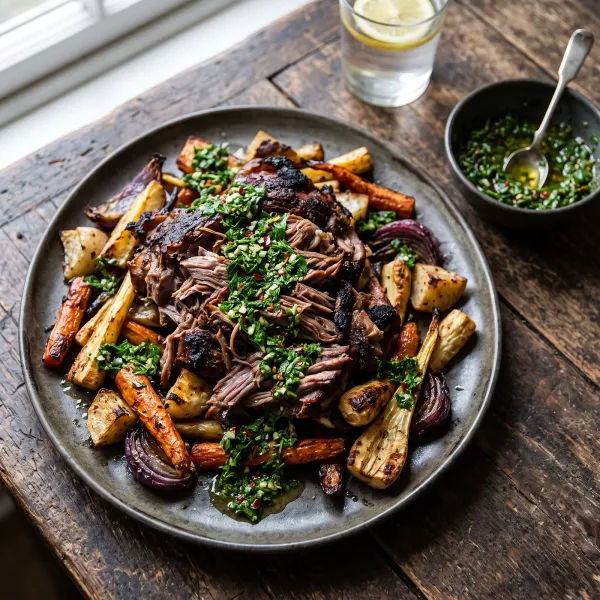
Most people have never smoked a goat shoulder. That is exactly why you should do it this weekend. Goat is one of the most widely eaten proteins on the planet, and somehow it barely shows up on American dinner tables. I do not get it. When you cook it low and slow over real wood smoke, it turns into something you will talk about for weeks. The fat renders down, the connective tissue melts, and the meat pulls apart in these dark, smoky ribbons that taste like a campfire and a spice market had a very delicious baby. Goat is also genuinely good for you in a way that does not require any creative marketing. It is leaner than beef, loaded with iron and B12, and because it is less commercially popular, it is almost always raised more humanely and without the feedlot nonsense. I buy mine from a local farmer or a halal butcher. If you have not checked either of those sources, start there. The chimichurri here is not optional. I mean, you could skip it, but the bright, garlicky herb sauce is what cuts through the richness of the smoke and ties everything together. And the roasted root vegetables underneath catch all the drippings and pan juices and become something way better than they have any right to be. This is a full, beautiful, real-food dinner. It takes time. It is worth every minute.
Nutritional Benefits
Goat Meat: Lean, Iron-Rich, and Seriously Underrated
- Goat is one of the leanest red meats available, with significantly less saturated fat than beef or pork, making it easier on the cardiovascular system while still delivering deep, satisfying nutrition.
- It is a rich source of heme iron, the most bioavailable form, which is critical for energy, oxygen transport, and preventing fatigue.
- Goat provides a full profile of B vitamins, especially B12, which supports neurological function, mood regulation, and red blood cell production.
- Because goat is rarely raised in factory-farm conditions, you are far more likely to get a pasture-raised animal with a cleaner fatty acid profile than conventionally raised beef.
Root Vegetables: Slow-Burning Carbs That Actually Fuel You
- Parsnips, turnips, and carrots deliver complex carbohydrates that digest slowly, helping to maintain stable blood sugar rather than causing a spike-and-crash cycle.
- Carrots are high in beta-carotene, the precursor to vitamin A, which supports eye health, immune function, and skin integrity.
- Turnips are a cruciferous vegetable with meaningful amounts of vitamin C and compounds that support liver detoxification pathways.
- Roasting these vegetables in avocado oil rather than seed oils means you are using a fat that is stable at high heat and not contributing to systemic inflammation.
Chimichurri: Fresh Herbs Are Medicine
- Flat-leaf parsley is one of the most nutrient-dense herbs you can eat, packed with vitamin K, vitamin C, and flavonoids that act as antioxidants in the body.
- Oregano has some of the highest antioxidant activity of any herb and contains compounds with natural antimicrobial properties.
- Garlic contains allicin, a sulfur compound that has been extensively studied for its cardiovascular and immune-supportive effects.
- Extra-virgin olive oil is rich in oleocanthal, a compound with anti-inflammatory action similar to ibuprofen, and in monounsaturated fats that support heart health and hormone balance.
FAQs
Where do I buy goat shoulder?
Your best bets are a local halal butcher, an ethnic grocery store (Caribbean, Mexican, Middle Eastern, and African markets all carry it regularly), or a local farm. You can also find it online through specialty meat purveyors. Call ahead if you are not sure, but I promise it is easier to find than most people think.
What if I do not have a smoker?
You can absolutely do this in a standard oven or a slow cooker, though you will miss the smoke flavor. For oven cooking, roast uncovered at 275 degrees F for about 4 to 4.5 hours until pull-apart tender. To get some smoke character without a smoker, add 1/2 teaspoon of smoked paprika and a few drops of clean liquid smoke to the spice rub. It is not the same, but it gets you closer.
What wood is best for smoking goat?
Hickory is my go-to for goat. It is bold and classic without being overwhelming. Mesquite works if you like a sharper, more intense smoke. Applewood or cherry will give you a lighter, slightly sweet smoke that is also beautiful with the spice rub on this recipe. Avoid anything too resinous, like pine.
How do I know when smoked goat is actually done?
Temperature is the only reliable answer. You need 195 to 205 degrees F internal temperature at the thickest part of the shoulder, away from the bone. At that range the collagen has fully broken down and the meat will pull apart with almost no effort. If it still feels tight or shreds in chunky pieces, put it back on and give it another 30 to 45 minutes. Goat is forgiving at low temps.
Can I make this ahead of time?
Yes, and it actually reheats beautifully. Smoke the goat, pull it, and store the meat separately from the vegetables in airtight containers in the fridge for up to 4 days. Reheat the pulled goat low and slow in a covered pan with a splash of broth or water to keep it moist. Make the chimichurri fresh on the day you serve it for the best flavor.
Is this recipe Whole30 compliant?
Yes. Every ingredient in this recipe is Whole30 compatible as written. No added sugar, no grains, no legumes, no dairy, and no seed oils. The chimichurri uses red wine vinegar, which is permitted on Whole30. You are good to go.
If you make this, I genuinely want to hear about it. Smoked goat is one of those dinners that makes people stop mid-bite and ask what they are eating. Tag me, leave a comment, tell your neighbor. This is the kind of food that deserves to be shared. And if you have been curious about goat but kept walking past it at the butcher, consider this your sign. You were designed to eat real food, and real food does not always look like a chicken breast. Sometimes it looks like this.
Ingredients
Instructions
Nutrition Facts
| Nutrient | Amount per Serving |
|---|