
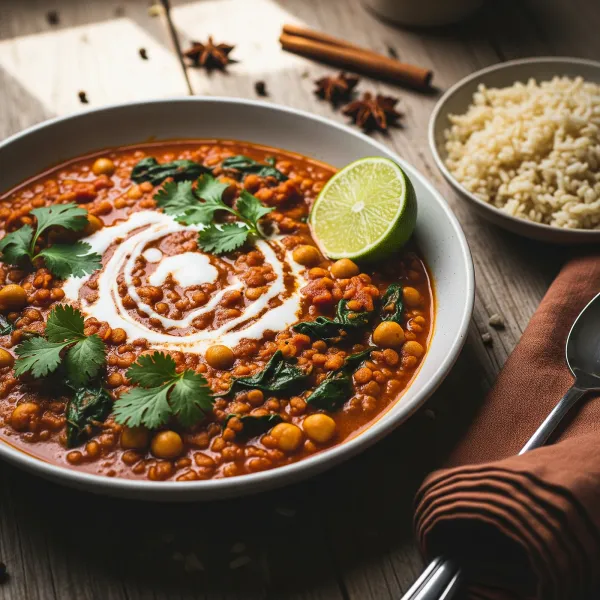
There was a solid stretch of my life where I thought vegan dinners were going to be sad, flavorless, rabbit-food situations. And then I made a proper lentil curry and had to eat every one of those words. This smoky red lentil and roasted tomato curry with coconut milk is the kind of bowl that makes you feel genuinely taken care of. It is warm, it is filling, it is deeply spiced, and it comes together in one pot in about 45 minutes. The secret move here is roasting the tomatoes first. I know it feels like an extra step, but please trust me on this. Sticking them in a hot oven for 20 minutes pulls out all their sweetness, concentrates their flavor, and adds a little char that does something beautiful when it hits those spices. You cannot get that from cracking open a can. Red lentils are one of my favorite ingredients to cook with because they break down into this thick, creamy texture without any blending required. They pull protein and fiber into every bite, they take on whatever spices you throw at them, and they are cheap. God made lentils and they are honestly perfect. This is a legit weeknight dinner. It reheats like a dream, freezes well, and genuinely gets better the next day. Make a big batch and thank yourself on Tuesday.
Nutritional Benefits
Red Lentils: Plant Protein That Actually Delivers
- One cup of cooked red lentils has around 18 grams of protein and nearly 16 grams of fiber. That is a serious nutritional profile.
- Lentils are rich in folate, iron, and manganese. For plant-based eaters, lentils are one of the most reliable iron sources you can put on your plate.
- Their soluble fiber feeds beneficial gut bacteria and helps stabilize blood sugar by slowing glucose absorption after meals.
Full-Fat Coconut Milk: Healthy Fat Worth Keeping
- Full-fat coconut milk provides medium-chain triglycerides (MCTs), which the body processes differently than long-chain fats. MCTs go more directly to the liver for energy rather than being stored.
- The fat in coconut milk also helps your body absorb the fat-soluble nutrients in the spices, including beta-carotene from turmeric and curcumin compounds.
- Skip the light coconut milk here. You want the richness, and your body actually benefits from it.
The Spice Blend: Not Just for Flavor
- Turmeric contains curcumin, one of the most studied anti-inflammatory compounds in food research. Pairing it with black pepper (add a crack to your bowl) increases absorption significantly.
- Cumin supports digestive enzyme activity and has been studied for its role in blood sugar regulation.
- Smoked paprika brings carotenoids including beta-carotene and lycopene, both linked to reduced oxidative stress.
Chickpeas: Double Down on Fiber and Satiety
- Adding chickpeas to this curry bumps both the protein and fiber content considerably, making this a genuinely filling plant-based meal that does not leave you hungry an hour later.
- Chickpeas are a good source of resistant starch, which acts as prebiotic fiber and supports a healthy gut microbiome.
- They also provide a meaningful amount of B vitamins, including B6 and folate, which matter for energy metabolism and neurological health.
FAQs
Can I use canned tomatoes instead of roasting fresh ones?
You can, and the curry will still taste great. Use one 14-oz can of fire-roasted diced tomatoes in place of the fresh roasted ones. That said, if you have 20 minutes and fresh tomatoes, roasting them yourself takes this to a different level entirely.
Do red lentils need to be soaked before cooking?
No, and that is part of what makes them so great for weeknight cooking. Just rinse them well under cold water until the water runs mostly clear, and they are ready to go straight into the pot.
How spicy is this curry?
As written it has a gentle kick from the cayenne, but it is not aggressive. If you are cooking for kids or spice-sensitive people, cut the cayenne to a pinch or leave it out entirely. If you like heat, add more cayenne or a sliced fresh chili with the onions.
Can I make this ahead of time?
Yes, and honestly it is even better the next day after the flavors have had time to settle together. Store it in an airtight container in the fridge for up to 4 days. It also freezes really well for up to 3 months. Reheat on the stove over low heat with a splash of broth or water to loosen it up.
What should I serve this with?
Brown rice is my go-to here because it adds more fiber and has a nuttiness that pairs well with the curry. Warm naan works beautifully too. If you want to keep it grain-free, it is also excellent over cauliflower rice or with roasted sweet potato on the side.
My curry is thicker than I want. How do I fix it?
Just add vegetable broth a quarter cup at a time, stirring over low heat until you hit the consistency you like. Red lentils continue to thicken as the curry sits and cools, so you may need to add a little liquid when reheating leftovers too.
If you make this curry, I genuinely want to hear about it. Drop a comment below and let me know how it turned out, or tag me on Instagram so I can see your bowl. And if you are building out your plant-based dinner rotation, take a look at some of my other whole-food vegan recipes. Your body was designed to run on real food, and dinners like this one are proof that eating well does not mean eating sad.
Ingredients
Instructions
Nutrition Facts
| Nutrient | Amount per Serving |
|---|