

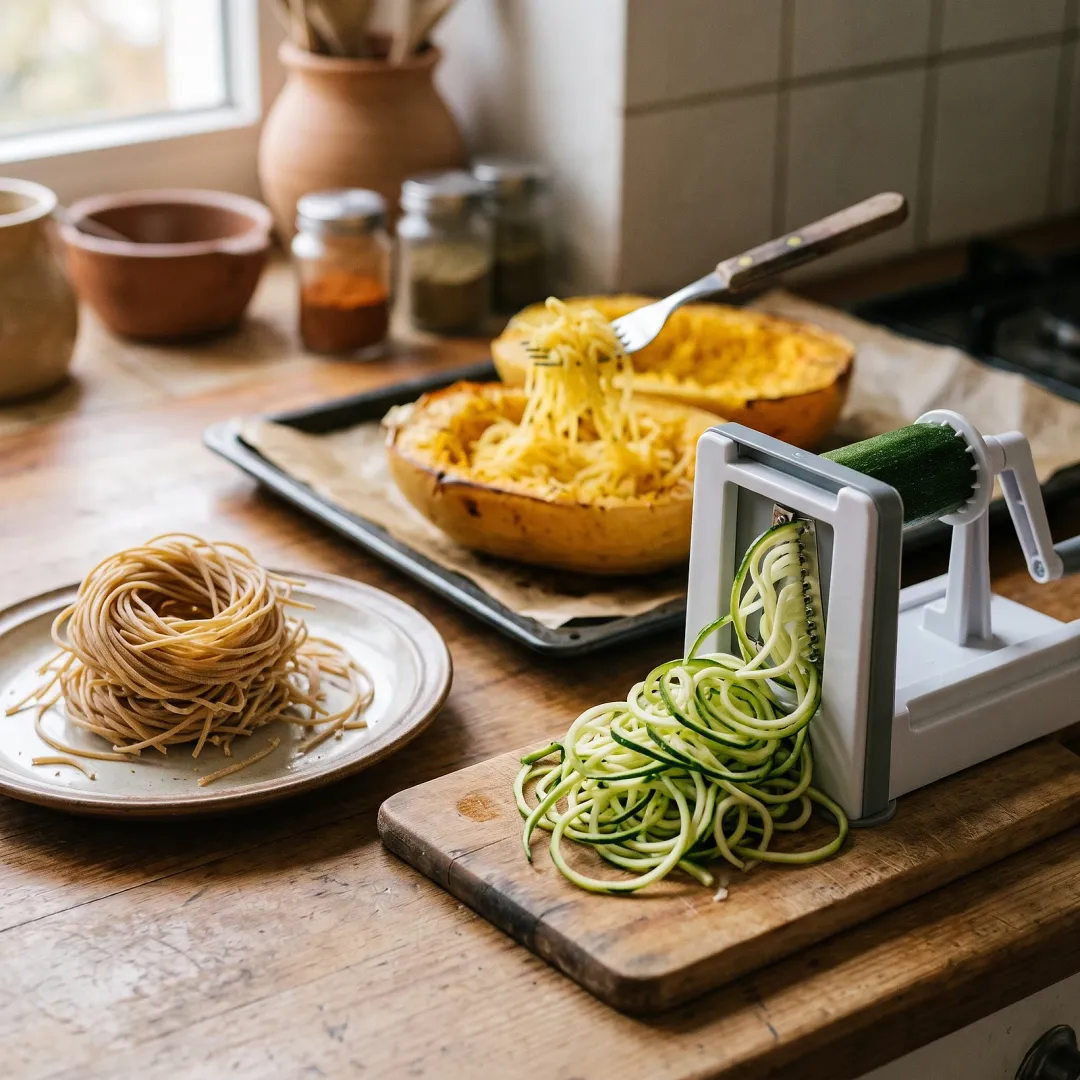

My first plate of zucchini noodles looked exactly like pasta and tasted exactly like a wet zucchini. That's the truth nobody tells you, and it's also not the end of the story.
What You're Actually Eating With Conventional Pasta
Regular wheat pasta is refined starch. That's the whole thing. Even the "whole grain" versions are mostly processed, with the fiber and germ ground down enough that your body barely notices the difference in how fast it hits your blood. A standard two-ounce serving of dry pasta delivers around 42 grams of carbohydrates and very little fiber to slow the absorption down. The USDA's FoodData Central has the full numbers if you want to look.
For most people eating a standard American diet, pasta is a vehicle for sauce. It doesn't taste like much on its own. That matters, because if the flavor is coming from what's on top of the noodle, the noodle itself is just texture and starch. Which means the noodle is replaceable.
This article is for general informational purposes only and is not medical advice. Always consult a qualified healthcare professional before making changes to your diet or health routine.
What to Use Instead: Spiralized Vegetables and Winter Squash
Two options do the job, and they behave pretty differently from each other.
Spiralized zucchini, cucumber, or carrot (zoodles, coodles, whatever you want to call them) go raw or barely cooked. A spiralizer does the work in about three minutes, or you can buy them pre-spiralized at most grocery stores now. Zucchini is the workhorse here because it's mild, cheap, and absorbs sauce well. A cup of raw zucchini has roughly 4 grams of carbohydrates and 1.4 grams of fiber, according to the USDA. That is a very different conversation from a bowl of penne.
Spaghetti squash is the other heavy hitter. You roast it, fork the strands out, and they pull into noodle-like ribbons that hold up to heavy meat sauce in a way zucchini honestly doesn't. One cup of cooked spaghetti squash has about 10 grams of carbohydrates and 2.2 grams of fiber, per USDA data. Still way lighter than pasta, with actual micronutrients in the mix.
Research published in Nutrients has linked higher vegetable intake to better overall diet quality and satiety, so getting more of this stuff in wherever you can is worth something beyond just the carb math. Here's a relevant review if you want to dig in.
What Honestly Changes
Taste: Zucchini noodles taste like zucchini. That's not a bad thing if you're dressing them with a bold bolognese or a garlicky pesto, because the sauce carries the dish. Where it fails is a simple butter-and-parmesan situation where the noodle itself is supposed to be the point. Spaghetti squash has a mild sweetness and a slightly stringy texture that some people love and some people find annoying. Neither one tastes like pasta. That's the honest answer.
Texture: This is where the swap most often falls apart. Zucchini noodles release a lot of water when they sit. If you dress them and walk away, you will come back to a puddle. The fix is salt them first, let them sit 10 minutes in a colander, squeeze out the liquid, then dress. Or eat them immediately. Spaghetti squash is more forgiving, holds its structure better, and reheats okay.
Cost and effort: A spiralizer runs $15 to $30 and takes up drawer space. Pre-spiralized bags at the store are convenient but cost more per serving. Spaghetti squash is cheap, usually $1 to $2 a pound, but it needs 40 to 50 minutes in the oven. Pasta takes 10 minutes. That's a real trade-off on a weeknight and worth admitting.
When the swap doesn't make sense: Lasagna. Mac and cheese. Pasta salad that's supposed to hold overnight. The vegetable versions don't behave the same way in layered or cold dishes. For those, there are better grain-free pasta options (cassava, chickpea, or hearts of palm) that actually mimic the texture. Zucchini noodles are not a universal substitute.
How to Make the Switch Stick
Start with spaghetti squash and a heavy sauce. Something like a Sunday meat sauce or a duck ragu, something with enough body to make the squash strands feel intentional rather than sad. That's a plate that lands. It converts people.
Save the zucchini noodles for summer, when zucchini is everywhere and the idea of eating a hot bowl of pasta feels wrong anyway. Toss them raw with pesto, some cherry tomatoes, and whatever protein you have. That dish works because nobody is pretending it should feel like a pasta bowl. It's its own thing.
The goal is not to suffer through a vegetable that's pretending to be something it isn't. The goal is to find the version of this swap that you will actually eat again next week. Start there.
Key Takeaways
- Conventional wheat pasta is primarily refined starch with limited fiber to slow glucose absorption.
- Spiralized zucchini has roughly 4g carbs per cup versus 42g in a standard pasta serving.
- Spaghetti squash is the more forgiving swap, it holds up to heavy sauces and reheats better than zucchini noodles.
- Zucchini noodles release water fast, salt and drain them before dressing or eat immediately.
- The swap doesn't work for every dish: layered and cold pasta recipes need a different grain-free noodle option.
- Start with spaghetti squash and a bold sauce, that's the version that actually converts you.
Frequently Asked Questions
Do zucchini noodles taste like pasta?
Honestly, no. Zucchini noodles taste like zucchini, which is mild and slightly vegetal. They work best under bold, flavorful sauces, think a heavy meat sauce or a garlicky pesto, where the sauce carries the dish. If you're expecting them to taste identical to wheat pasta, you'll be disappointed. But paired with the right sauce, most people eat them happily.
Why are my zucchini noodles watery?
Zucchini is mostly water and it releases liquid fast once cut or dressed. The fix is to salt your spiralized zucchini, let it sit for 10 minutes in a colander, then squeeze out as much liquid as possible with a clean kitchen towel before adding any sauce. Alternatively, eat them immediately after dressing so the liquid doesn't have time to pool.
Is spaghetti squash or zucchini noodles better for replacing pasta?
They suit different situations. Zucchini noodles are fast, three minutes with a spiralizer, and work well in lighter, fresh dishes. Spaghetti squash takes 40 to 50 minutes to roast, but its strands hold up better under heavy sauces, reheat more reliably, and have a slightly heartier texture. For a weeknight with a big sauce, spaghetti squash usually wins.
Can I meal prep zucchini noodles ahead of time?
You can spiralize them ahead and store them raw in the fridge, but dress them right before eating. Pre-dressed zucchini noodles sitting overnight will be very watery by the time you eat them. Spaghetti squash holds up better for meal prep, roast it, fork out the strands, and store them separately from the sauce.
Sources
- USDA FoodData Central, Pasta, dry: Pasta, dry, unenriched, Nutritional Data
- USDA FoodData Central, Zucchini: Zucchini, raw, Nutritional Data
- USDA FoodData Central, Spaghetti Squash: Squash, winter, spaghetti, cooked, Nutritional Data
- NCBI / Nutrients: Vegetable Intake and Diet Quality, A Systematic Review (Nutrients, 2019)
This article is for general informational purposes only and is not medical advice. Always consult a qualified healthcare professional before making changes to your diet or health routine.


Join the conversation
What do you think?
Free members can comment, reply and like. It takes ten seconds.