
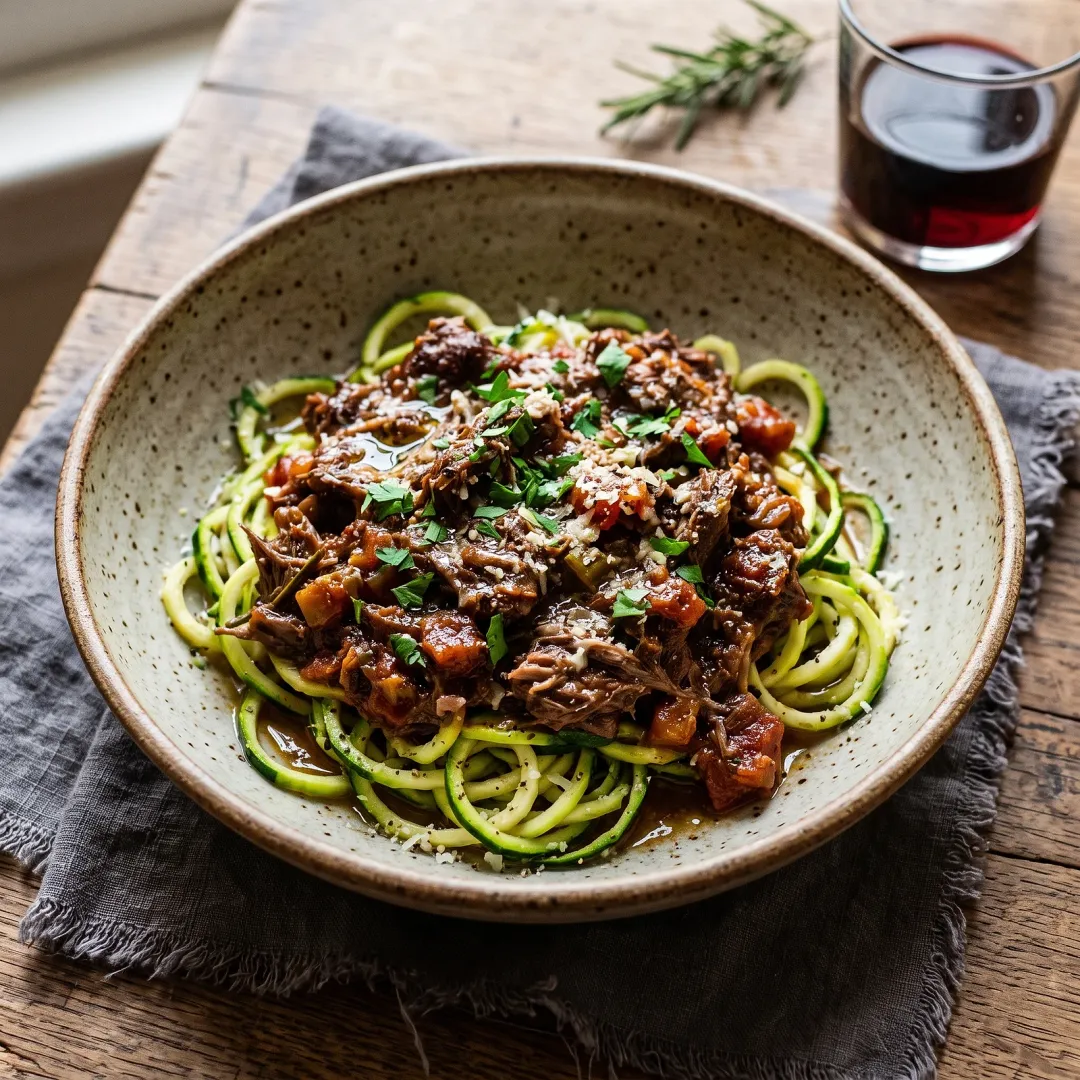

Wild boar ragu on a Tuesday night might sound like you've lost the plot. I get it. But once you've made this, regular ground beef pasta nights start to feel like a real downgrade. Wild boar is lean, mineral-rich, and deeply flavorful in a way that most store-bought proteins simply can't touch. When you give it three hours in a pot with San Marzano tomatoes, good aromatics, and a splash of red wine, something almost magical happens. The meat goes fall-apart tender, the sauce turns silky and bold, and your whole kitchen smells like a Tuscan farmhouse. Over spiralized zucchini instead of pasta, the whole thing stays totally paleo and completely satisfying. This is one of those dinners that makes you feel like you actually cooked, because you did.
Nutritional Benefits
Wild Boar: Wild-Caught, Nutrient-Dense Protein
- Wild boar is a naturally free-ranging animal, meaning the meat is leaner than conventional pork and higher in beneficial omega-3 fatty acids relative to grain-fed alternatives.
- It delivers a substantial amount of complete protein per serving, supporting muscle repair, immune function, and long-lasting satiety.
- Wild game is typically free of added hormones, antibiotics, and the stress compounds associated with factory-farmed meat, making it a cleaner protein source.
- Boar is a good source of B vitamins, especially B12, B3 (niacin), and B6, which are critical for energy metabolism and nervous system health.
Zucchini Noodles: All the Comfort, None of the Blood Sugar Spike
- Spiralized zucchini delivers the fork-twirling experience of pasta without the grain-driven carbohydrate load that spikes blood sugar and triggers inflammation.
- Zucchini is a good source of vitamin C, potassium, and manganese, plus it provides hydration from its naturally high water content.
- Keeping the zoodles slightly undercooked preserves more of their nutrients and keeps them from becoming watery and mushy.
San Marzano Tomatoes and Aromatics: Serious Antioxidant Power
- Crushed tomatoes are one of the best dietary sources of lycopene, a fat-soluble antioxidant that becomes more bioavailable when cooked with fat, like the olive oil in this recipe.
- Garlic contains allicin, a sulfur compound studied for its antimicrobial and cardiovascular-protective properties.
- Carrots, celery, and onion bring a steady supply of vitamins A, C, and K, along with prebiotic fiber that feeds beneficial gut bacteria.
- Rosemary and thyme are not just flavor agents. Both herbs carry anti-inflammatory and antimicrobial compounds and have a long history of use in traditional medicine.
Olive Oil: Heart-Healthy Fat Done Right
- Extra-virgin olive oil is rich in oleocanthal, a natural anti-inflammatory compound, and monounsaturated fats that support healthy cholesterol levels.
- Using it both for searing and as a finishing drizzle means you get the depth of cooked flavor plus the full benefit of its unheated polyphenols.
FAQs
Where do I find wild boar meat?
Your best bets are local butchers who specialize in wild game, farmers markets, or online wild game purveyors that ship directly to your door. Many quality online meat suppliers now carry wild boar shoulder, which is the ideal cut for this recipe. If you're in a hunting state, a local processor may carry it seasonally.
Can I make this in a slow cooker instead?
Absolutely. Complete steps one through six on the stovetop as written, then transfer everything to a slow cooker set on low for 7 to 8 hours. The shred-and-serve steps remain the same. The stovetop sear before transferring is non-negotiable for flavor, so don't skip it.
Can I substitute a different meat if I can't find wild boar?
Bone-in pork shoulder or pork butt is the closest substitute, followed by venison shoulder. The flavor won't be quite as deep and earthy, but the technique and timing will work well with either cut. Just make sure whatever you use is high quality and ideally pasture-raised.
Is the red wine strictly necessary?
It adds a real depth of flavor and helps tenderize the meat during the long simmer. That said, the recipe includes a fully Whole30-compatible swap: one cup of beef bone broth plus one tablespoon of balsamic vinegar. You'll still get richness and a little acidity. It works beautifully.
My zucchini noodles are getting watery. What am I doing wrong?
Two things. First, dry them really well with paper towels before they hit the pan. Second, cook them hot and fast in a dry or barely oiled skillet for no more than two to three minutes. Overcrowding or low heat turns them into a soggy mess. Keep the heat high and move fast.
Can I make the ragu ahead of time?
Yes, and honestly it's even better the next day. The flavors deepen overnight in the fridge. Store it in an airtight container for up to four days, or freeze it for up to three months. Just spiralize and cook the zucchini fresh when you're ready to serve.
If you've been eating the same rotation of chicken and ground beef on repeat, wild boar is the reminder that real food can be genuinely exciting. God didn't design us to eat flavorless, processed food out of a box. He gave us wild, nourishing, deeply satisfying ingredients like this, and we get to do something beautiful with them. Make this for a date night, make it for your family, make it when you need something that feels like a real meal. And if you try it, I want to hear about it. Drop a comment below or tag me so I can see your bowl.
 That Paleo Chick
Real food that heals
That Paleo Chick
Real food that heals
RecipePaleoDinnerGluten-Free

Fits these needs
Checked ingredient by ingredient. Tap one to see every recipe that fits.
Always check labels on packaged ingredients (gluten-free certification, hidden additives) and follow your clinician's advice.
Ingredients
Instructions
Nutrition Facts Amount per serving
Estimated from the ingredients. Values vary with brands and portions.

Join the conversation
Made it? Tell us how it went.
Free members can comment, reply and like. It takes ten seconds.