

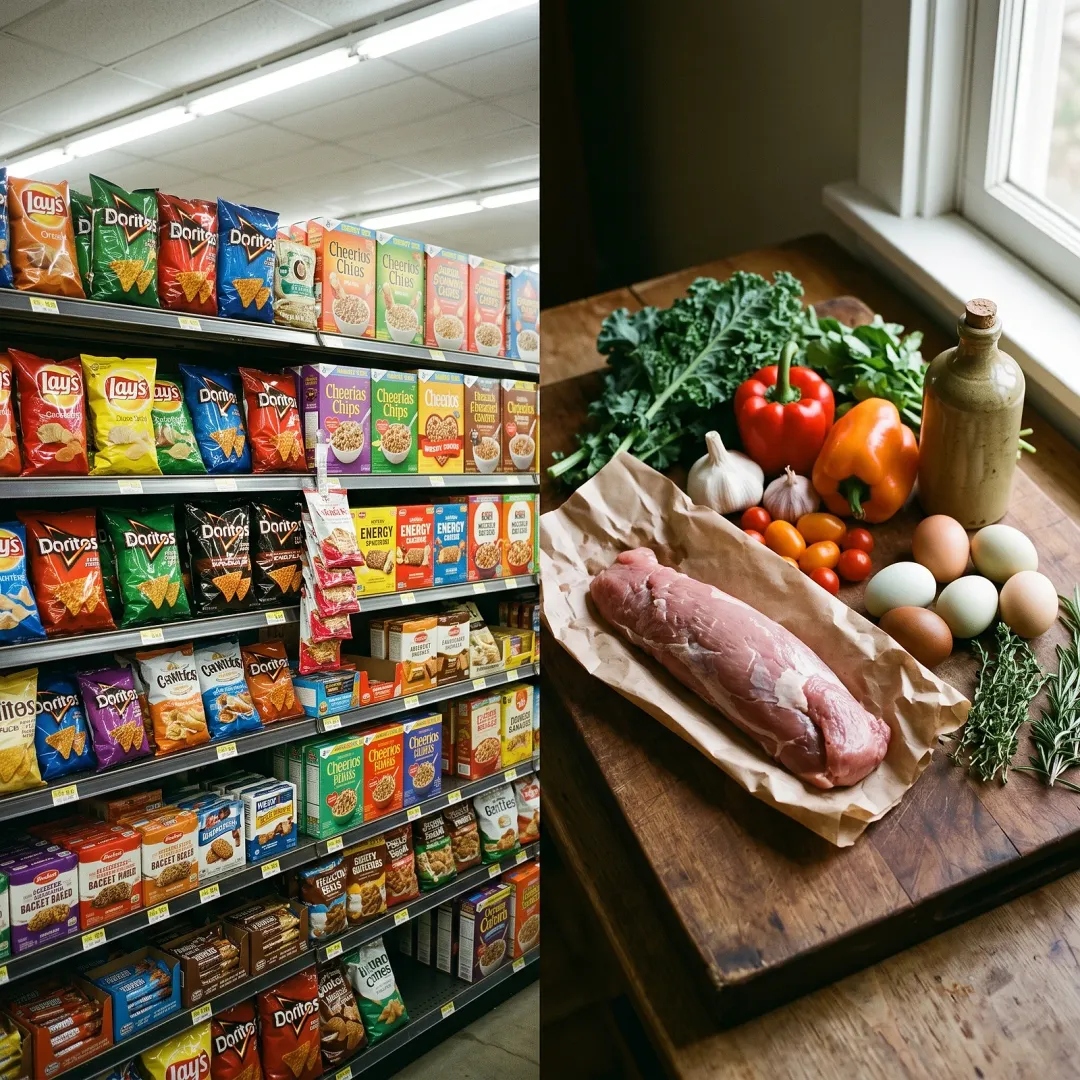

A small preliminary study just confirmed what a lot of us already knew in our bones: people who dramatically cut ultra-processed food out of their diet started feeling significantly better, mentally. Their depression symptoms improved. Researchers suspect the mechanism runs partly through the gut, reducing gut damage and chronic inflammation that feeds into how the brain functions. That research came out this fall, and it barely made a ripple in mainstream health coverage. That silence tells you everything.
What the Study Actually Found
A preliminary study released in late September 2026 looked at people with depression who made a dramatic shift away from ultra-processed foods. The results showed notable improvements in their mental health symptoms. The researchers flagged gut damage and chronic inflammation as likely pathways connecting the food to the brain. This was a small study, early-stage, so I'm not going to overstate it. But it adds to a growing pile of evidence that what we eat has a direct relationship with how we think and how we feel.
Notable is an understatement for a lot of people who've cleaned up their diet and felt the fog lift. I hear it constantly in my coaching work. People come in talking about their moods, their anxiety, their energy crashing after lunch, and somewhere in the conversation we get to what they're eating every day. Ultra-processed food shows up every single time. Crackers, flavored yogurt cups, protein bars with seventeen ingredients, fast food three nights a week because life is hard and they're exhausted. That's not a moral failure. That's what happens when an entire industry has spent decades engineering food to be impossible to stop eating.
The Industry That Built the Problem
Ultra-processed food is not an accident of the food supply. It is a product category that the largest food companies in the world have spent billions designing, marketing, and lobbying to protect. Companies like Nestlé, PepsiCo, Kraft Heinz, and General Mills are not in the business of your mental health. They are in the business of repeat purchases, shelf stability, and cheap ingredients that deliver a hit of sugar, salt, and fat in combinations a human body was never designed to regulate.
The NOVA classification system, developed by Brazilian researcher Carlos Monteiro and his team at the University of São Paulo, defines ultra-processed foods as industrial formulations containing ingredients you would not find in a home kitchen. Emulsifiers, artificial colors, flavor enhancers, hydrogenated oils, high-fructose corn syrup. The research using NOVA has consistently shown associations between higher ultra-processed food consumption and worse health outcomes across multiple body systems. The food industry has pushed back hard on NOVA, calling it imprecise and alarmist. They have funded researchers to write critiques of it. That is not a conspiracy theory; that is a documented pattern of industry-funded science designed to create doubt.
A 2019 report in PLOS Medicine found that food industry-funded nutrition studies are significantly more likely to reach conclusions favorable to the sponsor's product than independently funded studies. The authors called it a systematic bias. So when a Coca-Cola or Kellogg's funded study tells you their product is part of a balanced diet and poses no mental health risk, you are not looking at neutral science. You are looking at marketing with citations.
The Revolving Door Nobody Talks About
Here is where it gets ugly. The agencies and advisory bodies that shape what Americans are told to eat are not operating in a clean room free of industry influence. The Dietary Guidelines Advisory Committee, the group that feeds recommendations into the official U.S. Dietary Guidelines every five years, has repeatedly included members with financial ties to food and beverage companies. Marion Nestle, a nutrition researcher and professor emerita at NYU, has spent years documenting how food industry money flows into academic research, professional nutrition associations, and federal advisory panels. Her work is not fringe. It is meticulous and it is damning.
The Academy of Nutrition and Dietetics, the largest organization of registered dietitians in the country, has historically accepted corporate sponsorships from companies including PepsiCo, Coca-Cola, and General Mills. Those are the same companies producing the ultra-processed food now being linked to depression. The Academy has faced criticism from its own members over these conflicts of interest, including a formal letter signed by hundreds of dietitians calling for an end to industry partnerships.
The result of all of this is official guidance that continues to lag years behind independent science. You can eat a diet built almost entirely on ultra-processed foods and still technically hit the macronutrient targets in the federal guidelines. The guidelines do not say to avoid ultra-processed food as a category. They talk about sodium limits and saturated fat percentages while Froot Loops earns a Smart Choices checkmark. That program was actually launched by major food companies in 2009 and had to be abandoned after public backlash, but the spirit of it never really went away.
Glyphosate in the Food, Inflammation in the Brain
There's another layer here that does not get enough airtime. Glyphosate, the active ingredient in Roundup and the most widely used herbicide in the world, ends up in a significant portion of ultra-processed food because so much of it is built on corn, soy, and wheat, which are the most heavily sprayed commodity crops in the American food system. U.S. Right to Know has documented the breadth of health concerns associated with glyphosate exposure: potential links to cancer, liver and kidney stress, endocrine disruption, and neurotoxicity. These are not settled questions, and I will say that clearly. But the volume of research raising flags is significant enough that sitting on your hands waiting for a definitive verdict is a choice made at your own risk.
When researchers in the depression study pointed to gut damage and inflammation as mechanisms, that is not a standalone finding. It fits a larger picture. A gut lining that is repeatedly exposed to pesticide residues, emulsifiers, and other industrial additives is not going to function the way a gut lining fed real food functions. And a compromised gut has downstream consequences for the brain through the gut-brain axis. The research on this connection is active and real.
None of that makes it into the official conversation about mental health treatment in this country. The conversation stays on pharmaceuticals, which is its own follow-the-money story.
What Actually Helps
The study showed improvement from dramatically cutting ultra-processed food. Not a supplement. Not a prescription. Not a two-hundred-dollar functional food product. Removing the industrial garbage and replacing it with real food.
I know that is harder than it sounds. Ultra-processed food is cheap, convenient, and engineered to make you want more of it. The companies that make it have worked very hard to make sure that is true. But I also know from my own life and from the people I coach that the shift, even an imperfect one, produces real results that you can feel.
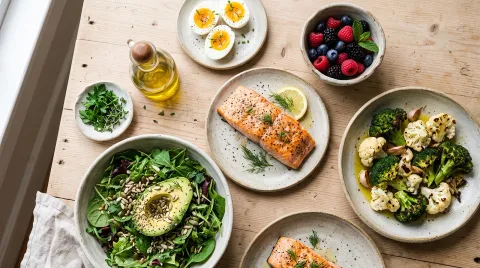
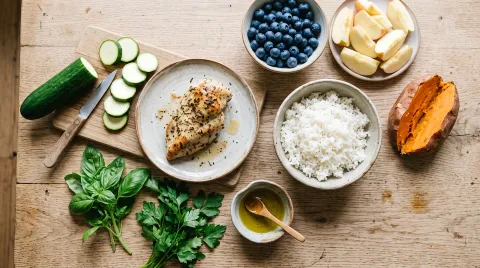
Practically: crowd out the processed stuff with whole food you actually enjoy. Real protein at every meal, good fats, vegetables you will realistically eat. A pork tenderloin roasted on Sunday and portioned through the week beats a drawer full of protein bars. Full-fat versions of real ingredients instead of low-fat products that replaced the fat with sugar and stabilizers. Cook from recognizable ingredients as often as you can manage it, and stop treating that as an unrealistic standard. It is just food. It is the way human beings have always eaten, right up until the last several decades.
The body you are living in is a gift. I genuinely believe that, and I think the people who are profiting from filling it with engineered junk are going to have to answer for that somewhere. In the meantime, you do not have to wait for the agencies to catch up or for the industry funding to dry up. The information is there. The research is accumulating. You can act on it right now.
Key Takeaways
- A new preliminary study found that people with depression who dramatically cut ultra-processed food saw notable improvements in their symptoms, with gut damage and chronic inflammation identified as likely mechanisms.
- Ultra-processed food is not an accident. It is a deliberately engineered product category backed by billions in marketing and lobbying from the largest food companies in the world.
- Industry-funded nutrition science is systematically more likely to favor industry products. The food companies that make ultra-processed food fund the researchers and the advisory bodies that shape official guidance.
- Glyphosate, found on many commodity crops that form the base of ultra-processed food, is linked to health concerns including potential endocrine disruption and neurotoxicity. These connections to gut and brain health deserve more attention than they receive.
- You do not need to wait for official guidance to catch up. Swapping ultra-processed food for real, whole food is the oldest dietary intervention there is, and the evidence that it matters is growing.
Frequently Asked Questions
Can changing your diet actually improve depression symptoms?
Emerging research suggests it may. A preliminary study found that people with depression who dramatically cut ultra-processed foods experienced notable improvements in their symptoms, with researchers pointing to reduced gut damage and lower chronic inflammation as likely mechanisms. This is early-stage research and is not a substitute for professional mental health care, but the connection between diet and brain function is an active and growing area of science.
What counts as ultra-processed food?
The NOVA classification defines ultra-processed foods as industrial formulations made with ingredients you would not find in a home kitchen: emulsifiers, artificial colors, flavor enhancers, hydrogenated oils, high-fructose corn syrup, and similar additives. Common examples include packaged snack foods, flavored breakfast cereals, most fast food, sugary beverages, and many products marketed as "health" bars or convenience meals.
Does the food industry really fund nutrition research?
Yes, and it is well-documented. A 2019 analysis published in PLOS Medicine found that industry-funded nutrition studies are significantly more likely to reach conclusions favorable to the sponsor than independently funded research. Major food companies have also historically sponsored professional nutrition organizations and contributed to federal advisory processes that shape dietary guidance.
How do I start cutting ultra-processed food without overhauling everything at once?
Start with one meal. Build it around a real protein (eggs, meat, poultry), add vegetables you will actually eat, and use a simple fat like olive oil or butter. From there, crowd out the processed options gradually rather than trying to eliminate everything overnight. Batch cooking a protein like a pork tenderloin at the start of the week makes real food more accessible on busy days when ultra-processed options are the path of least resistance.
Sources
- ScienceDaily Nutrition: Could quitting ultra-processed food boost your mental health?
- U.S. Right to Know: Glyphosate: Cancer, liver disease, endocrine disruption and other health concerns
- PLOS Medicine: Financial Conflicts of Interest and Reporting Bias Regarding the Association between Sugar-Sweetened Beverages and Weight Gain: A Systematic Review of Systematic Reviews
This article is for general informational purposes only and is not medical advice. Always consult a qualified healthcare professional before making changes to your diet or health routine.


Join the conversation
What do you think?
Free members can comment, reply and like. It takes ten seconds.