

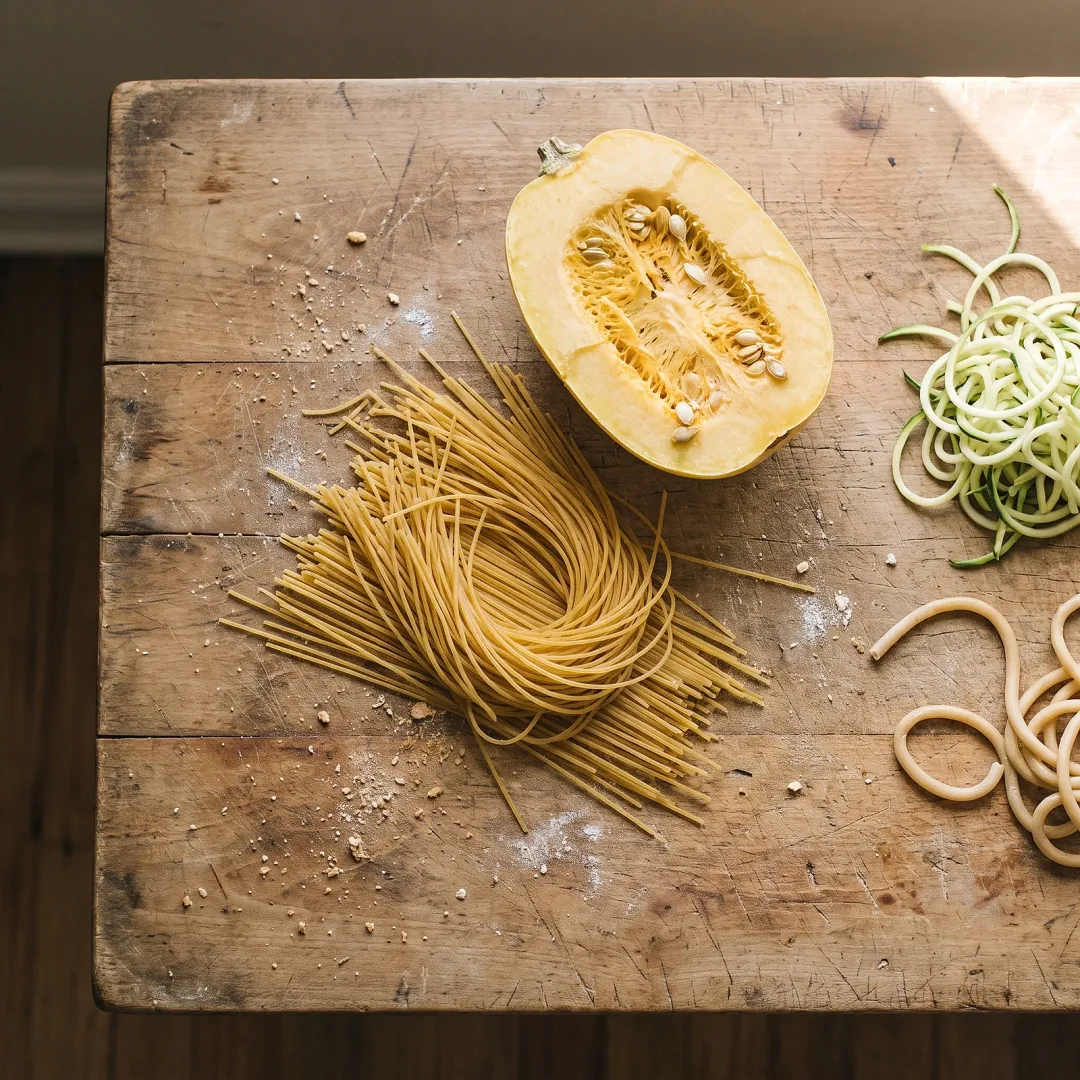

If there is one food that basically every human being on the planet has an opinion about, it is spaghetti. It is the comfort food of childhood, the centerpiece of Sunday dinners, the thing that somehow tastes better the next day cold, straight from the fridge at midnight. I am not here to take it from you. But I AM here to tell you what it actually is, what it is made of, what it does once it hits your body, and why the version most of us grew up eating is a far cry from what pasta looked like before food manufacturing got its hands on it. Because if you are going to eat it, or find a real-food swap for it, you deserve to know exactly what you are working with.
So, What Exactly Is Spaghetti?
Spaghetti is a long, thin, cylindrical pasta, and the word literally means "little strings" in Italian. It is one of the most widely consumed pasta shapes in the world, and in Italy it has been a staple for centuries. Traditional spaghetti is made from two ingredients: semolina flour and water. Semolina is a coarse flour milled from durum wheat, a hard variety of wheat with a higher protein content than common bread wheat. In Italy, pasta regulations still require that dried pasta be made from 100% durum wheat semolina. Here in the United States, that is not always the case, and you will find boxed spaghetti made from a mix of semolina and regular enriched wheat flour, plus added vitamins to replace what the milling process stripped out.
Fresh spaghetti, the kind you make or buy from an artisan pasta shop, typically swaps the water for eggs, giving it a richer texture and a slightly softer bite. Dried spaghetti and fresh spaghetti behave differently in cooking and in your body, and I will get to that.
The shape matters more than you might think. That thin, long strand is specifically designed to hold sauces in a particular way. Thinner strands like spaghetti pair best with olive oil-based, light tomato, or clam-style sauces. Thicker pasta shapes hold up to heartier, chunkier ragu-style sauces. This is not just food snobbery. The surface area-to-volume ratio genuinely changes how sauce clings and how the dish eats.
What Is Spaghetti Made Of? A Closer Look at the Ingredients
Let's talk about what is actually in a box of conventional grocery-store spaghetti, because the label tells a story.
The main ingredient is enriched semolina or enriched durum wheat flour. "Enriched" is a word that should give you pause. It means the milling process removed the germ and bran from the wheat kernel, stripping it of fiber, B vitamins, and minerals, and then the manufacturer added a small handful of synthetic vitamins back in. This is not restoration. It is a pale imitation of the original, and your body knows the difference.
Many conventional boxes also list niacin, iron, thiamine mononitrate, riboflavin, and folic acid in that long ingredient tail. These are the synthetic add-backs. The folic acid piece is worth a note: synthetic folic acid and the naturally occurring folate in whole foods are not the same molecule, and a significant portion of the population carries a MTHFR gene variant that makes processing synthetic folic acid difficult.
Whole wheat spaghetti does retain more of the original grain, including the bran and germ, giving it more fiber and a slightly higher micronutrient profile. But it is still wheat, still gluten-containing, and still a refined-carbohydrate-dominant food.
Then there are the alternative pastas that have flooded shelves in the last decade: chickpea, lentil, quinoa, brown rice, and cassava spaghetti. These vary wildly in quality and in how they actually behave nutritionally. More on those in a minute.
Spaghetti and Your Body: The Nutritional Reality
A standard two-ounce dry serving of conventional spaghetti (which is smaller than most people actually serve themselves) contains roughly 200 calories, 7 grams of protein, 1 gram of fat, and about 42 grams of total carbohydrates, with only 2 to 3 grams of fiber. According to the USDA FoodData Central, enriched spaghetti does provide some iron and B vitamins, but the micronutrient density per calorie is modest compared to vegetables or quality proteins.
The glycemic index of white pasta is often cited as being lower than white bread, and that is technically true. Pasta is denser and digests more slowly than bread, partly because the starch is embedded within a protein matrix that slows breakdown. A review published in the British Medical Journal found that pasta, consumed in moderate portions as part of a low glycemic index diet, was associated with modest weight loss compared to higher-GI foods. That is the nuance most "avoid all carbs" and "pasta is fine, eat all you want" camps both miss.
Here is the honest truth though: most Americans are not eating a modest two-ounce portion with olive oil and a side of vegetables. They are eating a heaping bowl with jarred sauce loaded with added sugar, refined seed oils, and God knows what else. The pasta is rarely the only problem; the context around it matters enormously.
Cooking and cooling spaghetti also changes its starch structure. When pasta is cooked and then cooled, some of its starch converts to resistant starch, which acts more like fiber in the body, feeding beneficial gut bacteria and producing a lower blood glucose response than freshly cooked pasta. This is one reason leftover pasta eaten cold or reheated briefly may actually be easier on your system than a fresh piping-hot bowl.
Does Spaghetti Have a Place in a Paleo or Real-Food Kitchen?
Traditional spaghetti is made from wheat, and wheat is not part of a strict paleo template. Full stop, that is just the truth of it. Wheat is a grain, grains are excluded from paleo because of their antinutrient content (lectins, phytates, gluten), and conventional spaghetti does not make the cut.
But here is where I want to pump the brakes on the all-or-nothing thinking, because I have been doing this long enough to know that rigidity is not the same as wisdom. If you are not celiac, not dealing with an autoimmune condition, not actively trying to reduce inflammation from a known gluten sensitivity, and you want to have spaghetti at your grandmother's house on Christmas, that is a whole different conversation than eating a bowl of enriched wheat pasta every night for dinner. Context, frequency, and your own body are all part of the equation.
For those who are strictly paleo, gluten-free, grain-free, or who simply feel better without wheat, the real-food swaps are genuinely excellent now in ways they were not ten years ago:
Spaghetti squash is the OG paleo swap, and it earns its reputation. You roast a whole squash, drag a fork through the flesh, and you have golden, tender strands that hold sauce beautifully. It is lower in carbohydrates, higher in fiber relative to calories, and contains beta-carotene and vitamin C. It is a vegetable pretending to be pasta, and I am here for it.
Zucchini noodles (zoodles) are another classic. Raw, they have a fresh, mild flavor and a satisfying crunch. Briefly sauteed, they soften enough to mimic pasta texture without becoming waterlogged if you do not overcook them. They are also ridiculously easy to make with a spiralizer or even a vegetable peeler.
Cassava pasta is one of the newer grain-free options and tends to have the closest texture to conventional pasta. Cassava is a starchy root vegetable, so it is still a carbohydrate-dense food, but it is gluten-free and grain-free, making it a reasonable choice for paleo folks who want that pasta experience without the wheat.
Hearts of palm pasta is a lower-carb option that has surprised a lot of skeptics. It is made from the inner core of palm trees, has a neutral flavor, and holds up in hot dishes better than many vegetable noodles.
None of these are "just like pasta" in exactly the same way, and I am not going to lie to you about that. But several of them are legitimately good, and with the right sauce they will satisfy that craving without the aftermath you might feel from a bowl of conventional wheat spaghetti.
A Word on Gluten and Who Really Needs to Avoid It
Spaghetti contains gluten, the protein network formed when two proteins in wheat (glutenin and gliadin) combine with water and heat. For people with celiac disease, gluten consumption triggers an immune response that damages the lining of the small intestine. This is not a preference or a trend. It is a serious autoimmune condition affecting roughly 1 in 100 people worldwide, according to the Celiac Disease Foundation, and many cases go undiagnosed for years.
Beyond celiac, there is a spectrum of gluten-related conditions including non-celiac gluten sensitivity, where people experience real, measurable symptoms from gluten without the intestinal damage seen in celiac disease. Research continues to evolve on just how common this is and what mechanisms are involved.
And then there is the larger population of people who do not have a diagnosed condition but simply feel better without wheat. That matters. Your body's feedback is not nothing, even when a lab test comes back "normal." Functional medicine takes that seriously.
If you suspect gluten is an issue for you, getting properly tested BEFORE going gluten-free is important, because eliminating gluten before testing can cause a false negative on celiac panels. Talk to a qualified healthcare provider who will actually listen to your full picture.
How to Buy the Best Version If You Do Eat Spaghetti
If spaghetti is going to be in your kitchen, here is how to buy the best version available:
Look for 100% durum wheat semolina as the only ingredient in conventional pasta. Fewer ingredients is always a better sign.
Seek out bronze-die extruded pasta. Most commercial pasta is pushed through Teflon dies at high speed, creating a smooth, almost slick surface. Bronze-die extrusion is slower, rougher, and creates a slightly porous, textured surface that holds sauce the way pasta is supposed to. Italian brands like De Cecco, Rustichella d'Abruzzo, and Setaro use bronze dies and are widely available.
If you want whole grain, choose actual whole wheat semolina pasta rather than "multigrain" blends, which can be more marketing than substance.
For grain-free, read labels carefully. Some alternative pasta brands sneak in additives, gums, and industrial ingredients to improve texture. Shorter ingredient lists are your friend here too.
Pair it wisely. Whatever pasta ends up in your bowl, add quality protein, a fat source like real olive oil, and as many vegetables as you can get in there. The company your spaghetti keeps matters as much as the spaghetti itself.
The Real-Food Bottom Line on Spaghetti
Spaghetti is one of the most ancient, beloved foods in human history, and it has fed people well for a long time in its original, simple form: semolina and water, nothing more. The problems with modern spaghetti are largely what food manufacturing has done to it, stripping it down and building it back up with synthetic vitamins, and how we eat it in massive portions with sauce from a jar that reads like a chemistry experiment.
A real-food approach does not require you to hate spaghetti. It requires you to know what you are eating, why, and how your body responds. For some of you, traditional pasta in reasonable portions as part of a varied whole-food diet works just fine. For others, especially those with celiac disease, gluten sensitivity, or autoimmune conditions, a real-food swap like spaghetti squash or cassava pasta is not a punishment. It is just eating in a way that actually serves you.
God gave us an incredible variety of foods to eat, and stewardship of this body means learning what yours actually needs, not just what your childhood nostalgia insists on. That is the work, and it is good work.
This article is for general informational purposes only and is not medical advice. Always consult a qualified healthcare professional before making changes to your diet or health routine.
Key Takeaways
- Traditional spaghetti is made from durum wheat semolina and water. In the US, most boxed versions are enriched, meaning nutrients stripped by milling are replaced with synthetic vitamins.
- Conventional spaghetti contains gluten and is not paleo-compliant. People with celiac disease or gluten sensitivity need to avoid it entirely.
- Pasta has a lower glycemic index than bread, and cooling cooked pasta increases its resistant starch content, which may produce a gentler blood sugar response.
- The best real-food paleo swaps are spaghetti squash, zucchini noodles, cassava pasta, and hearts of palm pasta.
- If you do eat conventional pasta, look for 100% durum wheat semolina and bronze-die extruded brands for better texture and ingredient quality.
- Context matters: portion size, what you pair it with, and your individual health picture all shape whether spaghetti is a reasonable occasional food or something to skip entirely.
Frequently Asked Questions
Is spaghetti gluten-free?
No, traditional spaghetti is made from durum wheat semolina and contains gluten. People with celiac disease or non-celiac gluten sensitivity need to avoid it. However, there are gluten-free and grain-free spaghetti alternatives made from cassava, chickpea, lentil, brown rice, or hearts of palm that can work as substitutes.
Is spaghetti paleo?
Conventional spaghetti made from wheat is not paleo. Paleo eating excludes grains due to their gluten and antinutrient content. Paleo-friendly spaghetti swaps include spaghetti squash, zucchini noodles (zoodles), cassava pasta, and hearts of palm pasta.
What is enriched spaghetti and is it healthy?
Enriched spaghetti is made from wheat flour that has been milled in a way that removes the bran and germ, stripping out natural fiber, vitamins, and minerals. Manufacturers then add back a small selection of synthetic vitamins. It is less nutritious than whole wheat versions and contains no fiber to speak of. Whole grain or alternative-flour pastas offer a better nutritional profile.
Does cooling spaghetti make it healthier?
Cooling cooked spaghetti increases its resistant starch content. Resistant starch behaves more like fiber in the body, digests more slowly, may produce a lower blood glucose response than hot freshly cooked pasta, and can feed beneficial gut bacteria. Reheating briefly after cooling preserves some of this effect.
Sources
- Italian Food Forever: Pasta Making 101: The Basics
- National Human Genome Research Institute: MTHFR Gene Mutation
- USDA FoodData Central: Spaghetti, dry, enriched
- The BMJ: Effect of pasta in the context of low-glycaemic index dietary patterns on body weight and markers of adiposity: a systematic review and meta-analysis
- Harvard T.H. Chan School of Public Health: Fiber: The Nutrition Source
- Celiac Disease Foundation: What Is Celiac Disease?
- PubMed / NIH: Non-Celiac Gluten Sensitivity: The New Frontier of Gluten Related Disorders
This article is for general informational purposes only and is not medical advice. Always consult a qualified healthcare professional before making changes to your diet or health routine.


Join the conversation
What do you think?
Free members can comment, reply and like. It takes ten seconds.