

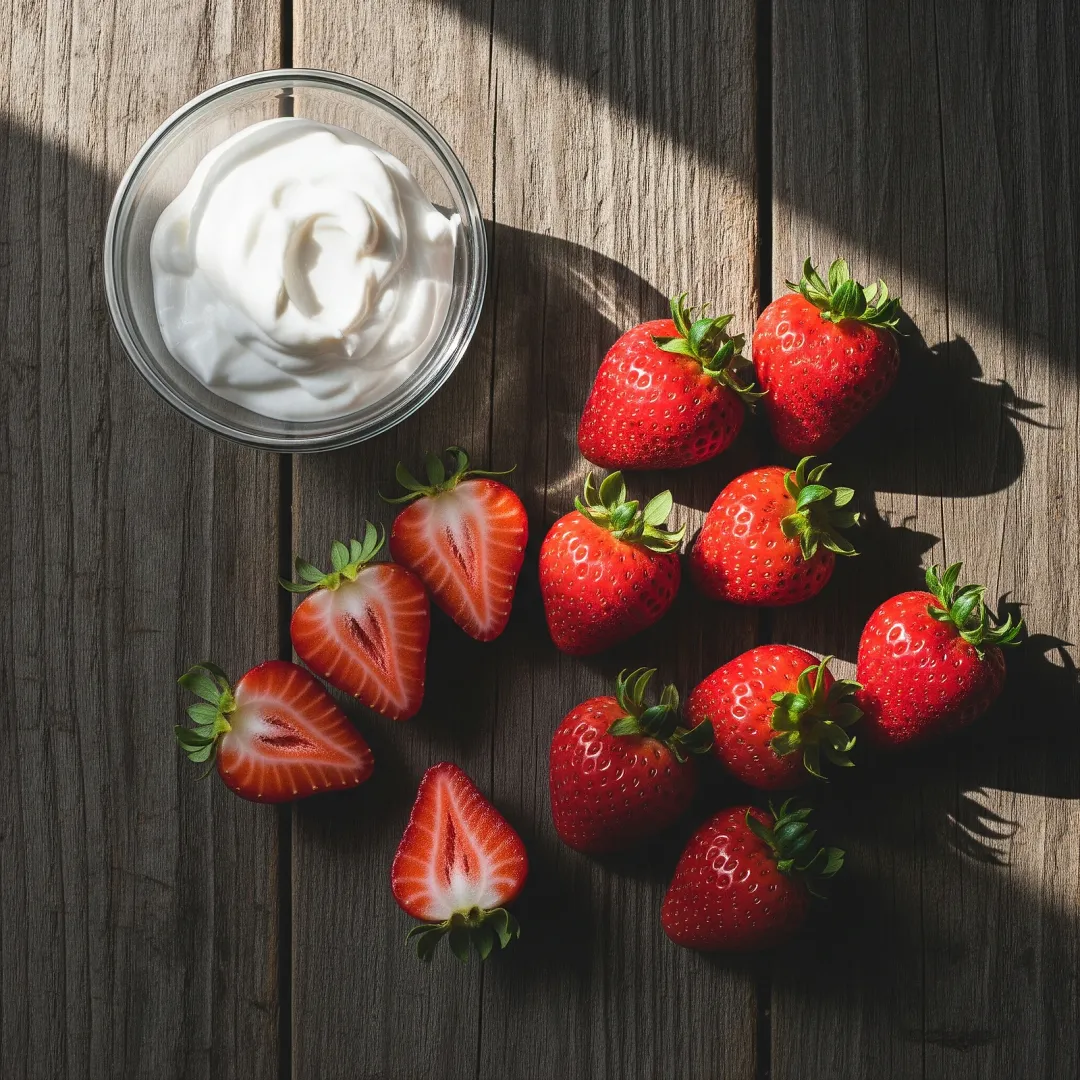

I will be completely honest with you: strawberries were one of the first foods I fell back in love with when I cleaned up my eating. Not some exotic superfood powder shipped from three countries away. Just a bowl of bright-red strawberries I grabbed at the farmers market on a Saturday morning. And I remember thinking, why did I ever replace this with a strawberry-flavored granola bar? This is the real thing. This is what food is supposed to be.
Strawberries are one of the most studied berries on the planet, and the research keeps confirming what our great-grandmothers already knew: real, whole fruit does something for your body that a processed imitation never will. So let's talk about what strawberries actually do, why they belong in your real-food kitchen year-round, and who should pay attention before going overboard.
What Strawberries Actually Are (And Why the Definition Matters)
Here is a fun fact that will make you the most annoying person at dinner parties: a strawberry is not technically a berry. It is what botanists call an "accessory fruit" or "false fruit," meaning the fleshy part we eat develops from the receptacle of the flower, not from the ovary. The actual fruits are those tiny yellow seeds on the outside called achenes.
But in the real-food world, we are not here to argue botany. We are here because Fragaria x ananassa, the cultivated strawberry, is a genuinely remarkable food. A single cup of halved strawberries (about 152 grams) delivers roughly 3 grams of fiber, almost 90 milligrams of vitamin C, and a meaningful load of folate, potassium, and manganese, all for about 49 calories and 12 grams of carbohydrates, of which nearly 3 grams are fiber and a good chunk of the rest are naturally occurring sugars. That nutrient density per calorie is exactly what we should be chasing.
And unlike the fortified breakfast cereal that brags about its vitamin C on the box, the vitamin C in a strawberry comes packaged with fiber, phytochemicals, and polyphenols that work together the way God designed food to work. That synergy is the whole point.
The Polyphenol Story: Why Strawberries Are More Than Just Vitamin C
If you have been hanging around the real-food world for any length of time, you have heard the word "antioxidant" thrown around a lot. I want to be specific here because specificity matters.
Strawberries are rich in a class of polyphenols called anthocyanins, and the primary one is pelargonidin-3-glucoside. That is the compound responsible for the berry's red color, and it is also one of the reasons strawberries show up so consistently in research on cardiovascular health and blood sugar metabolism. Strawberries also contain ellagic acid and ellagitannins, quercetin, kaempferol, and catechins.
These compounds are not inert decoration. They interact with biological pathways in your body in ways researchers are still mapping. According to a comprehensive review published in the journal Nutrients, the bioactive compounds in strawberries are linked to antioxidant activity, anti-inflammatory signaling, and modulation of several pathways associated with metabolic health.
Now, I want to be clear: eating strawberries is not going to fix a broken diet or replace medical care. But adding a genuinely polyphenol-rich food to a real-food eating pattern? That compounds over time.
Strawberries and Blood Sugar: The Paleo Objection, Answered
Here is the question I hear most from people in the paleo and low-carb world: "But Krista, strawberries have sugar. Should I even eat them?"
Yes. You should eat them. Here is why.
Strawberries have a glycemic index of around 40, which is considered low. The glycemic load per serving is even more reassuring because the fiber content slows the absorption of those natural sugars significantly. But it goes beyond the glycemic index math.
A 2021 clinical study published in Critical Reviews in Food Science and Nutrition reviewed the evidence on berry consumption and cardiometabolic health and found that strawberry intake was associated with improvements in postprandial glucose and insulin responses in clinical settings. That means real people eating real strawberries in controlled studies showed better blood sugar responses after meals.
This is the difference between a whole food and an isolated sugar. The matrix of fiber, polyphenols, and water in a strawberry changes how your body processes it. A strawberry is not a Skittle. They do not behave the same way in your bloodstream, and treating them the same way is one of the things I push back on hard in rigid low-carb dogma.
If you are managing a specific condition like diabetes or insulin resistance, talk to your doctor about your personal carbohydrate targets. But for most people eating a real-food diet, a cup of strawberries is one of the most metabolically friendly sweet things you can eat.
What the Research Says About Heart Health
The heart health data on strawberries is genuinely interesting and worth knowing.
One of the most cited bodies of work in this space comes from the Harvard-affiliated Nurses' Health Study, which tracked tens of thousands of women over years. Research published in Circulation found that women who ate three or more servings of blueberries and strawberries per week had a 32 percent lower risk of heart attack compared to those who ate berries once a month or less. The researchers specifically credited the high anthocyanin content for the association, noting that anthocyanins may help keep arteries flexible and reduce the buildup of plaque.
I want to be responsible here: that is an observational study, which means it shows association, not causation. Women who eat more berries may have other healthy habits too. The researchers accounted for a lot of those variables, but no observational study is the final word. What I will say is that the direction of evidence across multiple studies, over multiple decades, consistently points the same way.
The mechanism that researchers keep pointing to is the effect of strawberry polyphenols on LDL oxidation and endothelial function. Oxidized LDL is the more worrisome form, and some research suggests anthocyanins may help reduce that oxidation. That is the kind of detail that gets lost when we oversimplify the cholesterol conversation.
Folate, Potassium, and the Nutrients You Were Not Expecting
Beyond the headline polyphenols, strawberries carry a solid micronutrient profile that does not get talked about enough.
Folate is a big one. One cup of strawberries provides about 36 micrograms of folate, which is roughly 9 percent of the daily value. For women of childbearing age, this matters. Folate from real food, not just folic acid from fortified bread, is the form your body knows how to use. It is not a substitution for a prenatal if you are pregnant, but real-food folate sources are always worth stacking.
Potassium is another one. Most Americans are chronically under-consuming potassium relative to sodium, and the ratio between those two minerals is meaningful for blood pressure regulation. Strawberries provide a solid dose of potassium without the high natural sugar load of some other potassium-rich fruits like bananas.
And then there is manganese, which supports bone formation and plays a role in carbohydrate and fat metabolism. It is not a nutrient that makes headlines, but a cup of strawberries gives you about 29 percent of your daily value. Real food doing real work, quietly.
According to the USDA FoodData Central database, that single cup also provides small but meaningful amounts of magnesium, phosphorus, copper, and B vitamins. This is a complete, complex food.
Fresh vs. Frozen: Which One Should You Buy?
Both. Buy both. Let me explain.
Fresh, in-season strawberries from a local farm or farmers market are in a class of their own for flavor and for polyphenol content. Produce starts losing some phytochemicals the moment it is harvested, so a strawberry picked two days ago and eaten today is nutritionally superior to one that spent two weeks in a refrigerated truck.
But here is the thing: most of us do not live next door to a strawberry farm, and strawberry season is short. Frozen strawberries are picked and frozen at peak ripeness, which actually preserves a lot of their nutritional value remarkably well. Studies comparing fresh and frozen berries have found that freezing has a relatively minor effect on polyphenol content compared to the degradation that happens during long transport and storage of fresh produce.
For smoothies, sauces, and baking, frozen is completely legitimate and often the better practical choice. For eating out of hand or on a salad, fresh wins on texture and experience. I keep both in my kitchen at all times.
What I would steer you away from: strawberry preserves and jams loaded with added sugar, strawberry-flavored yogurts with zero actual strawberries in them, and anything that says "made with real strawberries" in tiny letters on the side of a brightly colored package. That is not the same thing, and you know it.
The Pesticide Issue: Buy Organic When You Can
I would be doing you a disservice if I wrote a whole post about strawberries and skipped this part.
Strawberries have been on the Environmental Working Group's Dirty Dozen list for years, consistently ranking at or near the top for conventional pesticide residue. The EWG's 2024 Shopper's Guide to Pesticides in Produce found multiple pesticide residues on a significant percentage of conventionally grown strawberry samples.
Does that mean you should never eat a conventional strawberry? I am not going to tell you that. Life has budgets and real constraints. But if there is one place in your produce budget to prioritize organic, this is it. When organic fresh strawberries are out of season or out of budget, organic frozen strawberries are widely available at reasonable prices. That is the practical middle ground.
This is not about fear. It is about stewardship. We are doing the best we can with what we have, and knowing where the higher-risk produce is lets you make smarter decisions at the store.
Who Should Be Cautious
Strawberries are genuinely safe for most people, but a few groups should pay attention.
Histamine sensitivity. Strawberries are considered a moderate-to-high histamine food and can also trigger histamine release directly. If you deal with symptoms like hives, headaches, nasal congestion, or digestive issues after eating strawberries, histamine intolerance might be worth looking into with a practitioner.
Oxalate sensitivity or kidney stones. Strawberries contain oxalates, which in people prone to calcium-oxalate kidney stones may be a consideration. If you have a history of that type of kidney stone, your doctor has probably already talked to you about higher-oxalate foods.
Blood thinners. Strawberries contain vitamin K in small amounts, and the salicylates in strawberries have mild blood-thinning properties. If you are on anticoagulant medication, be consistent about your intake and keep your doctor informed about significant dietary changes.
Specific food allergies. True strawberry allergies are not extremely common but they do exist. Oral allergy syndrome, where people with birch pollen allergies react to certain fresh fruits, can also make strawberries a problem for some people in raw form.
For everyone else? Eat them freely and enjoy them.
How to Use Strawberries in a Real-Food Kitchen
This is where it gets fun.
Strawberries are one of the most versatile real foods in your kitchen, and they go way beyond a bowl with coconut cream (although that is perfect and you should not overthink it).
Raw. Sliced over a simple arugula salad with balsamic and toasted walnuts. Blended into a smoothie with coconut milk and a handful of spinach. Eaten plain, straight from the bowl, standing over the kitchen sink in the summer. That is a complete life experience and I stand by it.
Cooked. Roasting strawberries concentrates their flavor and makes an incredible sauce for grilled chicken or pork. Just halve them, drizzle with a little avocado oil and balsamic, and roast at 400 degrees until they start to caramelize. That sauce will change your dinner routine.
Frozen. Blend with avocado for a creamy, no-dairy frozen treat. Use in paleo baked goods. Add to overnight coconut yogurt for a cold breakfast.
Preserved. A simple strawberry chia jam with nothing but berries, chia seeds, a little raw honey, and a splash of lemon juice is real food you made yourself. No pectin, no refined sugar, no mystery ingredients. It takes fifteen minutes.
The goal is always the same: get the whole food, as close to its original form as possible, onto your plate in a way you will actually eat and enjoy. Strawberries make that embarrassingly easy.
---
This article is for general informational purposes only and is not medical advice. Always consult a qualified healthcare professional before making changes to your diet or health routine.
Key Takeaways
- One cup of strawberries delivers vitamin C, folate, potassium, manganese, and fiber for about 49 calories, making them one of the most nutrient-dense real foods available.
- The anthocyanins and ellagitannins in strawberries are linked to cardiovascular and blood sugar benefits in multiple research studies.
- Strawberries have a low glycemic index and the fiber content slows sugar absorption, making them one of the most metabolically friendly fruits for most real-food eaters.
- Frozen strawberries retain most of their nutritional value and are a practical, budget-friendly alternative to fresh when out of season.
- Strawberries consistently top the EWG Dirty Dozen list, so buying organic is the smart move when your budget allows.
- People with histamine sensitivity, oxalate concerns, or who take blood thinners should talk to their provider before eating large amounts.
Frequently Asked Questions
Are strawberries paleo?
Yes, strawberries are absolutely paleo. They are a whole, unprocessed fruit with no additives, no industrial processing, and no problematic compounds. Their natural sugar content is balanced by fiber and polyphenols, and their glycemic index is low (around 40). They fit cleanly within a paleo eating framework and have been part of human diets for thousands of years.
Are strawberries good for blood sugar?
For most people, yes. Strawberries have a low glycemic index and their fiber content slows the absorption of natural sugars. Clinical research has found that strawberry consumption is linked to improved postprandial (after-meal) glucose and insulin responses. That said, if you are managing diabetes or insulin resistance, portion size and your overall dietary context always matter. Talking to your healthcare provider about your specific carbohydrate targets is the right move.
Should I buy organic strawberries?
If your budget allows it, yes. Strawberries consistently rank at or near the top of the Environmental Working Group's Dirty Dozen list, meaning conventionally grown strawberries often carry multiple pesticide residues. Organic fresh or organic frozen strawberries are the cleaner choice. Frozen organic is usually more affordable and retains most of the nutritional value of fresh.
Are frozen strawberries as nutritious as fresh?
Pretty close, yes. Strawberries are frozen at peak ripeness, which preserves much of their polyphenol and vitamin content. There is some nutrient degradation with freezing, but it is generally less than the degradation that happens to fresh produce during long transport and refrigerated storage. For cooking and smoothies, frozen strawberries are a completely legitimate real-food choice.
Sources
- Nutrients (MDPI): Strawberry Polyphenols and Their Biological Effects
- Circulation (American Heart Association): High Anthocyanin Intake Is Associated With a Reduced Risk of Myocardial Infarction in Young and Middle-Aged Women
- USDA FoodData Central: Strawberries, Raw, Nutritional Data
- Environmental Working Group: EWG's 2024 Shopper's Guide to Pesticides in Produce: Strawberries
This article is for general informational purposes only and is not medical advice. Always consult a qualified healthcare professional before making changes to your diet or health routine.


Join the conversation
What do you think?
Free members can comment, reply and like. It takes ten seconds.