


If you're going dairy-free, here's the good news up front: you can absolutely feel fantastic without milk, cheese, yogurt, butter, or cream. For a lot of people, dropping dairy is the thing that finally settles a cranky gut, clears the bloating, or ends the low-grade discomfort they'd started to think was just normal. This guide is here to make that transition easy and to show you how well you can eat once dairy is out of the picture.
Going dairy-free isn't about willpower or deprivation. It's about swapping a few ingredients for ones that love you back, and once you know where dairy hides and how to cover a couple of key nutrients, the whole thing becomes second nature. Let's walk through it together.
What is a dairy-free diet?
A dairy-free diet simply leaves out foods made from mammalian milk: cow's milk, cheese, yogurt, ice cream, butter, cream, and sour cream, plus the packaged foods that sneak dairy in. That's the whole idea, and everything else stays on the table.
And “everything else” is a lot. You've got meat, poultry, fish and seafood, eggs, vegetables, fruit, nuts and seeds, beans and legumes, whole grains, and a great lineup of fortified plant-based milks and yogurts. One quick note that saves confusion later: “dairy-free” and “lactose-free” aren't the same thing. Lactose-free milk still contains milk protein, so it works for many people who are lactose intolerant but not for someone avoiding milk protein because of an allergy. Knowing which camp you're in tells you exactly how to shop.
Lactose intolerance vs. milk allergy: the simple version
These two get mixed up all the time, but the difference is easy once you see it, and it's genuinely useful because it tells you how carefully you need to read labels.
Lactose intolerance is a digestive thing. According to the National Institute of Diabetes and Digestive and Kidney Diseases (NIDDK), it happens when your small intestine makes less lactase, the enzyme that breaks down lactose (the natural sugar in milk). Undigested lactose ferments in the colon and can cause bloating, gas, cramping, and diarrhea. It's uncomfortable, not dangerous. If anything, it's reassuringly common: Cleveland Clinic notes that about 65% of adults worldwide have a reduced ability to digest lactose after infancy, and NIDDK reports it's especially common in people of African American, American Indian, Asian American, and Hispanic/Latino descent. You're in very good company.
Milk allergy is an immune reaction. As the nonprofit Food Allergy Research & Education (FARE) explains, the immune system treats milk proteins (mainly casein and whey) as a threat, which can cause hives, swelling, stomach upset, wheezing, or, in serious cases, anaphylaxis. It's the most common food allergy in young children, affecting roughly 2.5% of kids under three, and many outgrow it. Because the trigger is protein rather than sugar, a milk allergy means avoiding all milk protein, lactose-free products included. If this is you, an allergist can set you up with a clear action plan and, when appropriate, epinephrine. That's the kind of straightforward, empowering step that lets you get on with your life confidently.
Why people feel so good dairy-free
Here's the part worth celebrating: for most people, going dairy-free feels good because it removes a food their body was quietly reacting to. When that irritation is gone, the difference can be noticeable fast.
- Calmer digestion. For people who don't handle lactose well, easing off it reliably cuts bloating, gas, and diarrhea. This is well established, and it's often the first thing people notice.
- Confidence and peace of mind. For anyone with a milk allergy, steering clear of dairy is simply how you stay comfortable and safe, and once your kitchen is set up for it, that peace of mind is automatic.
- Just feeling lighter. Plenty of people without a formal diagnosis say they feel less bloated or less congested off dairy. Everyone's different, so treat this as a friendly “try it and see how you feel.” Your own experience is the best evidence you'll get.
None of this requires dairy to be “bad.” It's simply that if your body does better without it, honoring that is a win. And happily, real food makes covering the nutrients dairy provided genuinely easy, which we'll get to.
What you get to eat
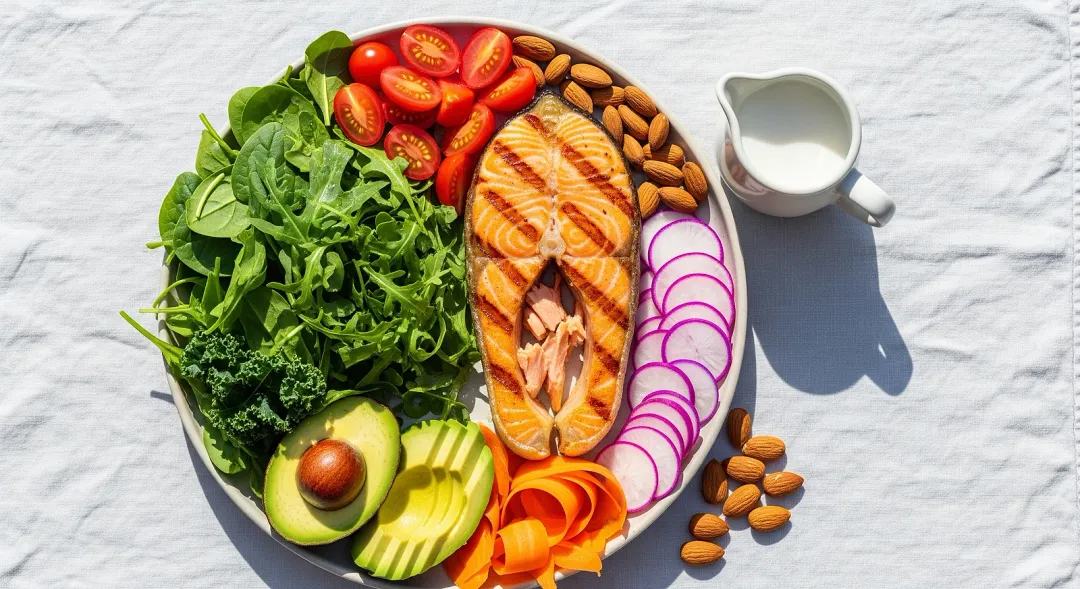
This is where dairy-free stops feeling like a restriction and starts feeling like a well-stocked kitchen. Your plate can be built from:
- Proteins: beef, pork, chicken, turkey, fish and shellfish, and eggs.
- Produce: every vegetable and fruit you like, no exceptions.
- Healthy fats: olive oil, avocado oil, coconut oil, avocados, olives, nuts, and seeds.
- Creamy swaps: coconut milk, cashew cream, and unsweetened fortified plant milks (soy, almond, oat) for coffee, smoothies, sauces, and baking.
- Extras: beans and legumes, whole grains, and dark chocolate that's labeled dairy-free.
Cooking from these ingredients, you'll find most meals are naturally dairy-free without a single specialty product. Sauté in olive oil instead of butter, blend soaked cashews for a silky sauce, and stir coconut milk into curries and soups. The food is rich and satisfying, no compromise required.
Making the dairy-free diet work for you
The one skill that makes dairy-free effortless is spotting where dairy hides. It's rarely the obvious foods that trip people up. It's the sneaky ones. NIDDK points out that milk ingredients turn up in bread and baked goods, breakfast cereals, instant potatoes, salad dressings, margarine, coffee creamers, whipped toppings, and processed meats like bacon, sausage, hot dogs, and lunch meats.
Label reading is your superpower here, and it gets fast quickly. Watch for these words, all of which signal dairy: milk, lactose, whey, curds, milk by-products, dry milk solids, and nonfat dry milk powder. Casein and caseinates matter especially if you have a milk allergy, since those are milk proteins. In the U.S., milk is a labeled major allergen, so packaged foods have to flag it. Just remember a “non-dairy” label doesn't always mean allergen-free, so give the full ingredient list a glance.
A few practical moves that make it all smoother:
- If you're lactose intolerant, you may not need to go all-or-nothing. NIDDK notes most people with lactose intolerance can handle some lactose. Research suggests many tolerate about 12 grams at a time (roughly a cup of milk), especially spread through the day and eaten with other foods. Hard aged cheeses and yogurt are naturally lower in lactose and often sit well, and lactase enzyme drops or tablets can help when you want them. Find your own comfortable amount.
- Replace what dairy gave you, and you're set. Dairy is a handy source of calcium, vitamin D, and B12, so build those in on purpose (there's an easy playbook for that in the next section) and you won't miss a beat.
- Loop in a pro when it helps. If you're managing a milk allergy, feeding a growing child, pregnant, or thinking about bone health, a doctor or registered dietitian can help you tailor the details with confidence.
How the dairy-free diet fits a real-food approach
Here's the happy overlap: a real-food, paleo-leaning kitchen is already dairy-free by design. Paleo skips dairy, so if you cook mostly from whole ingredients, like meat, fish, eggs, vegetables, fruit, nuts, and seeds, you're most of the way there without leaning on specialty products at all.
The move I'd steer you toward is filling your cart with naturally dairy-free whole foods and using good fortified alternatives where they genuinely help, rather than swapping dairy for a pile of highly processed “free-from” packages. Cook with olive, avocado, or coconut oil in place of butter; blend cashews or coconut milk for creaminess; and pick an unsweetened, fortified plant milk for coffee and baking. The goal is a plate that just happens to be dairy-free because it's built from real food.
Two nutrients are worth being intentional about, and both are easy to cover. For calcium, the NIH Office of Dietary Supplements sets needs at about 1,000 mg a day for most adults, rising to 1,200 mg for women 51 and older and everyone over 70; you'll find it in canned sardines and salmon with the bones, kale, broccoli, bok choy, calcium-set tofu, almonds, and fortified plant milks and juices. Because vitamin D helps you absorb calcium, keep it in the mix too. The NIH recommends about 600 IU (15 mcg) daily for adults up to 70 and 800 IU (20 mcg) after that, from fatty fish, egg yolks, fortified foods, and sunlight. And since dairy is a natural source of vitamin B12 (about 2.4 mcg a day for healthy blood and nerve cells), anyone eating little animal food can get it from fortified foods or a supplement, something the NIH flags especially for vegans. Cover those three and dairy-free eating is nutritionally complete and genuinely satisfying.
Key takeaways
- You can thrive dairy-free. For many people it's the change that finally calms digestion and helps them feel lighter.
- Lactose intolerance is a common, manageable digestive reaction to milk sugar; a milk allergy is an immune reaction to milk protein that calls for full avoidance. Knowing which you have tells you exactly how to shop.
- Many lactose-intolerant folks tolerate small amounts of lactose, aged cheeses, and yogurt, so you can find your own comfortable level.
- Dairy hides in bread, dressings, and processed meats, so a quick scan for milk, whey, casein, and curds on labels becomes second nature fast.
- Cover calcium, vitamin D, and B12 with fish, greens, fortified plant milks, and a supplement when handy, and you're all set.
- A real-food, paleo-style kitchen is dairy-free by default. Lean on whole foods and you'll barely notice the swap.
This guide is for general education and is not medical advice. Everyone's needs are different, so talk with your doctor or a registered dietitian before making big changes to how you eat, especially for children, during pregnancy, or if you're managing a diagnosed allergy or a health condition. They can help you make dairy-free work beautifully for you.
Frequently Asked Questions
How do I start eating dairy-free?
Start by swapping the obvious dairy for easy alternatives: cook with olive, avocado, or coconut oil instead of butter, use unsweetened fortified plant milk in coffee and baking, and blend cashews or coconut milk for creamy sauces. Then get comfortable scanning labels for milk, lactose, whey, and casein, since dairy hides in things like bread, dressings, and processed meats. Within a couple of weeks it feels automatic.
What's the difference between lactose intolerance and a milk allergy?
Lactose intolerance is a digestive thing: your body makes less lactase to break down lactose (milk sugar), which can cause bloating, gas, and diarrhea. A milk allergy is an immune reaction to milk proteins like casein and whey and can cause hives, swelling, or anaphylaxis. Intolerance is uncomfortable but manageable; an allergy calls for avoiding all dairy, including lactose-free products. Knowing which you have makes shopping simple.
Do I have to avoid all dairy if I'm lactose intolerant?
Usually not. NIDDK notes most people with lactose intolerance can handle some lactose, and research suggests many tolerate about 12 grams at a time (roughly one cup of milk), especially with meals. Hard aged cheeses and yogurt are naturally lower in lactose and often sit well, and lactase supplements can help when you want them. You get to find your own comfortable amount. A milk allergy is different and does mean avoiding all dairy.
Will I get enough calcium and vitamin D without dairy?
Easily. Lean on canned sardines and salmon with the bones, leafy greens like kale and bok choy, broccoli, calcium-set tofu, almonds, and fortified plant milks and juices. Adults need about 1,000 mg of calcium a day (1,200 mg for women over 50 and everyone over 70). Vitamin D, which helps you absorb calcium, comes from fatty fish, egg yolks, fortified foods, and sunlight, and a supplement is an easy backup.
Is dairy-free eating right for me?
If dairy leaves you bloated or uncomfortable, if you have a diagnosed milk allergy, or if you simply feel better without it, going dairy-free is a great fit, and it pairs naturally with a real-food, paleo-style kitchen that skips dairy anyway. The best test is your own experience: try it, notice how you feel, and cover calcium, vitamin D, and B12 as you go. A dietitian can help you tailor the details.
Sources
- Cleveland Clinic: Lactose Intolerance: Symptoms, Diagnostic Tests & Treatment
- NIDDK (National Institute of Diabetes and Digestive and Kidney Diseases): Definition & Facts for Lactose Intolerance
- NIDDK (National Institute of Diabetes and Digestive and Kidney Diseases): Eating, Diet, & Nutrition for Lactose Intolerance
- Food Allergy Research & Education (FARE): Milk Allergy Vs. Lactose Intolerance
- NIH Office of Dietary Supplements: Calcium - Fact Sheet for Consumers
- NIH Office of Dietary Supplements: Vitamin D - Fact Sheet for Consumers
- NIH Office of Dietary Supplements: Vitamin B12 - Fact Sheet for Consumers
This guide is for general education and is not medical advice. Everyone is different, so talk with your doctor or a registered dietitian before making a major change to how you eat, especially if you are pregnant, managing a health condition, or have a history of disordered eating.








Join the conversation
What do you think?
Free members can comment, reply and like. It takes ten seconds.