

On this page
I want you to sit with this for a second. Researchers just found that people who had less sugar in the very first years of their lives, because wartime rationing literally made it unavailable, had lower rates of several cancers and showed measurably slower biological aging decades later. Decades. We are talking about what happened before age two still showing up in someone's body in their fifties, sixties, and seventies. And the food industry is still selling squeezable pouches and "infant cereals" loaded with added sugar to babies who cannot even talk yet. I am not okay with that. You shouldn't be either.
The Study That Should Have Made Front Page News
Britain rationed sugar during and after World War II. From 1942 until 1953, families got limited sugar rations, full stop. No workarounds, no "low-sugar" marketing spin. Just less sugar, by necessity.
That created something incredibly rare in science: a natural experiment. Researchers used this window to study what happens when people are exposed to significantly less sugar in their first 1,000 days of life (conception through roughly age two), compared to those who were born after rationing ended and grew up with normal commercial sugar access.
The findings, published via ScienceDaily, are striking. The lower-early-sugar group had lower rates of several cancers. They showed signs of slower biological aging. And here is the part that really gets me: they were still eating less sugar and maintaining healthier diets around age fifty. One early-life food environment, echoing forward for half a century.
This is not a small finding. This is a massive, real-world signal that the first two years of life are a genuine programming window, and what we put into tiny, developing bodies during that window matters in ways we are only beginning to fully understand.
The First 1,000 Days: Why This Window Is Different
Functional medicine has talked about the first 1,000 days for years, and the mainstream is slowly catching up. This is the period from conception through a child's second birthday, and it is when the gut microbiome is being seeded, when metabolic pathways are being set, when taste preferences are literally being wired into the brain, and when epigenetic patterns (the "on/off switches" on your genes) are being laid down.
Epigenetics is key here. Your genes are not your destiny, but your early environment can influence which genes get expressed and how. Sugar, inflammation, and nutritional quality in those early years are not just "diet choices." They are inputs into a biological programming process that the body then carries forward.
When the rationing study shows lower cancer rates and slower aging in the group that had restricted sugar early on, it is pointing directly at that programming window. It is saying: what we do in those first two years is not neutral. It has consequences that outlast childhood, outlast adolescence, and in some cases outlast middle age entirely.
So What Is the Baby Food Industry Doing With This Information?
Here is where I get fired up. Because we have had signals about early sugar exposure and long-term harm building in the research literature for years. And what has the commercial baby food industry done with that? Largely nothing good.
A 2023 investigation by Consumer Reports found that many commercially sold toddler snacks and baby food products contain added sugars, and that some products marketed to babies and toddlers have more sugar per serving than adult snack foods. The labeling is often confusing or misleading, leaning on words like "organic" or "natural" to imply health while the ingredient panel tells a different story.
And it is not just the snacks. Infant cereals, those ubiquitous rice-based products that pediatricians have handed out as the "safe first food" for generations, have been a source of concern for more than added sugar. A report from the House Subcommittee on Economic and Consumer Policy found heavy metals in commercial baby food products at levels the subcommittee called dangerous. So we are not just talking about sugar. We are talking about an industry that has been given enormous trust, given access to the most vulnerable humans on the planet, and has repeatedly prioritized shelf life, palatability, and profit over genuine safety.
This is corporate capture of the earliest stage of human nutrition. And almost nobody is calling it that.
Taste Preferences Are Being Engineered. Early.
Here is something I think about a lot as a functional-medicine health coach. The rationing study noted that the lower-early-sugar group was still eating less sugar and maintaining healthier diets around age fifty. That is not coincidence. That is taste preference, set early and carried forward.
We know from research that flavor preferences begin forming in the womb, through amniotic fluid, and are reinforced through breast milk and early solid food. Repeated early exposure to sweet flavors raises the threshold for what tastes "sweet enough" later in life. In other words, babies introduced early and repeatedly to sweetened foods are being primed to seek out more sugar for the rest of their lives.
Food companies know this. This is not some obscure nutritional side note. The concept of building brand loyalty through childhood flavor conditioning is well documented in investigative reporting by Michael Moss and others who have tracked how Big Food scientists deliberately engineer palatability in products aimed at children. Start them young, hook the palate, build the customer.
The rationing data puts a long, hard, decades-spanning number on what that strategy costs us in human health. And the cost is not small.
The MAHA Moment We Actually Need Here
I am openly in the Make America Healthy Again camp on this. And this is exactly the kind of issue that movement needs to be loud about. Because this is not abstract policy. This is babies. This is the programming window for a human life. And right now, that window is being exploited by an industry that answers to shareholders, not to the long-term health of your child.
Where is the federal action requiring clear, honest labeling of added sugars in products marketed to children under two? The FDA has made some moves on added-sugar labeling for adults, but protections specifically targeting the infant and toddler food market are still inadequate, according to consumer advocacy groups. Where is the congressional pressure on the baby food manufacturers who have been caught with heavy metals, misleading labels, and high sugar loads in products sitting on the shelves of every pediatrician's sample cabinet in America?
And here is my blunt take on why this is not getting the attention it deserves: the baby food industry is a multi-billion dollar market. Gerber, Beech-Nut, Plum Organics (owned by Campbell's), Happy Family (owned by Danone). These are not scrappy little startups. These are enormous food conglomerates with lobbying arms and marketing budgets that dwarf what any parent advocacy group can put together. Follow the money, and you will understand why the conversation around infant nutrition stays quietly focused on "breastfeeding rates" and not on what is actually in the jar.
What I Would Tell Any Parent Right Now
I am a coach, not a doctor, and this is not medical advice for your specific child. What I am is someone who has spent years digging into the root-cause, real-food evidence, and I want to give you the real talk I wish more parents heard.
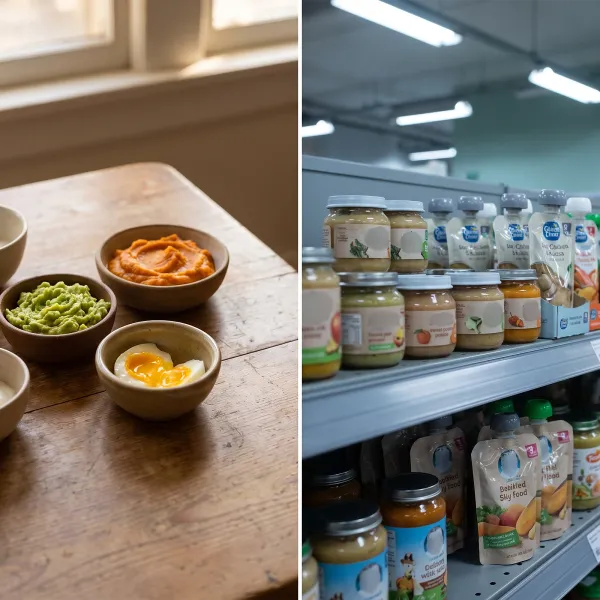
First, real food made at home is almost always going to beat a commercial pouch or jar, not because homemade is fancy, but because you control exactly what goes in it. Pureed sweet potato with a little coconut oil. Mashed avocado. Soft-cooked egg yolk. These are foods humans have fed babies for millennia. They do not need a label because they are not hiding anything.
Second, delay sweetened flavors as long as you reasonably can. This does not mean your baby can never have fruit. It means you do not need to be introducing sweetened puffs, fruit juice, or flavored yogurt pouches in the first year. The more you let their palate develop around savory, bitter, and mild flavors first, the wider their food acceptance tends to be later.
Third, read ingredient labels on anything commercial, even the ones that say "organic" and have a cute garden on the front. Added sugar shows up under a lot of names: fruit juice concentrate, brown rice syrup, cane juice, tapioca syrup. If the second or third ingredient is any form of concentrated sweetener, put it back.
And fourth, give yourself grace. You are navigating a food system that was literally designed to make it hard for you to choose the real thing. This is not about being a perfect parent. It is about knowing what you are up against so you can make the most informed choices you can with what you have.
The Body Is a Gift. Guard the Beginning.
I believe this body we are given is a gift we are meant to steward. And I believe our children's bodies are an even greater responsibility, because they cannot yet advocate for themselves. They cannot read the label. They cannot follow the money. They cannot question why the pediatrician's office has a Gerber display in the waiting room.
That is on us.
The rationing study is one of the most powerful pieces of long-term nutritional evidence I have seen in years, precisely because it was not a controlled lab trial. It was real life. Real food deprivation of one ingredient, tracked across real lifetimes. And the signal came through loud and clear: less sugar in those first two years, less cancer and slower aging for the next seven decades.
We do not need another decade of randomized trials to act on that. We need parents who know the truth, and we need food companies that are finally held accountable for what they put in front of the most vulnerable eaters on earth.
Start with your own table. Demand more from the industry. And do not let anyone sell you the idea that a squeezable pouch with cartoon vegetables on it is the same thing as real food.
It is not.
---
This article is for general informational purposes only and is not medical advice. Always consult a qualified healthcare professional before making changes to your diet or health routine.
Key Takeaways
- A natural experiment using WWII-era British sugar rationing found that people with lower sugar exposure in their first two years had lower rates of several cancers and showed signs of slower biological aging decades later.
- The first 1,000 days of life (conception through age 2) are a genuine biological programming window for metabolism, gut health, epigenetics, and long-term taste preference.
- The commercial baby food industry continues to market products with added sugars, misleading labels, and in some cases heavy metals to infants and toddlers, with insufficient federal oversight.
- Early sweet-flavor exposure appears to shape lifelong dietary patterns, a mechanism food companies have long understood and exploit.
- Real, whole, home-prepared food is almost always a safer choice for infants than commercial pouches or jars, and delaying sweetened flavors in the first year supports a broader, healthier palate.
Frequently Asked Questions
How does early sugar exposure affect a child's health long-term?
Research, including a natural experiment using WWII-era British sugar rationing, suggests that high sugar exposure in the first two years of life may be linked to higher rates of certain cancers and faster biological aging decades later. The first 1,000 days are considered a key programming window for metabolism, gut health, taste preferences, and epigenetic patterns, all of which can influence health outcomes well into adulthood.
Is commercial baby food safe for infants?
Commercial baby food varies widely in quality. A 2021 U.S. House Subcommittee report found concerning levels of heavy metals in some major baby food brands, and consumer investigations have identified added sugars in products marketed to infants and toddlers. Reading ingredient labels carefully, regardless of front-of-package claims like 'organic' or 'natural,' is important. Many functional-medicine and real-food advocates recommend simple, home-prepared whole foods as the safest and most transparent option for babies.
What are good real-food first foods for babies?
Simple, whole, minimally processed foods are generally considered the most nutrient-dense options for babies starting solids. Options commonly recommended in real-food circles include pureed or mashed avocado, sweet potato, soft-cooked egg yolk, pureed pastured meat, and soft banana. These provide healthy fats, protein, and micronutrients without added sugar, preservatives, or fillers. Always discuss introduction of solids with your pediatrician.
What is the first 1,000 days and why does it matter for nutrition?
The first 1,000 days refers to the period from conception through a child's second birthday. During this window, the gut microbiome is being established, metabolic and immune pathways are being set, and epigenetic patterns, the biological switches that influence how genes are expressed, are being shaped by nutrition, environment, and other inputs. Research increasingly suggests that food quality and sugar exposure during this period may have consequences that extend far beyond childhood.
Sources
- ScienceDaily: What you eat before age 2 may affect your health 70 years later
- Consumer Reports: Too Much Sugar in Baby Food
- House Subcommittee on Economic and Consumer Policy: Baby Foods Are Tainted with Dangerous Levels of Arsenic, Lead, Cadmium, and Mercury
- The New York Times Magazine: The Extraordinary Science of Junk Food (Michael Moss)
- Environmental Working Group: EWG Analysis Finds Most Toddler Foods Have Too Much Sugar, Sodium
This article is for general informational purposes only and is not medical advice. Always consult a qualified healthcare professional before making changes to your diet or health routine.