

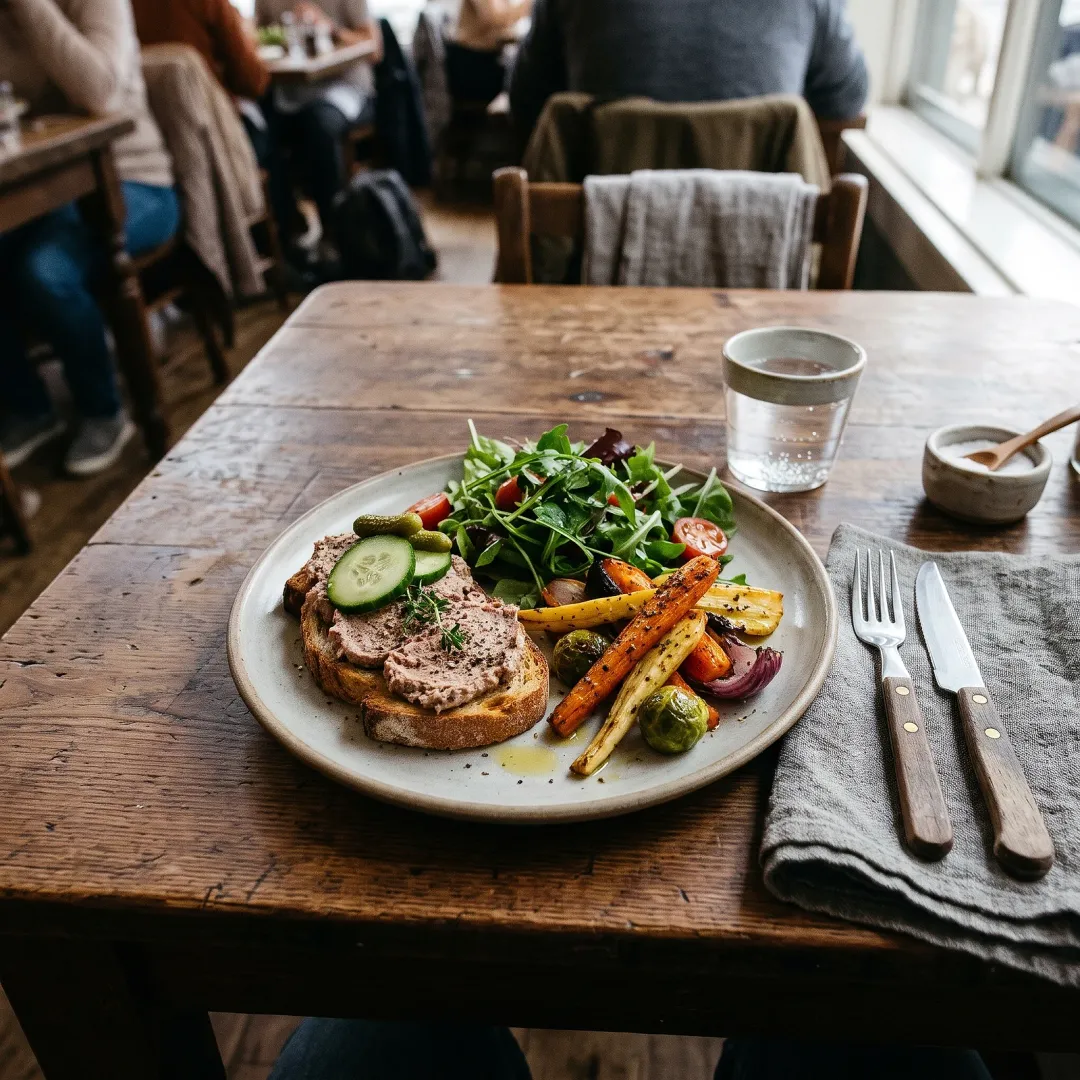

Most of the advice about PCOS starts and ends with losing weight. Eat less, move more, get to a smaller size and presumably everything else sorts itself out. But that framing misses so much of what it actually feels like to live with this condition day to day, especially when you're out at a restaurant, traveling for work, or sitting at a friend's wedding reception trying to figure out what on the buffet is going to leave you feeling okay tomorrow morning.
PCOS Is a Whole-Body Condition, Not Just a Weight Issue
Polycystic ovary syndrome is one of the most common hormonal conditions affecting people with ovaries, estimated to affect roughly 8 to 13 percent of reproductive-age women globally, according to the World Health Organization. And yet the public conversation around it is dominated by weight and fertility, as though those are the only two things that matter.
They're not. PCOS involves a cluster of hormonal and metabolic patterns that can affect your skin, your mood, your energy, your sleep, your digestion, and your relationship with food in ways that are genuinely complicated. The Mayo Clinic notes that symptoms can include irregular periods, excess androgen levels (which show up as acne, facial hair, or scalp hair thinning), and polycystic ovaries, but also fatigue, brain fog, and mood changes that often go unaddressed in a standard 15-minute appointment.
Research also links PCOS to a higher likelihood of insulin resistance, which is not a weight issue per se but a metabolic one. According to a review published on NCBI, somewhere between 65 and 70 percent of women with PCOS show evidence of insulin resistance regardless of body weight. That's worth sitting with. Thin women get PCOS. Active women get PCOS. Women who eat well and exercise get PCOS. The weight-first frame does a disservice to all of them.
If you're wondering whether your symptoms fit, bring them to a clinician who can properly evaluate and diagnose. That's not something food or a blog post can do for you.
Why Eating Out Feels Complicated With PCOS
When your body is navigating insulin sensitivity, inflammation, and hormonal fluctuation all at once, eating out isn't just a social pleasure. It's a logistics puzzle. And the frustrating part is that most menus are not built with any of this in mind.
Refined carbohydrates and added sugars are everywhere in restaurant food, even in places you wouldn't expect. Sauces are thickened with flour or sweetened with corn syrup. Salad dressings are made with industrial seed oils. The "healthy" grain bowl has three different sweetened components. None of that is catastrophic in isolation, but if your body is already working hard to manage blood sugar, a meal that spikes it sharply and then drops it fast can leave you fatigued, foggy, or irritable for the rest of the afternoon.
Research suggests that reducing glycemic load (meaning how sharply a meal raises blood sugar) may support hormone balance in people with PCOS. A 2013 study in the European Journal of Clinical Nutrition found that a low-glycemic diet was associated with improvements in hormonal and metabolic markers in women with PCOS compared to a higher-glycemic approach. That doesn't mean you can't eat out. It means knowing what to look for on the menu.
Inflammation is another piece of this. Cleveland Clinic research describes chronic low-grade inflammation as a feature of PCOS that may drive androgen production and worsen symptoms. Processed food, fried food, and heavily refined oils tend to promote inflammatory patterns, which is why even an "average" restaurant meal can leave some people feeling off in ways that are hard to explain to someone who doesn't live with this.
What to Ask Before You Even Look at the Menu
The single most useful thing you can do before you sit down is get curious rather than anxious. Restaurants are far more accommodating than they used to be, and most kitchens will work with you if you ask clearly and without fuss.
A few questions worth making a habit:
What's the base cooked in? Sautéed vegetables and proteins that come out glistening are often finished in seed oils or butter-substitute blends. Most kitchens will use olive oil or just hold the finishing fat if you ask.
Can I swap the starch for a double vegetable? Grilled proteins and roasted meats are usually fine on their own. The issue is often the side they come with: the white rice, the bread, the pasta. Asking for roasted vegetables or a side salad instead is a totally normal request now and most places won't bat an eye.
Is the sauce made to order or premade? Premade sauces are where the sugar and seed oils hide. If they can't tell you, it's safer to ask for sauce on the side or skip it.
What's actually in the dressing? Most house dressings are made with soybean oil and some form of sweetener. Asking for olive oil and lemon or plain vinegar instead is not precious. It's practical.
None of this has to be a whole production. You ask once, quietly, and then you enjoy your meal. You're not asking anyone to rearrange the kitchen. You're just making sure the food works for your body.
What to Actually Order: Real Food Strategies by Meal Type
Breakfast out: Eggs are your friend here, but so is offal if you happen to be somewhere that serves it. Chicken liver pâté on cucumber slices, or a breakfast hash with beef liver hidden in with the ground meat, gives you a dense hit of B vitamins, iron, and choline that a stack of pancakes simply cannot match. Research from the National Institutes of Health suggests that choline plays an important role in fat metabolism and liver function, both of which are relevant to the metabolic side of PCOS. If liver feels like a stretch, scrambled eggs with vegetables and a side of smoked salmon or a plain meat patty is a solid, low-glycemic start.
If you're at a diner-style place, skip the toast and hash browns and ask if they can add a second egg or some sliced avocado instead. Most will.
Lunch out: Build your plate around a protein anchor and real vegetables. A salad with a grilled protein, dressing on the side, and extra avocado or olive oil drizzled over the top is genuinely satisfying if you don't skimp on the fat. Fat slows digestion and blunts the blood sugar response of whatever carbohydrates you do eat, which is relevant if your PCOS shows up with energy crashes after meals.
At a sandwich place, consider ordering your filling as a salad bowl instead, or ask if they'll wrap it in lettuce. Plenty of places do this now without a second thought.
Dinner out: Steak houses and farm-to-table restaurants are generally the easiest to navigate, because the menu is built around quality proteins and vegetables anyway. Restaurants that focus on cuisines heavy in sauces, fried coatings, or flour-thickened gravies take more work. At a Mexican restaurant, skip the chips and tortillas, build a bowl or a plate with protein, guacamole, salsa, and grilled vegetables. At an Asian restaurant, ask for steamed rice instead of fried, and be aware that many sauces contain significant added sugar and cornstarch. Soy sauce is often fine in small amounts for people who tolerate it, but teriyaki glaze, hoisin, and sweet chili sauce are usually high in sugar.
At a buffet or social event: Scan the whole spread before you plate anything. Find the protein first, then the vegetables, then decide whether any of the other options are worth it to you. A plate that is half vegetables, a quarter protein, and a quarter of whatever you actually want to try is a practical default that doesn't require you to explain yourself to anyone.
Traveling With PCOS: Staying Grounded When Routine Goes Out the Window
Travel is where good intentions meet reality, and reality usually wins. You're in an airport at 6am with a three-hour flight ahead and the options are a croissant, a bag of pretzels, or a $17 fruit cup. This is not a moral failure. It's just Tuesday.
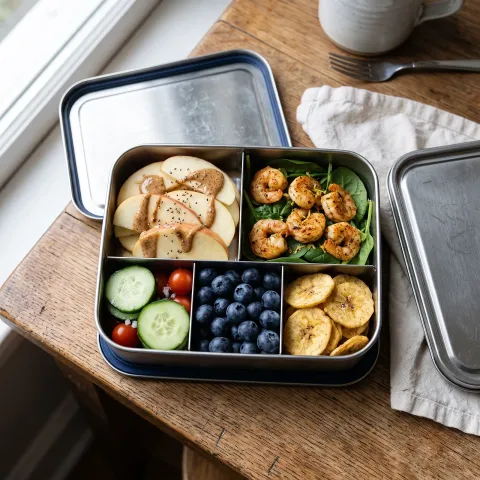
The practical answer is to travel with food whenever you can. A small container of hard-boiled eggs, some raw nuts, a piece of real cheese, or even a grass-fed meat stick gets you through a flight without the blood sugar whiplash of airport pastries. If you're staying somewhere with a kitchenette, one grocery store trip on arrival can set you up for most of your breakfasts and some of your lunches without any extra effort.
For longer trips, it helps to know which chain restaurants or fast-casual spots you can navigate reliably. A place like Chipotle where you can build a bowl with rice left out and extra guacamole added is genuinely fine. A burger place where you can order a lettuce-wrapped patty with avocado and leave the fries is workable. You're not eating perfectly. You're eating well enough to not feel terrible, and that's the actual goal.
Sleep disruption and stress both affect the hormonal patterns associated with PCOS, so travel itself is a factor worth managing, not just the food. The Cleveland Clinic notes that stress and poor sleep can worsen hormonal imbalances in PCOS. Protecting your sleep on the road, even imperfectly, matters.
Social Meals: How to Navigate the Table Without Making It a Thing
This is where the emotional weight of PCOS shows up in a way that doesn't get talked about enough. You're at a birthday dinner, or a holiday gathering, or a work lunch, and you're doing mental math about every dish on the table while trying to also just be present with the people you love.
A few things that actually help:
Eat something before you go. A small protein-forward snack before a social meal means you arrive without blood sugar dropping and without the kind of hunger that makes the bread basket feel like an emergency. You can still eat and enjoy yourself. You just don't have to make decisions from a place of desperation.
You don't owe anyone an explanation. If you pass on the cake or ask for your dressing on the side, you don't have to explain PCOS, insulin sensitivity, or anything else. "I'm just not feeling it tonight" and a smile is a complete sentence.
Focus on what you can eat, not what you're avoiding. Most family-style or buffet spreads have something that works: a roasted meat, a vegetable dish, a salad. Build your plate around those and enjoy the rest of the evening. Focusing on restriction makes social eating feel like punishment. Focusing on abundance, even within a smaller set of options, makes it feel like dinner.
If you're the host: You have complete control, which is actually a gift. A table with a good quality protein (beef liver pâté as an appetizer is genuinely delicious and impressive when done right), roasted vegetables, a simple salad, and fruit for dessert is a meal that works for almost everyone, looks generous and beautiful, and requires zero apologizing.
A Note on the Weight Conversation
If someone at the table, including a well-meaning family member, brings up your weight in the context of your PCOS, you are allowed to redirect. You are also allowed to simply not engage.
What the research actually shows is that insulin sensitivity, inflammation, and androgen levels in PCOS are influenced by diet quality and lifestyle, not just body weight. A 2019 review in Therapeutic Advances in Endocrinology and Metabolism found that dietary pattern changes, including reducing refined carbohydrates and increasing whole foods, were associated with improvements in metabolic and hormonal markers in PCOS independent of significant weight change.
That's not a license to ignore your overall health. It's a reminder that you are not failing if the scale doesn't move and you're still doing the work. What you eat at the table matters because of how it makes you feel, how it supports your energy and your hormones and your mood, not only because of what it does to your weight. That's a more honest frame. And it makes every meal, including the messy ones, feel less like a test and more like a choice.
Work with your doctor and a registered dietitian to find an approach that fits your specific situation. PCOS is genuinely individual and what works well for one person may not be the right fit for another.
---
This article is for general informational purposes only and is not medical advice. Always consult a qualified healthcare professional before making changes to your diet or health routine.
Key Takeaways
- PCOS affects far more than weight: it's a multi-system hormonal and metabolic condition with symptoms ranging from fatigue and brain fog to irregular cycles and skin changes.
- Research suggests insulin resistance is present in a majority of people with PCOS regardless of body weight, making food quality a meaningful lever alongside medical care.
- Eating out with PCOS is manageable with a few consistent habits: knowing what to ask the kitchen, building plates around protein and vegetables, and eating before social events to avoid arriving hungry.
- Travel doesn't have to derail you. Planning ahead with real-food snacks and knowing a few reliable restaurant formats you can navigate makes a significant difference.
- Dietary pattern changes, including reducing refined carbohydrates and prioritizing whole foods, are linked to improvements in hormonal and metabolic markers in PCOS, independent of weight change alone.
- Work with your doctor and a registered dietitian for a plan that fits your specific presentation of PCOS. No two people experience this condition the same way.
Frequently Asked Questions
Can you eat out with PCOS without ruining your progress?
Yes, absolutely. Eating out with PCOS is very manageable with a few consistent habits. Focus on asking what your protein is cooked in, swapping starchy sides for extra vegetables, and getting dressings and sauces on the side so you can control how much you use. You don't need a perfect menu, just a few reliable moves you can apply anywhere. Work with a registered dietitian to build a specific approach that fits your situation.
What should someone with PCOS order at a restaurant?
A good default is to anchor your plate around a quality protein, add non-starchy vegetables as the bulk of your sides, and choose fats from whole sources like avocado, olive oil, or real butter rather than seed-oil-heavy dressings or sauces. Research suggests that reducing refined carbohydrates and prioritizing whole foods may support hormonal and metabolic markers in PCOS. Your specific needs may vary, so a registered dietitian familiar with PCOS can help you personalize this.
Does PCOS only affect people who are overweight?
No. PCOS is a hormonal and metabolic condition that affects people across a full range of body sizes. Research suggests that insulin resistance, one of the common metabolic features of PCOS, is present in roughly 65 to 70 percent of women with the condition regardless of weight. If you have symptoms that concern you, bring them to a clinician who can properly evaluate and diagnose.
How do you handle social meals and holidays with PCOS?
A few practical strategies help a lot: eat a small protein-forward snack before arriving so you're not making decisions while hungry, scan the whole spread before plating anything and build your plate around what works for your body, and remember you don't owe anyone an explanation for what you put on your plate. Focus on what you can enjoy rather than what you're avoiding, and the whole experience feels a lot less stressful.
Sources
- World Health Organization: Polycystic Ovary Syndrome (PCOS) Fact Sheet
- Mayo Clinic: Polycystic Ovary Syndrome (PCOS): Symptoms and Causes
- NCBI / PubMed: Insulin Resistance in Polycystic Ovary Syndrome
- NCBI / European Journal of Clinical Nutrition: Low Glycemic Diet and PCOS Hormonal Markers
- Cleveland Clinic: Polycystic Ovary Syndrome (PCOS)
- National Institutes of Health, Office of Dietary Supplements: Choline: Health Professional Fact Sheet
- NCBI / Therapeutic Advances in Endocrinology and Metabolism: Dietary Interventions in PCOS: A Review
Cook for it
Start with one of these PCOS-Friendly recipes:
- Ethiopian Spiced Goat Tibs Bites with Berbere Dipping Sauce
- Greek Bison Lunch Bowl with Tzatziki Cauliflower Rice
- Paleo Cloud Bagel Rounds with Lox and Whipped Herb Cashew Cream
Browse every PCOS-Friendly recipe
This article is for general informational purposes only and is not medical advice. Always consult a qualified healthcare professional before making changes to your diet or health routine. Nothing here diagnoses, treats or cures any condition, and food is support alongside medical care, not a replacement for it. If you have, or think you may have, the condition discussed here, work with your doctor or a registered dietitian, and do not start, stop or change any medication without talking to them first.


Join the conversation
What do you think?
Free members can comment, reply and like. It takes ten seconds.