

On this page
Okay, real talk. For a long time I kind of wrote watermelon off. It felt like a fun summer thing, not a serious real-food thing. Too sweet, too much water, not enough going on. I was wrong. Once I actually started digging into what is inside a slice of watermelon past just the water and sugar, I changed my tune pretty fast. This fruit has some genuinely impressive stuff happening at a nutritional level, and most people have no idea. So let me break it down.
What Is Watermelon, Really?
Watermelon (Citrullus lanatus) is a fruit in the Cucurbitaceae family, which makes it a cousin to cucumber, pumpkin, and cantaloupe. It originated in northeastern Africa, and humans have been cultivating it for thousands of years. Today it is one of the most widely consumed fruits in the world.
About 91 to 92 percent of watermelon is water, which is exactly what the name promises. But that remaining 8 to 9 percent is where things get interesting. That fraction contains natural sugars, fiber, and a lineup of bioactive compounds that researchers have been studying seriously for the past couple of decades.
There are hundreds of watermelon varieties, ranging from the classic red-fleshed types to yellow and orange flesh varieties. The red color is your first clue that something nutritionally meaningful is going on: it comes from lycopene, and we are going to spend some real time on that.
The Lycopene Story (And Why It Matters More Than You Think)
Lycopene is a carotenoid, meaning it is part of the same pigment family as beta-carotene. It is one of the most potent antioxidants found in food. You have probably heard it associated with tomatoes, and yes, tomatoes are a major source. But watermelon actually contains more lycopene per 100 grams than raw tomatoes do.
According to the USDA FoodData Central database, raw watermelon contains roughly 4,500 to 6,700 micrograms of lycopene per 100 grams, while raw tomatoes clock in around 2,500 micrograms per 100 grams. That is a meaningful gap.
What does lycopene actually do? It functions as a free-radical scavenger in the body, meaning it helps neutralize oxidative stress. Research published in the journal Antioxidants has linked lycopene intake to a reduction in markers of oxidative damage in multiple cell types. Oxidative stress is one of the root mechanisms underlying a wide range of chronic conditions, so eating foods that help buffer it is genuinely relevant to long-term health.
One thing worth knowing: lycopene is fat-soluble. That means your body absorbs it better when it is eaten alongside some fat. A little drizzle of olive oil, some feta cheese, a handful of nuts on the side. Do not eat your watermelon in a completely fat-free vacuum if you want to actually use what is in it.
Citrulline: The Compound Nobody Talks About
This is the one that genuinely surprised me when I first learned about it. Watermelon is the richest known dietary source of an amino acid called L-citrulline. And citrulline is not a minor player.
Your kidneys convert citrulline into another amino acid called arginine, which is a precursor to nitric oxide. Nitric oxide is a signaling molecule that tells blood vessels to relax and widen. This matters for blood flow and circulation.
A review published in the journal Nutrients found that supplemental L-citrulline was associated with improved arterial function and reduced blood pressure in several clinical trials. The watermelon-specific research is still building, but a study from Florida State University found that watermelon extract supplementation was linked to improved arterial function in participants with prehypertension.
Now, I want to be careful here. Eating a couple of slices of watermelon is not the same as a clinical dose of isolated citrulline. The research on supplemental citrulline involves much higher doses than you would realistically get from food alone. But the underlying mechanism is real, and getting citrulline from an actual whole food instead of a pill is always going to be my preference when the opportunity is there.
The rind, by the way, has higher concentrations of citrulline than the flesh. More on that in a minute.
Hydration That Actually Works
Yes, watermelon is about 92 percent water. But here is why that deserves more than a dismissive shrug: the water inside whole fruits and vegetables is structured differently than the water you drink from a glass. It is bound up with fiber, minerals, and natural sugars that slow its absorption and keep you hydrated more consistently.
Watermelon also contains small amounts of potassium and magnesium, two electrolytes that matter for fluid balance. The USDA FoodData Central database shows that a standard two-cup serving of watermelon provides around 170 milligrams of potassium and about 15 milligrams of magnesium.
Is watermelon going to replace a serious electrolyte protocol in high-heat conditions? No. But as a real-food hydration support on a hot day, especially for people who struggle to drink plain water, it genuinely helps. That matters. Chronic mild dehydration is more common than most people realize, and eating water-dense whole foods is one practical way to address it.
A 2009 study published in the Journal of Agricultural and Food Chemistry confirmed that watermelon consumption meaningfully contributes to daily hydration status. Nothing fancy, just real.
Other Compounds Worth Knowing
Lycopene and citrulline get most of the attention, but watermelon has a few other things worth naming.
Cucurbitacin E. This is a naturally occurring compound found in the Cucurbit plant family, including watermelon. Early research, including a study in Scientific Reports, has explored its potential in inhibiting certain cancer cell lines in lab settings. This is early, pre-clinical research, and I am not going to overstate it. But it is worth knowing it exists.
Vitamin C. A two-cup serving of watermelon provides roughly 21 milligrams of vitamin C, which is about 23 percent of the daily value for most adults. That is meaningful, especially coming from a whole food rather than a supplement bottle.
Beta-carotene. Watermelon also contains some beta-carotene, the precursor to vitamin A. Not as much as a deep orange sweet potato, but it is there.
Choline. This one flies under the radar. Watermelon contains small amounts of choline, a nutrient that plays important roles in cellular membrane integrity, nerve signaling, and fat metabolism. Most Americans do not get enough choline. Every little bit from real food counts.
Fiber. Watermelon is not a high-fiber food, but it does contain about 0.6 grams per 100-gram serving. Pair it with nuts, seeds, or other produce and you have a solid whole-food snack.
What About the Sugar?
I hear this question all the time. Watermelon has a high glycemic index, so does that mean it is off-limits on a real-food or paleo approach?
Here is how I think about it. Glycemic index measures how fast a food raises blood sugar in isolation, in a fasted state, after eating a specific amount of pure carbohydrate from that food. Glycemic index is a useful tool but it has real limitations in real life.
Watermelon has a glycemic index of around 72, which sounds alarming. But its glycemic load, which accounts for how much carbohydrate is actually in a typical serving, is only about 5. That is in the low range. You would have to eat a staggering amount of watermelon in a sitting to produce the same blood-sugar impact as, say, a bowl of refined breakfast cereal.
The Harvard T.H. Chan School of Public Health explains the glycemic load concept clearly, and it is worth understanding because the glycemic-index-only conversation leaves out critical context.
For most healthy people eating real food, a reasonable serving of watermelon alongside some fat and protein is not a problem. Context always matters. If you are actively working with a practitioner on blood-sugar concerns, get specific guidance for your situation.
Don't Throw Away the Rind
The white rind of a watermelon is one of the most wasted parts of any fruit, and that is a shame. As I mentioned earlier, the rind actually contains higher concentrations of citrulline than the red flesh does.
You can pickle watermelon rind (it is genuinely delicious, a classic Southern tradition), blend it into smoothies where it has a mild, almost cucumber-like flavor, stir-fry it, or juice it. There is real nutritional value in that pale green and white part most people slice off and throw in the trash.
If you are buying conventional watermelon, wash the outside thoroughly before cutting. If you can access organic watermelon and you plan to use the rind, that is worth the extra consideration.
Who Should Be Cautious
Watermelon is a whole, real food, and for most people it is a completely reasonable thing to eat. But I am not going to be the blogger who tells you everything is perfect for everyone, because that is not honest.
People with fructose malabsorption or FODMAP sensitivity. Watermelon is high in fructose and also contains mannitol, a sugar alcohol. Both are on the high-FODMAP list. If you have been told you are sensitive to FODMAPs, or if watermelon consistently leaves you bloated and miserable, your body is telling you something. A low-FODMAP protocol, ideally guided by a registered dietitian or functional-medicine practitioner, is worth exploring.
People on certain medications. Watermelon's citrulline-to-arginine pathway produces nitric oxide, which can interact with medications that also affect nitric oxide or blood pressure regulation. If you are on prescription medication, particularly anything cardiovascular-related, mention it to your doctor before dramatically increasing your watermelon intake.
Anyone eating the rind from conventionally-grown watermelon. The rind sits at the outer surface of the fruit and can hold pesticide residue. If you are going to eat the rind, buy organic or wash it very thoroughly.
People who tend toward excessive portion sizes. Watermelon is naturally sweet, and it is easy to eat more than you intended. Eating a slice or two is a reasonable choice. Eating half a melon in one sitting because it is summer and it is there is a different story, particularly if you are working on anything blood-sugar-related.
How to Actually Eat More of It
Plain, cold, and straight from the fridge is always a winner. But if you want to think a little bigger:
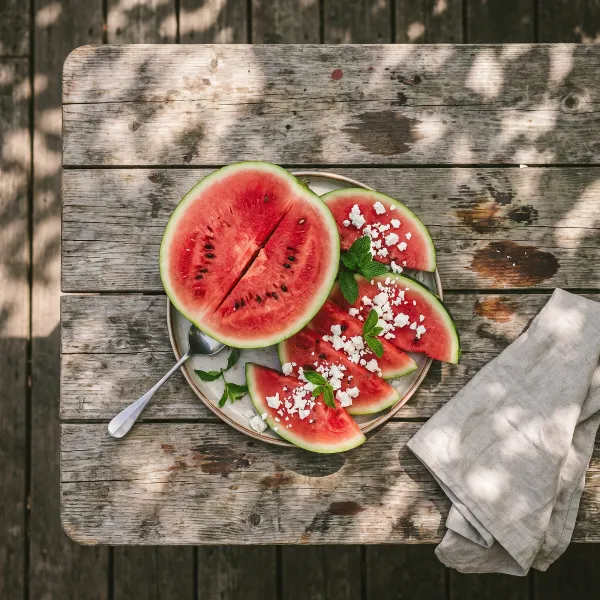
Watermelon and feta salad. The sweet-salty combination is ridiculous in the best way, and the fat in the feta helps you absorb the lycopene. Add fresh mint, a drizzle of good olive oil, and a crack of black pepper. This is a summer staple at my house.
Watermelon gazpacho. Blend watermelon with cucumber, red onion, lime juice, jalapeño, and a little olive oil. Chill it. It is a real-food appetizer that takes ten minutes.
Blended into smoothies. Frozen watermelon cubes work beautifully as a smoothie base. Add coconut cream, lime, mint, and a pinch of sea salt for a creamy, hydrating drink that feels like a treat.
Watermelon salsa. Dice it small with red onion, cilantro, jalapeño, and lime. Serve it with grilled fish or chicken. It is bright and unexpected and really good.
Pickled watermelon rind. If you have never done this, try it. A simple brine of apple cider vinegar, water, salt, and a little honey will transform that rind into something genuinely craveable. A small Southern grandmother in your family probably already knows this.
God put an enormous amount of nutritional complexity into this fruit that most people write off as 90 percent nothing. The more I learn about real food, the more I believe that was not an accident. Steward what you have been given. Sometimes that means taking a second look at the thing sitting on your picnic table all summer long.
This article is for general informational purposes only and is not medical advice. Always consult a qualified healthcare professional before making changes to your diet or health routine.
Key Takeaways
- Watermelon contains more lycopene per 100 grams than raw tomatoes, and lycopene is a potent antioxidant linked to reduced oxidative stress.
- Watermelon is the richest known dietary source of L-citrulline, an amino acid that converts to arginine and supports nitric oxide production and blood flow.
- Its glycemic load is low (around 5 per serving) despite a high glycemic index, making reasonable portions appropriate for most real-food eaters.
- The rind contains more citrulline than the flesh and is edible; pickling or blending it is a practical way to use the whole fruit.
- Lycopene is fat-soluble, so pairing watermelon with a fat source (feta, olive oil, nuts) meaningfully improves absorption.
- People with fructose malabsorption or FODMAP sensitivity may not tolerate watermelon well and should work with a practitioner.
Frequently Asked Questions
Is watermelon paleo?
Yes, watermelon is a paleo-friendly fruit. It is a whole, unprocessed food with no additives, grains, legumes, or dairy. Like all fruit, it contains natural sugars, so most people eat it in reasonable portions alongside protein and fat rather than in unlimited quantities. The rind is also edible and paleo-friendly.
Does watermelon have a lot of sugar?
Watermelon does contain natural fructose, and it has a relatively high glycemic index of around 72. However, its glycemic load per standard serving (about two cups) is only around 5, which is considered low. Glycemic load accounts for the actual amount of carbohydrate in a serving, not just how fast it raises blood sugar in isolation. For most healthy people eating a balanced real-food diet, a moderate serving of watermelon is not a problem.
What is citrulline and why is it in watermelon?
L-citrulline is an amino acid found in particularly high concentrations in watermelon. It is actually a byproduct of arginine synthesis in the body and is also produced during the urea cycle. When you eat citrulline from food, your kidneys convert it into arginine, a precursor to nitric oxide. Research has linked citrulline supplementation to improved arterial function and blood flow. Watermelon is the richest known whole-food source of citrulline, with higher concentrations in the rind than in the flesh.
Can you eat watermelon rind?
Yes, watermelon rind is completely edible and nutritionally meaningful. It contains higher concentrations of citrulline than the red flesh, plus some fiber and micronutrients. It has a mild, slightly cucumber-like flavor. Common ways to eat it include pickling it in a vinegar brine, blending it into smoothies, or stir-frying it. If you are eating the rind from conventionally grown watermelon, wash the outer surface thoroughly. Organic is worth considering if rind eating becomes a regular habit.
Sources
- USDA FoodData Central: Watermelon, Raw, FoodData Central
- MDPI Antioxidants: Lycopene and Its Antioxidant and Anti-Inflammatory Effects
- NCBI / Nutrients: L-Citrulline Supplementation: Impact on Cardiometabolic Health
- PubMed / American Journal of Hypertension: Watermelon Extract Supplementation Reduces Ankle Blood Pressure and Carotid Augmentation Index in Obese Adults With Prehypertension
- Journal of Agricultural and Food Chemistry: Watermelon Consumption Increases Plasma Arginine Concentrations in Adults
- Harvard T.H. Chan School of Public Health: Carbohydrates and Blood Sugar: Glycemic Load
- Scientific Reports: Cucurbitacin E Inhibits Proliferation of Several Cancer Cell Lines
This article is for general informational purposes only and is not medical advice. Always consult a qualified healthcare professional before making changes to your diet or health routine.