


The prenatal nutrition advice starts before the second line even shows up on the test. Eat more folate. Eat less mercury. Eat this, not that, and for the love of everything holy, eat enough iron. And then week six arrives, and the smell of the chicken you were supposed to be grilling sends you straight to the bathroom floor. That is where I meet most of my clients. Not at the kale salad. On the bathroom floor.
The Mistake I See Over and Over Again
The most common thing I see first-trimester clients do is white-knuckle their way through a meal plan that made sense in theory and makes zero sense right now, in their actual body, in week eight of pregnancy. They downloaded the prenatal nutrition guide. They stocked their fridge with leafy greens and wild salmon and pastured eggs. And now they can't look at any of it without gagging.
So they feel like they're failing. They're not eating enough vegetables. They're living on crackers and plain toast and they are convinced they are somehow hurting their baby by not executing the plan.
This is the mistake. Not the crackers. The guilt spiral and the rigidity.
The first trimester is a physiological earthquake. Your body is building a placenta from scratch, surging progesterone and hCG through the roof, and redirecting enormous amounts of energy to a project happening at the cellular level. Nausea affects somewhere between 70 and 80 percent of pregnant women, and food aversions are not a character flaw. They are a documented, biologically driven response. Trying to force yourself through a rigid whole-food meal plan during this window is like trying to run a marathon with a sprained ankle because you had a training schedule. Sometimes the most intelligent thing you can do is adjust.
Why the 'Eat Perfectly' Pressure Is So Tempting
We live inside a culture that has turned pregnancy into a performance. There are apps that tell you exactly what your baby looks like this week and exactly what you should be eating to support it. There are Instagram accounts devoted to gorgeous, color-coded prenatal meal preps. There are well-meaning family members who will absolutely tell you that their generation ate liver and sardines through morning sickness and turned out fine.
And when you already love real food, like most of my clients do, the pressure compounds. You came into this pregnancy knowing better. You were the one who threw out the seed oils and started reading labels. You feel like you should be able to do this right.
I get it. I really do. That desire to steward this pregnancy well is a good instinct. It is rooted in love. But stewardship in the first trimester looks different than it does at week 25. It looks a lot more like grace and a lot less like a meal plan.
The Blood Sugar Piece Nobody Talks About Enough
Here is the actual functional thing that is making your nausea worse, and the fix that helps more clients than almost anything else: blood sugar instability.
When you go too long without eating, blood sugar drops, and for a pregnant person in the first trimester, that drop hits like a freight train. It amplifies nausea, makes fatigue worse, and sets off a cascade your body reads as stress. Research has consistently linked low blood sugar to worsening nausea and vomiting of pregnancy, which is part of why eating small, frequent amounts throughout the day tends to help.
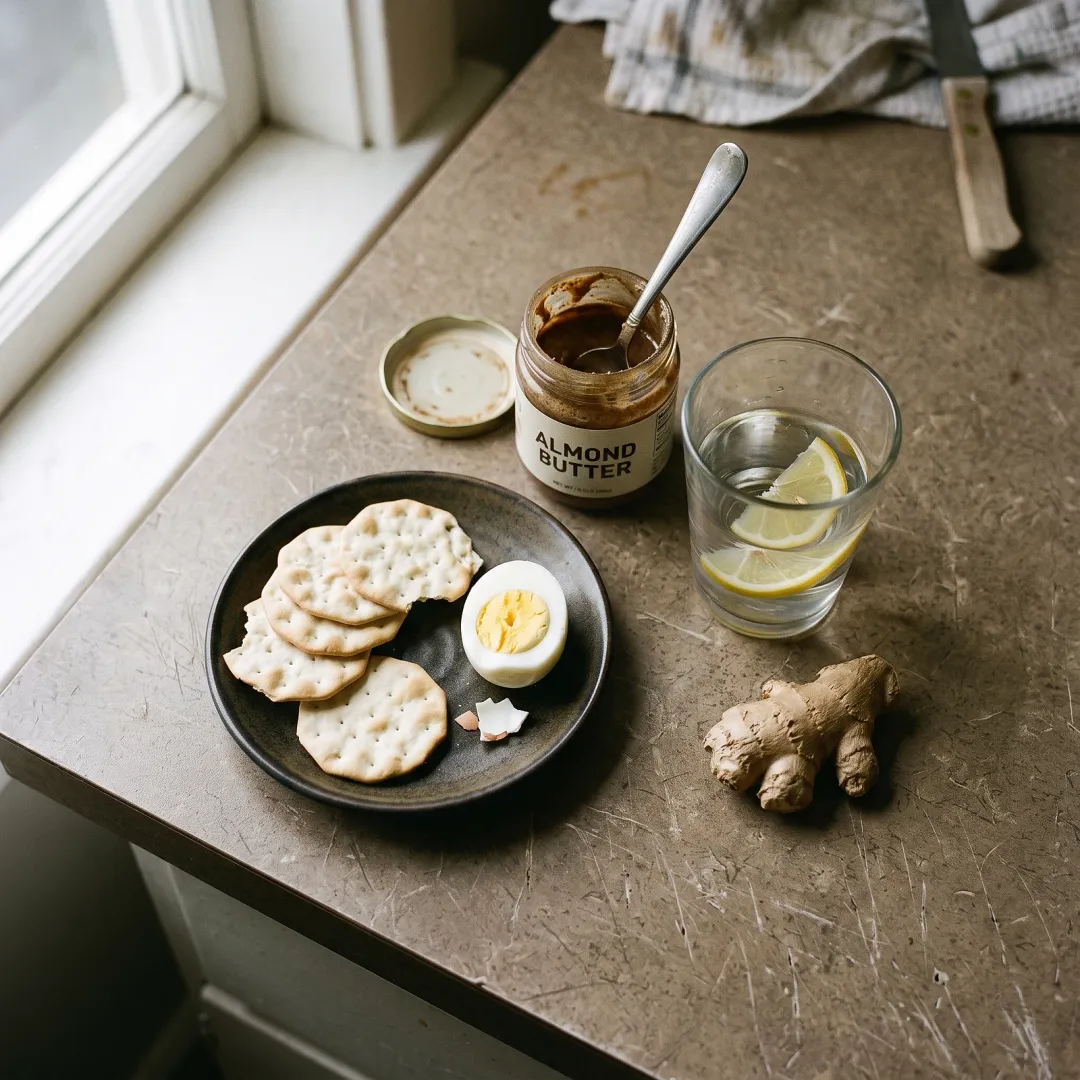
This does not mean grazing on crackers from dawn to dusk. It means the goal is to never let your tank fully empty. The practical version of this in real food terms is: keep something with protein nearby at all times. A hard-boiled egg by the bed before you even sit up. A small handful of nuts before you get in the car. A few bites of cold leftover salmon if you can tolerate it. Not a full meal. Just an anchor.
Protein is the thing that steadies blood sugar. Carbohydrates alone, even the well-intentioned whole-food ones, will not hold you. The crackers will give you five minutes of relief and then drop you again. So we are not avoiding carbs, we are pairing them. Toast with almond butter. A banana with a few bites of hard-boiled egg. Whatever version of protein your stomach will actually accept right now.
If the idea of eating protein makes your stomach turn, cold and bland tends to be more tolerable than warm and aromatic. Cold salmon, a chilled boiled egg, cold chicken, a spoonful of almond or sunflower seed butter straight out of the jar. Smell is the biggest nausea trigger for most people, and cooking amplifies it. Cold food just smells less.
What to Actually Prioritize (Without the Guilt)
When I'm coaching someone through the first trimester, I narrow the focus down to three non-negotiables and release everything else until the fog lifts.
One: Stay hydrated, and make it count. Dehydration makes nausea dramatically worse, and plain water can be hard to stomach for some people in the first trimester. The American College of Obstetricians and Gynecologists recommends around 8 to 12 cups of fluids daily during pregnancy, but the form matters. If plain water is making you queasy, try it cold, add a slice of lemon or cucumber, or sip on coconut water or a diluted electrolyte drink without the dyes and sweeteners. Small sips frequently beat a whole glass at once.
Two: Take your prenatal, but time it strategically. This is not the time to skip it because your stomach is upset. But if swallowing it on an empty stomach is wrecking you, take it with your most tolerable meal, sometimes that is a small evening snack when nausea tends to ease. If the iron in your prenatal is making things worse, talk to your midwife or OB about a lower-iron option for the first trimester. That is a real conversation to have, not a reason to stop supplementing.
Three: Eat what you can keep down, and do not apologize for it. If the only protein you can eat right now is cold salmon on plain crackers, that is not a failure. That is a win. If you are surviving on scrambled eggs and applesauce for three weeks, your baby is not suffering. The placenta is not fully operational yet in the first trimester, and your prenatal is covering most of the gap. The goal is nourishment and survival, not perfection.
When the second trimester arrives and the nausea lifts, you will get your appetite back. That is when we rebuild. That is when the rainbow of vegetables returns and the meal prep feels exciting again. You are not behind. You are in a season.
A Note About Ginger, and What Else Might Help
Ginger is genuinely worth trying. It is not a placebo and it is not just an old wives' tale. A review published in the journal Obstetrics and Gynecology found ginger to be effective in reducing the severity of nausea during pregnancy, with no identified significant safety concerns at culinary doses. Fresh ginger in hot water, ginger chews without corn syrup, or ginger capsules are all reasonable options to discuss with your provider.
Acupressure wristbands (the kind sold for motion sickness) have also helped some of my clients and carry essentially zero risk. If it gives you twenty minutes of relief so you can get something in your stomach, it is worth the five bucks.
Vitamin B6 is another option with a real evidence base. ACOG actually lists B6 as a first-line recommendation for nausea and vomiting of pregnancy, often in combination with doxylamine. If your nausea is severe and none of the dietary strategies are touching it, please talk to your provider. Hyperemesis gravidarum is a serious condition, not just bad morning sickness, and it needs medical support, not just a better meal plan.
This is where I want to be really clear: I am a health coach, not your OB. If you are losing weight, cannot keep fluids down, or feel like something is wrong, that is a call to your provider, not a call to adjust your macros.
The Real Fix Is Releasing the Pressure
The women I coach through the first trimester who do the best are not the ones who found the perfect anti-nausea meal plan. They are the ones who gave themselves permission to eat what they could keep down, stayed anchored with protein and fluids, and stopped punishing themselves for not being able to execute the plan they had before all hell broke loose.
Your body is not broken. It is doing something extraordinary. The nausea, as miserable as it is, is largely a sign that pregnancy hormones are doing what they are supposed to do. That does not make it easier to live through, but it might make it easier to stop fighting it.
Hold your real-food values loosely right now. They will still be there in twelve weeks. The goal right now is to nourish yourself with what your body will accept, stay hydrated, take your prenatal, and trust that this season is temporary.
You are not failing. You are growing a person. Cut yourself some slack.
---
This article is for general informational purposes only and is not medical advice. Always consult a qualified healthcare professional before making changes to your diet or health routine.
Key Takeaways
- The biggest first-trimester eating mistake is chasing a perfect prenatal diet while your body is in full revolt. Survival eating is strategic, not a failure.
- Blood sugar instability makes nausea worse. Pairing small amounts of protein with carbs throughout the day is one of the most effective tools you have.
- Cold, bland protein (think cold salmon, chilled eggs, nut butter) is easier to stomach than warm, aromatic food because smell is the biggest nausea trigger.
- Hydration matters as much as food right now. If plain water is making you queasy, find a form you can tolerate and sip it constantly.
- Ginger and vitamin B6 both have real evidence behind them for nausea relief. If nausea is severe and unrelenting, talk to your provider, not just your health coach.
- The second trimester is when you rebuild. Right now, the goal is to nourish yourself with what your body will accept and release the guilt.
Frequently Asked Questions
What should I eat in the first trimester when nothing sounds good?
Focus on small amounts of protein paired with whatever carbs you can tolerate, eaten frequently to keep blood sugar steady. Cold, bland foods tend to be easier to stomach than warm, aromatic ones because smell is a major nausea trigger. Cold salmon, hard-boiled eggs, almond butter, and plain crackers are not a failure. They are a practical, strategic choice for this season. Hydration matters just as much as food, so sip fluids constantly, and find a form of water or electrolytes your stomach will accept.
Is it okay to not eat much in the first trimester because of nausea?
Most healthy women can sustain early pregnancy even when food intake is reduced in the first trimester, especially with a quality prenatal supplement covering nutritional gaps. The placenta is not yet fully operational in these early weeks, and your body has reserves. That said, if you cannot keep any food or fluids down, are losing weight, or feel like your nausea is extreme, please call your provider. Hyperemesis gravidarum is a real medical condition that needs more than dietary adjustment.
Does ginger actually help with first trimester nausea?
Yes, and there is real research behind it. A clinical review published in Obstetrics and Gynecology found ginger to be effective in reducing the severity of pregnancy nausea at culinary doses, with no identified significant safety concerns. Fresh ginger steeped in hot water, ginger chews without added corn syrup, or ginger capsules are all options worth trying. It works better for some people than others, but the evidence supports giving it a shot.
Should I take my prenatal vitamin if it makes morning sickness worse?
Do not skip it, but do change the timing. Taking your prenatal with your most tolerable meal of the day, often a small evening snack when nausea tends to ease, can make a real difference. If the iron content seems to be making things worse, talk to your midwife or OB about a low-iron prenatal option for the first trimester. That is a legitimate conversation, not a reason to go without supplementation entirely.
Sources
- NIH / NCBI: Nausea and Vomiting of Pregnancy
- American College of Obstetricians and Gynecologists: Morning Sickness: Nausea and Vomiting of Pregnancy (ACOG FAQ)
- American College of Obstetricians and Gynecologists: Nutrition During Pregnancy (ACOG FAQ)
- PubMed / Obstetrics and Gynecology: Ginger for nausea and vomiting in pregnancy: randomized, double-masked, placebo-controlled trial
This article is for general informational purposes only and is not medical advice. Always consult a qualified healthcare professional before making changes to your diet or health routine.

Join the conversation
What do you think?
Free members can comment, reply and like. It takes ten seconds.