


Bananas get a weirdly bad rap in real-food circles. People hear "high sugar" and drop them like they're a Snickers bar. Then other people eat three a day and wonder why they feel off. The truth is somewhere in the middle, and it depends almost entirely on which banana you're picking up, how ripe it is, and what you're pairing it with. This is one of those foods where the details genuinely matter, and once you know them, you'll shop the banana display completely differently.
What's Actually in a Banana: The Baseline Numbers
A medium banana, about 118 grams, comes in at roughly 105 calories, 27 grams of carbohydrate, 3 grams of fiber, 14 grams of natural sugar, 1.3 grams of protein, and less than half a gram of fat. It also provides about 422 mg of potassium (roughly 9% of the daily value), along with meaningful amounts of vitamin B6, vitamin C, and magnesium, according to USDA FoodData Central.
That potassium number is real and worth noting. Most Americans are chronically low in potassium, and getting it from whole food is always preferable to supplementing. Bananas are a practical, affordable way to move the needle there.
The protein count is low, the fat is negligible, and the carbohydrate is the whole story with this fruit. Which is exactly why ripeness matters so much.
How Ripeness Rewrites the Nutrition Profile
This is the part almost nobody talks about, and it's the most important thing to understand about banana nutrition.
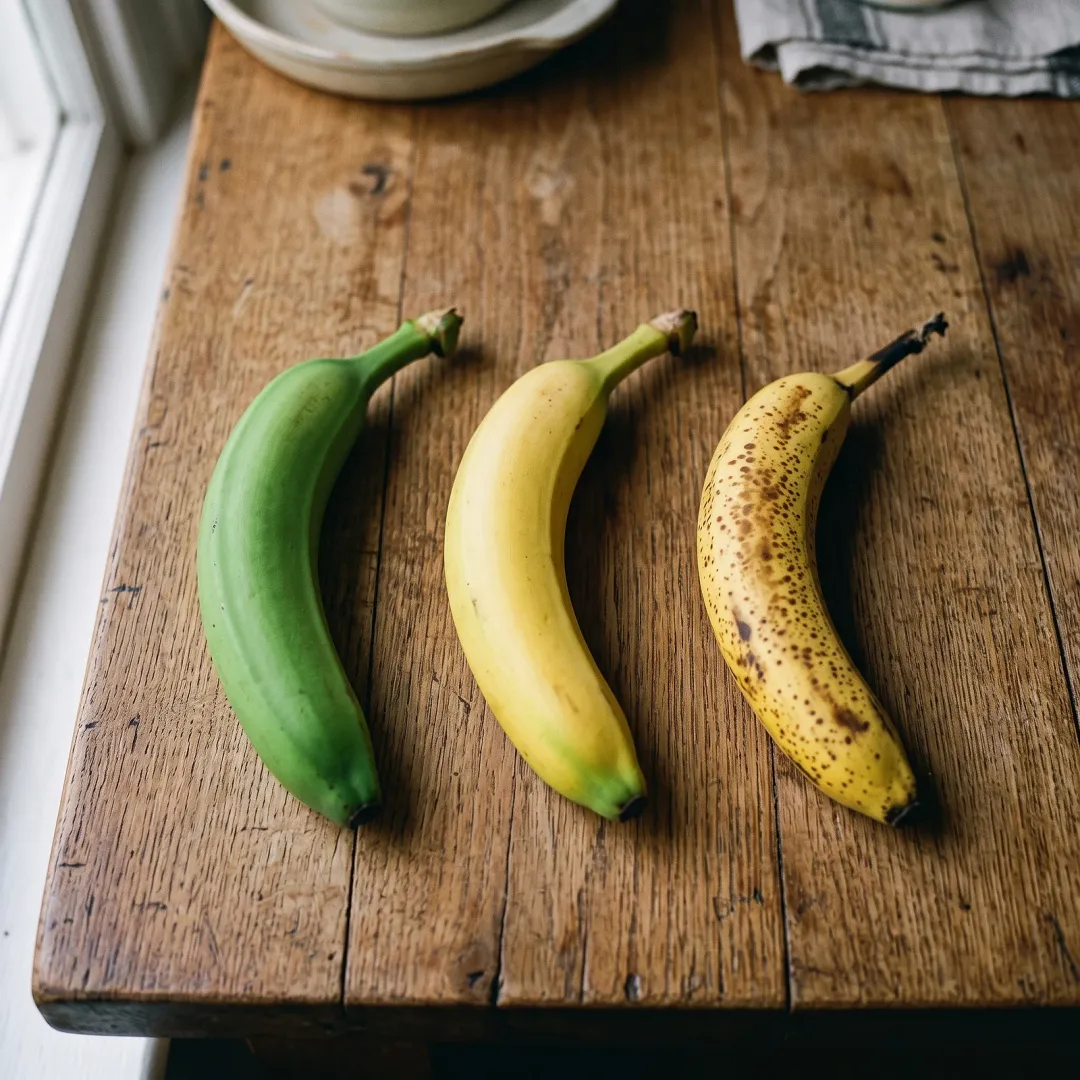
A green, underripe banana is actually a resistant starch powerhouse. According to research published in Comprehensive Reviews in Food Science and Food Safety, unripe bananas can contain up to 70-80% of their starch as resistant starch. Resistant starch behaves more like fiber in the body than like sugar. It passes through the small intestine largely undigested and feeds beneficial bacteria in the large intestine. It also produces a lower glycemic response compared to fully ripe fruit.
As the banana ripens and those brown spots appear, enzymes convert that resistant starch into free sugars, primarily glucose, fructose, and sucrose. A fully ripe, spotty banana has only about 1% resistant starch left. The carbohydrate content by weight stays roughly similar, but the form of those carbs shifts dramatically.
A yellow banana with no spots: moderate sugar, some resistant starch remaining, firm texture. A yellow banana with brown spots: most starch converted to sugar, sweeter, digests faster. A very green banana: highest resistant starch, lowest free sugar, starchy flavor many people find unpleasant raw.
Neither extreme is wrong. They're just different foods in different contexts, and knowing which you're reaching for is the point.
Size Is Not a Minor Detail
The "medium banana" you see on nutrition labels is 7 to 7.75 inches long. That's a real standard, but walk through any grocery store and you will see bananas that range from small finger bananas to enormous ones that would dwarf a hot dog bun.
A small banana (about 6 inches, 101 grams) has roughly 90 calories and 23 grams of carbohydrate. An extra-large banana (9 inches or more, around 152 grams) can push past 135 calories and 35 grams of carbs. That's a meaningful difference if you're tracking how food makes you feel or you're trying to manage your energy without the crash. Eating what you think is one serving but is actually one and a half is an easy mistake, and the banana display at most stores runs large.
When a recipe calls for "one banana," the size matters to the outcome, both in flavor and in how your plate actually lands.
What to Look For at the Store: A Practical Picking Guide
If you want the resistant starch benefit: Go for bananas that are fully yellow but still have a slight green tip. The starch conversion hasn't fully completed, you get some of both worlds, and the texture is firmer if you're eating them plain. Fully green bananas work too if you don't mind the starchy, almost savory flavor. They're genuinely great sliced and pan-fried or used in cooking (plantain-style preparations).
If you want maximum sweetness and easy digestion: Grab the ones with brown spots. A spotted banana is not a bad banana. It's just a riper one. For smoothies, for baking paleo-friendly bread or muffins, or for a quick energy source before or after physical activity, a ripe spotty banana is your friend. The natural sugars are more available and it will blend smoother and taste sweeter without adding anything.
If you're watching your overall sugar intake: Choose smaller bananas and choose them on the greener side. You get the same micronutrient package in a smaller dose, with more resistant starch and less free sugar per bite. Pair it with something that has fat and protein (a handful of nuts, a scoop of almond butter, a few slices of tuna on the side) to slow the whole thing down and keep your energy steadier.
If you're buying for baking: Overripe, spotty, or even blackened bananas are exactly what you want. The sweeter, wetter flesh blends into batter and reduces your need to add as much additional sweetener. Don't throw them away. Freeze them. A freezer bag of overripe bananas is a real-food baker's best friend.
If you see plantains: Those are a banana family member, but they're a different creature. Raw plantains are starchier and less sweet than regular bananas at any ripeness stage. They're typically cooked rather than eaten raw, and their nutrition profile is slightly different. Green plantains are very starchy; ripe (black) plantains are sweeter and softer. They're whole food and they're worth using, but they're not interchangeable with bananas cup for cup.
Conventional vs. Organic: Is It Worth Paying More?
Bananas have a thick peel that you don't eat. The Environmental Working Group consistently puts bananas on their Clean Fifteen list, meaning pesticide residues on the edible flesh are generally low. This is one of the few instances where I'll tell you the conventional option is probably fine if budget is a real constraint.
That said, if you can afford organic and you care about supporting farming practices that don't saturate monoculture crops in synthetic inputs, that's always a reasonable choice. But if buying organic bananas means you skip buying them at all, skip the organic. A conventional banana is still a whole food, and whole food beats processed food every time regardless of the label.
One more thing on the organic question: banana farming at scale has real sustainability concerns that go beyond the pesticide question, including soil depletion and monoculture vulnerability. Buying from smaller farms or fair-trade operations when you can find them matters for reasons beyond your own plate.
When Bananas Might Not Be Your Best Move
I'm not going to pile on bananas and tell you they're a problem food, because for most people eating a real-food diet, they're not. But there are a few honest situations where you might want to be more intentional.
If you notice that sweet fruit in general tends to leave you more hungry or spacey an hour later, pay attention to that signal. That's your body communicating something about how it processes quick-releasing carbohydrate. In that case, greener bananas and always pairing with fat and protein is a smart adjustment.
If you have a true fructose malabsorption issue, bananas (especially ripe ones) can be uncomfortable. According to Monash University's FODMAP research, overripe bananas are higher in fructans and oligo-fructose and may trigger symptoms in sensitive individuals, while unripe bananas are generally considered low-FODMAP at a serving of one medium banana.
And if you're doing a strict elimination phase for any reason, just know bananas are still carbohydrate-dense fruit and your practitioner's guidance should lead, not a blog post.
How to Use a Banana Well in a Real-Food Kitchen
Plain as a snack with almond butter. Sliced over a bowl of full-fat coconut yogurt. Frozen and blended into a one-ingredient "ice cream" that is genuinely good. Mashed into paleo pancake batter. Sliced green and pan-sautéed in coconut oil with a pinch of cinnamon as a savory-sweet side. Added to a post-workout smoothie with a scoop of tuna (yes, you read that right, it works in a savory-green smoothie with cucumber, lime, and cilantro if you want to try something different). Frozen chunks in an overnight smoothie prep bag for the week.
The banana is incredibly versatile precisely because it shifts character so dramatically depending on ripeness. You essentially get multiple ingredients out of one fruit at different points of its life. That's real-food value.
This article is for general informational purposes only and is not medical advice. Always consult a qualified healthcare professional before making changes to your diet or health routine.
Key Takeaways
- A medium banana has about 105 calories, 27g carbohydrate, 3g fiber, and 422mg potassium. Size varies widely at the store and so do the actual numbers.
- Ripeness fundamentally changes the nutrition: green bananas are high in resistant starch; ripe, spotted bananas are high in free sugar. Neither is wrong. They're just different.
- For baking and smoothies, go ripe and spotty. For eating plain and slowing digestion, go yellow with a green tip. For resistant starch benefits, go green.
- Conventional bananas are on the EWG Clean Fifteen. Organic is a values and budget call, not a food-safety emergency with this fruit.
- Always pair a banana with fat and protein if you notice it affects your energy or fullness. Whole fruit on its own is fine for most people; context and pairing matter.
Frequently Asked Questions
Are bananas high in sugar?
It depends on ripeness. A ripe, spotty banana has most of its carbohydrate as free sugar (glucose, fructose, sucrose). A green or barely-yellow banana still has a significant portion of its carbohydrate as resistant starch, which behaves more like fiber and produces a lower glycemic response. The total carbohydrate count is similar at both stages, but the form is very different.
How many calories are in a banana?
A medium banana (about 118 grams, 7 to 7.75 inches) has approximately 105 calories and 27 grams of carbohydrate, according to USDA data. Smaller bananas (around 6 inches) are closer to 90 calories; extra-large ones can exceed 135. Size varies a lot at the grocery store, so the actual banana in your hand may be larger than what the nutrition label calls 'medium.'
Are bananas paleo?
Yes, bananas are a whole, unprocessed fruit and are generally considered paleo. Some people in stricter paleo communities moderate fruit intake based on sugar content, and that's a personal call. For most people eating a real-food diet, a banana paired with fat and protein is a completely reasonable choice.
Should I buy organic bananas or is conventional okay?
The Environmental Working Group consistently places bananas on their Clean Fifteen list, meaning pesticide residues on the edible flesh tend to be low. The thick peel provides a natural barrier. Conventional bananas are generally considered a lower-risk choice compared to thin-skinned produce. Buying organic is a values and budget decision with this particular fruit, not a food-safety necessity for most people.
Sources
- USDA FoodData Central: Bananas, raw, Nutritional Profile
- National Institutes of Health, Office of Dietary Supplements: Potassium: Fact Sheet for Health Professionals
- IFT / Comprehensive Reviews in Food Science and Food Safety: Resistant Starch in Bananas: Impact of Ripening
- Environmental Working Group: EWG's Shopper's Guide: Clean Fifteen
- Monash University FODMAP: High and Low FODMAP Foods
This article is for general informational purposes only and is not medical advice. Always consult a qualified healthcare professional before making changes to your diet or health routine.

Join the conversation
What do you think?
Free members can comment, reply and like. It takes ten seconds.