
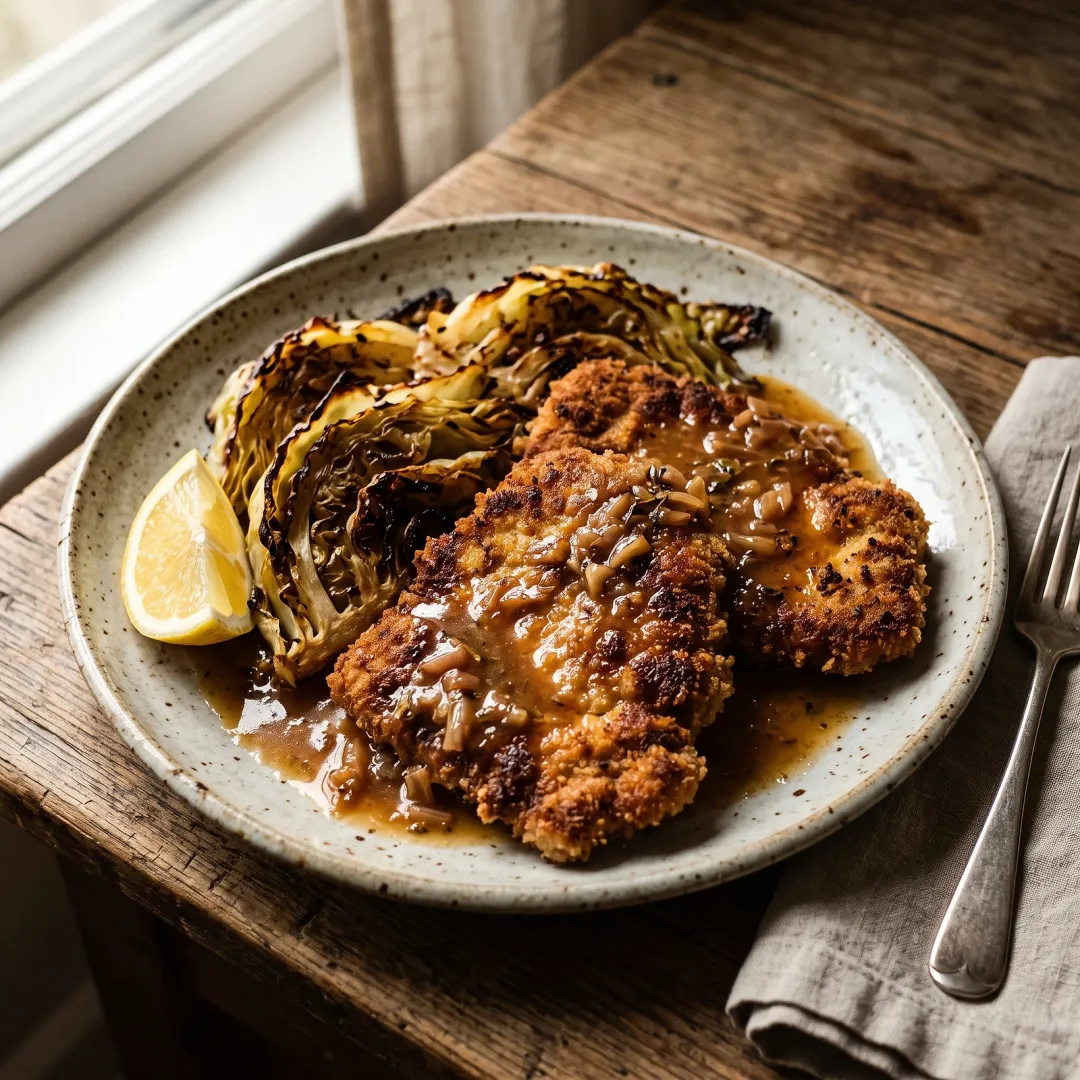

My grandmother never made schnitzel, but the first time I had the real thing, somewhere between a cast-iron pan and a glass of hard cider at a friend's dinner table, I completely understood why Germans have been eating it for centuries. There is something almost primal about a thin piece of pork, pounded flat, pressed into a crispy coating, and fried until golden. It is satisfying in a way that goes beyond the food itself. It just feels right. Of course, traditional schnitzel is breaded in breadcrumbs and often finished with butter, which isn't exactly what I do around here. But the thing is, you don't need any of that to get to the same place. Almond flour and tapioca starch together give you a crust that is genuinely crispy, golden, and a little nutty in the best way. You won't miss the breadcrumbs. I promise you that. The apple cider pan sauce is the part I am most proud of here. It takes maybe five extra minutes after you pull the schnitzels out of the pan, and it completely transforms the whole dish. The roasted cabbage underneath gets those gorgeous caramelized edges in the oven and soaks up the sauce beautifully. This is a real dinner. A proper one. The kind of thing you'd be proud to put on the table on a regular Tuesday.
Nutritional Benefits
Pork Loin: Lean, Complete Protein
- Pork loin is one of the leanest cuts available, delivering around 40 grams of complete protein per serving to support muscle repair and satiety.
- It's a solid source of B vitamins, especially B1 (thiamine), B6, and B12, which your nervous system and energy metabolism genuinely depend on.
- The zinc and selenium in pork support immune function and thyroid health, two things a lot of us are not paying nearly enough attention to.
Green Cabbage: The Underrated Cruciferous
- Cabbage is packed with vitamin C and vitamin K, and roasting it makes it taste completely different from raw, which means even people who claim they don't like cabbage tend to eat it.
- The glucosinolates in cruciferous vegetables like cabbage have been studied for their role in supporting the body's natural detoxification pathways.
- Cabbage is also a good prebiotic fiber source, feeding the beneficial bacteria in your gut, which affects everything from digestion to mood.
Almond Flour Coating: Grain-Free and Nutrient-Dense
- Blanched almond flour replaces grain-based breadcrumbs and brings vitamin E, magnesium, and healthy monounsaturated fats to the crust.
- Tapioca starch helps create a lighter, crispier texture without relying on gluten, making this completely safe for anyone with gluten sensitivity or celiac disease.
- Together they produce a breading that crisps up beautifully in avocado oil without the inflammatory seed oils found in most restaurant-style fried foods.
Apple Cider and Bone Broth Pan Sauce: Flavor With Function
- Fresh apple cider brings natural sugars that caramelize in the pan, adding depth without any added sweeteners.
- Bone broth adds collagen and amino acids like glycine and proline, which support gut lining integrity and joint health.
- Apple cider vinegar rounds out the acidity and supports healthy digestion by stimulating stomach acid production, something a lot of people are chronically low on.
FAQs
Can I use pork tenderloin instead of pork loin chops?
Yes, absolutely. Cut the tenderloin into medallions and pound them out to about 1/4 inch thickness the same way. They cook a little faster since tenderloin is slightly more tender, so watch your internal temperature and pull them at 145°F.
My almond flour crust keeps sliding off. What am I doing wrong?
Two things usually cause this. First, the pork needs to be completely dry before breading, so press it firmly with paper towels. Second, after pressing the cutlet into the breading, let it rest on the plate for five minutes before it hits the oil. That short rest helps the coating adhere. And make sure your oil is properly hot before the pork goes in.
Is this recipe Whole30 compliant?
Almost, but not quite as written. Apple cider and apple cider vinegar are generally fine, but Dijon mustard needs to be checked for compliant ingredients (some brands add white wine). Swap in a compliant Dijon or plain yellow mustard and you are good to go.
Can I bake the schnitzel instead of frying it?
You can, though the crust won't get quite as shatteringly crispy. Place the breaded cutlets on a wire rack over a baking sheet, spray or brush with avocado oil, and bake at 425°F for about 18 to 20 minutes, flipping halfway through. Still very good, just a different texture.
What can I substitute for fresh apple cider?
Unsweetened apple juice works in a pinch, though it won't have quite the same depth. You could also use a dry white wine (not strictly paleo, so just note that if you're tracking) combined with an extra splash of apple cider vinegar to bring some tartness back in.
How do I store and reheat leftovers without losing the crispiness?
Store the schnitzels and sauce separately in airtight containers in the fridge for up to three days. To reheat, put the schnitzels on a wire rack over a baking sheet and pop them in a 375°F oven for 8 to 10 minutes. The oven brings the crust back to life far better than a microwave, which turns everything soggy.
If you make this, I really want to hear about it. Drop a comment below and tell me how it went, especially if this is your first time making schnitzel. And if you are building out your paleo dinner rotation, save this one, share it with someone who thinks paleo food is boring, and let it prove them wrong.
 That Paleo Chick
Real food that heals
That Paleo Chick
Real food that heals
RecipePaleoDinnerGluten-Free

Fits these needs
Checked ingredient by ingredient. Tap one to see every recipe that fits.
Always check labels on packaged ingredients (gluten-free certification, hidden additives) and follow your clinician's advice.
Ingredients
Instructions
Nutrition Facts Amount per serving
Estimated from the ingredients. Values vary with brands and portions.

Join the conversation
Made it? Tell us how it went.
Free members can comment, reply and like. It takes ten seconds.