
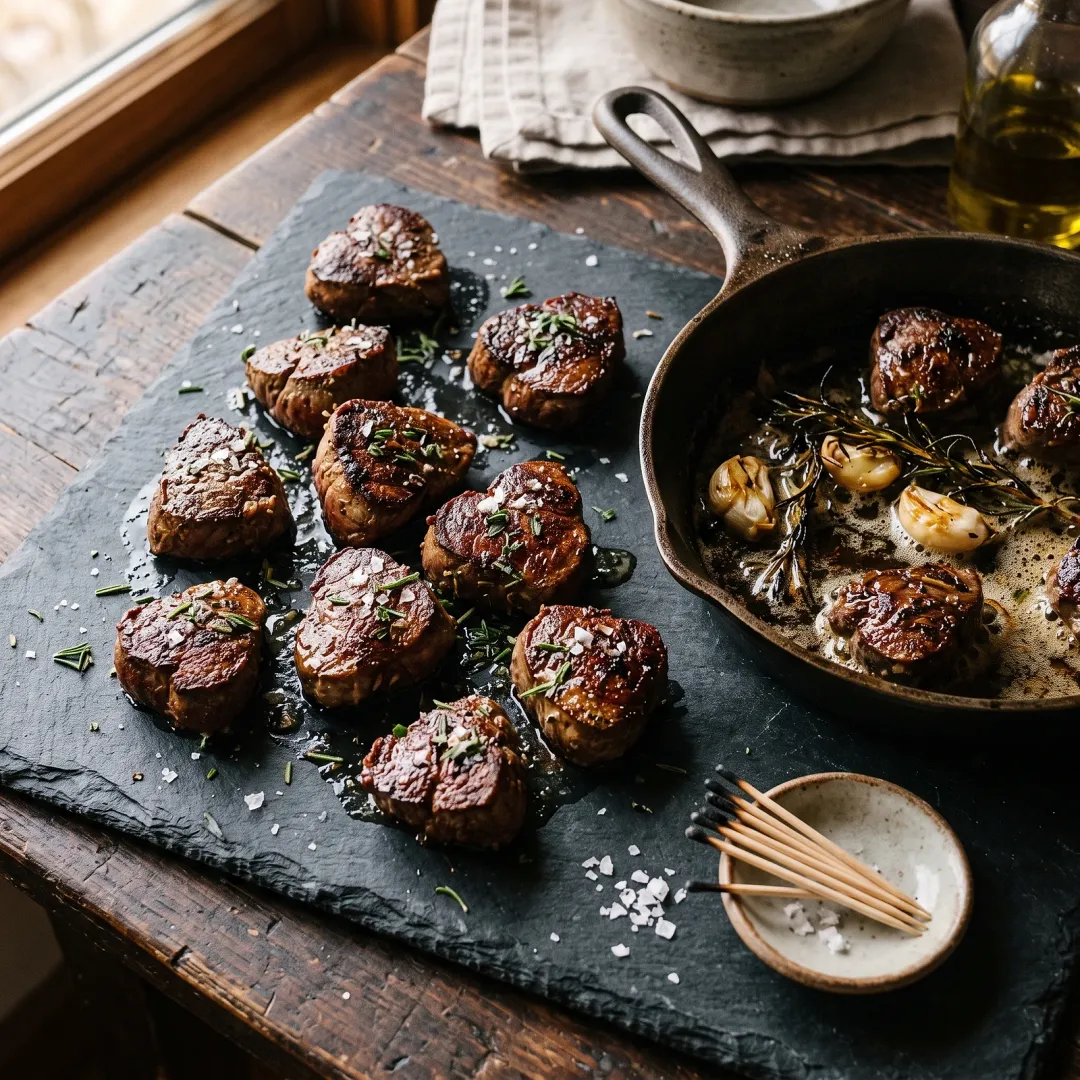

Venison gets overlooked in the snack space, and that is honestly a shame. Most people associate it with a slow braise or a hearty stew, but a hot cast iron pan and 8 minutes will turn a pound of backstrap into something extraordinary. These bites hit the table smelling like a steakhouse, they disappear fast, and every single one of them is pure, clean fuel. I grew up around hunters, so venison was just part of life. It was not exotic. It was dinner. But once I got deep into real food and started paying attention to where my meat actually came from, wild-harvested venison shot straight to the top of my list. There is nothing more truly free-range than a deer living its whole life in the woods. No feedlots. No hormones. No weird inputs. Just an animal doing exactly what it was designed to do, and meat that reflects that. This recipe is fast, unfussy, and genuinely impressive. The rosemary garlic ghee baste is what pulls it all together. You do not need a sauce, a dip, or anything else. Flaky sea salt on top and you are done.
Nutritional Benefits
Wild Venison: Lean, Clean, and Loaded with Protein
- Venison is one of the leanest red meats available, with significantly less total fat and saturated fat than conventionally raised beef while still delivering around 26 to 30 grams of protein per serving.
- Wild deer graze on native grasses, leaves, and forage, which means the fat they do carry tends to have a much healthier omega-3 to omega-6 ratio compared to grain-finished livestock.
- Venison is a rich source of B12, B6, riboflavin, zinc, and iron, all of which support energy metabolism, neurological function, and immune resilience.
- Because it is not commercially raised, wild venison contains no added hormones, antibiotics, or synthetic growth promoters.
Ghee: The Cooking Fat That Earns Its Place
- Ghee is clarified butter with the milk solids removed, which makes it tolerated by most people who are sensitive to dairy and completely appropriate for strict paleo.
- It has a high smoke point, making it ideal for high-heat searing without oxidizing or breaking down into harmful compounds the way seed oils do.
- Ghee from grass-fed sources contains fat-soluble vitamins A, D, E, and K2, plus conjugated linoleic acid, which has been associated with anti-inflammatory effects.
- The rich, nutty flavor it develops during basting adds depth that no neutral oil can replicate.
Rosemary and Garlic: More Than Just Flavor
- Rosemary contains rosmarinic acid and carnosic acid, compounds that have demonstrated antioxidant and anti-inflammatory properties in research.
- Garlic is one of the most well-studied whole foods for cardiovascular support. Its allicin content has been linked to improved blood pressure, reduced LDL oxidation, and antimicrobial activity.
- Both are real, whole ingredients that have been used medicinally for centuries across nearly every food culture in the world. They are in this recipe because they work, not just because they taste good.
FAQs
Can I use frozen venison for this recipe?
Yes, but thaw it fully in the refrigerator first and then pat it very, very dry before cooking. Frozen meat releases a lot of moisture as it thaws, and any extra surface water will prevent a proper sear. Do not rush the drying step.
What cut of venison works best for this?
Backstrap (the loin that runs along the spine) is the gold standard here. It is tender, lean, and handles high heat beautifully. You can also use the tenderloin. Avoid tougher cuts from the shoulder or leg, those benefit from low and slow cooking, not a quick sear.
How should I cook the venison if I do not have a cast iron skillet?
A heavy stainless steel pan works. What you need is a pan that holds high heat evenly. Non-stick pans are not ideal because they cannot handle the high temperatures needed for a real crust, and the coating can degrade. Get a cast iron if you do not have one yet, it is one of the best kitchen investments you can make.
What temperature should venison bites be cooked to?
For snack-sized cubes like these, you are aiming for medium-rare to medium: an internal temperature of around 130 to 140 degrees Fahrenheit. Venison has very little intramuscular fat, which means it dries out fast if overcooked. Pull it off the heat on the lower end, it will carry-over cook slightly as it rests.
Can I substitute beef if I do not have venison?
Absolutely. A beef tenderloin or sirloin tip cut into cubes will work well with the same method and timing. That said, if you have access to venison, use it. The flavor and nutritional profile are genuinely worth seeking out.
Is this recipe Whole30 compliant?
Yes. Every ingredient as written is Whole30 compatible. Ghee is explicitly allowed on Whole30, and there is no added sugar, grains, or legumes anywhere in this recipe.
If you made these, I want to hear about it. Drop a comment below and tell me what cut you used or where your venison came from, I love hearing from people who are doing the wild game thing. And if you know someone who thinks venison is intimidating to cook, send them this recipe. Eight minutes and a cast iron pan is all it takes to change their mind.
Seared Venison Bites with Rosemary Garlic Butter and Sea Salt
Tender, pan-seared venison cubes basted in a fragrant rosemary garlic butter, finished with flaky sea salt. A rich, protein-packed paleo snack that comes together in minutes and tastes like something you would get at a fancy charcuterie spread, only cleaner and way more satisfying.
Ingredients
- 1 lb venison backstrap or loin, cut into 1-inch cubes
- 1 tablespoon avocado oil
- 3 tablespoons ghee, divided
- 4 cloves garlic, smashed and peeled
- 3 sprigs fresh rosemary
- 1 teaspoon coarse black pepper
- 3/4 teaspoon fine sea salt, plus flaky sea salt for finishing
- 1/2 teaspoon smoked paprika
- Optional: fresh flat-leaf parsley, roughly chopped, for garnish
Instructions
- Pull the venison cubes out of the refrigerator at least 10 minutes before cooking. Pat them completely dry with paper towels, this step matters more than almost anything else. Moisture on the surface will steam the meat instead of searing it, and you will lose that crust you are after.
- In a small bowl, combine the fine sea salt, black pepper, and smoked paprika. Toss the venison cubes in the spice mix until every side is coated.
- Heat a cast iron skillet over high heat for about 2 minutes until it is genuinely hot. Add the avocado oil and swirl to coat. The oil should shimmer immediately.
- Add the venison cubes in a single layer, making sure they are not crowded. Sear without moving them for 60 to 90 seconds until a deep brown crust forms on the bottom. Flip each piece and sear the opposite side for another 60 seconds.
- Reduce the heat to medium. Add 2 tablespoons of the ghee, the smashed garlic cloves, and the rosemary sprigs directly to the pan. As the ghee melts, tilt the pan slightly and use a spoon to continuously baste the venison with the foaming, herb-scented butter for about 30 to 45 seconds.
- Remove the pan from the heat. Transfer the venison bites to a plate and immediately top them with the remaining 1 tablespoon of ghee, a few pieces of the basted garlic, and a generous pinch of flaky sea salt.
- Let the bites rest for 2 minutes before serving. Garnish with chopped parsley if you like. Serve with toothpicks.
Nutrition per serving
- Calories: 210
- Total Fat: 11g
- Carbohydrates: 1g
- Protein: 28g
- Dietary Fiber: 0g
- Sugar: 0g
 That Paleo Chick
Real food that heals
RecipePaleoSnackGluten-Free

Fits these needs
Checked ingredient by ingredient. Tap one to see every recipe that fits.
Ingredients
Instructions
Nutrition Facts Amount per serving
Estimated from the ingredients. Values vary with brands and portions.

Join the conversation
Made it? Tell us how it went.
Free members can comment, reply and like. It takes ten seconds.