
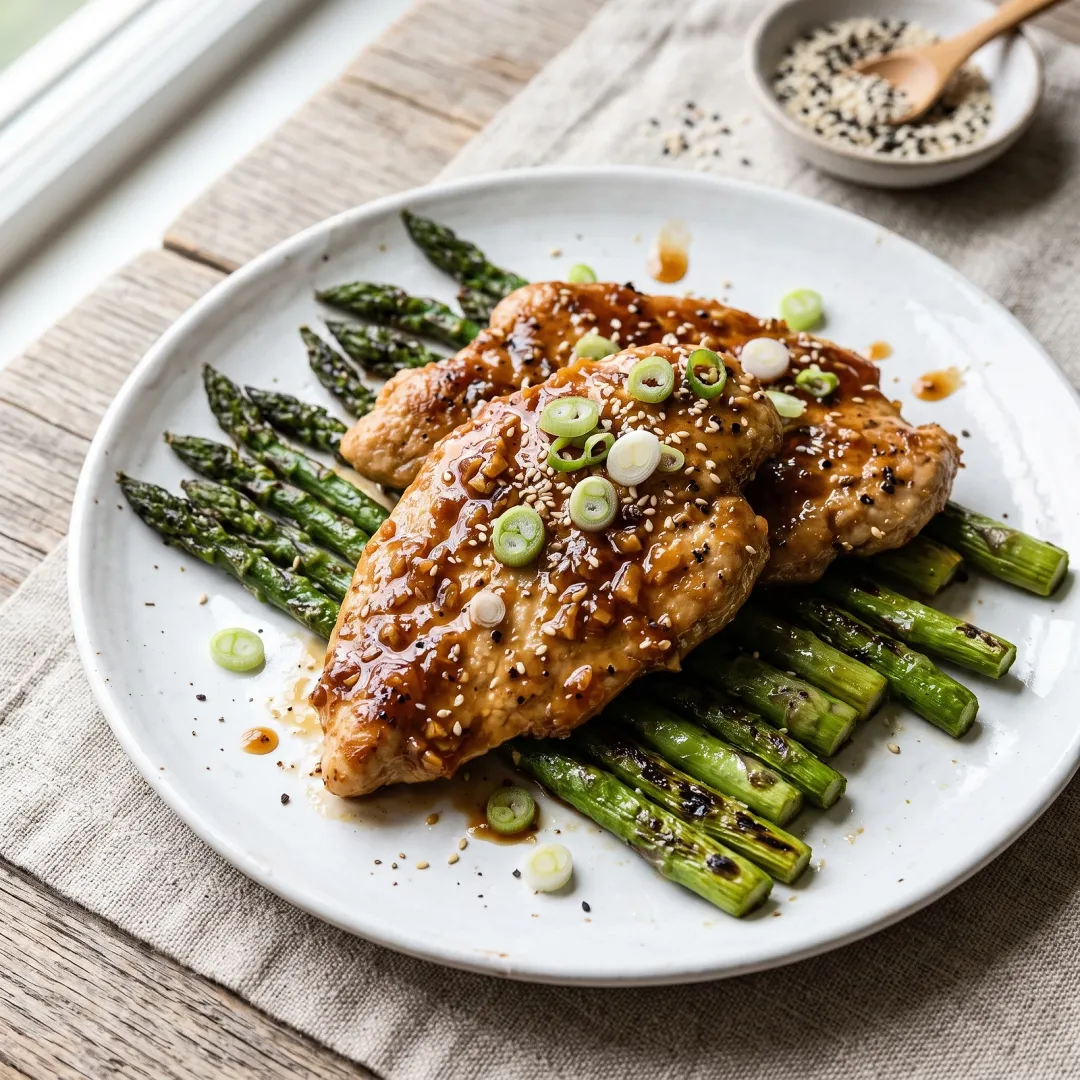

My functional medicine journey taught me a hard truth: not all healthy food is safe food, depending on what your immune system is doing on any given day. If you are dealing with histamine intolerance or MCAS, you already know the frustration of looking at a dinner recipe that seems perfectly clean and then spotting the fermented soy sauce, the bone broth, the leftover chicken, or the splash of rice wine vinegar buried in the ingredients. Almost every Asian-inspired recipe trips one of those wires. This one does not. It is built from scratch with histamine safety in mind, starting with fresh turkey cutlets from the butcher or meat counter, never pre-marinated, never sitting around. The glaze is ginger, garlic, raw honey, and sesame oil, that is it. It reads unmistakably Korean at the table: a little sticky, a little fragrant, that satisfying savory-sweet thing that makes you want to scrape the pan. And it all comes together in one skillet in about 30 minutes. Freshness is the whole game here, so I always mention: eat it hot, and if there are leftovers, freeze them that night rather than letting them sit in the fridge.
Nutritional Benefits
Fresh Turkey: Lean, Complete Protein with a Low-Histamine Profile
- Turkey breast is one of the best proteins for histamine-sensitive folks because freshness is controllable. Buy it fresh, cook it same day, and you sidestep the histamine accumulation that happens in aged, cured, or leftover meats.
- Each serving delivers roughly 38 grams of protein to support muscle repair, satiety, and immune function, all important when your body is already running a high inflammatory burden.
- Turkey is a solid source of B6, which is a cofactor in the enzymes that break down histamine in the body. That is not a coincidence. It genuinely helps.
Asparagus: A Prebiotic Vegetable That Earns Its Place
- Asparagus is naturally low in histamine and rich in prebiotic inulin-type fructans, which feed beneficial gut bacteria. A healthier gut microbiome is associated with better DAO enzyme production, the enzyme responsible for breaking down dietary histamine.
- It provides a meaningful hit of folate, vitamin K, and vitamin C without any of the histamine-triggering compounds found in spinach or tomatoes.
- The brief high-heat sear preserves more of its nutrients than long boiling while adding a charred edge that makes it feel like actual dinner food, not a side dish afterthought.
Fresh Ginger and Garlic: Anti-Inflammatory Without the Histamine Drama
- Fresh ginger has well-documented anti-inflammatory properties and contains compounds that support digestive motility, helpful when histamine reactions often show up as gut symptoms.
- Garlic provides quercetin, a natural mast cell stabilizer that may help reduce histamine release. It is one of the reasons I reach for it constantly in low-histamine cooking.
- Both are freshly grated and minced here, not powdered or from a jar. Fresh matters. Processed and stored versions accumulate more problematic compounds over time.
Raw Honey and Sesame Oil: Purposeful Flavor With Function
- Raw honey brings natural sweetness and trace enzymes and is one of the few sweeteners that is well-tolerated by most histamine-sensitive people. It keeps the glaze sticky and caramelized without any refined sugar.
- Toasted sesame oil is used in a small, finishing amount, enough to deliver that signature Korean warmth and aroma without overloading on omega-6 fats.
- Avocado oil does the heavy lifting for searing because of its high smoke point, which means less oxidation and less of the inflammatory byproducts that come from cooking oils pushed past their limits.
FAQs
Can I use ground turkey instead of cutlets?
You can make it work, but the dish changes character. With ground turkey you lose the sear-and-glaze drama that makes this recipe feel like a real dinner. If you go that route, form it into thin patties, sear them the same way, and reduce the cook time slightly.
Can I swap green beans for the asparagus?
Yes, and they are great here. Trim the ends, add them to the hot skillet with a little oil, and cook them about 4 to 5 minutes total. They take slightly longer than asparagus to get that tender-with-a-little-char texture, so give them an extra minute or two.
Is this safe for Whole30?
Almost, but not quite. The raw honey puts it outside Whole30 rules. If you are on a Whole30, skip the honey and whisk in a small amount of unsweetened apple juice or just extra water to thin the glaze. The flavor will be lighter but still good.
My glaze seized up and burned before it thickened properly. What happened?
The heat was too high. Honey glazes go from perfect to scorched fast. Pull the skillet back to medium-low before you add the glaze, and do not walk away. Sixty to ninety seconds in the pan is really all it needs. If it looks too thick, add a splash more water.
How long can I keep leftovers?
For low-histamine safety, refrigerated leftovers should be eaten within 24 hours at most, but freezing them the same night you cook is the better call. Histamine continues to build in cooked proteins even in the fridge. Freeze flat in an airtight bag, thaw in cold water, and reheat in a skillet.
I do not have a cast iron skillet. Will stainless steel work?
Stainless steel is actually excellent for this. Preheat it a little longer than you think you need to, add the oil once the pan is hot, and do not move the turkey once it hits the pan. It will release naturally when it is ready to flip. A nonstick pan will also work but you will get less of that deep golden crust.
If you made this and your kitchen smelled like a Korean restaurant and your family ate every last piece off the platter, come back and leave a comment. That is the whole point of this place. And if you are navigating histamine intolerance and MCAS and you feel like every recipe out there was written for someone with a completely different body than yours, you are in the right corner of the internet. Save this one, pin it, share it with a friend who needs a real dinner they can actually eat.
Ginger-Glazed Turkey Cutlets over Seared Asparagus
Thin turkey cutlets seared golden in a hot skillet, finished with a quick Korean-leaning pan glaze of fresh ginger, garlic, honey, and sesame oil, then laid over crisp-tender asparagus cooked in the same pan. One skillet, big flavor, and totally low-histamine friendly.
Ingredients
- 1.5 lbs fresh turkey breast cutlets, pounded to about 1/2-inch thickness
- 1 lb fresh asparagus, tough ends snapped off
- 2 tablespoons avocado oil, divided
- 1 tablespoon fresh ginger, finely grated
- 4 garlic cloves, minced
- 2 tablespoons raw honey
- 1 tablespoon toasted sesame oil
- 2 tablespoons water
- 1/2 teaspoon fine sea salt, plus more to taste
- 1/4 teaspoon ground white pepper
- 1 teaspoon sesame seeds, for garnish
- 3 scallions, thinly sliced, for garnish
Instructions
- Pat the turkey cutlets completely dry with paper towels. Season both sides with sea salt and ground white pepper. Set aside at room temperature while you prep the remaining ingredients.
- In a small bowl, whisk together the fresh ginger, minced garlic, raw honey, toasted sesame oil, and 2 tablespoons of water until combined. Set the glaze aside.
- Heat a large skillet (12-inch cast iron or stainless steel) over medium-high heat. Add 1 tablespoon of avocado oil and let it get hot and shimmering, about 1 minute.
- Add the asparagus spears in a single layer. Season lightly with sea salt. Sear without moving for 2 minutes, then toss and cook another 2 to 3 minutes until bright green, lightly charred in spots, and just tender. Transfer to a serving platter and tent loosely with foil.
- Return the skillet to medium-high heat and add the remaining 1 tablespoon of avocado oil. Once shimmering, add the turkey cutlets in a single layer, working in batches if needed. Sear undisturbed for 3 to 4 minutes until deep golden brown on the bottom.
- Flip the cutlets and cook another 2 to 3 minutes until cooked through and the internal temperature reads 165°F on an instant-read thermometer.
- Reduce the heat to medium-low. Pour the ginger-honey glaze into the skillet directly over and around the cutlets. Let it bubble and reduce for 60 to 90 seconds, turning the cutlets once to coat them fully in the glaze. The glaze should thicken and cling to the turkey.
- Arrange the seared asparagus on your platter or individual plates. Lay the glazed turkey cutlets on top and spoon any remaining pan glaze over everything.
- Garnish with sesame seeds and sliced scallions. Serve immediately. Refrigerate leftovers only for up to 24 hours, or freeze promptly for best low-histamine results.
Nutrition per serving
- Calories: 310
- Total Fat: 12g
- Carbohydrates: 12g
- Protein: 38g
- Dietary Fiber: 3g
- Sugar: 7g
 That Paleo Chick
Real food that heals
RecipePaleoDinnerGluten-Free

Fits these needs
Checked ingredient by ingredient. Tap one to see every recipe that fits.
Ingredients
Instructions
Nutrition Facts Amount per serving
Estimated from the ingredients. Values vary with brands and portions.

Join the conversation
Made it? Tell us how it went.
Free members can comment, reply and like. It takes ten seconds.