
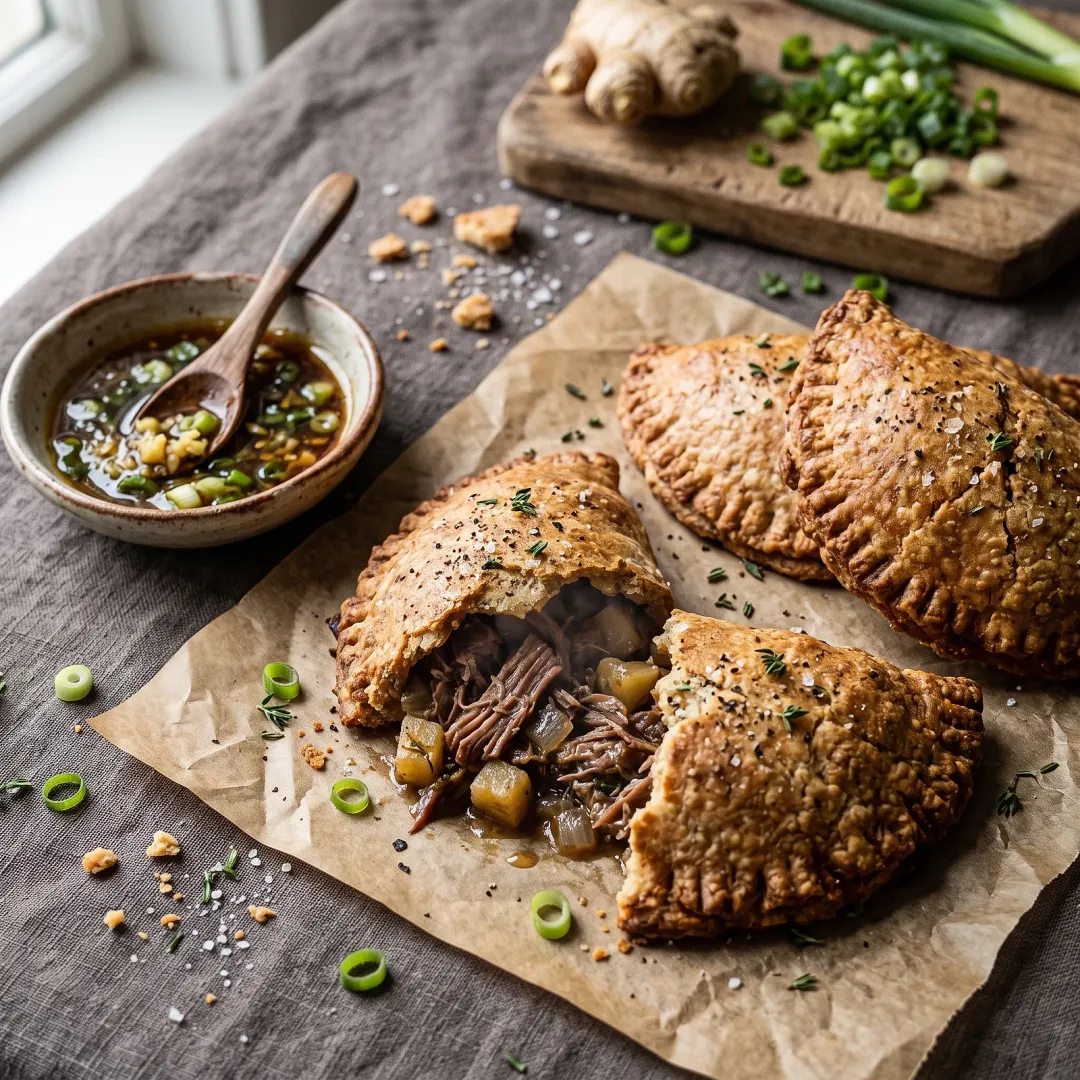

Duck hand pies sound like a project, but the payoff is a lunch you can eat standing at the kitchen counter without a single utensil, feeling like you did something really good for yourself. The cassava pastry bakes up flaky and golden, the filling is rich without being heavy, and the ginger-scallion sauce made from the actual duck drippings tastes like something a Japanese grandmother would know by heart. For anyone managing histamine intolerance or MCAS, lunch is usually the hardest meal to get right. Breakfast is eggs. Dinner is a full cook. But lunch? Most grab-and-go options are loaded with vinegar, aged proteins, canned everything, or fermented sauces that would wreck the whole rest of the day. These hand pies solve that. Fresh-cooked duck, freshly boiled potato, aromatics that are genuinely low-histamine, and a pastry shell that travels well. You make a batch, freeze what you do not eat immediately, and you have real lunch for the week. The Japanese lean here is intentional and clean. No soy, no mirin, no sake. Just ginger, garlic, scallion, and sesame oil doing exactly what they were always doing: building depth and warmth without a single fermented drop. It works beautifully with duck, which has this natural richness that meets the aromatics halfway. You do not need a complicated sauce when the drippings are this good.
Nutritional Benefits
Duck: A Richer Protein with Real Payoff
- Duck is one of the most nutrient-dense poultry options available. It is high in complete protein, delivering all essential amino acids, which matters for tissue repair and immune function.
- It is notably rich in iron, zinc, and selenium, three minerals that are often depleted in people with chronic inflammatory conditions like MCAS.
- The fat in duck is largely monounsaturated and is similar in profile to olive oil. It is not the enemy. It supports fat-soluble vitamin absorption, keeps you full, and adds genuine flavor.
- Unlike processed or cured meats, fresh-cooked duck does not carry an elevated histamine load when made and eaten promptly.
Cassava Flour: The Grain-Free Pastry Foundation
- Cassava flour is made from the whole yuca root and behaves more like wheat flour than any other grain-free alternative, which makes it uniquely suited for pastry work.
- It is completely grain-free and gluten-free, making it appropriate for celiac disease, gluten sensitivity, and strict paleo eating.
- It provides resistant starch, which feeds beneficial gut bacteria and supports healthy digestion.
- It is one of the few low-histamine-compatible baking flours, almond and other nut flours are often problematic for MCAS.
Ginger and Garlic: Anti-Inflammatory Aromatics
- Fresh ginger contains gingerols and shogaols, compounds with well-documented anti-inflammatory and anti-nausea properties.
- Garlic provides allicin, which has both antimicrobial and immune-modulating effects, relevant for people managing immune dysregulation.
- Both ginger and garlic are considered low-histamine and generally well-tolerated even in sensitive individuals, making them excellent flavor anchors for this protocol.
- Unlike many spice blends, fresh aromatics deliver flavor without hidden additives or preservatives.
Potato: Underrated Fuel
- Yukon Gold potatoes are a good source of potassium, vitamin C, and B6, nutrients that support nervous system function and adrenal health, both relevant for MCAS.
- Potatoes are a clean, low-histamine carbohydrate source. They are naturally filling and provide sustained energy without a sharp blood sugar spike when paired with protein and fat.
- They hold their shape well in a filling, which means you get actual texture in every bite rather than mush.
FAQs
Can I use duck breast instead of duck legs?
You can, but the legs give you more flavor and a better shred. Duck breast is leaner and can dry out if overcooked, and you will get fewer drippings for the sauce. If you use breast, sear it hard in an oven-safe pan, finish it in the oven just until 160°F internal, let it rest fully, then slice it very thin rather than shredding. It will still be delicious, just a little different in texture.
My cassava pastry keeps cracking. What am I doing wrong?
Cassava dough needs more water than you think. Add it slowly, one tablespoon at a time, but do not stop until the dough genuinely holds when you press a piece between two fingers without crumbling. Also make sure you are rolling it between two sheets of parchment rather than directly on a floured surface, and work with one ball at a time while keeping the rest covered so they do not dry out.
Why do you say to freeze leftovers instead of refrigerating them?
Histamine forms when proteins sit. Even in the fridge, cooked meat accumulates histamine over 24 to 48 hours, which can trigger symptoms in sensitive individuals. Freezing stops that process cold, literally. So the protocol for MCAS and histamine intolerance is to cook fresh and freeze everything you are not eating right now. Reheat from frozen rather than storing cooked meat in the fridge for days.
Is sesame oil low-histamine?
Toasted sesame oil is generally well-tolerated by most people with histamine intolerance and is not on the standard high-histamine or histamine-liberating food lists. That said, individual tolerance varies. If you are newly diagnosed or highly reactive, start with a very small amount and see how you respond. You can also use a neutral-flavored oil like avocado oil in the filling if you prefer to keep it simpler.
Can I make the pastry dough ahead of time?
Yes. Make the dough, shape it into a flat disk, wrap it tightly in plastic wrap, and refrigerate for up to one day. Let it sit at room temperature for 10 minutes before rolling. Do not make it more than a day ahead, and do not freeze the raw dough, cassava flour pastry does not thaw well before baking, but the baked finished pies freeze beautifully.
What if I cannot find fresh duck legs?
Check an Asian grocery store, a specialty butcher, or order directly from a poultry farm online. Fresh, never-frozen is ideal for histamine reasons, but if you can only find frozen, thaw it in the fridge and cook it immediately after thawing. Do not use pre-marinated, smoked, or cured duck products, as those are high in histamine regardless of how they are listed.
If you made these, I genuinely want to know how they turned out. Drop a comment below and tell me if you stuck to the recipe or riffed on it. And if you are cooking for histamine intolerance or MCAS, share this with someone who is still eating sad desk lunches because they think their options are gone. They are not. Not even close.
 That Paleo Chick
Real food that heals
That Paleo Chick
Real food that heals
RecipePaleoLunchGluten-Free

Fits these needs
Checked ingredient by ingredient. Tap one to see every recipe that fits.
Health needs
New to these? Read our condition guidesAlways check labels on packaged ingredients (gluten-free certification, hidden additives) and follow your clinician's advice.
Ingredients
Instructions
Nutrition Facts Amount per serving
Estimated from the ingredients. Values vary with brands and portions.

Join the conversation
Made it? Tell us how it went.
Free members can comment, reply and like. It takes ten seconds.