


Fifty-eight million Americans are walking around with osteoarthritis, and the official conversation is almost entirely about managing pain with drugs or waiting until the joint is bad enough to replace. A new clinical trial just quietly dropped a result that should have been front-page news, and you probably didn't hear about it.
What the Trial Actually Found
Researchers published results from a randomized clinical trial showing that a simple, inexpensive daily fiber supplement significantly reduced knee osteoarthritis pain, improved muscle strength, and made participants less sensitive to pain overall. That last part is worth reading again: less sensitive to pain, not just at the joint, but systemically.
The mechanism they identified is what grabbed me. It was not about lubricating the joint or reducing local inflammation with a topical. The benefits were linked to measurable changes in gut bacteria and a corresponding rise in the hormone GLP-1, according to the ScienceDaily report on the trial. GLP-1, the same hormone now being chased by billion-dollar injectable drugs, was going up because people were eating more fiber. And that shift in the gut appeared to be doing something meaningful for pain and strength.
This is not fringe stuff. The gut-joint axis is an emerging and legitimate area of research. We already know from published work in the journal Nature Reviews Rheumatology that gut microbiome composition is altered in people with rheumatoid arthritis, and the conversation is expanding to osteoarthritis as researchers learn more about how microbial metabolites influence systemic inflammation. A fiber supplement moving that needle in a clinical trial is a genuinely significant finding.
So why did it land with barely a ripple?
Follow the Money: Who Benefits When Arthritis Stays a Drug Problem
The global osteoarthritis drug market was valued at over $7 billion and is projected to keep climbing, according to industry market analysis reported by Grand View Research. The pipeline is loaded with biologics, injectables, and next-generation anti-inflammatories. That is where the investment is. That is where the revenue is.
Fiber costs almost nothing. You cannot patent a fiber supplement, and you absolutely cannot patent the fiber that comes from eating vegetables, legumes, and whole real food. There is no shareholders' meeting where someone stands up and pitches a broccoli trial. That is simply not how the incentive structure works.
Meanwhile, the GLP-1 receptor agonist market, drugs like semaglutide (sold as Ozempic and Wegovy), is projected to reach over $100 billion annually by the early 2030s, according to Reuters reporting on Novo Nordisk's projections. The entire selling point is that these drugs work partly through GLP-1 pathways. And here comes a clinical trial showing that a cheap dietary fiber may move GLP-1 too, through the gut bacteria you can grow for free by eating real food.
I am not saying anyone buried this study. I am saying the structure of how research gets funded, amplified, and translated into clinical guidelines is not neutral. The National Institutes of Health's own data show that pharmaceutical and biotech partnerships shape a significant portion of applied health research priorities. When there is no commercial sponsor with a financial interest in the outcome, a study tends to stay in the journal and die there.
The Revolving Door Between Agencies and Industry
This is not a conspiracy theory. It is a documented structural problem. The FDA and the USDA have a long-established pattern of senior officials moving between regulatory roles and industry positions. A 2018 analysis published in PLOS Medicine documented that more than half of FDA medical reviewers who left the agency moved into roles with the pharmaceutical industry they had previously regulated.
When the people writing clinical guidelines and approving drug pathways have professional futures in the industry those guidelines affect, the incentive to highlight "eat more fiber" over "here is a new injectable" is essentially zero. It is not corruption in a cartoonish sense. It is captured attention. It is what happens when the system is designed around drugs as the primary output.
Osteoarthritis guidance from major clinical bodies, including the American College of Rheumatology, does mention exercise, weight management, and physical therapy. It has not historically centered the gut microbiome as a therapeutic target, and it places pharmacological management front and center in the treatment algorithm. The new fiber trial is early evidence. But the question of whether findings like this get serious follow-up funding or get quietly noted in a footnote depends entirely on who is paying for the follow-up.
What This Means in Real-Food Terms
Here is what the functional medicine lens says about all of this: the gut has always been central. We did not need a GLP-1 mechanism story to understand that feeding your microbiome well has downstream effects on inflammation, pain signaling, and metabolic function. That is foundational stuff. This trial just handed us a clinical trial to point to, which is useful when people want the data.
Fiber feeds the bacteria that produce short-chain fatty acids. Short-chain fatty acids like butyrate help regulate gut barrier integrity and systemic inflammatory signaling, as outlined in research published in Frontiers in Immunology. A leaky, dysbiotic gut is not sending good signals anywhere in the body, including to your joints. This is not new science. The trial is just confirming what a whole-food, fiber-rich eating pattern has been doing quietly for people for years.
For the real-food crowd, the practical takeaway is straightforward. You are not trying to replicate a supplement. You are trying to build a diet that naturally delivers diverse, fermentable fiber from vegetables, low-sugar fruits, cooked and cooled starches (which increase resistant starch content, as research in the journal Food Chemistry notes), and whole food sources your grandparents would recognize.
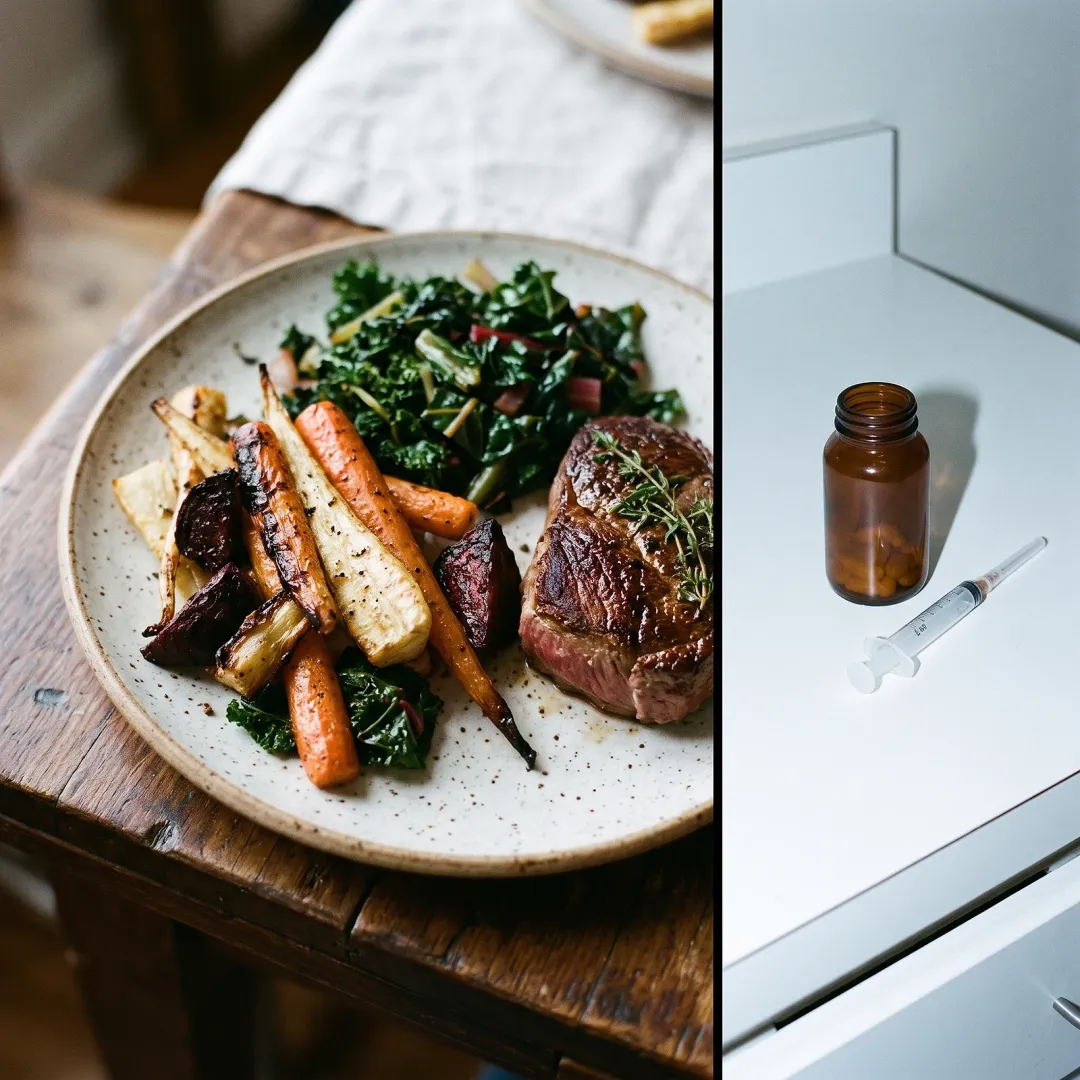
If you are eating a plate built around a good piece of grass-fed beef, roasted root vegetables, some leafy greens, and maybe some cooked and cooled sweet potato or white potato, you are already doing a version of what that fiber trial is pointing toward. You are feeding your gut bacteria. You are supporting GLP-1 naturally. You are doing this without a prescription and without a co-pay.
That is the part nobody with a financial stake in the drug pipeline is going to tell you.
What I Want You to Take Away From This
This trial matters because it is a clinical trial, the kind of evidence the medical system says it requires before taking something seriously. It showed measurable pain reduction, measurable strength improvement, and a plausible mechanism tied to gut bacteria and GLP-1. That is not nothing. That is actually a lot.
And it is pointing directly at something you can do with your fork.
I am not telling you to throw out your doctor's advice or stop any medication. That is between you and your physician, full stop. But I am telling you that if the first and loudest conversation your doctor is having with you about joint pain is about NSAIDs or biologics, and no one has talked seriously with you about gut health, fiber intake, or the microbiome-pain connection, you are getting an incomplete picture. You have the right to ask for the full one.
The body was designed to work. Real food supports that design. And the science, when it is not filtered through a commercial interest, keeps confirming it. This trial is one more piece of that confirmation. I will take it.
This article is for general informational purposes only and is not medical advice. Always consult a qualified healthcare professional before making changes to your diet or health routine.
Key Takeaways
- A new clinical trial found that a daily fiber supplement significantly reduced knee osteoarthritis pain and improved muscle strength, with effects linked to changes in gut bacteria and GLP-1 levels.
- GLP-1, the hormone targeted by expensive injectable drugs, can be supported naturally through dietary fiber and gut microbiome changes.
- The osteoarthritis drug market is worth billions, and there is no financial incentive to fund or amplify research showing cheap, food-based approaches may help.
- Documented revolving-door patterns between FDA regulators and pharmaceutical industry roles create structural conflicts of interest in how treatments get prioritized.
- A whole-food, fiber-rich eating pattern, centered on vegetables, quality protein like grass-fed beef, and diverse plants, supports the gut-joint connection without a prescription.
- This is general educational information. Talk to your doctor before changing any medication or treatment plan.
Frequently Asked Questions
Can fiber really help with arthritis pain?
A recent clinical trial found that a daily fiber supplement was linked to significantly reduced knee osteoarthritis pain and improved muscle strength, with researchers pointing to changes in gut bacteria and GLP-1 levels as the likely mechanism. This is promising early evidence, not a proven treatment. Research on the gut-joint connection is still developing. Talk to your doctor before changing your approach to managing joint pain.
What is GLP-1 and what does it have to do with joint pain?
GLP-1 (glucagon-like peptide-1) is a hormone produced in the gut that plays a role in metabolic signaling. It's the same hormone targeted by drugs like semaglutide (Ozempic). The fiber trial found that participants' GLP-1 levels rose alongside improvements in pain and strength, suggesting that feeding gut bacteria with fiber may naturally influence this hormone pathway. Research is still ongoing on exactly how this affects joint health.
What foods naturally support GLP-1 and gut bacteria?
Fiber-rich whole foods, including vegetables, low-sugar fruits, legumes (for those who tolerate them), and cooked-and-cooled starches like sweet potato or white potato (which increase resistant starch), are linked to feeding the gut bacteria that support GLP-1 production and short-chain fatty acid output. A whole-food, varied eating pattern that emphasizes plants alongside quality proteins like grass-fed beef is a reasonable, food-first approach. This is general information, not medical advice.
Why don't doctors talk about fiber and gut health for osteoarthritis?
The honest answer involves both the newness of the research and the structural incentives of medical research funding. Gut-joint research is a genuinely emerging field, and clinical guidelines take time to catch up with new evidence. Additionally, there is significantly more funding available for pharmaceutical interventions than for dietary ones, since drugs can be patented and generate returns on investment in ways that food cannot. A 2018 analysis in PLOS Medicine documented conflicts of interest between FDA reviewers and the pharmaceutical industry, which illustrates the broader structural issue.
Sources
- ScienceDaily: A simple daily fiber supplement reduced arthritis pain and improved strength
- Nature Reviews Rheumatology: The gut microbiome in rheumatoid arthritis
- Grand View Research: Osteoarthritis Market Size & Share Report
- Reuters: Novo Nordisk and the GLP-1 market projections
- NIH Research Portfolio: NIH Categorical Spending Data
- PLOS Medicine: Institutional conflicts of interest at the FDA: analysis of FDA reviewers who moved to industry
- American College of Rheumatology: Clinical Practice Guidelines for Osteoarthritis
- Frontiers in Immunology: Short-Chain Fatty Acids and Gut Microbiota in Inflammatory Disease
- Food Chemistry: Resistant starch content of cooked and cooled foods
This article is for general informational purposes only and is not medical advice. Always consult a qualified healthcare professional before making changes to your diet or health routine.




Join the conversation
What do you think?
Free members can comment, reply and like. It takes ten seconds.